
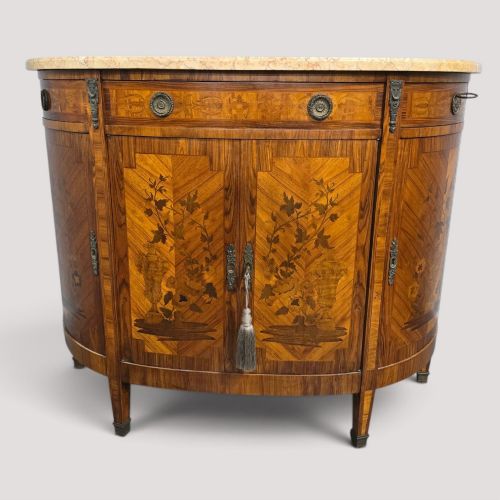

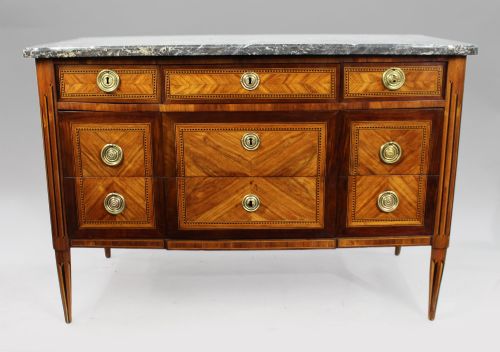
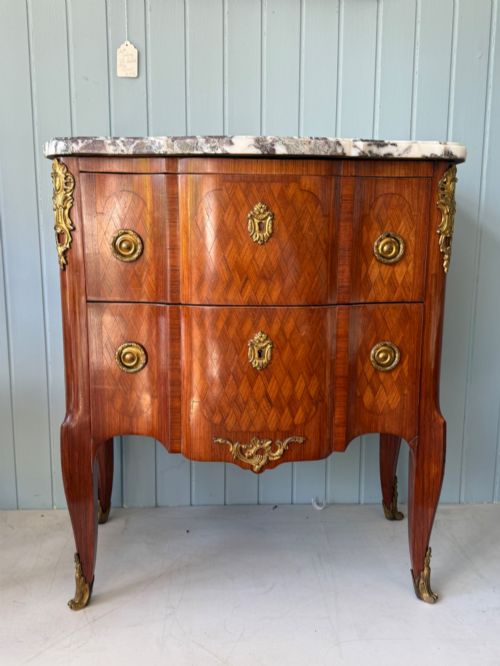
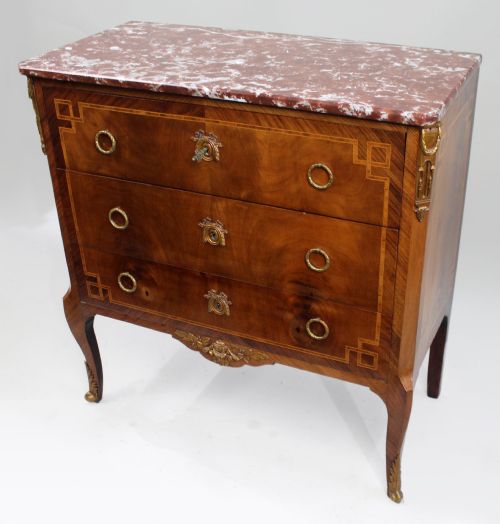
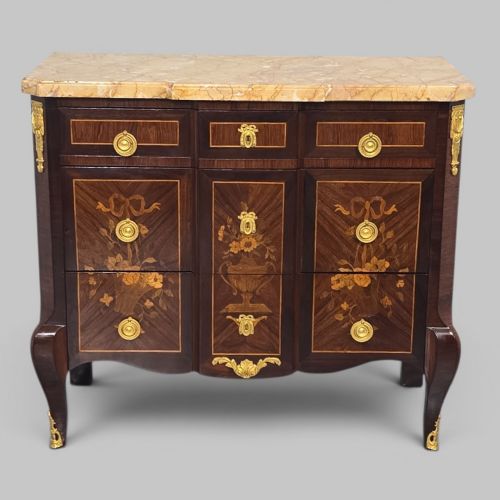
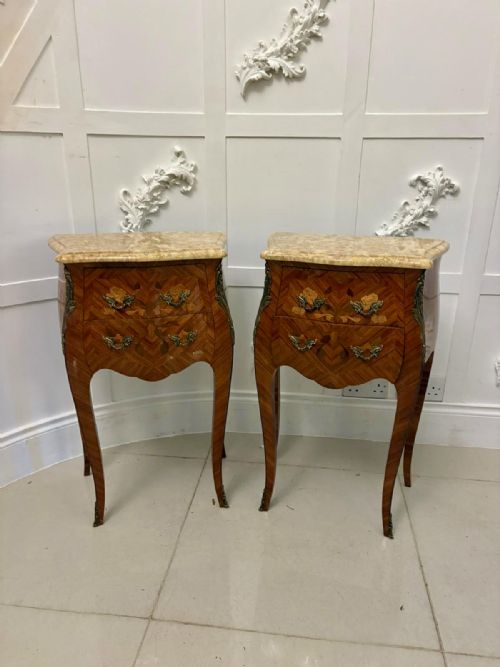
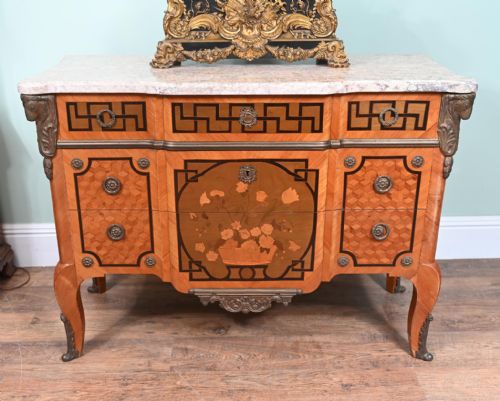
Walnut Marble Top Commode
A walnut marble top commode combines timber warmth with a cool stone surface, offering practical storage and distinct European elegance.
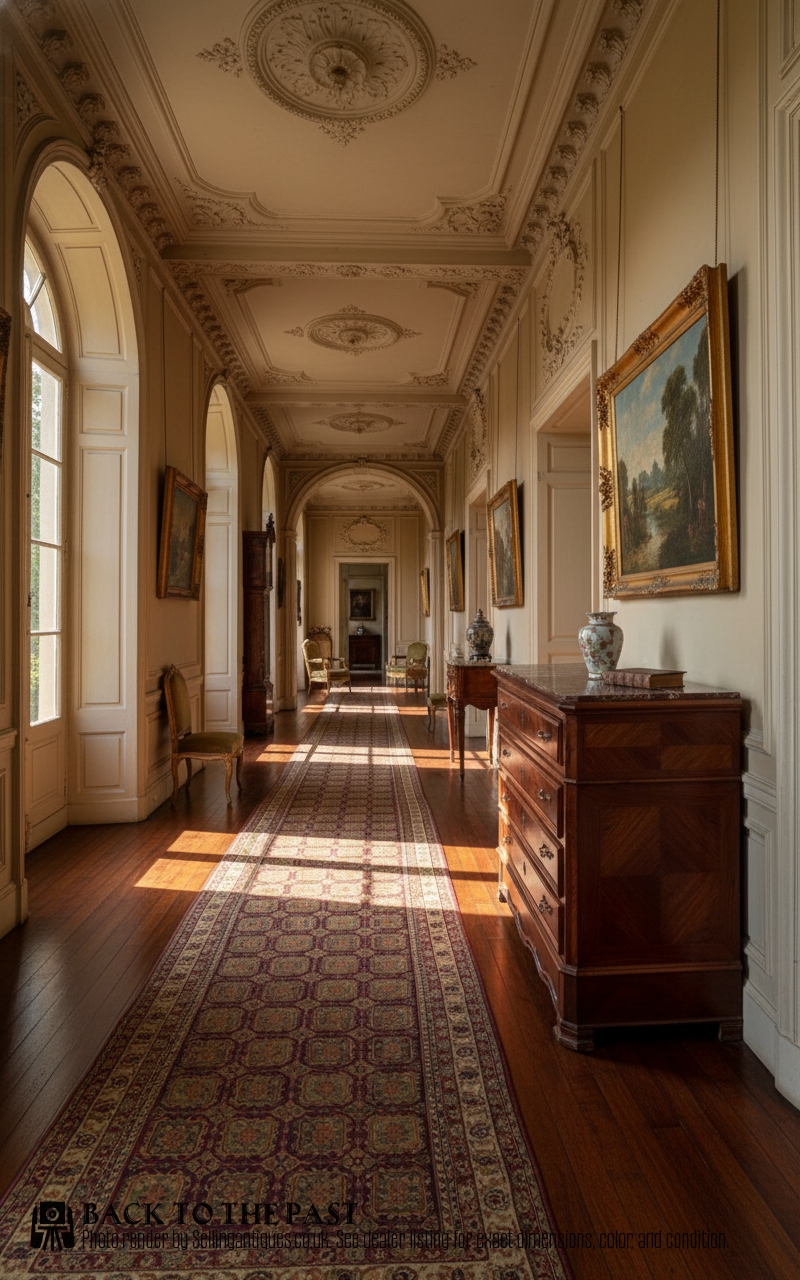
Walnut Marble Top Commode
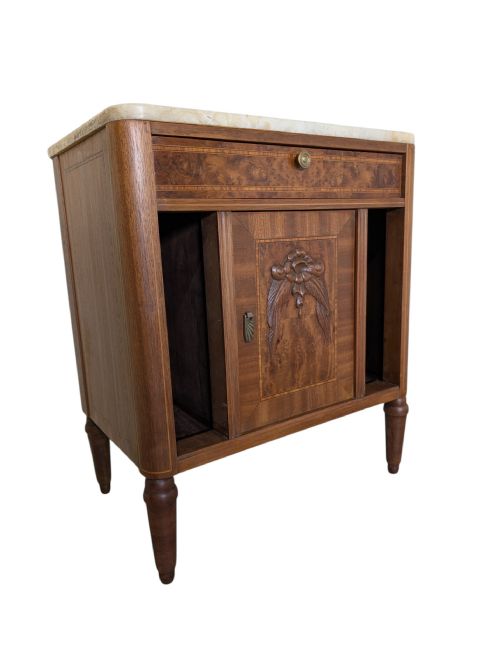
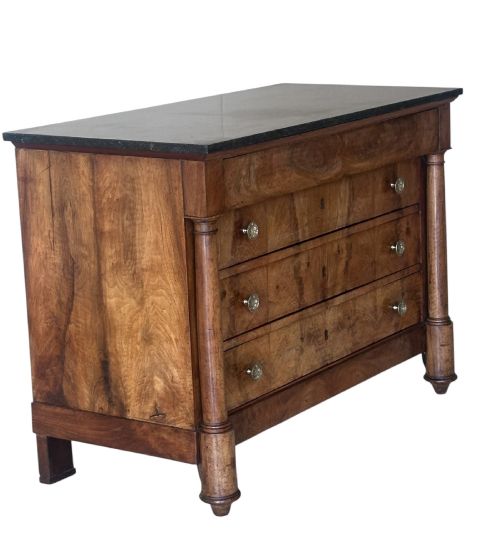
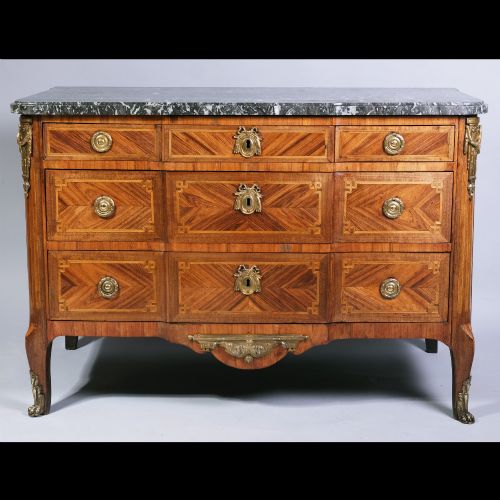
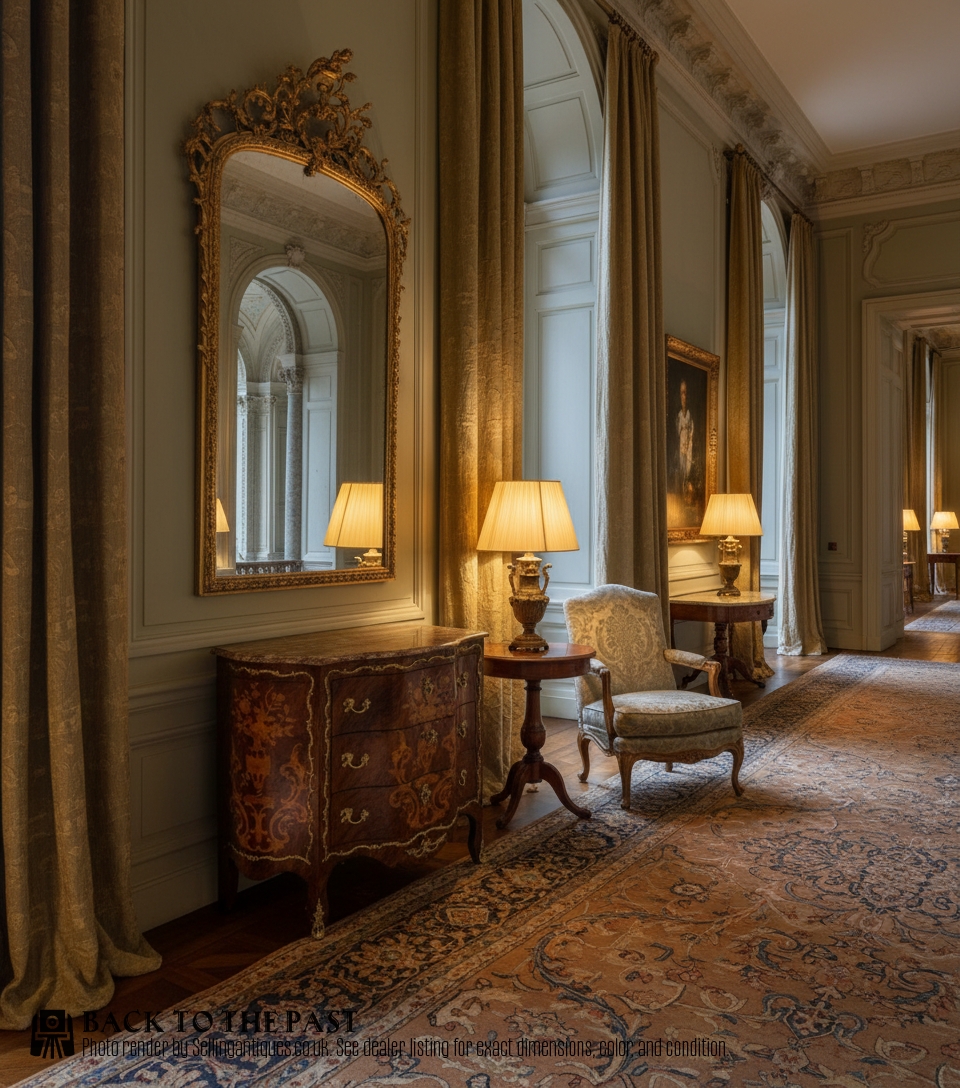
A walnut marble top commode functions primarily as a low chest of drawers or bedside cabinet, originating mostly from French and Italian workshops across the eighteenth and nineteenth centuries. These pieces combine substantial timber carcases with fitted stone surfaces, providing both a stable utilitarian top and generous drawer capacity for the bedroom or salon.
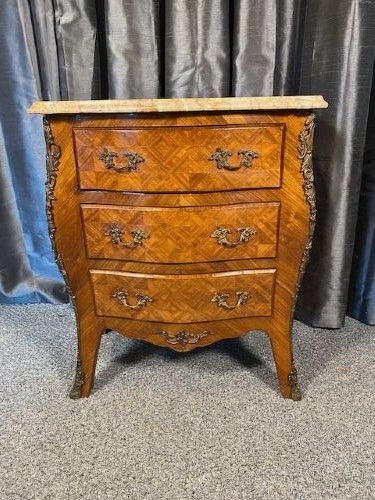
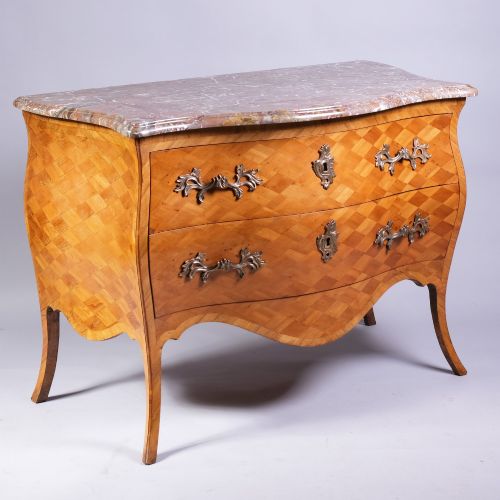
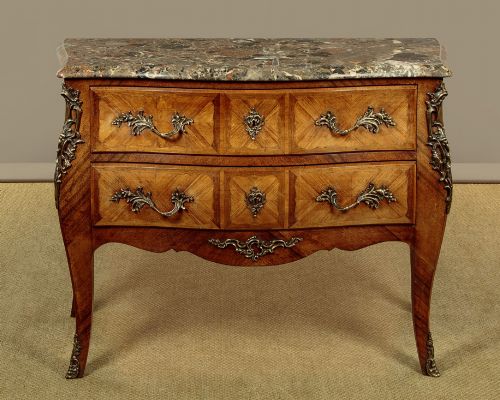
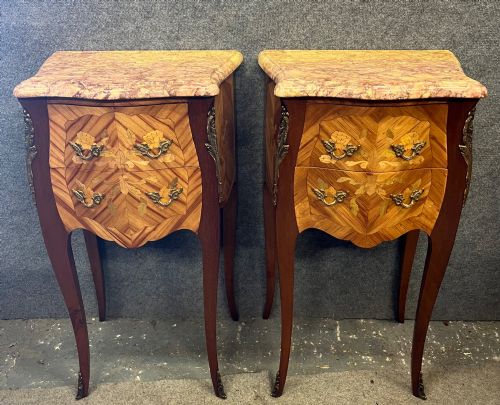
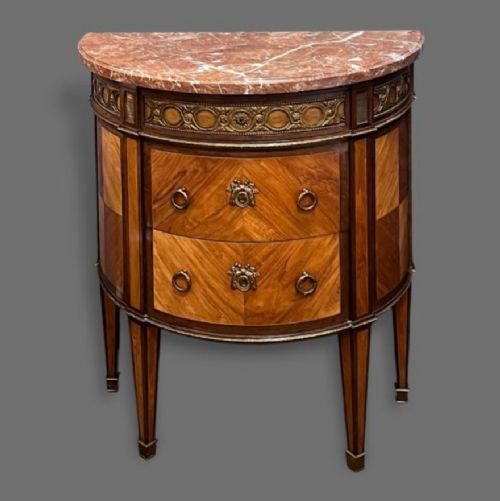
The varieties encountered on this page range from generous Louis Philippe and Louis XVI chests to compact bedside cabinets and serpentine commodes. Regional pieces span French marquetry designs and Italian neoclassical works, frequently incorporating figured burr walnut veneers alongside grey, white, or rouge marble slabs.
How they were made
Cabinetmakers constructed the carcases using solid timbers like walnut, applying decorative veneers such as burr walnut, kingwood, or geometric parquetry across the drawer fronts and sides. Marquetry details often incorporated floral or scroll motifs integrated directly into the wooden surfaces during assembly.
Heavy marble slabs were cut and polished to fit precisely over the timber top, occasionally secured with brass or ormolu mounts, handles, and cast feet. Gilt bronze and brass hardware provided both structural reinforcement and decorative contrast against the dark wood and veined stone.
Walnut Marble Top Commode Retail Price Guide 2026
Typical asking prices for walnut marble top commode among the pieces listed under this phrase on Sellingantiques today, from the lower quarter to the upper quarter. They describe what is for sale here now, not the wider market.
Common object forms include bedside cabinets, demi-lune chests, and serpentine commodes.
What varies in quality
Quality rests upon the precision of the veneer work, the grain selection in the burr walnut, and the crispness of the marquetry inlay. Superior examples display seamless matching across drawer fronts and hand-cut botanical details rather than mechanical uniformity.
The thickness and colour variation of the marble top, alongside the casting quality of the ormolu mounts, signal higher workshop standards. Better pieces maintain structural integrity in the drawer runners and tight joints throughout the carcase over centuries of use.
The Walnut Marble Top Commode Glossary
- Commode
- A low French chest of drawers or cabinet designed for domestic storage. These pieces typically feature multiple drawers and sit on short legs.
- Marquetry
- Decorative veneer work arranged in pictorial or geometric patterns using various coloured woods. Craftsmen cut thin slices of timber and fitted them together like puzzles.
- Ormolu
- Gilded bronze mounts applied to furniture for decorative and protective purposes. This technique was widely utilised during the eighteenth and nineteenth centuries.
- Parquetry
- Geometric wood inlay forming repeating patterns such as cubes or chequers across a surface. It differs from marquetry by focusing on repeating shapes rather than pictorial scenes.
- Bombe
- A swelling, convex furniture shape characteristic of certain continental styles. This curved profile requires skilled carpentry to match veneers across rounded surfaces.
Walnut Marble Top Commode: Frequently Asked Questions
How do I clean the marble top?
Use a soft cloth dampened with warm water and mild, pH-neutral soap to wipe the surface gently. Avoid acidic cleaners, vinegar, or harsh chemicals that can etch or dull the stone.
Dry the marble thoroughly with a clean microfiber towel to prevent water spots. Routine wiping keeps the polished finish protected without wearing down the natural stone.
Are these pieces suitable for bedside use?
Many examples on this page were built specifically as bedside cabinets or small side tables. Their modest proportions and stone surfaces make them practical for holding lamps and nighttime items.
Larger commodes function better as bedroom chests or hallway storage units. Check the specific dimensions of each piece to ensure it fits your intended room layout.
How do I identify a Louis Philippe piece?
Louis Philippe furniture generally dates from the mid-nineteenth century and favours restrained, clean lines over heavy ornamentation. These pieces often showcase figured walnut veneers with minimal carving and subtle curves.
The marble tops on these models tend to be thick and functional, resting securely on understated carcases. This style bridges earlier classical periods and later Victorian excesses.
Can I place a lamp on the veneer?
Walnut surfaces benefit from coasters and protective pads beneath lamps or heavy objects to prevent ring marks. Direct heat and moisture can damage antique French polish or wax finishes over time.
Positioning pieces away from direct sunlight and radiators prevents the walnut timber from drying out or splitting. Regular waxing maintains the moisture barrier on the wood.