

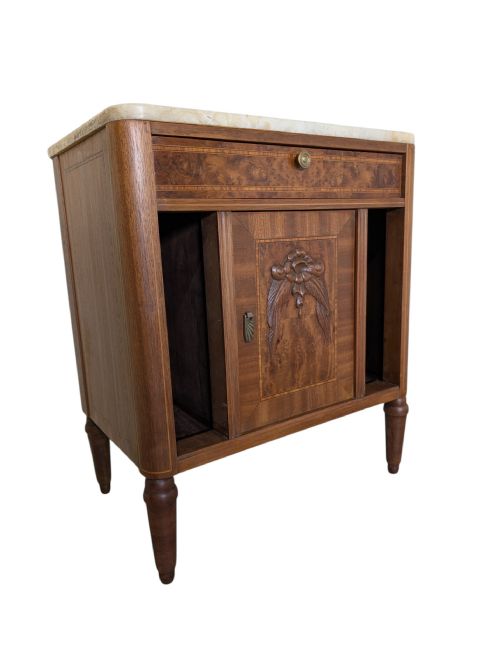
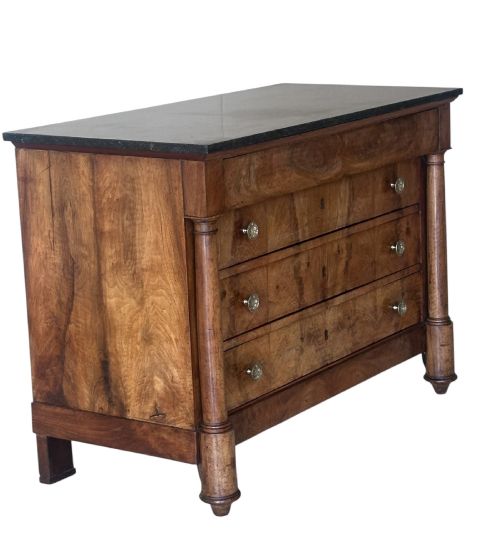
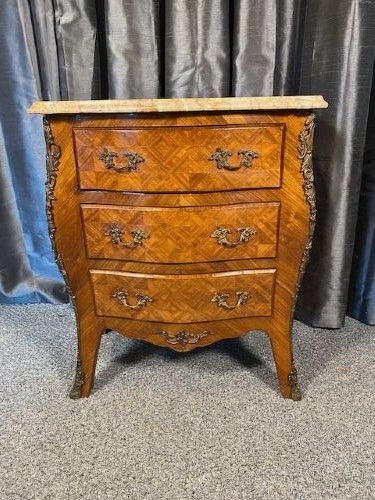
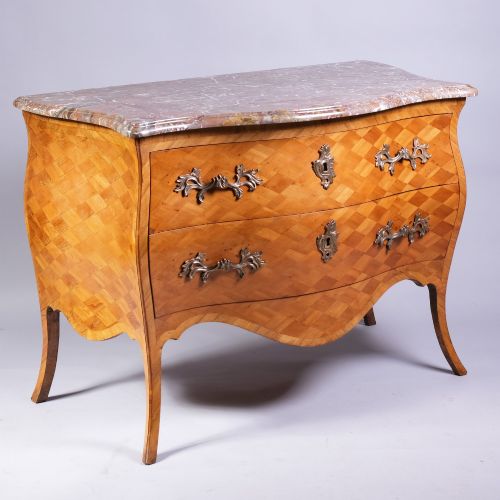
Walnut Marble Commode
A walnut marble commode brings continental elegance to a room, offering practical drawer storage beneath a cool stone surface.
Walnut Marble Commode
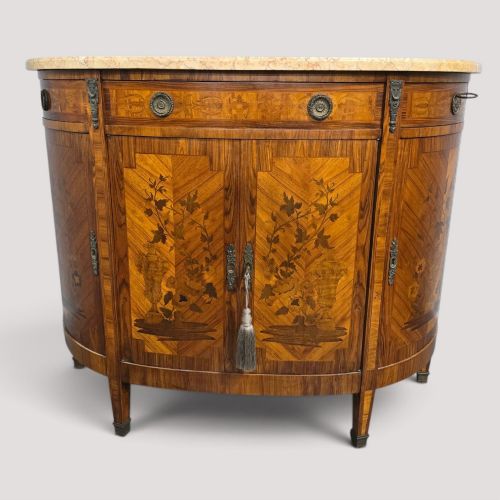
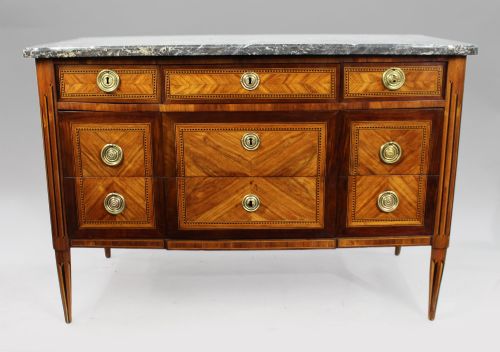
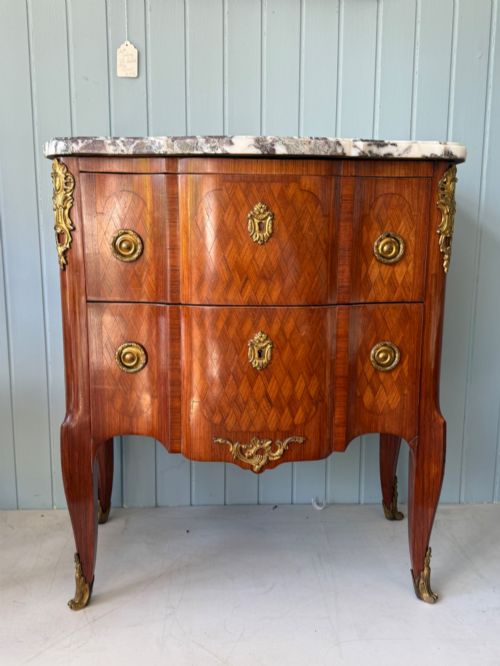
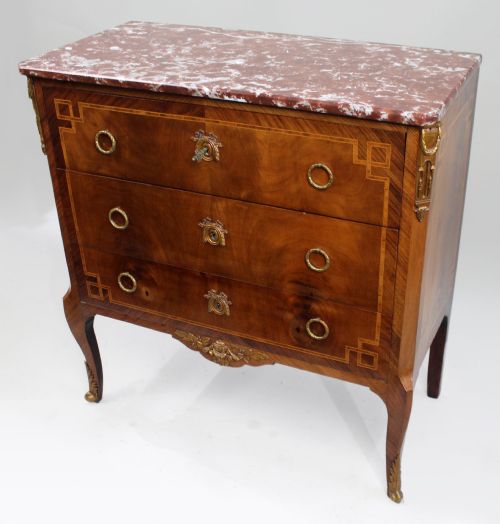
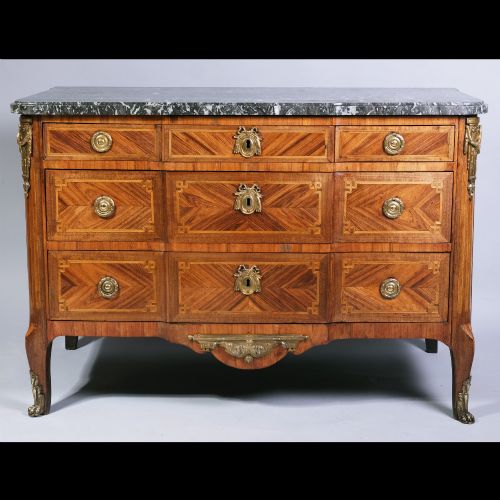
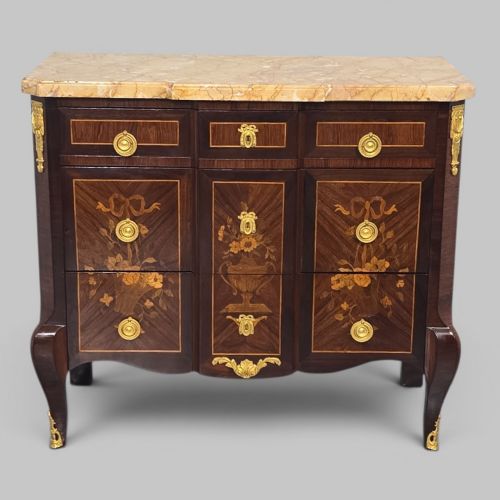
When searching for a walnut marble commode, buyers encounter low-profile storage chests originating primarily from eighteenth and nineteenth-century France and Italy.
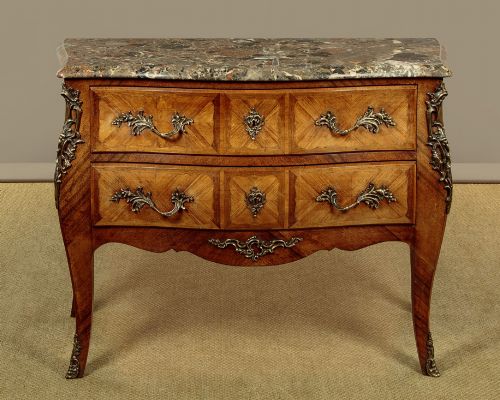
The most common examples on this page are French regional pieces from the Louis Philippe and Louis XV periods, constructed with generous drawer counts and heavy stone slabs.
Makers utilised figured timbers such as burr walnut alongside varied marble varieties including grey, rouge and white types to create striking domestic furniture.
Materials and construction methods
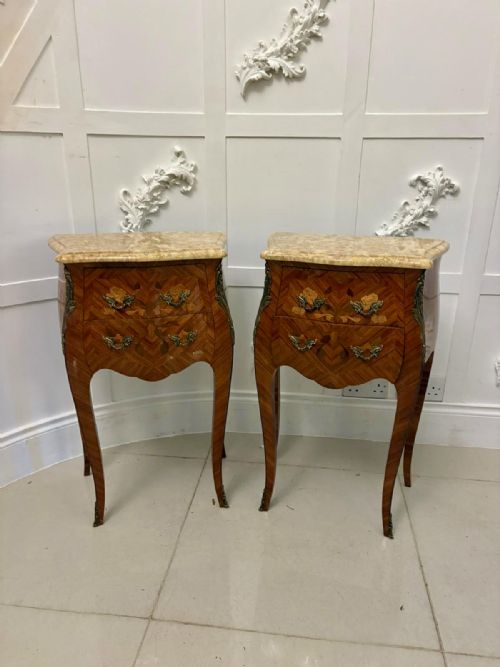
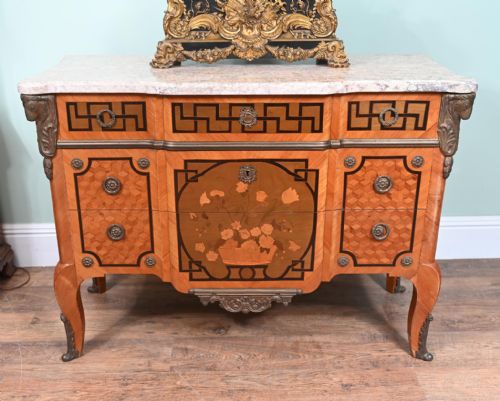
Cabinet makers built these pieces using solid walnut carcases overlaid with decorative veneers, frequently employing burr walnut or geometric parquetry patterns across the drawer fronts.
Heavy marble slabs were cut and polished to fit precisely over the top of each chest, serving as a durable and decorative surface.
Metal elements including brass handles, keyhole escutcheons and cast ormolu mounts were applied to accent the corners and legs of the cabinetry.
Listings span periods from the 18th century through the 1930s, featuring walnut, marble, ormolu, and kingwood.
Factors determining the grade of a piece
The distinction between standard and superior pieces rests on the choice of timber and the precision of the marquetry or parquetry layout.
Superior examples exhibit finely figured walnut grains, heavier and more detailed cast bronze mounts, and thick marble tops with well-executed edge moulding.
The Walnut Marble Commode Glossary
- Commode
- A low chest of drawers or cabinet designed for domestic storage. These pieces typically feature multiple drawers and sit on short legs.
- Parquetry
- Geometric wood inlay patterns arranged to create decorative surfaces on furniture panels. Craftsmen cut small pieces of contrasting timber to form precise shapes.
- Ormolu
- Gilded bronze mounts attached to furniture for decoration. This technique was widely utilised during the eighteenth and nineteenth centuries.
- Serpentine
- A curved furniture front that undulates outward in the centre and inward at the sides. This shape demands high skill from the cabinet maker.
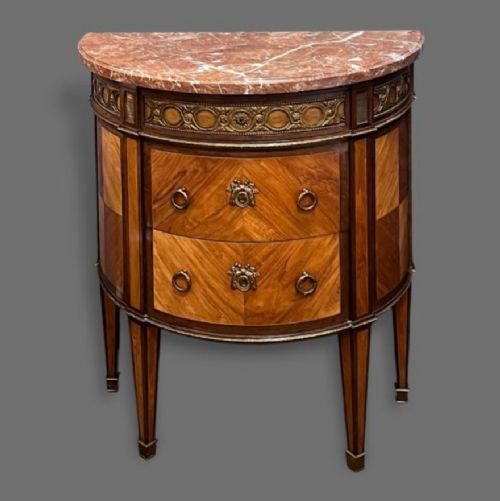
- Demi-lune
- A half-moon shape used for console tables and cabinets designed to stand flat against a wall. Such pieces often incorporate curved drawers matching the frame.
Walnut Marble Commode: Frequently Asked Questions
How do I clean the marble top?
Wipe the stone surface using a soft cloth dampened with warm water and mild soap.
Avoid harsh acidic cleaners that can etch or dull the polished marble finish over time.
Can I use a commode as a bedside table?
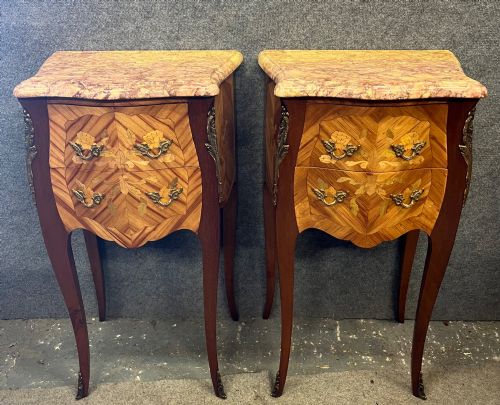
Many smaller versions and bedside cabinets listed here function well beside a bed for enclosed storage.
Verify the height and dimensions of the piece against your bed frame before purchasing.
How do I identify burr walnut?
Burr walnut displays swirling, knotty grain patterns created from tree growths rather than straight timber boards.
This highly figured veneer was favoured for high-status cabinet fronts and top panels.