


Parquetry Walnut Sideboard
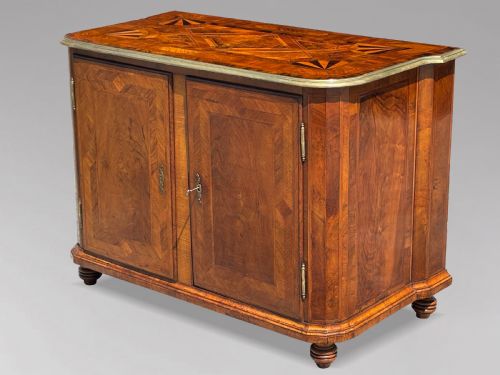
A parquetry walnut sideboard brings geometric wood patterns and rich brown tones together in a substantial storage piece.
Parquetry Walnut Sideboard
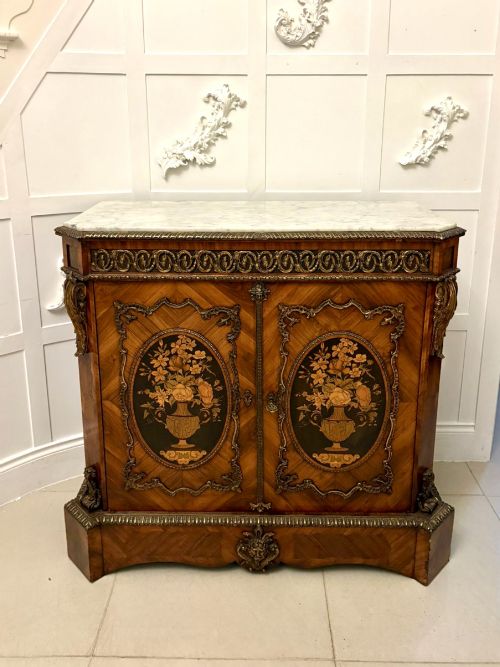
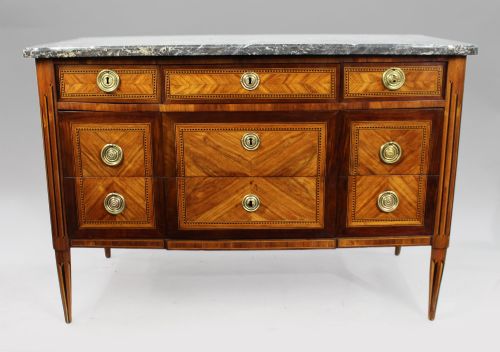
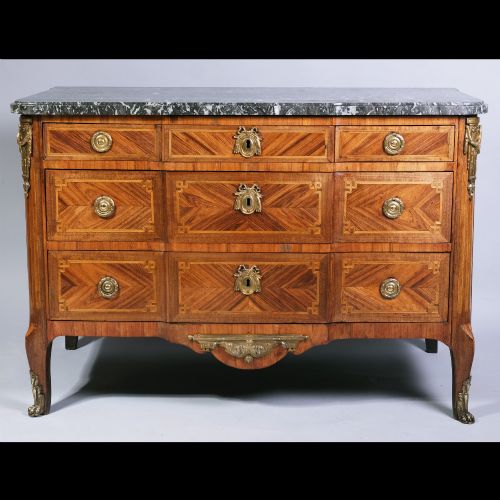
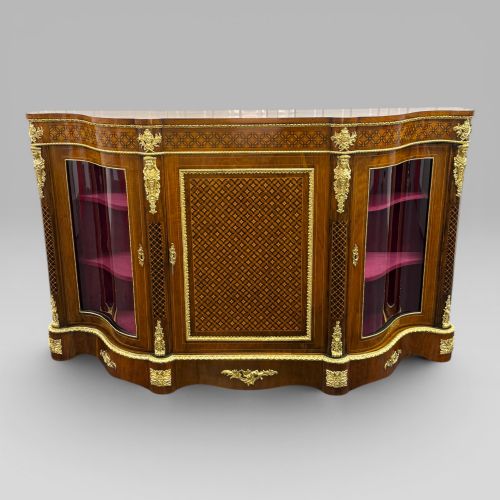
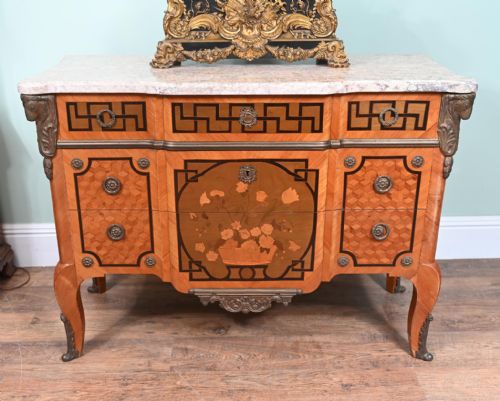
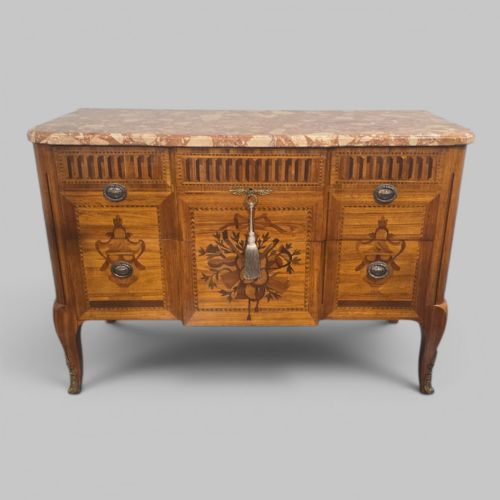
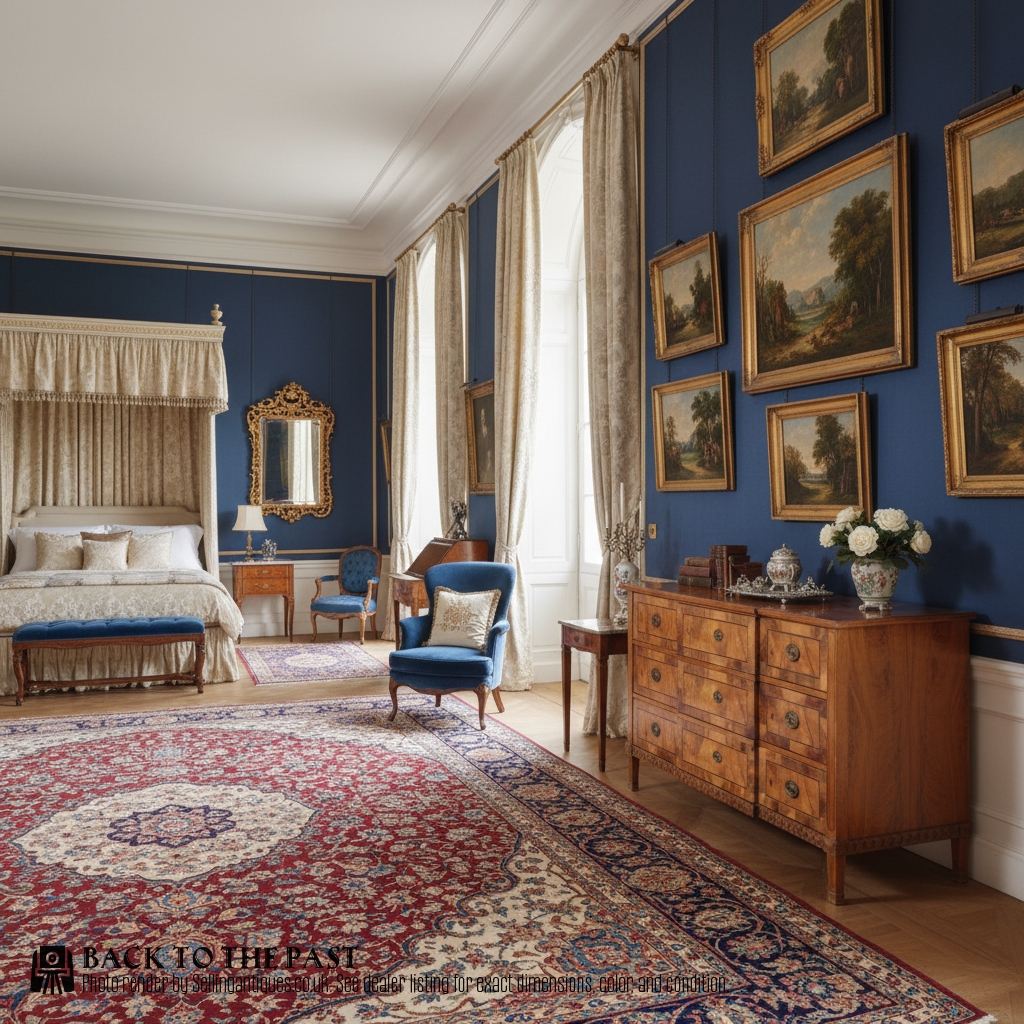
A parquetry walnut sideboard combines the rich grain of walnut with precise geometric wood inlay, serving as both a functional storage unit and a decorative focal point in a room. These pieces appear in forms such as commodes, credenzas, and buffet sideboards across periods including the eighteenth century, the Victorian era, and the early twentieth century.
The styles range from French Louis XV and Louis XVI to Baroque and Art Deco, reflecting European design shifts from ornate curves to more restrained neoclassical lines. Buyers encounter continental pieces featuring marble tops, brass fittings, and ormolu mounts alongside simpler wooden chests.
Maltese, Austrian, Italian, and French origins dominate the selections, demonstrating regional variations in cabinet-making traditions. The most common manifestations on this page take the form of marble-topped commodes and side cabinets utilising intricate wood inlay.
Materials and construction
Makers built these pieces using solid walnut and fruitwood timbers as a structural base, applying fine veneers in geometric parquetry patterns across the exterior surfaces. Wood inlay and marquetry added contrasting tones and pictorial details, often combining kingwood with walnut to create depth.
Heavy slabs of marble formed the top surface on many continental examples, requiring robust joinery in the main cabinet body to support the stone weight. Ormolu, brass, and glass elements completed the construction, providing decorative mounts and protective surfaces.
Some nineteenth-century makers hid small secret drawers behind decorative mouldings to guard family valuables from curious guests.
Determinants of quality
Quality rests upon the precision of the wood inlay and the alignment of the parquetry geometric patterns across the drawers and doors. Finer examples display seamless integration of veneers without lifting, while lesser pieces show gaps or hasty repairs in the wood grain.
The presence of heavy, well-cast ormolu mounts and thick, original marble tops elevates a piece above standard utilitarian cabinets. Master workshops applied greater attention to the interior secondary woods and the fluidity of serpentine or bombe forms.
Maison Gagneau·Jules Leleu
The Parquetry Walnut Sideboard Glossary
- Parquetry
- Geometric mosaic woodwork formed by small pieces of veneer fitted together to create patterns like cubes or chequers. This technique decorates the main exterior surfaces of the cabinet.
- Ormolu
- Gilded bronze mounts applied to furniture for decorative effect, particularly prominent on French styles. These metal elements frame drawers and highlight corners.
- Commode
- A low chest of drawers, often with marble tops, which serves a similar function to a sideboard in European interiors. These pieces form a large portion of the available inventory.
- Marquetry
- The art of applying pieces of veneer to a structure to form decorative pictures or scrolling designs. It differs from parquetry through its use of curved and pictorial motifs.
- Bombe
- A swelling, outward-curving contour found on the front and sides of certain cabinet designs. This silhouette requires advanced woodworking skill to execute properly.
Parquetry Walnut Sideboard: Frequently Asked Questions
How do I clean a marble top?
Wipe the marble surface gently using a soft cloth dampened with warm water and mild, pH-neutral soap. Avoid acidic cleaners, vinegar, or harsh chemicals that can etch or dull the stone finish.
Dry the marble thoroughly with a clean towel to prevent water spots. For persistent marks, consult a professional restorer rather than using abrasive scrubbing pads.
Where should I place a sideboard?
Position the piece against a sturdy interior wall in a dining room, hallway, or living space where humidity and temperature remain stable. Ensure it sits away from direct heat sources and strong sunlight to protect the walnut veneer and wood inlay.
Allow sufficient clearance around doors and drawers for smooth daily operation. A central location helps balance the visual weight of heavy marble tops and ormolu mounts.
How do I identify a Louis XV style?
Look for characteristic asymmetrical curves, cabriole legs, and elaborate floral marquetry or rococo bronze mounts. These pieces emphasise organic shapes and flowing lines rather than straight architectural borders.
Examine the hardware and the sweep of the commode front. Authentic period indicators include hand-cut dovetails and older secondary woods behind the decorative exterior.
Are these pieces suitable for daily use?
These cabinets offer practical surface areas and drawer storage that function well in modern homes. Use coasters and felt pads beneath objects to protect the antique wood and marble finishes from scratches.
Treat the drawers with care and avoid overloading them to preserve the antique joinery. Regular gentle polishing maintains the lustre of the walnut and parquetry.