




Grey Marble Chest Drawers
Grey marble chest drawers pieces unite heavy stone tops with timber frames, offering a grounded surface and deep storage for any bedroom.
Grey Marble Chest Drawers
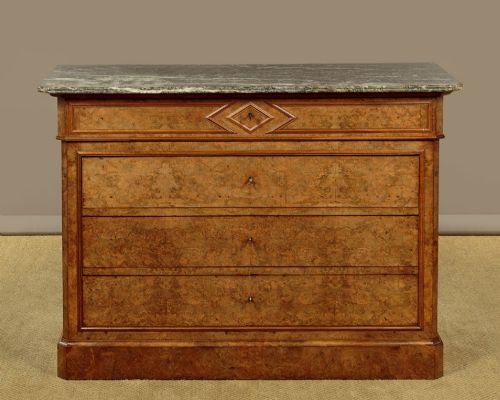
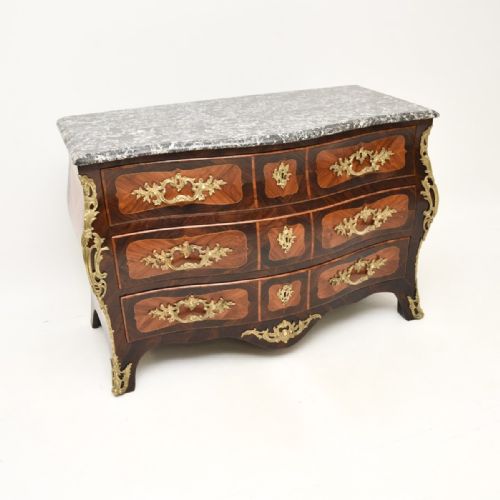
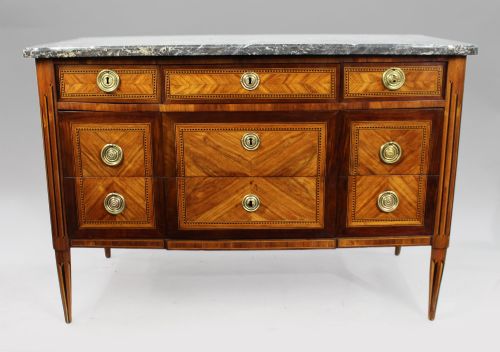
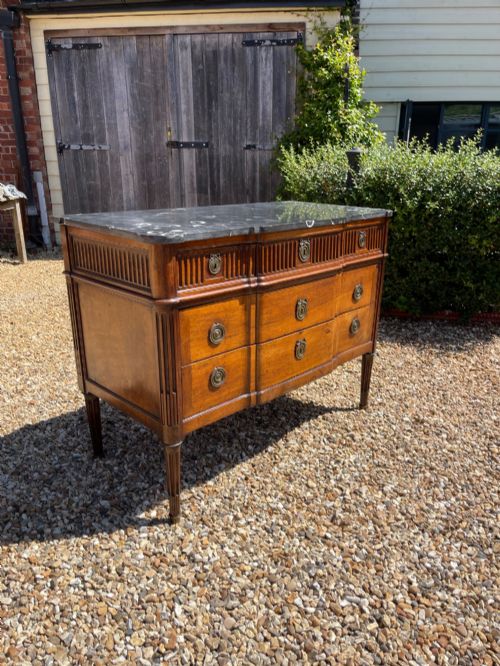
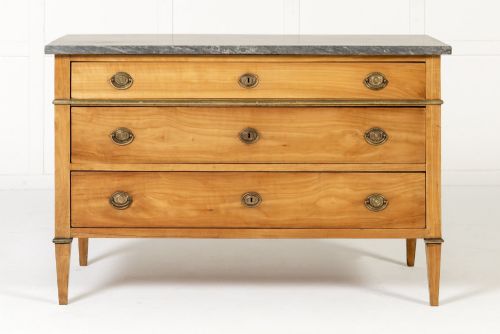
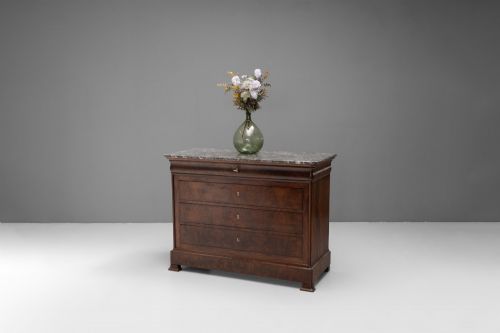
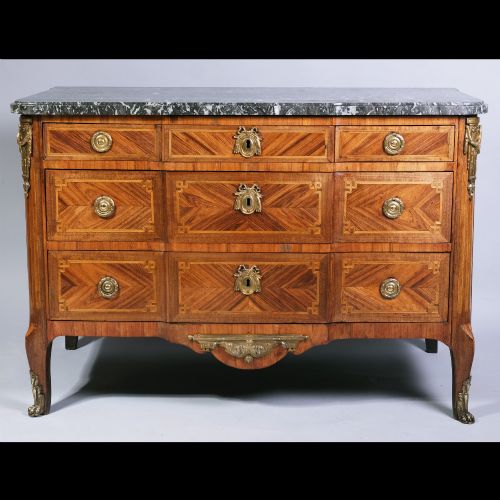
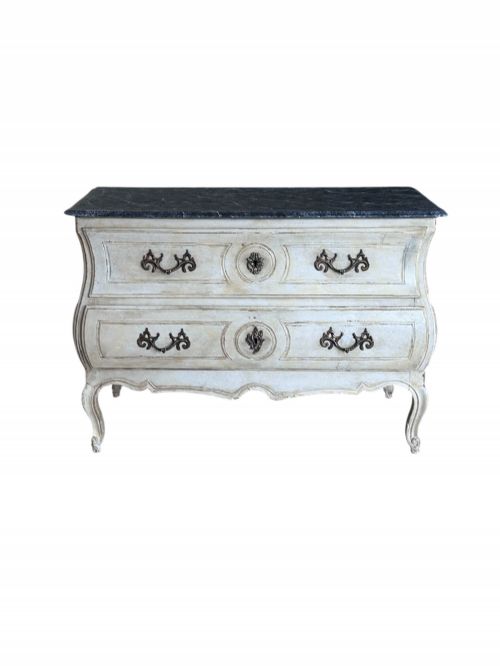
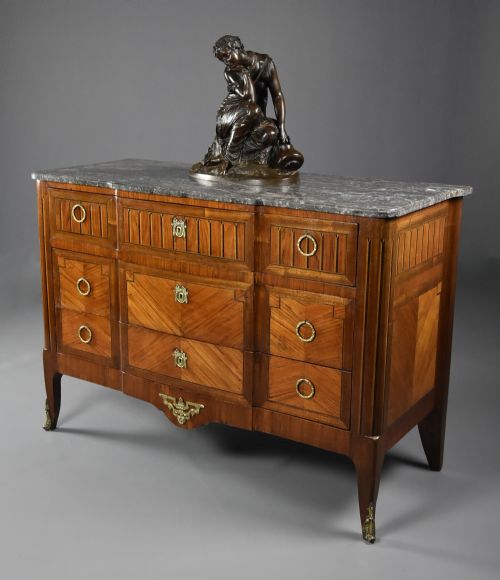
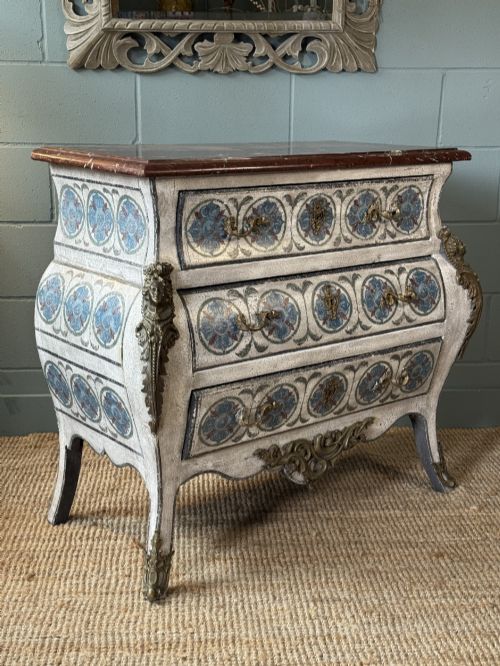
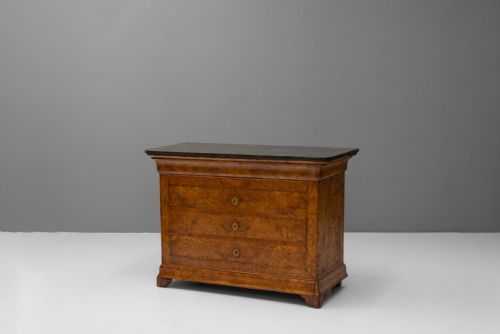
Grey marble chest drawers examples on this page are predominantly French commodes and chests spanning the eighteenth, nineteenth, and early twentieth centuries. These pieces function as low storage units topped with thick slabs of stone, most often configured with three to four main drawer rows.
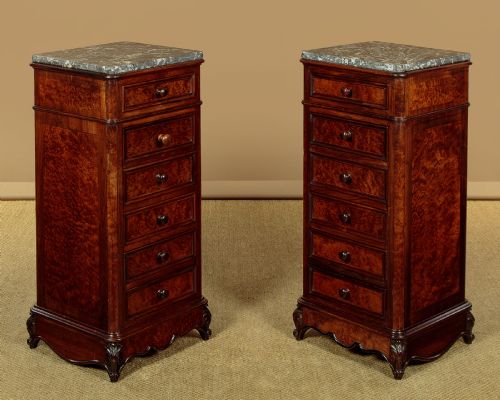
The regional styles vary from provincial cherrywood and painted oak to refined walnut parquetry, mahogany, and burr elm. Buyers frequently encounter Louis Philippe, Louis XV, and Louis XVI designs alongside simpler continental bedside pedestals and semainiers.
How they were made
Cabinetmakers constructed the foundational carcases using local timbers such as walnut, mahogany, cherrywood, and elm, often applying delicate veneers, tulipwood inlay, or parquetry patterns. Ormolu mounts and brass hardware frequently accent the structural joints and drawer fronts.
Heavy marble slabs, selected for their grey tones, were dressed to fit precisely over the timber frame and secured by their own weight. Painted wood and faux marble alternatives also appear across the selection, mirroring the appearance of solid stone.
Listings span the eighteenth to the twentieth centuries, featuring walnut, mahogany, cherrywood, and marble.
What varies in quality
Quality rests upon the harmony between the timber carcase and the density of the stone top, alongside the precision of the cabinet work. Pieces featuring finely matched walnut parquetry or flame mahogany veneer demonstrate superior artisan skill.
The integrity of the original marble slab and the refinement of cast ormolu mounts elevate an example above standard utility pieces. Finer specimens retain their original hardware and structural stability across decades of use.
Jacques Bircklé
The Grey Marble Chest Drawers Glossary
- Semainier
- A tall, narrow chest traditionally designed with seven drawers, one for each day of the week. These pieces often feature marble tops.
- Parquetry
- Geometric wood inlay patterns applied to the exterior carcase. Artisans used contrasting timbers to create decorative surfaces.
- Ormolu
- Gilded bronze applied as decorative mounts on furniture feet, corners, and drawer pulls. It provides a bright metallic contrast to dark woods.
- Bombe
- A swelling, outward-curving chest profile popular in eighteenth-century continental design. This silhouette requires advanced joinery to shape the timber accurately.
Grey Marble Chest Drawers: Frequently Asked Questions
How do I clean grey marble?
Wipe the surface gently with a soft cloth dampened in warm water. Avoid acidic cleaners that etch the stone.
Dry the marble thoroughly with a clean towel to prevent water spots from forming on the polished finish.
Are marble tops removable?
Most stone slabs simply rest on the timber carcase without permanent fixings. Their substantial weight keeps them stable during normal use.
Lift the slab straight up with assistance if you need to lighten the chest for moving.
Where should I place this chest?
These pieces suit bedrooms, living rooms, and hallways as functional storage surfaces. The stone top withstands daily decorative use.
Keep the timber away from direct heat sources to prevent veneer shrinkage or cracking.
How do I date a commode?
Examine the timber construction, drawer dovetailing, and hardware styles. Regional characteristics also point toward specific centuries.
Compare the veneer types and decorative motifs against known historical periods like Louis Philippe or Louis XVI.