
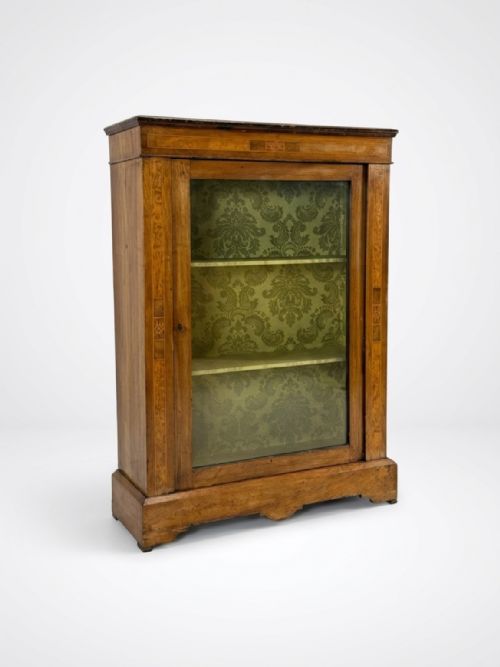
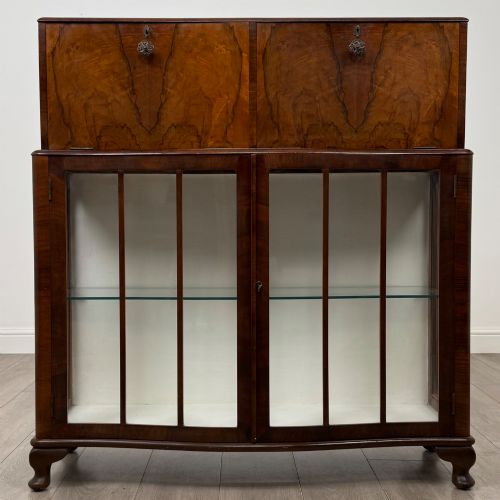
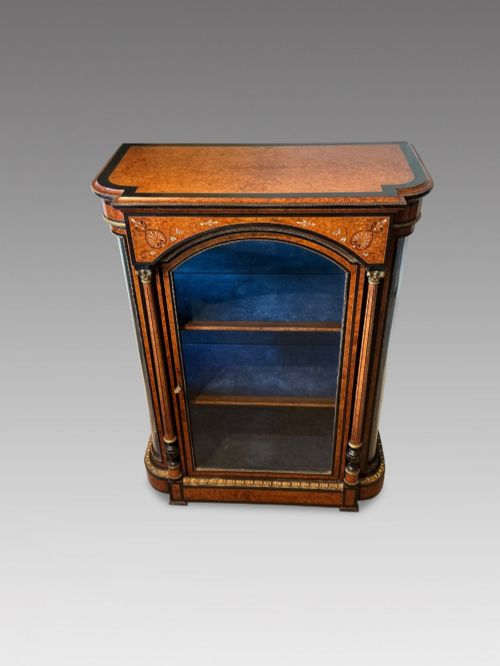
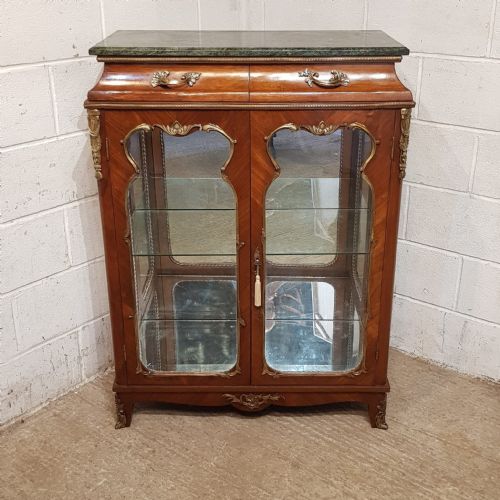


Walnut Glass Front Cabinet
A walnut glass front cabinet brings rich grain and clear panes together, holding books or display pieces with quiet presence.
Walnut Glass Front Cabinet
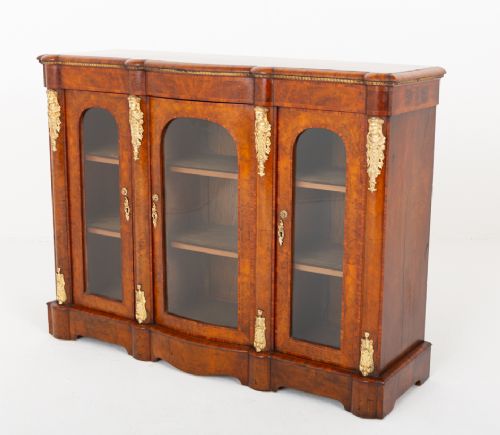
A walnut glass front cabinet encompasses a variety of timber furniture designed to showcase and protect possessions behind glazed doors. These pieces span centuries of cabinet-making, with Victorian and Edwardian examples appearing most frequently alongside earlier continental interpretations.
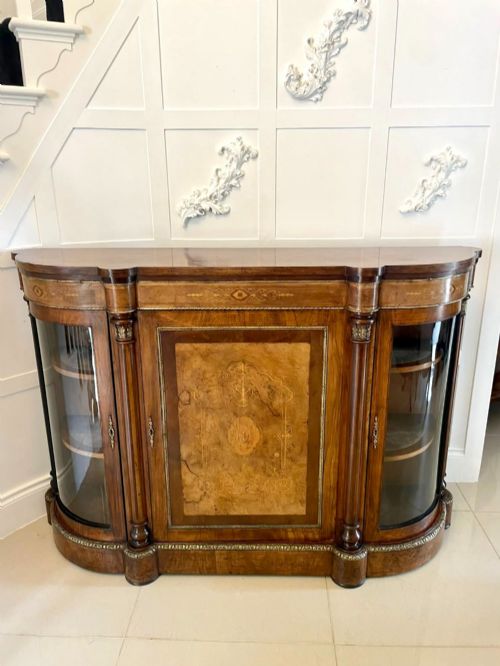
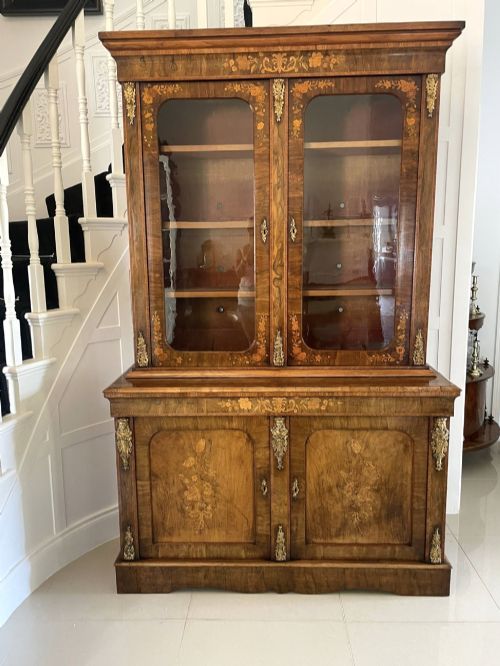
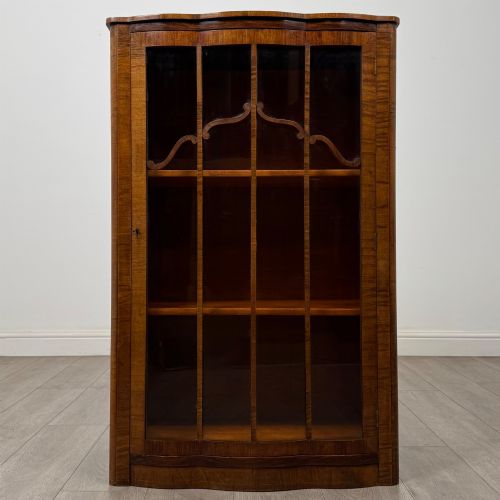
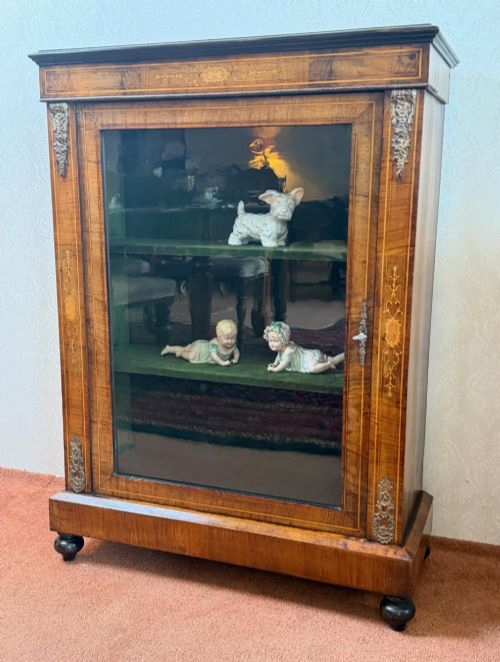
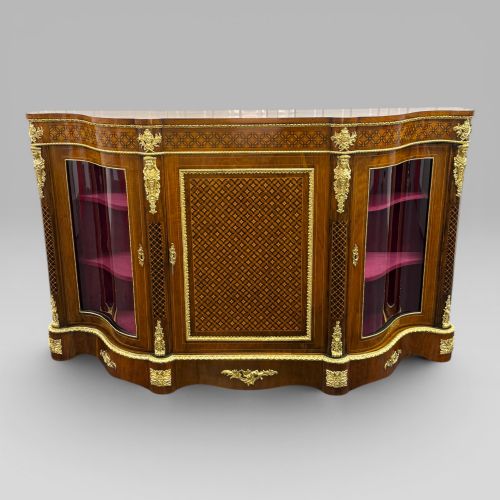
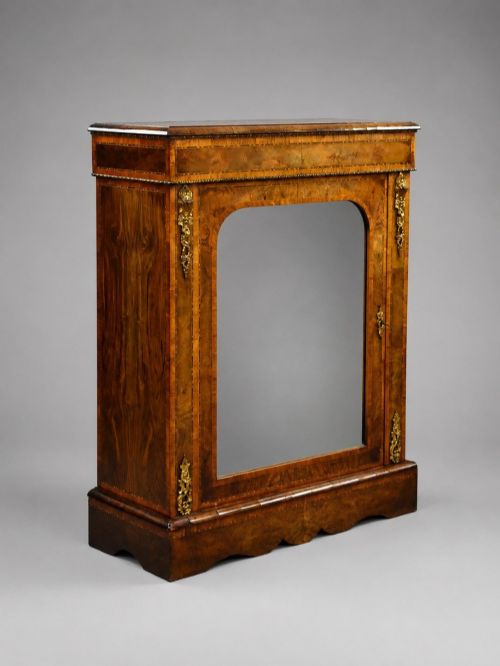
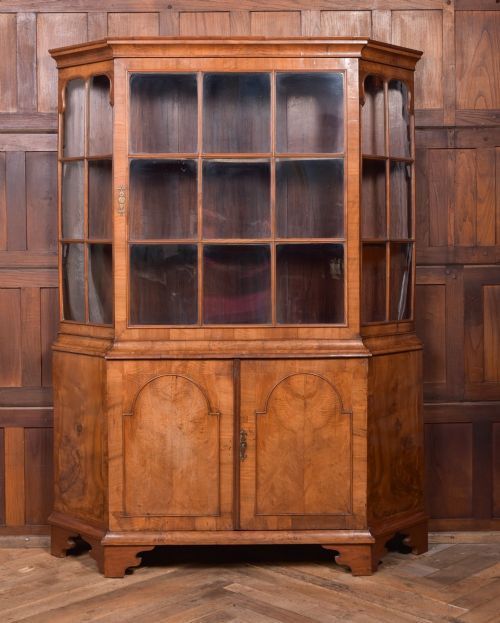
The category covers distinct architectural forms, from low pier cabinets and serpentine credenzas to tall bookcases and corner cupboards. Buyers encounter these items configured for specific domestic uses, such as displaying collections or storing volumes in a drawing room.
Materials and Technique
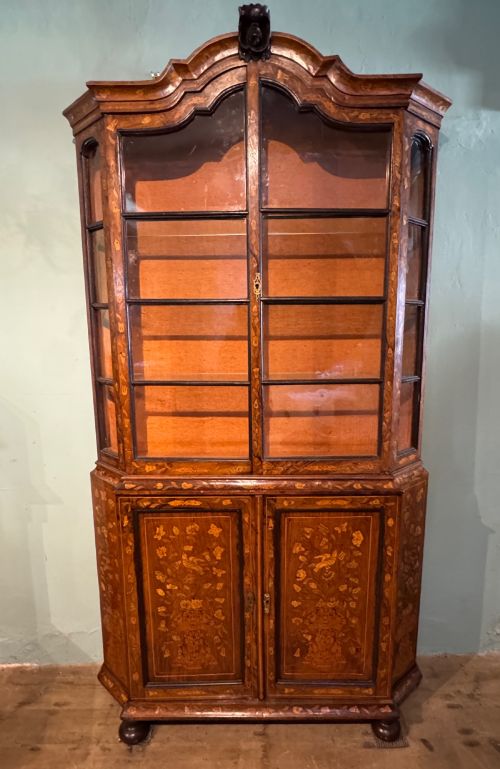
Carpenters utilised solid walnut and figured burr veneers over secondary timbers, often framing the primary surfaces with boxwood inlay or crossbanding. Cabinet makers applied these decorative veneers to create symmetrical grain patterns across large flat expanses and curved doors.
Metal mounts in ormolu and brass frequently accent the timber construction, while velvet or fabric lines the internal display spaces. Glazing bars divide the glass panels into geometric or curved panes, securing the transparent frontage within the wooden frame.
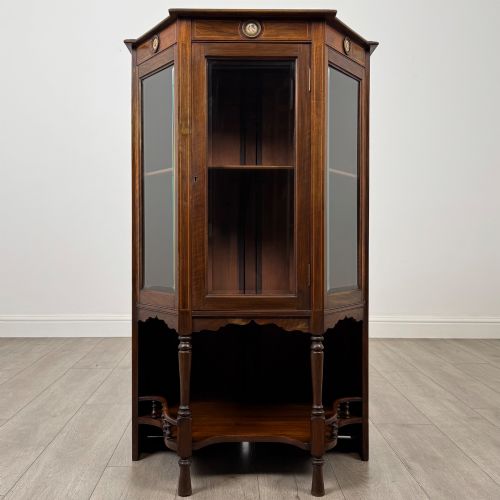
Listings feature walnut glass front cabinets spanning from the eighteenth to the twentieth century, incorporating Victorian, Edwardian, and Art Deco eras.
Judging Quality
The choice of veneer sets the baseline for visual impact, with figured burr walnut and intricate marquetry marking the more ambitious examples. Plain walnut surfaces rely purely on timber selection and proportion rather than applied ornamentation to hold the eye.
Integration of secondary materials dictates the refinement of the piece, from the crispness of ormolu mounts to the precision of inlaid stringing. Structural articulation, such as serpentine fronts and curved glass, demands greater joinery skill than flat-fronted carcases.
Maison Gagneau·Heals
The Walnut Glass Front Cabinet Glossary
- Burr walnut
- Timber taken from the warted growths on walnut trees, yielding highly figured, swirling grain patterns. Cabinet makers prized this wood for veneering primary display surfaces.
- Credenza
- A low cabinet, frequently serpentine or bow-fronted, designed for dining rooms or parlours. These often feature central glazed doors flanked by cupboards.
- Marquetry
- The art of forming decorative patterns by fitting together small pieces of veneer. Craftsmen utilised diverse woods to create floral or geometric motifs.
- Ormolu
- Gilded bronze mounts applied to furniture for decorative enrichment. Makers cast and chased these metal elements to accent corners and borders.
- Pier cabinet
- A narrow display cabinet built to stand against the wall space between windows. These vertical pieces typically house glazed doors for porcelain or curiosities.
- Vitrine
- A glass-sided display cabinet intended for the exhibition of small objects. This form prioritizes maximum visibility through glazed panels on multiple sides.
Walnut Glass Front Cabinet: Frequently Asked Questions
What is a walnut glass front cabinet used for?
These cabinets serve primarily to display china, books, or collections while protecting them from dust behind glass doors. They function as focal points in reception rooms, combining storage with decorative presentation.
Historically, they housed precious porcelain, scientific instruments, or treasured volumes. Today, owners utilise them in living spaces and studies for similar purposes.
How do I date a walnut glass front cabinet?
Dating relies on architectural style, construction methods, and timber choice. Victorian pieces often feature heavy burr walnut and marquetry, whereas Edwardian examples tend towards lighter figured veneers.
Examining the interior timbers, backboards, and glass manufacturing characteristics provides further chronological clues. Hand-cut dovetails and older screw types point firmly to nineteenth-century manufacture or earlier.
Are walnut glass front cabinets fragile?
The primary structure remains robust, but the extensive use of veneer and glass requires careful handling. Burr walnut can be sensitive to direct sunlight and rapid humidity changes.
Moving these pieces necessitates removing internal glass shelves and securing doors to prevent twisting. Regular maintenance involves gentle cleaning of the timber and glass without harsh chemicals.
How do I style a walnut glass front cabinet?
Balance the dark, figured timber by curating the items placed inside the glazed section. Limiting clutter allows the grain patterns of the walnut and the internal objects to complement each other.
Position the cabinet away from direct heat sources and strong sunlight to preserve the finish. Pairing the piece with neutral walls lets the rich brown tones of the wood stand out.