

Inlaid Display Case
When you search for an inlaid display case, you find timber cabinetry designed to hold and protect treasured objects behind glass.
Inlaid Display Case
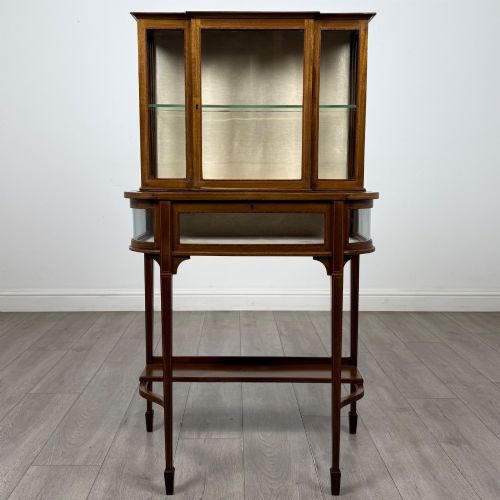
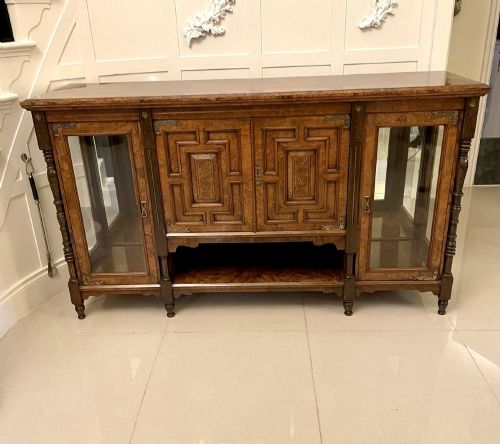
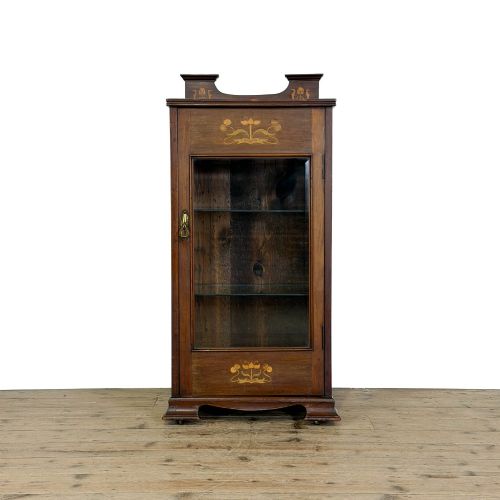
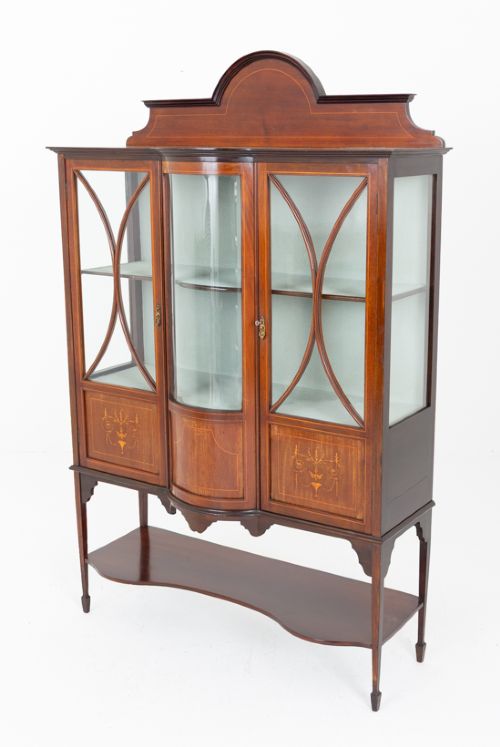
An inlaid display case serves to present porcelain, books, and decorative items within glazed compartments while exhibiting decorative woodworking. These pieces range from compact pier cabinets and corner units to large credenzas and bookcases spanning the Victorian and Edwardian periods.
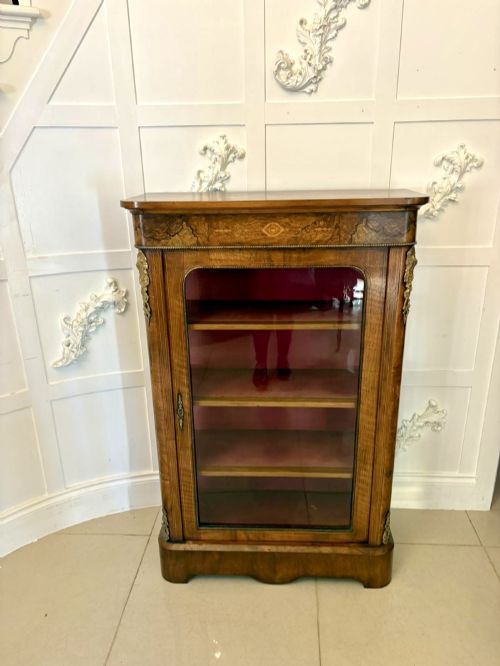
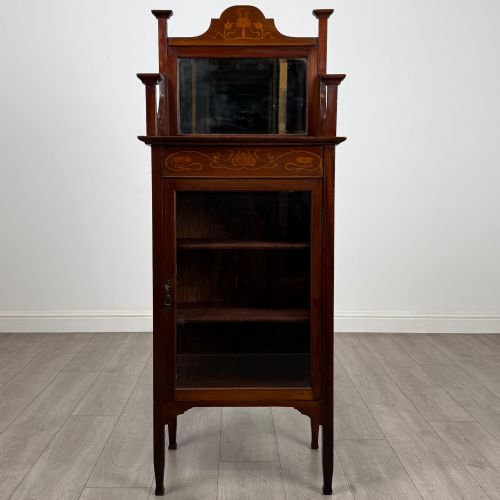
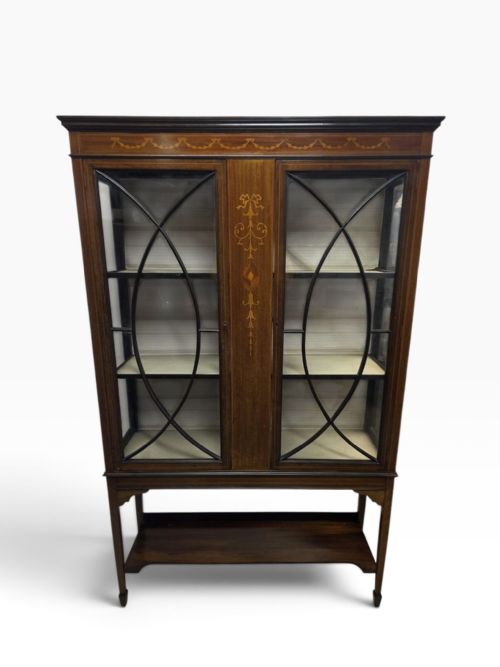
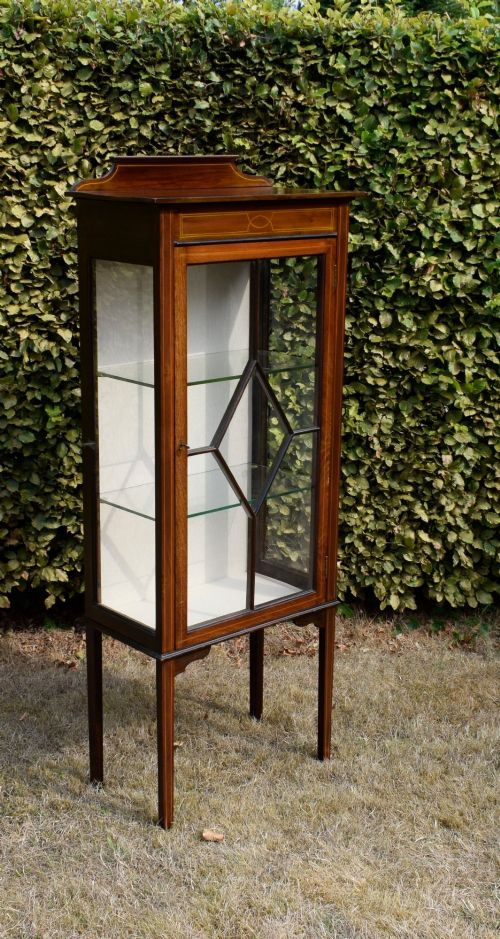
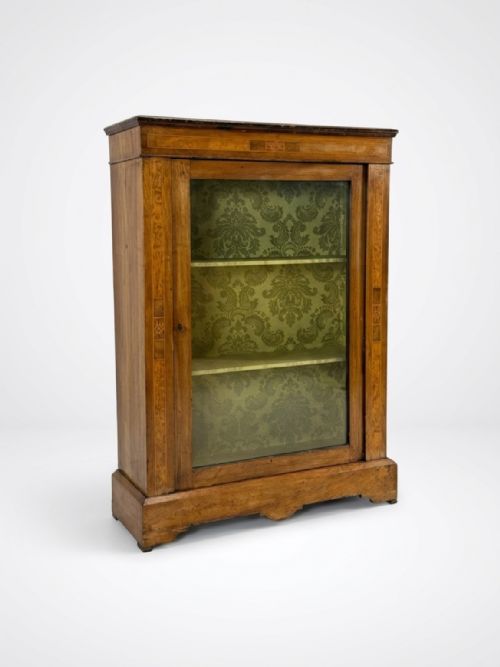
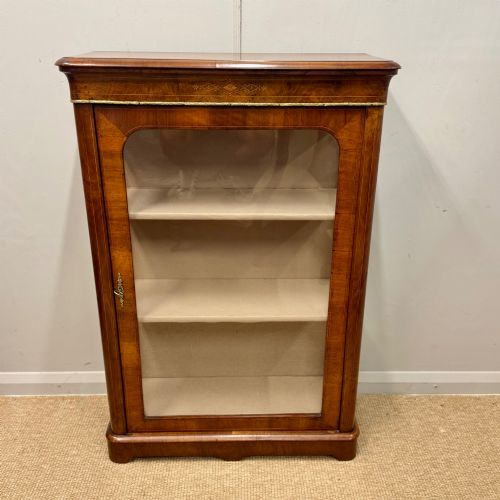
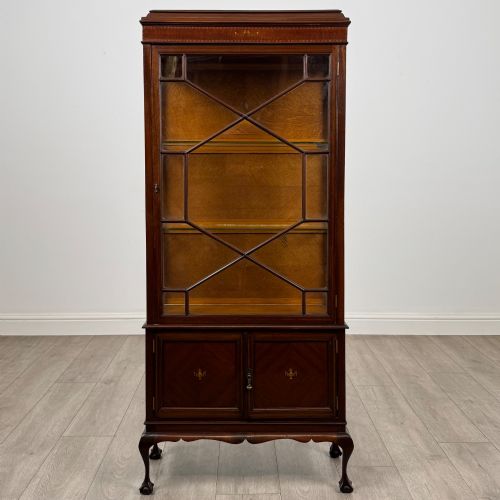
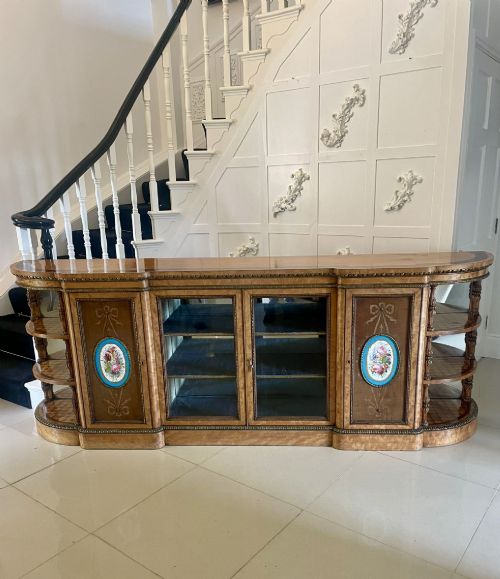
The Edwardian mahogany model forms the most common type encountered here, often featuring Sheraton Revival styling and delicate stringing. Alongside these sit Victorian walnut pier cabinets and larger satinwood or burr walnut creations decorated with marquetry.
Forms include freestanding floor cabinets, wall-mounted cupboards, and low table-height bijouterie cases designed for tabletop viewing. Their origins span English workshops alongside Dutch and Italian examples utilising regional cabinetry traditions.
Materials and construction methods
Makers built carcass structures primarily using solid mahogany, walnut, or satinwood, frequently applying veneers of burr walnut, flame mahogany, or amboyna to the primary surfaces. Contrasting timbers such as satinwood, boxwood, and ebony formed intricate marquetry panels and linear bandings.
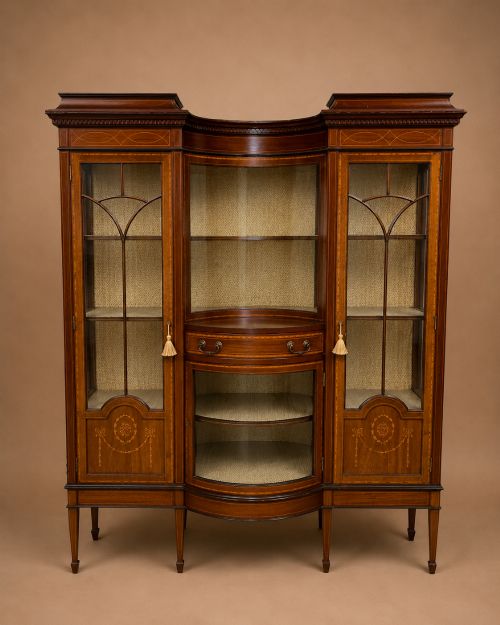
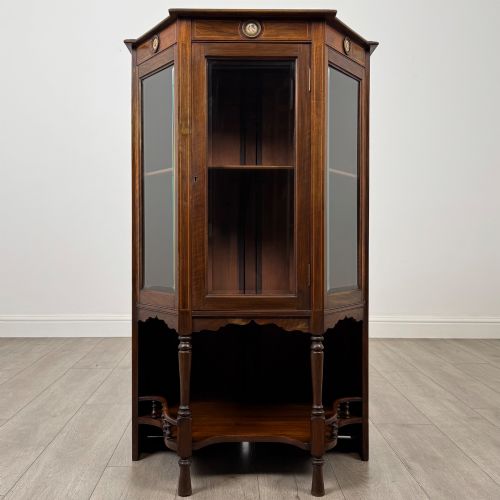
Glass panels were fitted into wooden door frames, sometimes curved in bow-front or serpentine examples, and secured with glazing bars. Metalwork played a supporting structural and decorative role, with brass hardware and cast ormolu mounts framing doors and corners.
Listings feature mahogany, walnut, and satinwood alongside specialised glass-fronted forms spanning the Victorian and Edwardian eras.
Factors determining quality
Quality rests upon the precision of the timber selection and the complexity of the marquetry work. Finer examples display carefully matched veneer grains and multi-timber floral or classical inlays executed with sharp definition.
The integration of metal mounts, such as fire-gilded ormolu, and the finesse of the glazing bars indicate the tier of the workshop. Superior execution appears in the fluidity of curved glass doors and the refinement of internal shelving provisions.
Lamb of Manchester·James Hicks·EDWARDS and ROBERTS·Maple and Co
The Inlaid Display Case Glossary
- Marquetry
- A decorative technique where thin veneers of various woods are assembled into pictorial or symmetrical patterns. This method covers flat surfaces on doors and friezes.
- Pier Cabinet
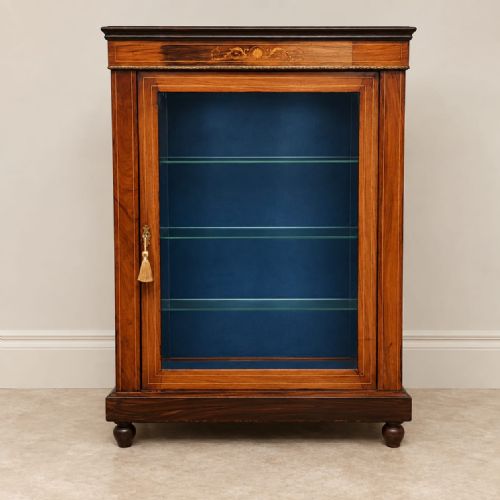
- A narrow freestanding cabinet designed to fit the wall space between windows. These upright pieces typically feature a single glazed door and velvet-lined interior shelves.
- Ormolu
- Cast bronze finished with a gold-coloured mercury amalgam, used for decorative mounts and feet. This material appears on high-status Victorian and Continental pieces.
- Sheraton Revival
- A late nineteenth and early twentieth-century design movement inspired by late eighteenth-century neoclassical furniture. Pieces in this style utilise satinwood, delicate stringing, and tapered legs.
- Bijouterie Case
- A glazed tabletop or pedestal display case intended for small valuables, medals, and jewellery. The interior is generally lined with fabric to cushion the contents.
- Stringing
- Thin lines of contrasting timber inlaid into grooves on drawer fronts, tabletops, and cabinet doors. This linear detail defines the edges of panels.
Inlaid Display Case: Frequently Asked Questions
What went inside an inlaid display case?
These cabinets housed fine porcelain, china services, leather-bound library books, and small personal collections. Owners used them in drawing rooms and parlours to showcase items of social standing.
Interior shelving held the displays upright behind glass doors, keeping dust away from delicate ceramics and paper goods while maintaining full visibility.
How do I date an Edwardian display case?
Edwardian examples, largely produced between nineteen hundred and the First World War, typically show lighter timbers like satinwood and lighter mahogany. They frequently employ Sheraton Revival motifs and symmetrical line inlay.
Comparison with earlier Victorian pieces reveals a shift away from dark, heavy burr walnut toward brighter, more slender proportions influenced by eighteenth-century neoclassical revivals.
Where should I place a pier cabinet?
Pier cabinets suit narrow wall sections, hallways, or drawing-room perimeters where floor space is limited. Their shallow depth allows them to stand against walls without obstructing pathways.
Positioning them away from direct sunlight protects both the polished timber veneer and any textile linings on the internal shelves from fading.
What is the difference between a vitrine and a pier cabinet?
A vitrine is a glass-fronted or fully glazed cabinet intended primarily for displaying objects from multiple angles, often with glass side panels. A pier cabinet is a specific upright timber cupboard designed for a wall pier.
While pier cabinets frequently incorporate solid wooden sides and a single glazed door, vitrines maximise transparency through all-glass construction.