





Walnut Floral Marquetry Bureau
A walnut floral marquetry bureau brings together rich timbers and intricate floral inlays into a practical writing piece.
Walnut Floral Marquetry Bureau
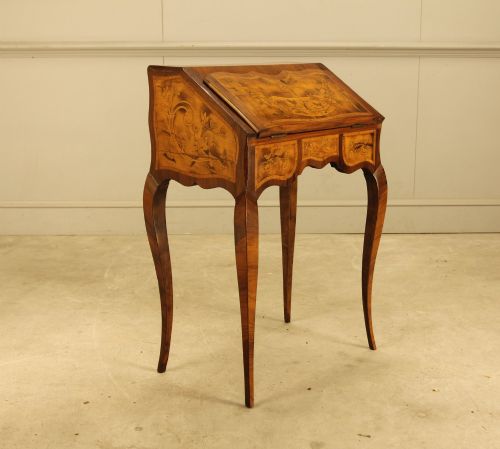
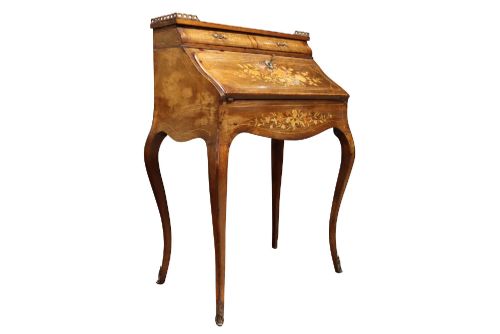
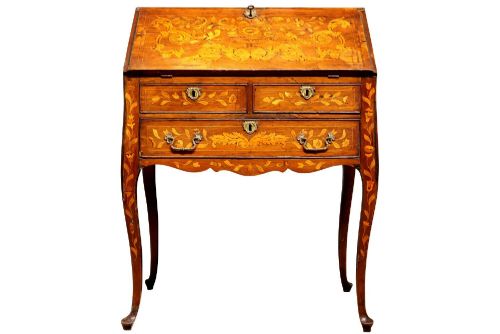
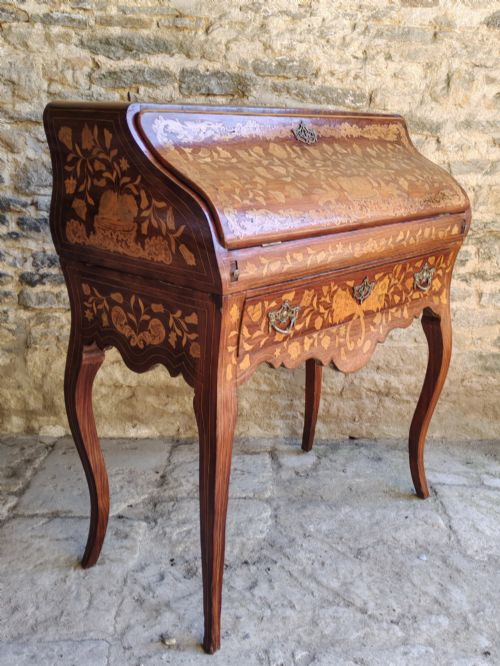
A walnut floral marquetry bureau combines a fitted writing compartment with elaborate plant and flower inlays set into the wood. Buyers searching this phrase typically encounter 18th century and 19th century forms, frequently associated with Dutch and French workshops.
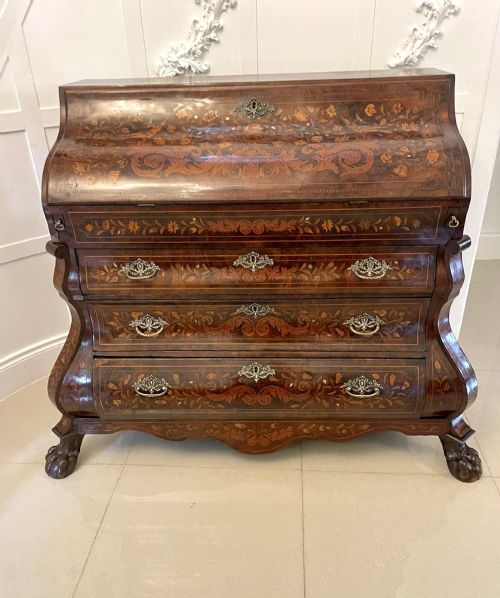
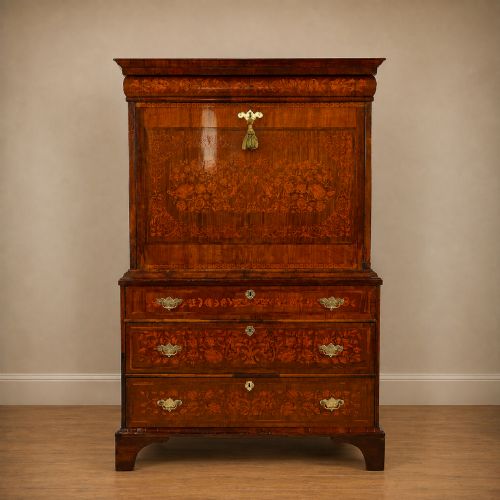
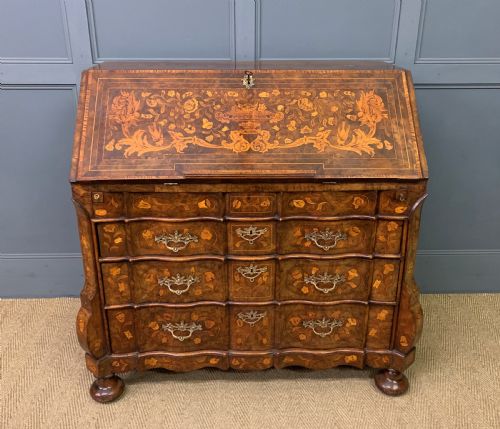
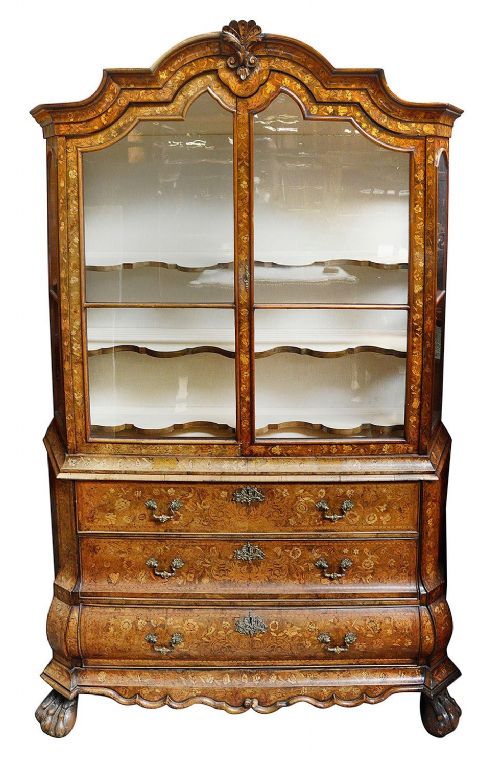
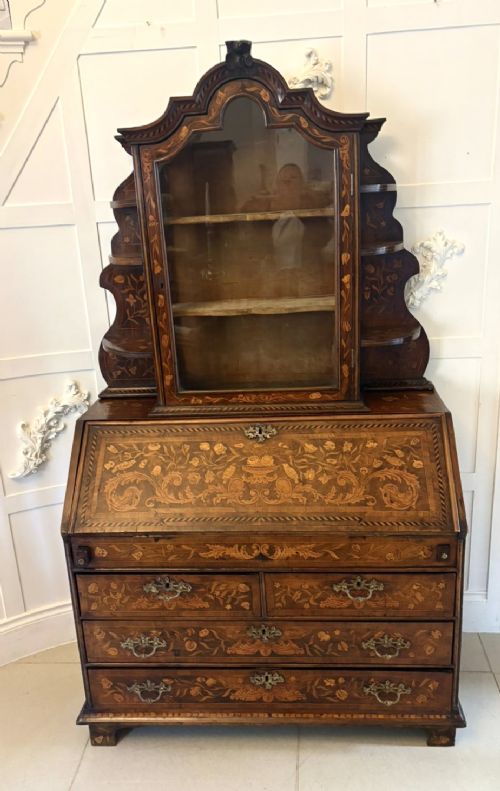
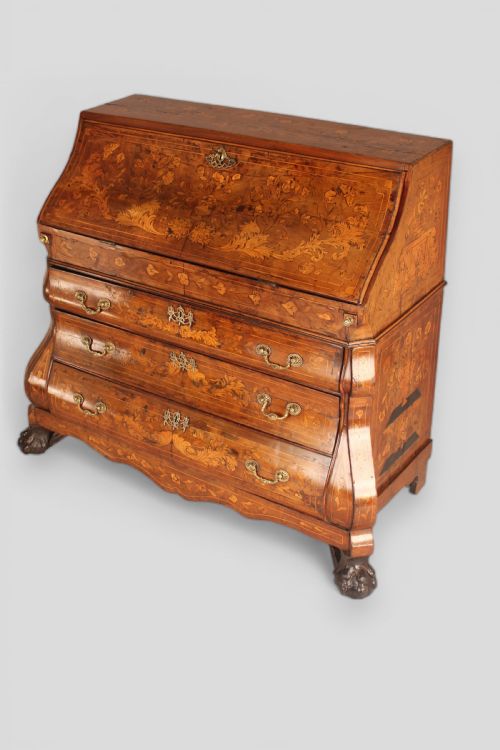
The selection here spans standard drop-front writing desks, larger bureau bookcases, and bombe shaped cabinets featuring swelling lower drawers. These items served as private spaces for correspondence and record keeping in wealthy homes.
Most examples rely on walnut and burr walnut as the primary background timbers, decorated with contrasting fruitwood inlays forming elaborate floral sprays, urns, and scrolling foliage.
How they were made
Cabinet makers constructed the carcases from solid walnut or pine framing, applying veneers of burr walnut to achieve rich grain patterns across the main surfaces. Thin slices of fruitwood and other contrasting timbers were meticulously cut and fitted by hand to form the intricate floral marquetry panels.
Brass handles, escutcheons, and occasional ormolu mounts were cast and hand-chased to complement the dark wood tones and bright inlaid details. Internal compartments often involved secondary woods like oak or pine for drawer linings and pigeonhole dividers.
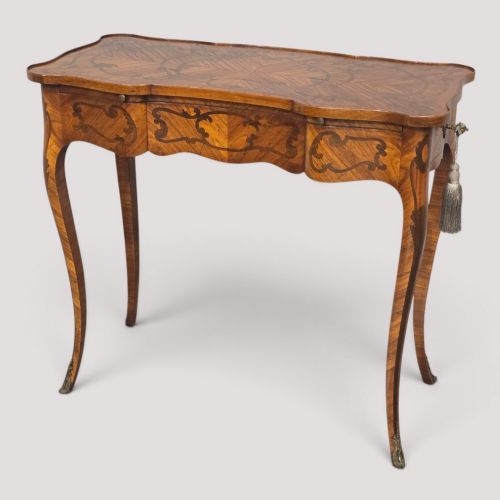
The archive includes bureau-plat writing tables alongside standard drop-front writing desks.
What varies in quality
The distinction between standard examples and top-tier pieces rests upon the precision of the marquetry cutting and the choice of burl timber. Finer pieces demonstrate exceptional depth in the floral shading, achieved by scorching veneer edges in hot sand.
Structural harmony also dictates quality, particularly where the bombé contour of the lower chest meets the crisp geometry of the interior writing flap. Superior examples maintain crisp lines and continuous inlay alignment across the moving joints and drawer fronts.
Morison of Edinburgh·Paul Sormani
The Walnut Floral Marquetry Bureau Glossary
- Marquetry inlay
- A decorative technique where small pieces of veneer are assembled into picture patterns and glued to a carcase. This forms the characteristic floral designs seen across these desks.
- Bombe
- A bulging, outward-curving shape found on the front and sides of certain cabinet furniture. It requires considerable skill from the woodworker to shape the drawers and frame.
- Burr walnut
- Timber taken from the abnormal growth of a walnut tree, yielding highly swirled and mottled grain patterns. It provides a dramatic background for floral marquetry.
- Bureau bookcase
- A writing desk combined with an upper shelving or display section enclosed by doors. These tall items dominate a room and offer extensive storage.
- Secretaire
- A piece of furniture containing a drawer or flap that drops down to form a writing surface. These often conceal numerous small drawers and pigeonholes inside.
Walnut Floral Marquetry Bureau: Frequently Asked Questions
What is a walnut floral marquetry bureau?
It is a traditional writing desk featuring a sloping front that opens to reveal internal compartments, decorated all over with intricate floral designs in contrasting wood veneers.
These pieces usually date from the eighteenth and nineteenth centuries, originating primarily from Dutch and French cabinet makers who specialised in elaborate surface decoration.
How were these desks used historically?
Owners used them for private correspondence, storing important documents, and managing household accounts behind a locked drop-front flap.
The fitted interior compartments held inkwells, quills, and stationery, while the main writing surface provided a convenient slant for daily letter writing.
How do I distinguish eighteenth century examples?
Eighteenth century pieces typically display heavier carcase construction in solid walnut and burr walnut, combined with natural fruitwood tones in the floral inlays rather than stained or dyed woods.
They also tend to feature hand-cut dovetailing in the interior drawers and simpler, more robust brass hardware appropriate to the Georgian or Dutch Baroque periods.
Where should I place a bureau in a modern room?
Because of their decorative front panels and rich wood tones, these desks work well as focal points in studies, living rooms, or large hallways.
Keeping them out of direct sunlight helps protect the delicate fruitwood veneers and prevents the burr walnut from drying out over time.