

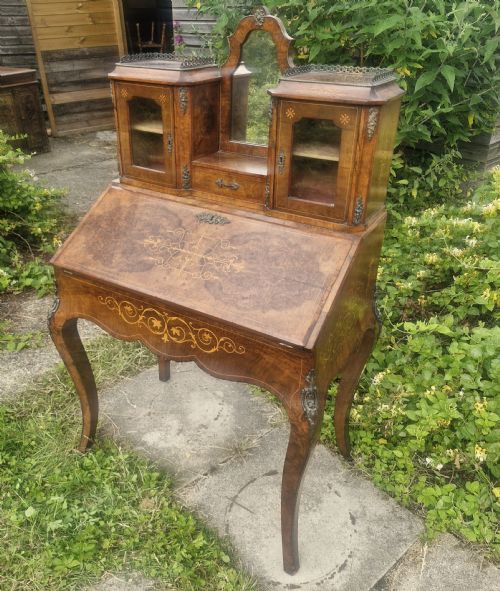


Walnut Escritoire Desk
A walnut escritoire desk brings architectural presence and concealed writing surfaces into a room, prized for figuring and drop-front compartments.
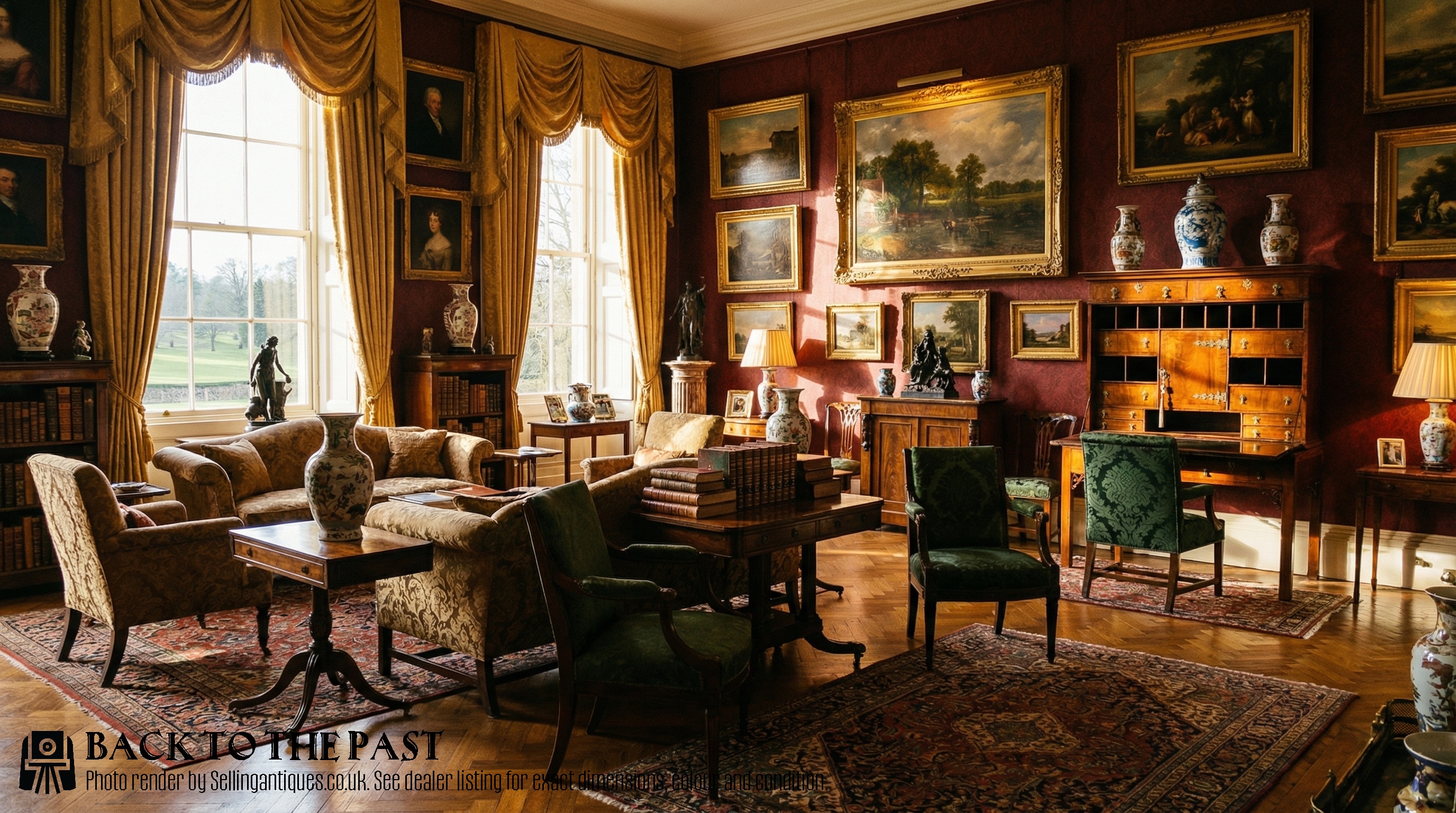
Walnut Escritoire Desk
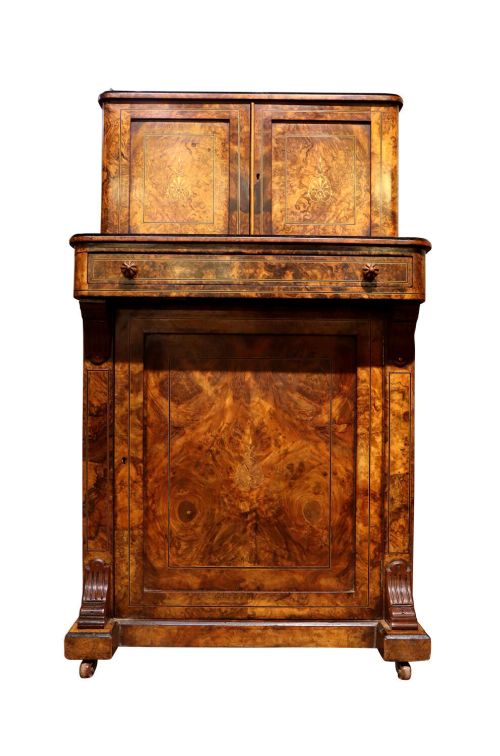
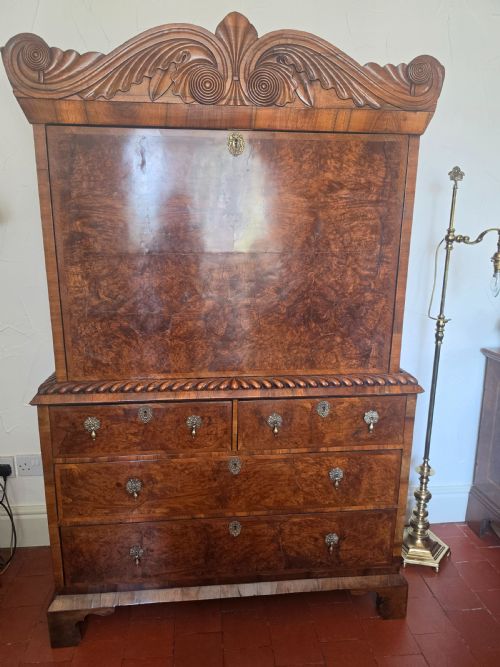
A walnut escritoire desk combines cabinet storage with a drop-front writing surface, spanning periods from William and Mary through the Georgian era to Victorian revivals. Early examples often present upright proportions with fitted internal drawers, whilst later Victorian iterations lean towards smaller ladies writing desks and bonheur du jour forms.
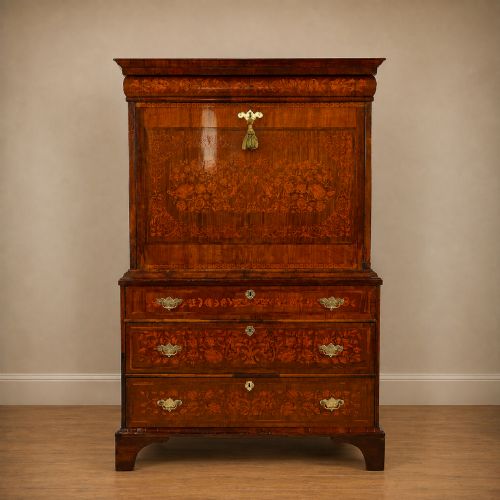
The materials recorded across these pieces rely heavily on figured walnut, burr walnut, and contrasting marquetry or brass inlay. Stylistic influences cross English Queen Anne, French Louis XV and XVI revivals, and Dutch floral marquetry traditions.
Construction and Materials
Makers utilised solid walnut and oak for carcases, applying highly figured walnut veneers and burr walnut sections across primary surfaces to create natural geometric patterns. Marquetry inlay, satinwood detailing, and brass or ormolu mounts complete the decorative vocabulary.
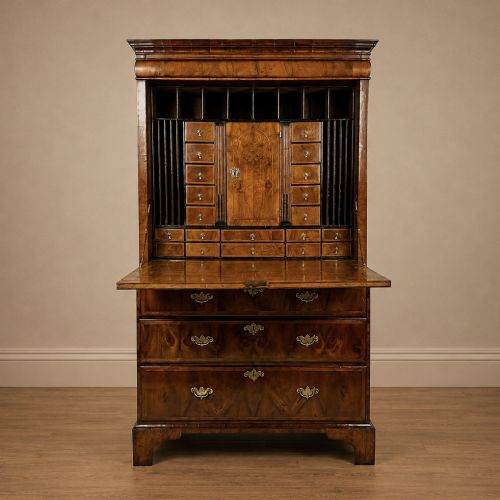
Internal components employ smaller secondary timbers for drawer linings, whilst writing surfaces frequently incorporate leather inserts, brass hardware, and specialised mechanisms such as drop-front hinges or tambour cylinders.
Walnut Escritoire Desk Retail Price Guide 2026
Typical asking prices for walnut escritoire desk among the pieces listed under this phrase on Sellingantiques today, from the lower quarter to the upper quarter. They describe what is for sale here now, not the wider market.
Materials recorded across current and past stock include solid walnut, burr walnut veneers, oak, brass mounts, and detailed floral marquetry inlay.
Evaluating the Pieces
Quality rests in the matching and continuity of the walnut veneer across the fall front and drawer fronts, where balanced grain alignment marks superior cabinet work. The complexity and precision of internal secret compartments also distinguish standard pieces from exceptional examples.
Hardware integrity, original brass ormolu mounts, and the crispness of marquetry or floral inlay dictate the overall standard of preservation and execution across different periods.
Gregory & Co. of London
The Walnut Escritoire Desk Glossary
- Escritoire
- A writing cabinet featuring a drop-front writing flap that conceals an arrangement of small drawers and pigeonholes.
- Burr walnut
- Timber taken from the warted growths of walnut trees, yielding highly ornamental swirling grain patterns used for veneering.
- Marquetry
- Decorative patterns formed by the insertion of pieces of wood, brass, or other materials into a veneered surface.
- Bonheur du jour
- A light lady's writing desk originating in France, typically featuring a small cabinet or set of drawers on the upper surface.
- Ormolu
- Gilded bronze mounts and decorative ornaments applied to furniture, common in French revival pieces.
Walnut Escritoire Desk: Frequently Asked Questions
How do I identify an early 18th-century walnut escritoire?
Early 18th-century examples typically display upright rectangular proportions with a fall-front writing surface enclosing numerous internal small drawers. They often utilise unadorned figured walnut or oyster veneer arranged in geometric patterns.
Later Victorian versions tend to incorporate marquetry, brass inlay, or lighter proportions associated with ladies desks rather than tall cabinet furniture.
What is the difference between an escritoire and a bureau?
An escritoire generally refers to a taller cabinet-form piece with a vertical front that drops down to form a writing ledge. A bureau more commonly describes a sloping front desk design.
Both forms house internal compartments, but the architectural upright case distinguishes the escritoire.
Where should I place a walnut escritoire in a room?
These pieces function well against flat wall spaces where their vertical grain and architectural cornice can be appreciated. Adequate clearance must be left in front of the piece to allow the drop-front writing surface to open fully.
Positioning them away from direct sunlight protects vulnerable walnut veneers and leather writing inserts from fading.
How are internal compartments organised?
Internal layouts usually feature a central small door surrounded by multiple graduated drawers and pigeonholes for correspondence. More complex pieces include concealed sliding compartments or secret locking mechanisms operated by hidden catches.
These fitted interiors reflect the primary purpose of managing letters and private documents.