




French Revival Desk
When you want a french revival desk, you are looking for nineteenth-century writing furniture shaped by continental historicism and continental taste.
French Revival Desk
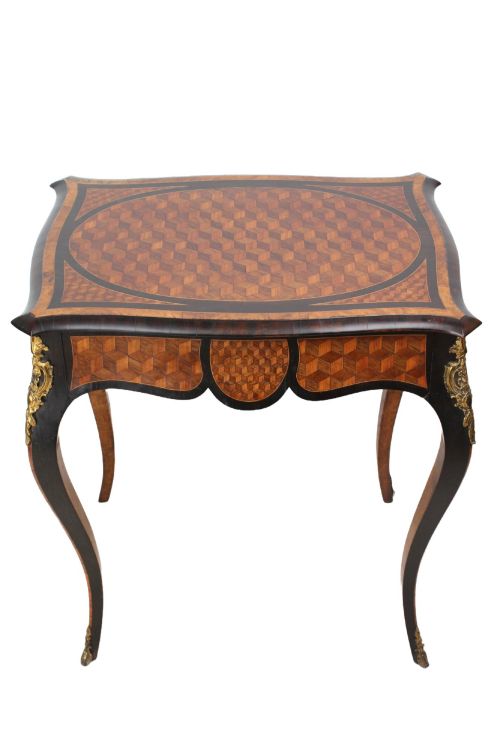
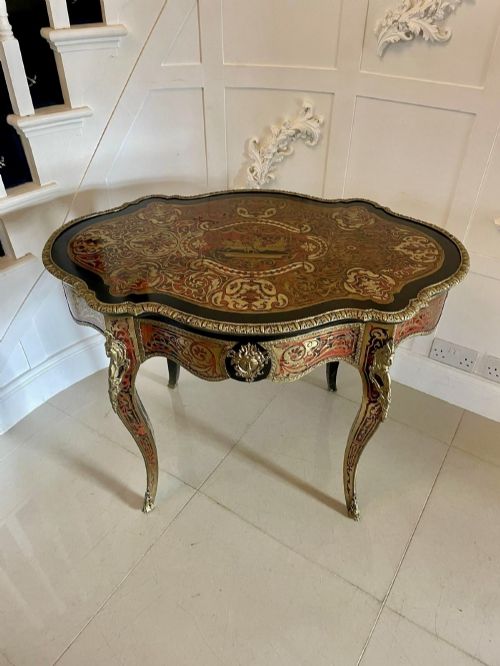
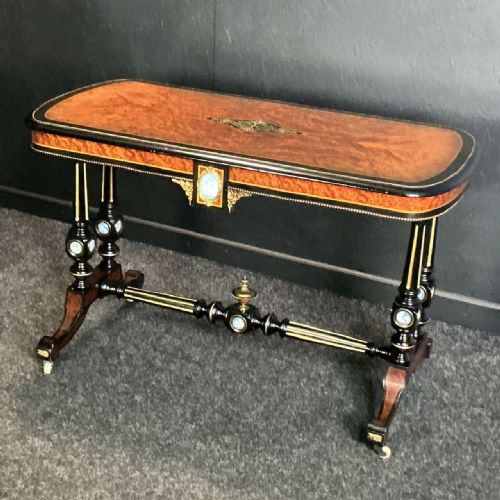
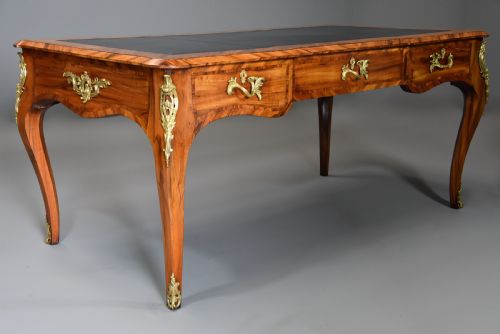
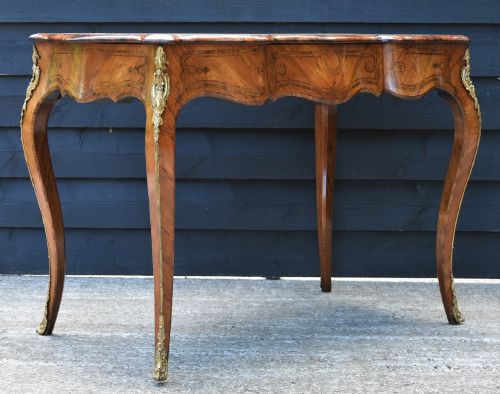
A french revival desk brings seventeenth and eighteenth-century continental design into Victorian and later interiors through confident cabinetmaking. You meet kidney-shaped writing tables, bureau plats, and pedestal desks built during the nineteenth century and drawing on Louis XV, Louis XVI, and Empire styles. These pieces range from walnut partners desks to kingwood writing tables enriched with gilt bronze mounts.
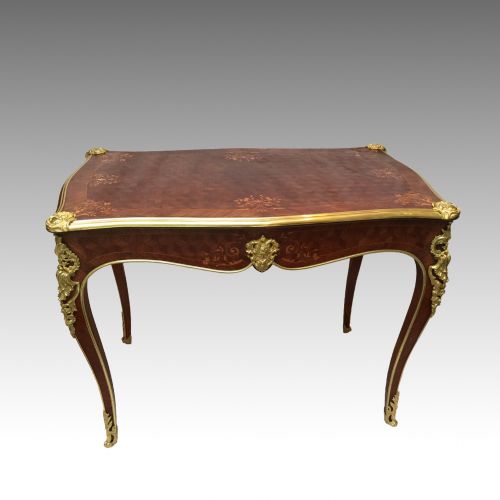
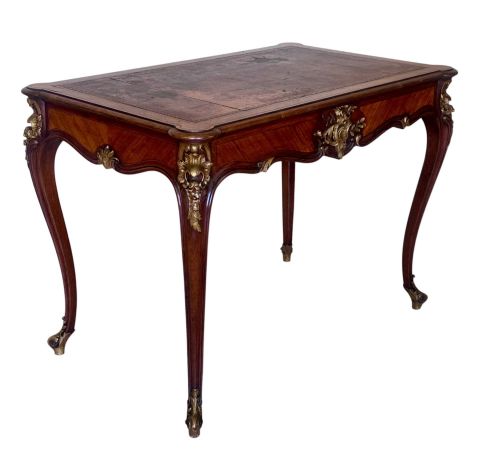
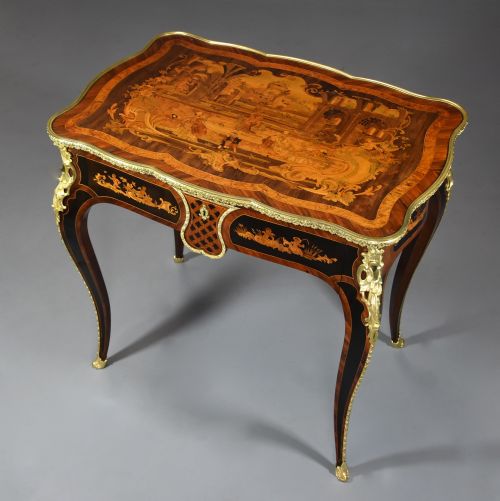
The version most commonly encountered on this page is the nineteenth-century bureau plat or writing table finished with marquetry, parquetry, and ormolu mounts. Makers adapted these forms for Victorian and Edwardian libraries, using exotic timbers like kingwood and rosewood. They combine serpentine outlines with practical writing surfaces often inset with leather.
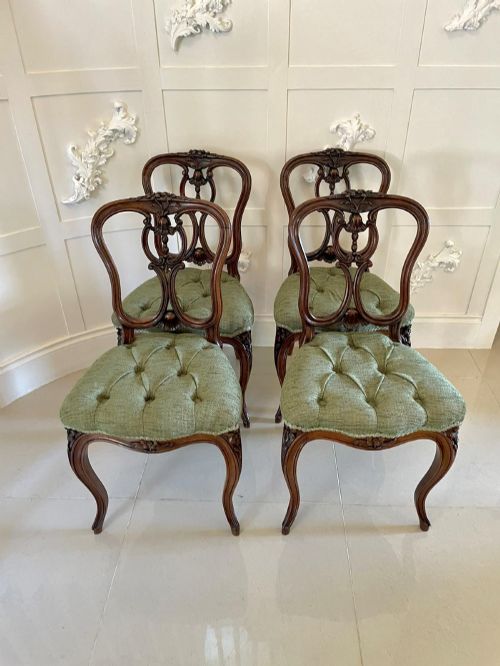
Alongside standalone writing tables, the evidence records matching office sets and revolving desk chairs designed to create a unified study. These pieces translate continental court furniture into functional workspaces suited to nineteenth-century domestic life. The recurring forms rely on revival styles that mirror historical French cabinetmaking traditions.
Materials and construction
Cabinetmakers built these desks using foundational carcases of oak, walnut, or mahogany veneered in decorative timbers like kingwood, satinwood, and rosewood. Parquetry and marquetry patterns form geometric or floral designs across the writing surfaces and drawer fronts. Selected examples incorporate brass inlay in the Boulle manner or painted panels.
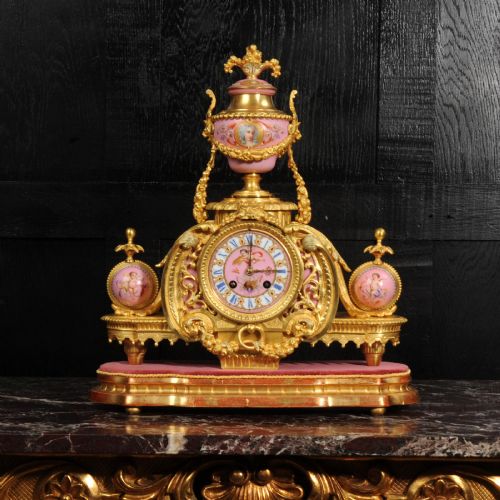
Cast ormolu and gilt bronze mounts define the vocabulary of these desks, accentuating corners, legs, and drawer rails. Leather writing surfaces, frequently tooled in gold, are bordered by timber crossbanding and patinated brass trims. Structural stability relies on traditional joinery concealed beneath elaborate decorative veneers and metal ornamentation.
Several desks include rotating chair options so you can spin away from your correspondence with eighteenth-century grace.
Markers of quality
Quality in a french revival desk rests on the crispness of the ormolu casting and the precision of the parquetry or marquetry inlay. Finer pieces display hand-chased bronze mounts rather than generic cast replacements, alongside meticulously matched timber veneers across every surface. The depth of the hand-carving and the integration of secondary timbers inside the drawer boxes indicate the level of workshop care.
Construction details distinguish workshop output, particularly the movement of drawers, the thickness of the timber veneers, and the quality of the original leather writing inserts. Pieces bearing maker signatures or stamps reflect documented cabinetmaking firms that maintained rigorous standards of design and assembly. The harmony between the bronze mounts and the underlying timber carcase determines the overall success of the piece.
JAS Shoolbred·Achille Brocot·CH. Jeanselme And Co·Mercier Freres·Alphonse Tahan
The French Revival Desk Glossary
- Ormolu
- Gilded bronze used for decorative mounts and fittings on furniture and clocks. The technique involves applying a mercury-gilding process to cast bronze.
- Marquetry
- Decorative veneer work arranged in pictorial or floral patterns using various coloured woods. Craftsmen cut contrasting timbers and fit them together into a paper-thin sheet before gluing.
- Parquetry
- Geometric patterns formed of small wooden tiles inlaid into a furniture surface. Common motifs include cubes, chequers, and herringbones.
- Serpentine
- A curved line that undulates inwards and outwards, frequently seen on the fronts and sides of desks. This shaping requires skilled timber bending and veneer application.
French Revival Desk: Frequently Asked Questions
What is a bureau plat?
A bureau plat is a double-sided or single-sided writing table with a frieze containing drawers, designed to stand away from the wall in the centre of a room.
These tables provide a finished appearance on all sides, incorporating leather writing surfaces and decorative ormolu mounts around the frame.
How do I identify a revival style?
Revival styles borrow decorative elements, proportions, and cabinetmaking techniques from earlier historical periods like the reign of Louis XV or the French Empire.
Makers in the nineteenth century reinterpreted these historical designs using contemporary construction methods while retaining signature motifs such as cabriole legs or laurel wreaths.
Where were these desks placed?
These desks were designed for principal reception rooms, libraries, and private studies in large nineteenth-century houses.
Because they were finished on all sides, they stood prominently in the middle of a room rather than being pushed against a wall.
How should I care for timber and ormolu?
Maintain timber surfaces by applying appropriate wax polish sparingly and avoiding direct exposure to strong sunlight or heat sources.
Clean gilt bronze mounts gently with a dry microfibre cloth, taking care not to use abrasive cleaning agents that could strip the original gilding.