


Inlaid Brown Bureau
An inlaid brown bureau brings warmth and refined surface pattern into a room, offering a practical writing surface with concealed compartments.
Inlaid Brown Bureau
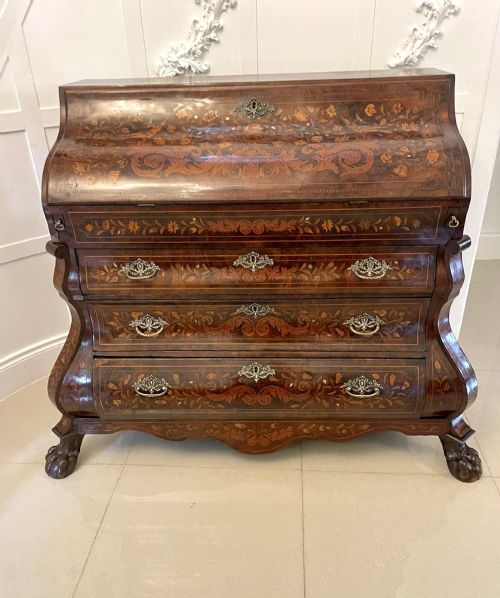
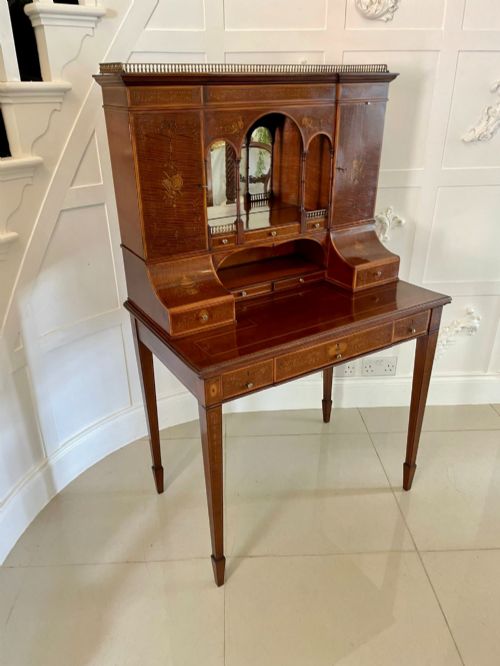
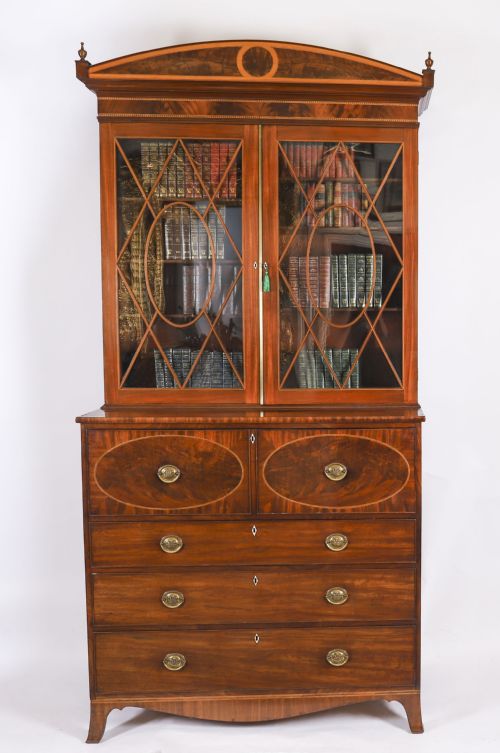
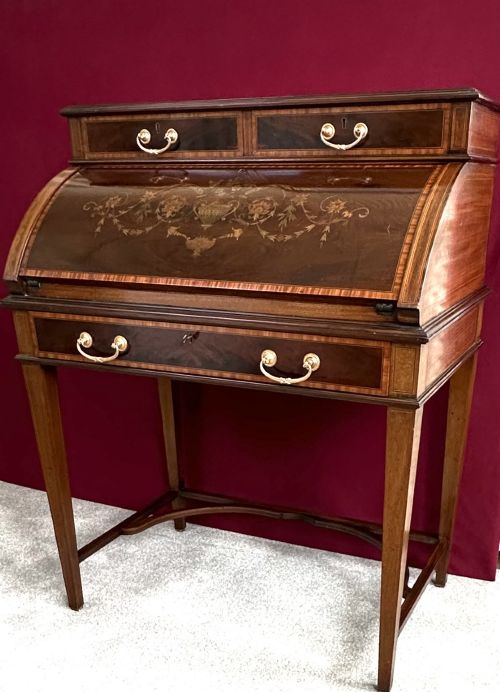
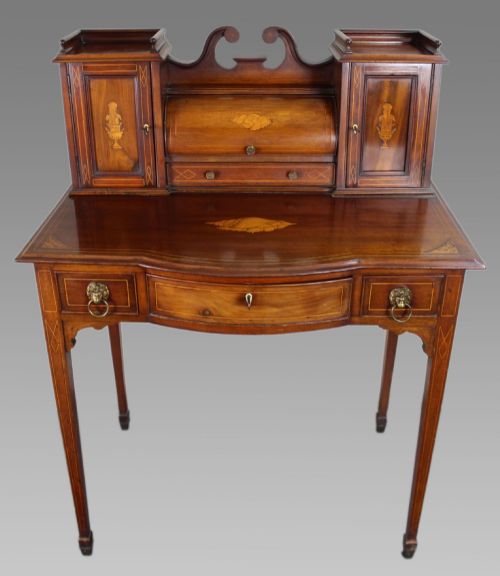
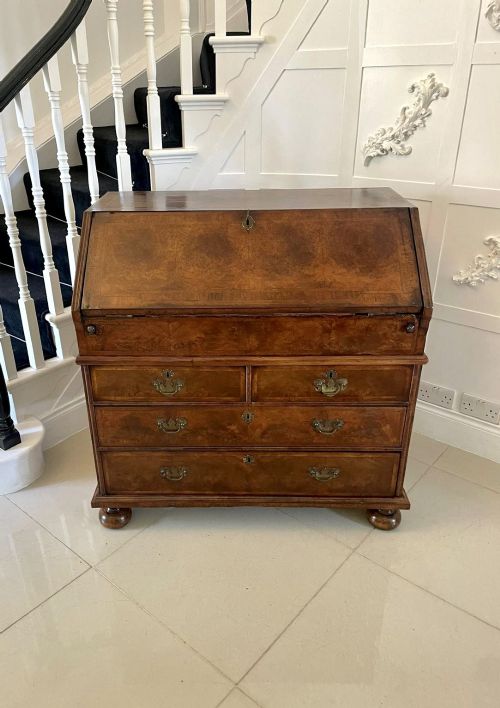
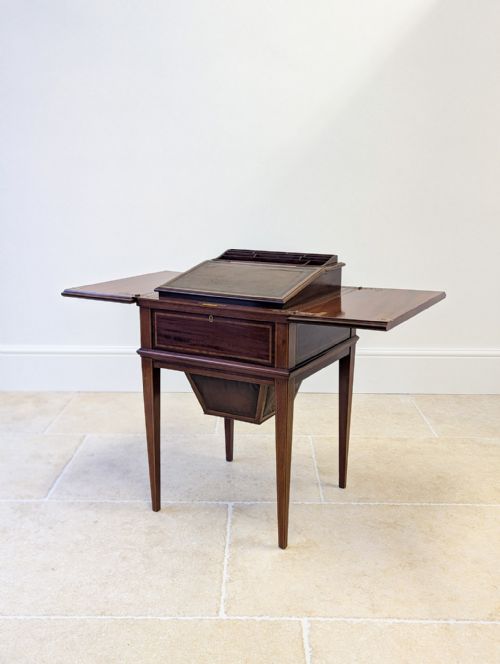
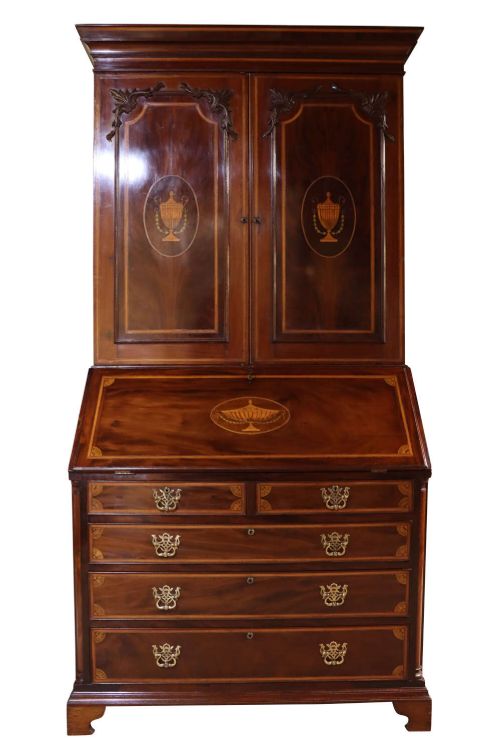
When searching for an inlaid brown bureau, buyers encounter various forms including fall-front writing desks, secretaire bookcases, and bureau bookcases originating from the seventeenth century to the Edwardian era.
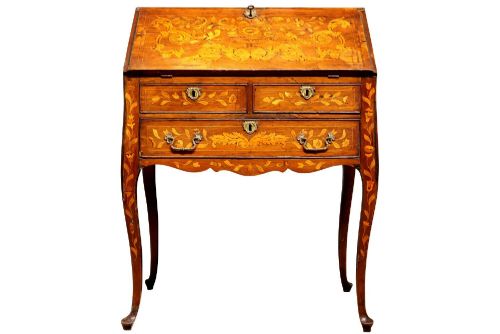
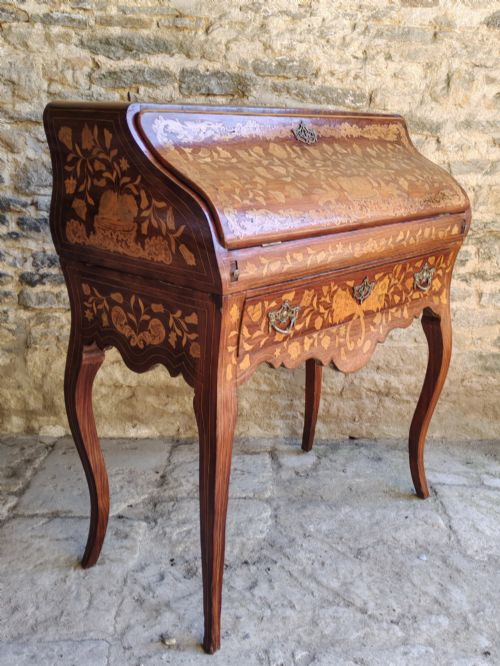
The most common examples on this page are mahogany, walnut, and satinwood pieces featuring contrasting wood inlay or floral marquetry, spanning Georgian, Victorian, and Edwardian periods.
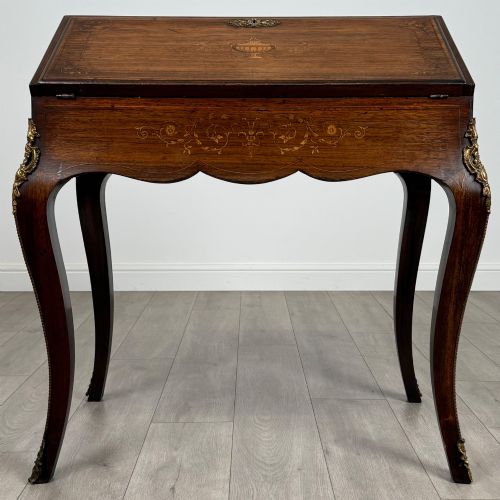
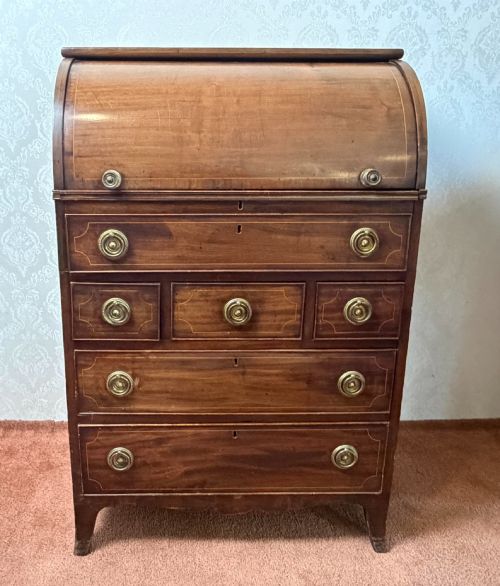
These items function primarily as writing furniture, combining enclosed drawers and pigeonholes behind a sloping or cylinder front with decorative timber surfaces.
Materials and Construction
Cabinetmakers constructed these writing pieces using solid and veneered timbers such as mahogany, walnut, kingwood, and rosewood over secondary woods, applying intricate floral marquetry and parquetry.
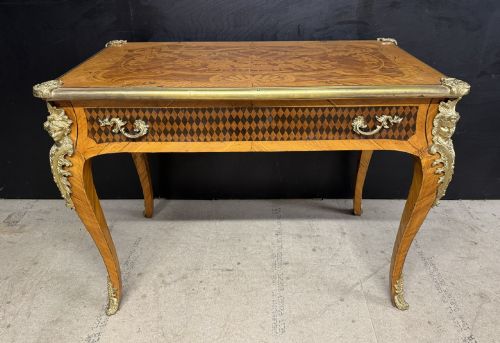
Surface enrichment often involves contrasting light veneers like satinwood and fruitwood, sometimes accented with brass stringing, handles, and occasional ormolu mounts.
The fall-front writing slopes and cylinder desks rely on specialised joinery and hinges to support the descending writing surface while concealing internal compartments.
Listings span multiple centuries, incorporating seventeenth-century William and Mary examples alongside eighteenth-century Georgian designs and twentieth-century Edwardian interpretations.
Evaluating the Range
The distinction between tiers rests upon the precision of the marquetry cutting, the choice of burr or flame grain in the primary timbers, and the harmony of the contrasting stringing.
Fine execution appears in the crispness of floral details, the alignment of grain across drawer fronts, and the integrity of the secondary woods used in the interior carcase.
Maple and Co London·Edwards and Roberts
The Inlaid Brown Bureau Glossary
- Marquetry
- Decorative veneer work forming pictures or patterns using various tinted woods. This technique covers the entire fall front or top of finer writing desks.
- Secretaire bookcase
- A tall piece combining a shelved upper cabinet with a lower writing drawer that drops down. The fitted interior contains small drawers and pigeonholes.
- Bureau de dame
- A small ladies writing desk, often featuring a cylinder or sloping fall front. These compact French forms typically display delicate marquetry.
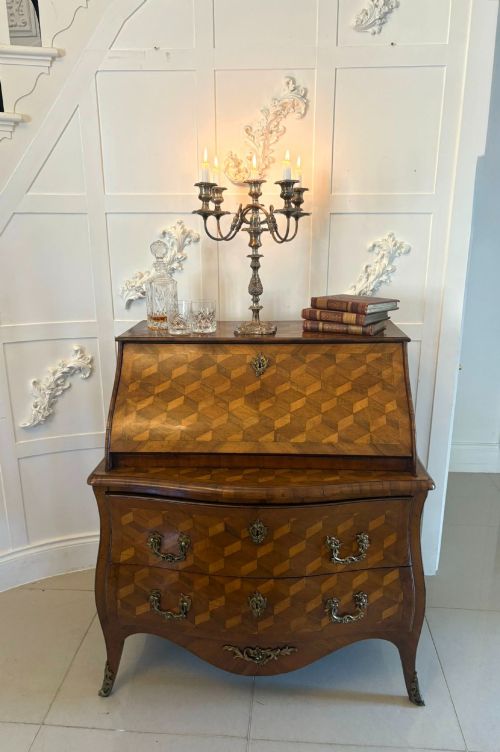
- Parquetry
- Geometric wood inlay forming repeating patterns such as cubes or squares. It differs from floral marquetry through its strict angular symmetry.
Inlaid Brown Bureau: Frequently Asked Questions
What is a fall front bureau?
A fall front bureau is a desk featuring a hinged writing flap that pulls down to reveal internal compartments and drawers.
When closed, the flat sloping surface conceals the writing materials and keeps the working area tidy.
How do I identify a bureau bookcase?
A bureau bookcase combines a lower writing desk with an upper section enclosed by doors, usually holding shelves for books.
These taller items served as multi-functional study furniture in Georgian and Victorian homes.
What woods are used in these desks?
Cabinetmakers utilised mahogany, walnut, satinwood, and rosewood as primary surfaces, often enhanced by lighter fruitwood inlays.
Secondary timbers inside the drawers typically include oak or pine.
Are these pieces Edwardian or Georgian?
The selection includes both Georgian originals from the eighteenth century and Edwardian revivals dating around nineteen hundred.
Construction details and timber choice help differentiate the earlier handcrafted pieces from later productions.