


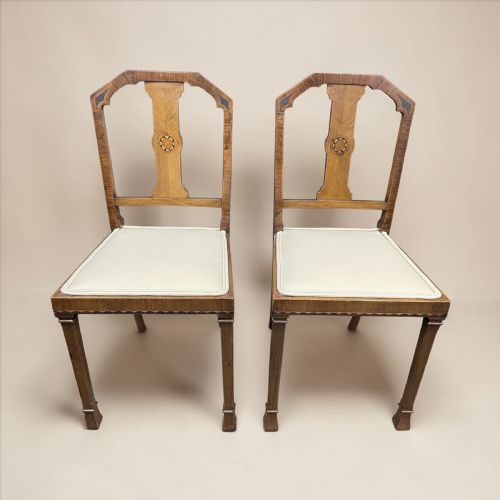
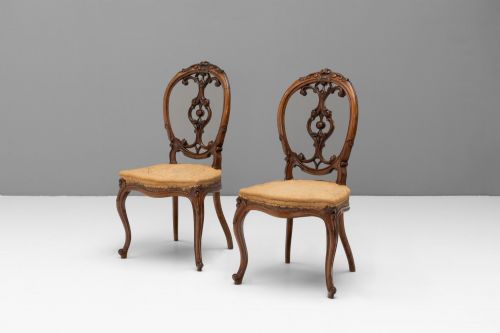


Walnut Dining Chair Pair
A walnut dining chair pair delivers matched seating in rich timber, uniting dining utility with period character.
Walnut Dining Chair Pair
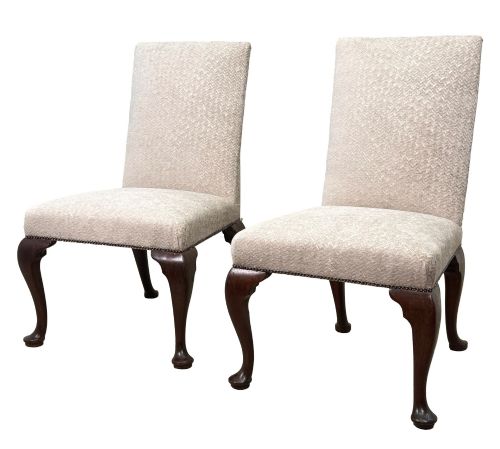
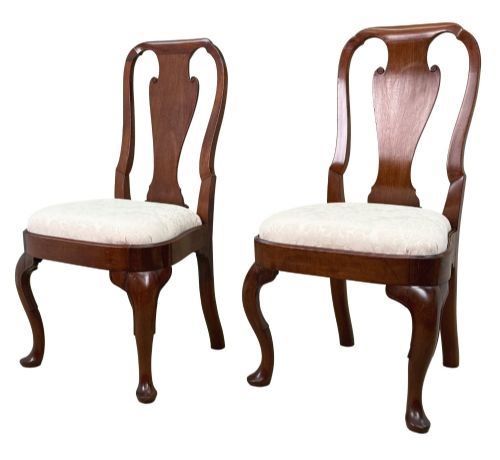
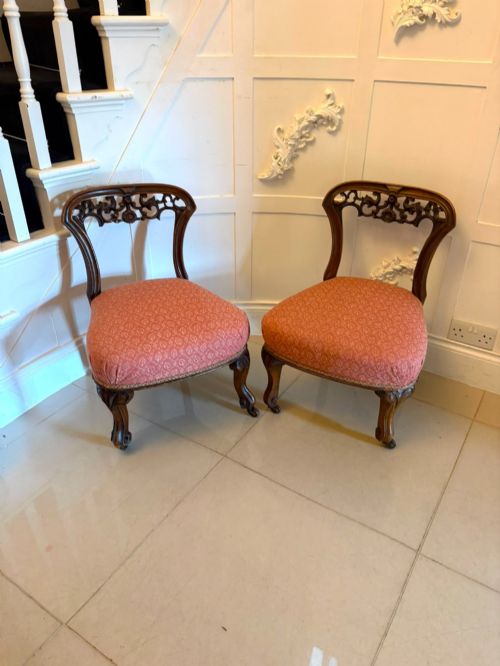
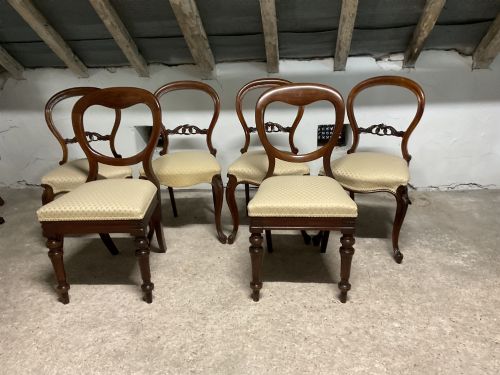
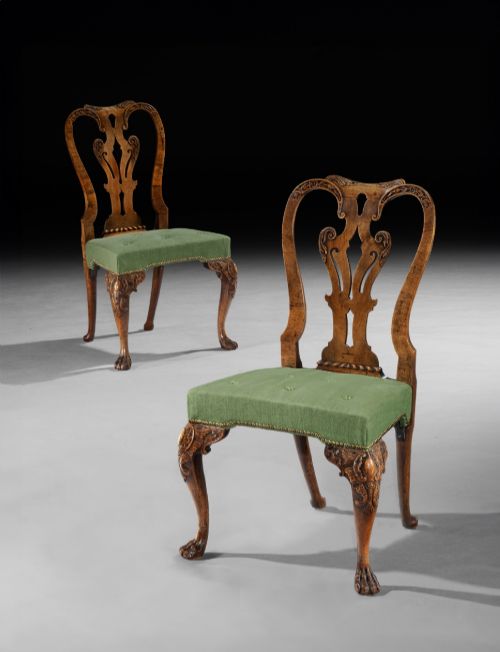
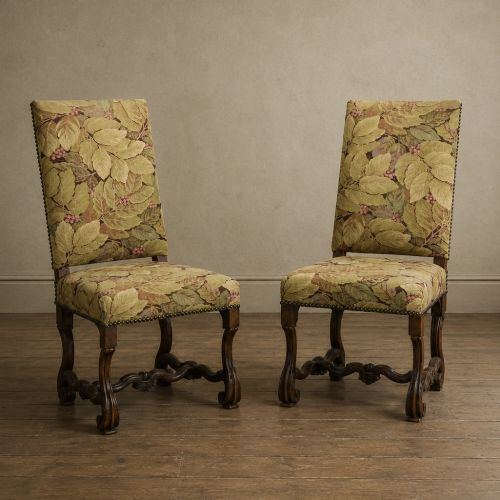
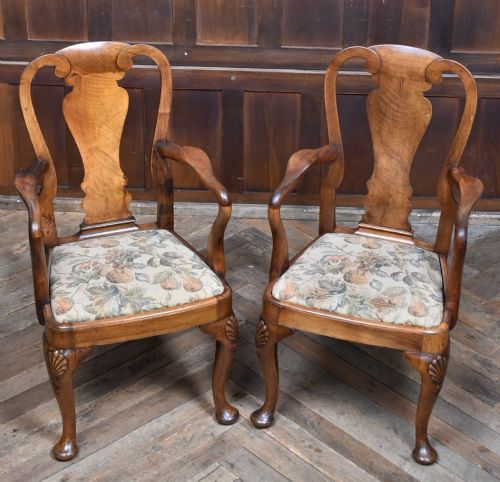
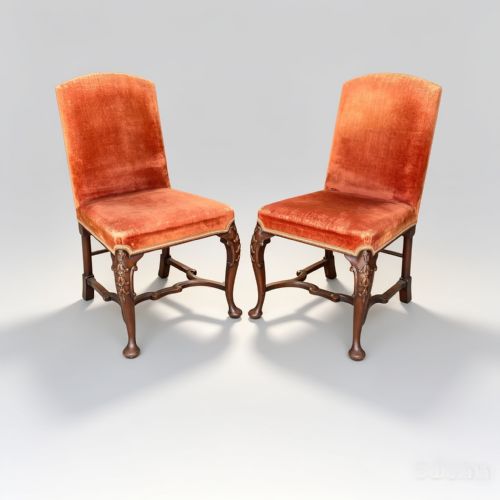
A walnut dining chair pair consists of two matched seats shaped from walnut timber, appearing across periods from the eighteenth century to the twentieth century. These sets take forms such as side chairs, armchairs, and balloon back dining chairs, originating from English, Dutch, Italian, and Portuguese workshops.
The most common examples encountered on this page date to the Victorian era and the Georgian period, often employing Queen Anne or George II styles. Buyers select these pairs for dining rooms, bedrooms, and occasional seating where matched timber grain and period forms matter.
How they were made
Carpenters constructed these frames primarily from solid walnut, occasionally utilising veneer over secondary woods, and shaped them with carved splats, cabriole legs, or balloon backs. Workshops incorporated joinery techniques such as mortise and tenon to build sturdy frames capable of supporting daily dining use.
Seating areas were upholstered using materials like fabric, textile, velvet, leather, or cane inserts. Makers added decorative elements including brass accents, needlework, and bone inlay depending on the stylistic demands of the period.
Bone inlay whispers secrets from Portuguese workshops into seventeenth-century parlours.
What varies in quality
The degree of crispness in the carved wood ornament separates standard examples from superior pieces, as skilled carvers achieved deeper relief and sharper lines in the walnut. Timber selection also dictates grade, with highly figured grain patterns commanding greater attention than plain stock.
Structural integrity influences worth, where tight joints and original blocking maintain the maker's intended stability. Furthermore, the retention of period upholstery materials or historically sympathetic re-covering preserves the integrity of the design.
Charles Tozer·Harry and Lou Epstein·Waring and Gillow·Whytock and Reid of Edinburgh·Hille·Hewetson and Milner
The Walnut Dining Chair Pair Glossary
- Cabriole leg
- A furniture leg that curves outward at the knee and tapers inward toward the foot, often ending in a pad or claw.
- Balloon back
- A rounded, oval-shaped wooden chair back popular during the nineteenth century, resembling the profile of a balloon.
- Splats
- The central vertical strip of wood in the middle of a chair back, frequently vase-shaped or pierced in Georgian designs.
- Carver chair
- An armchair designed with arms, traditionally placed at the head of a dining table or used as an occasional seat.
- Marquetry
- Decorative veneer work forming pictures or geometric patterns using various woods inlaid into a solid ground.
Walnut Dining Chair Pair: Frequently Asked Questions
Are these chairs suitable for daily dining?
Most walnut dining chair pair options are built for regular use, provided the wood joints remain tight and stable. Eighteenth-century and nineteenth-century frames offer robust construction designed to withstand everyday seating.
Buyers should assess the height and seat depth to ensure comfort during long meals. Pairing antique chairs with a modern table requires checking clearance for legs and armrests.
How do I identify Georgian walnut chairs?
Georgian pieces typically display rich walnut grain, simple cabriole legs, and solid splats without excessive ornamentation. Earlier eighteenth-century models often feature pad feet and spooned backs designed to fit the human spine.
Construction methods such as hand-cut tenons and pegged joints help distinguish authentic period pieces from later revival items. Examining the underside reveals the tool marks and timber ageing consistent with the seventeen-hundreds.
Can I mix different chair styles together?
Matching a walnut dining chair pair with other seating works well if the wood tone and period share similar design characteristics. Queen Anne revival styles blend harmoniously with genuine eighteenth-century walnut furniture due to shared proportions.
Maintaining a consistent wood finish prevents the seating arrangement from looking disjointed around a dining table. Contrast can succeed when proportions align, but matching timber grain creates a cohesive appearance.
How should I care for antique walnut?
Walnut timber requires protection from direct sunlight and extreme humidity changes to prevent the wood from drying out or cracking. Regular dusting with a soft cloth maintains the surface finish without stripping the natural oils.
Applying occasional specialist wax feeds the timber and preserves the patina built up over centuries. Avoiding synthetic polish prevents buildup that can dull the grain definition.