



1930s Cream Leather Seats
These 1930s cream leather seats offer the sweeping curves and tactile warmth of Art Deco design.
1930s Cream Leather Seats
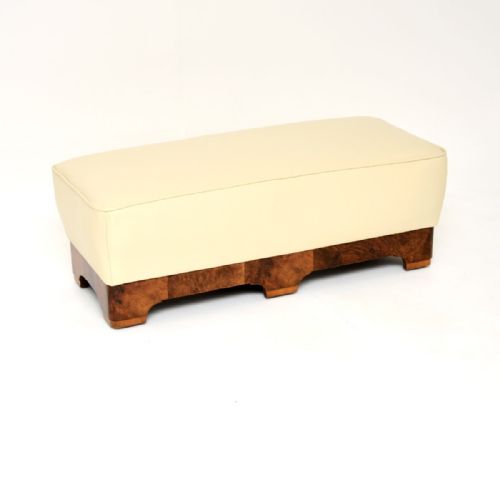
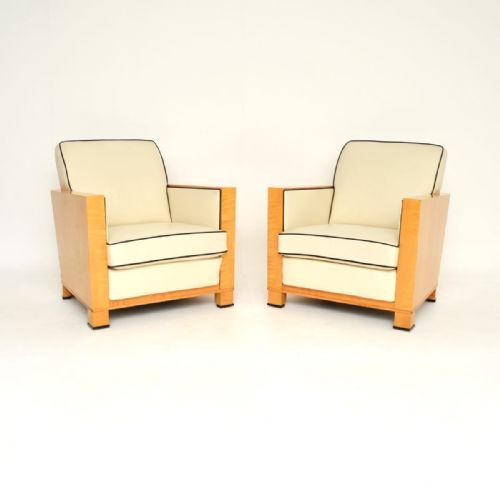
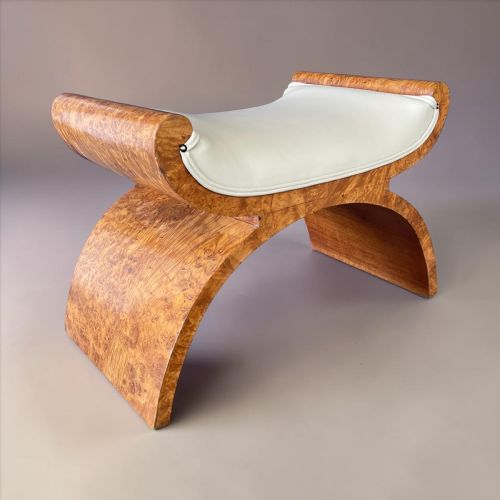
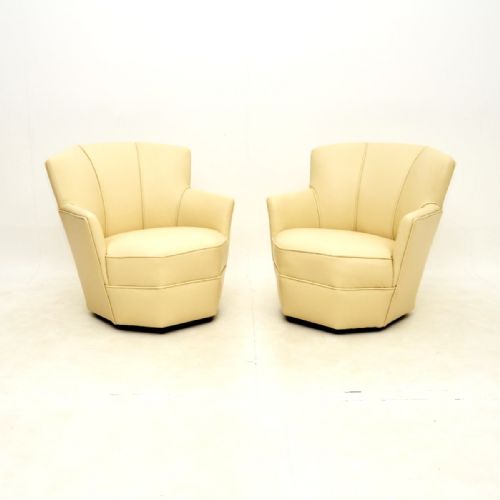
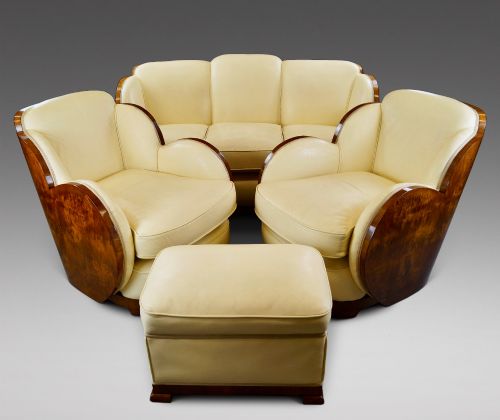
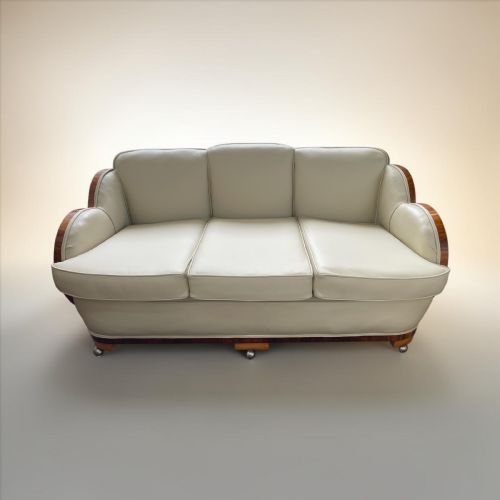
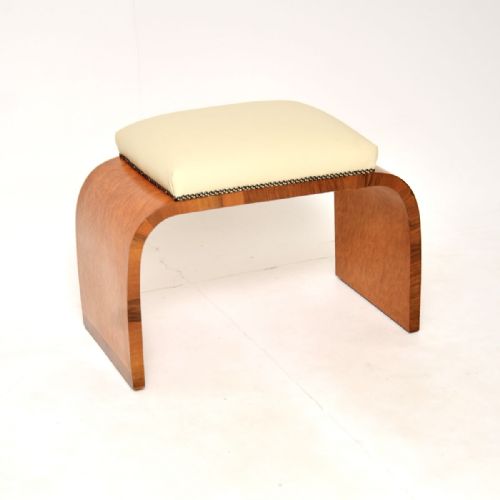
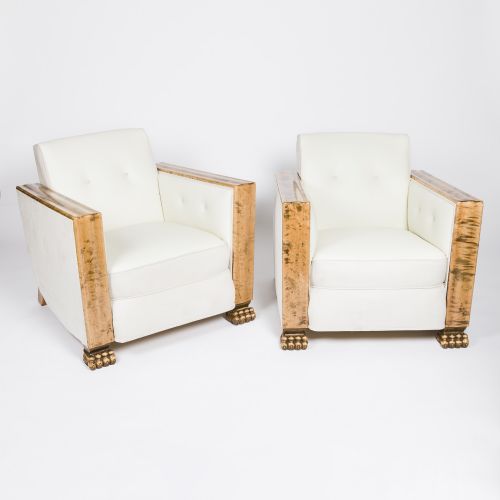
When you search for 1930s cream leather seats, you encounter seating built during the Art Deco and Swedish Art Deco periods, spanning the nineteen twenties and nineteen thirties. The selection centres heavily on armchairs, lounge suites, sofas, and various forms of stools including dressing table and piano stools, alongside dining and side chairs.
Makers such as Hille and Harry and Lou Epstein shaped much of this seating, often pairing cream leather with rich timbers like burr walnut, walnut veneer, and birds eye maple. Buyers seeking this aesthetic will find both generous cloud suites and individual occasional chairs designed for domestic comfort.
The physical forms range from compact rectangular dressing stools to substantial three-seater sofas and bankers sofas. Each piece displays the characteristic silhouette of the era, uniting utilitarian seating with decorative wood grains.
How they were made
Makers constructed the frames using hardwoods like walnut and timber, frequently applying burr walnut or birds eye maple veneer to visible surfaces for decorative grain patterns. This foundation provided the structural strength required for the rounded cloud shapes characteristic of the period.
Upholsterers fitted cream leather over sprung or padded interiors, securing the hides to match the sweeping contours of the wooden frames. The combination of tactile leather and polished wood veneers defined the finish of these seating forms.
What varies in quality
The grade of timber veneer significantly distinguishes pieces, with rich burr walnut and birds eye maple displaying superior grain movement compared to plain hardwood frames. Selection of the hide and the precision of stitching along curved seams further separates standard seating from finer workshop production.
Attribution to notable makers such as Hille or Harry and Lou Epstein elevates a piece through documented craftsmanship and distinct proportions. The integrity of the internal frame construction and the preservation of the original wood finish govern the overall standard of the furniture.
Hille·Harry and Lou Epstein
The 1930s Cream Leather Seats Glossary
- Art Deco
- A design style characterised by sleek lines, geometric forms, and modern materials that dominated the nineteen twenties and nineteen thirties. It influenced furniture architecture through streamlined curves and luxurious finishes.
- Burr Walnut
- A specialised timber cut from the wart or burl of a walnut tree, prized for its swirling and intricate grain patterns. Makers applied it as a veneer to elevate the visual appeal of cabinets and seating frames.
- Cloud Suite
- A bulky, rounded upholstered lounge group popular in the interwar period, designed for deep comfort and dramatic silhouette. These suites typically comprise a sofa and matching armchairs.
- Birds Eye Maple
- A figure in maple timber that resembles tiny swirling eyes, created through local distortions in the wood growth. It provides a pale, decorative surface frequently utilised in high-end period furniture.
1930s Cream Leather Seats: Frequently Asked Questions
Are these seats comfortable?
The generous proportions and padded upholstery of the era provide a deep and supportive sit. Cloud suites and armchairs specifically prioritize domestic comfort alongside striking visual presence.
Stools and side chairs offer firmer seating suited for dressing tables or dining arrangements rather than lounging.
How do I identify a maker?
Attribution often relies on construction characteristics, distinctive silhouettes, and documented workshop designs associated with prominent cabinetmakers. Specific proportions in cloud suites frequently point to well-known London workshops.
Absence of a physical stamp does not preclude attribution when the timber selection and upholstery shaping match known pieces.
What is a cloud suite?
A cloud suite consists of a matching sofa and armchairs featuring rounded, billowing upholstery forms reminiscent of cumulus clouds. These sets dominated the interwar period living room.
The enveloping curves require substantial floor space and serve as the visual anchor of a room.
How do I care for cream leather?
Maintenance involves gentle cleaning with appropriate leather care products to prevent the pale surface from drying or staining. Regular conditioning helps preserve the suppleness of the hide over time.
Keeping the seating away from direct heat sources protects both the leather and the underlying wooden frame.