

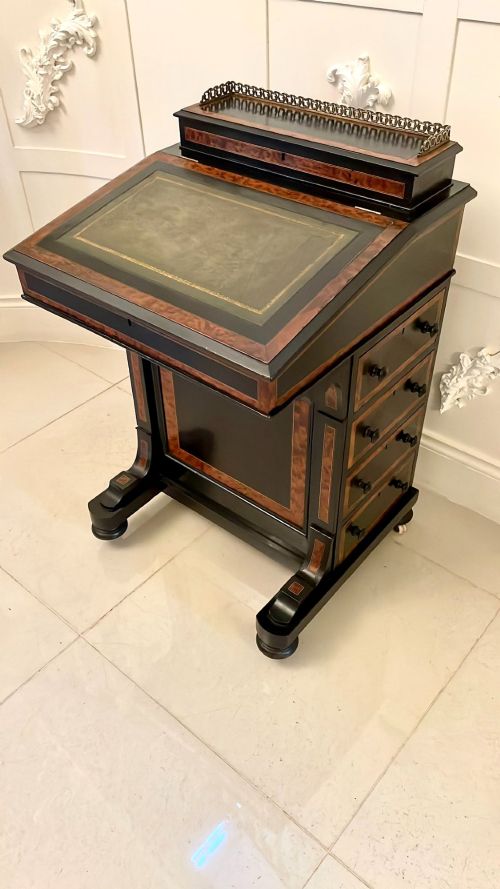
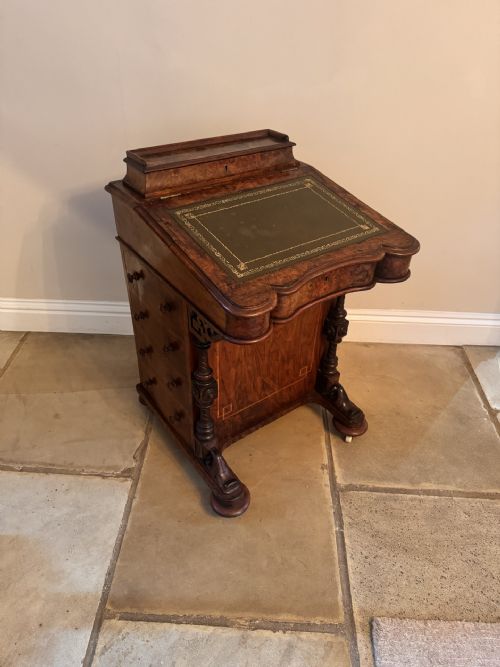
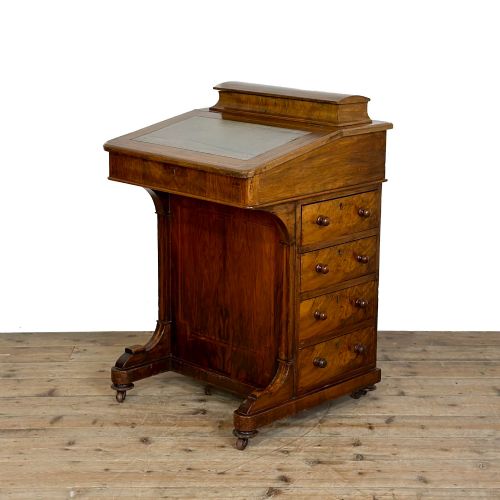
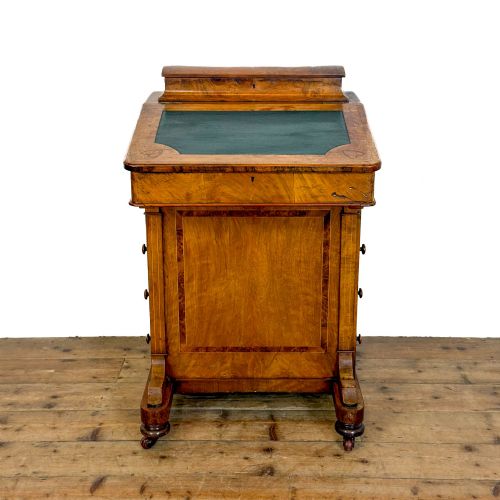





Walnut Davenport Bureau
A walnut davenport bureau combines compact writing utility with rich burr timber, offering a dedicated writing surface and stationery storage.
Walnut Davenport Bureau
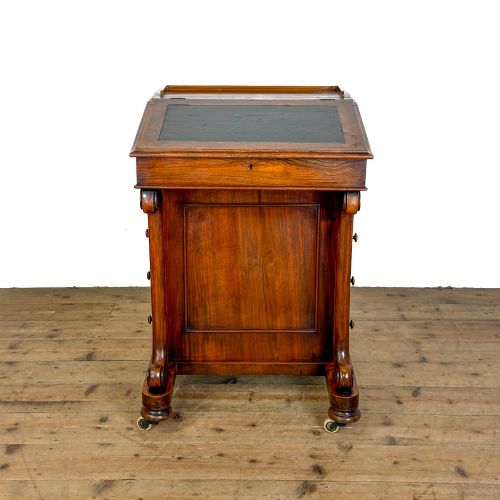
A walnut davenport bureau is a compact writing desk typically featuring a sloped writing surface above a set of drawers or a stationery cabinet. These pieces belong predominantly to the Victorian period, appearing across the mid and late nineteenth century in forms designed for small domestic spaces.
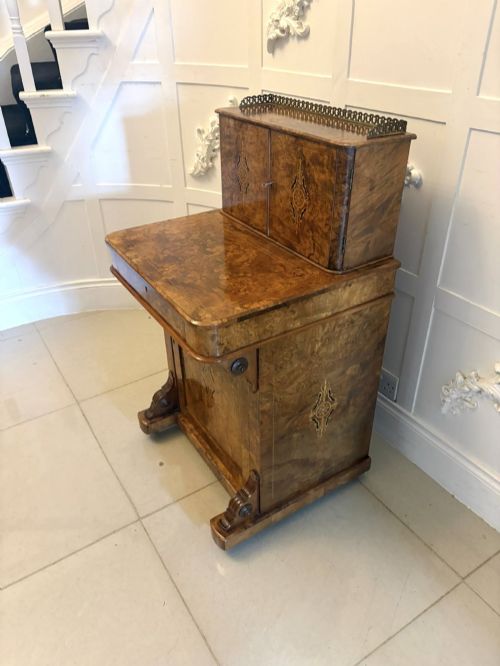
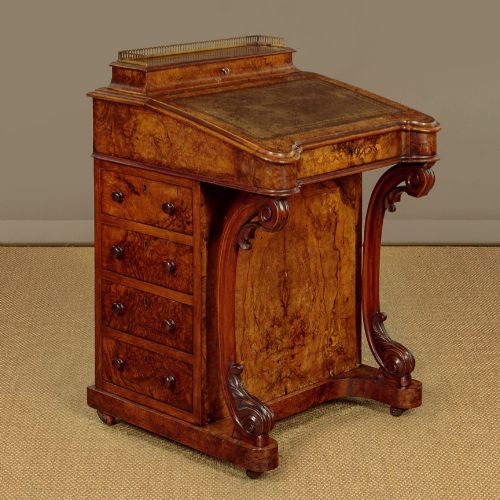
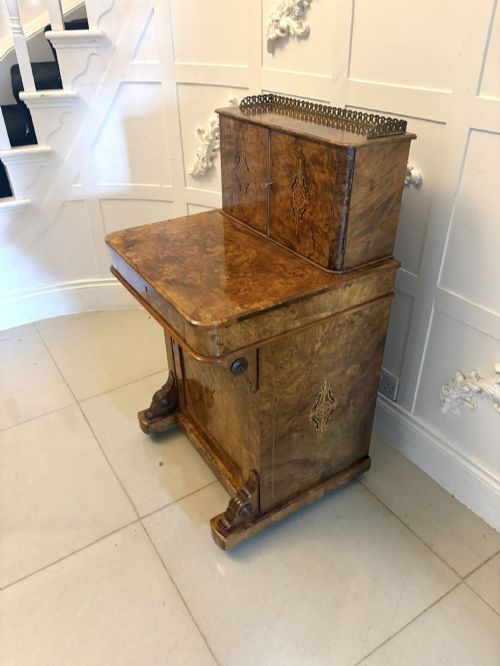
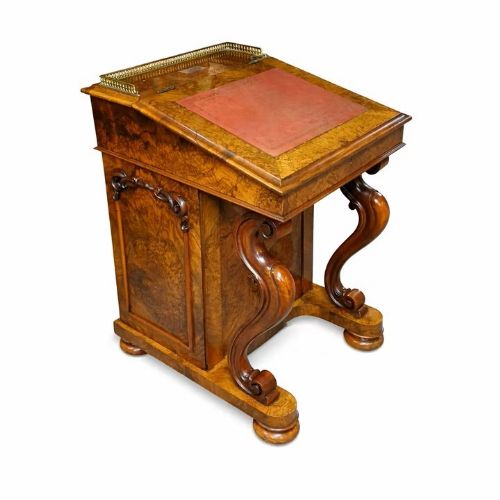
The version most commonly met on this page is the Victorian burr walnut davenport desk, often incorporating an internal arrangement of small drawers and satinwood fittings. Examples range from standard four-drawer writing desks to freestanding variants and specialised piano top models with sliding writing surfaces.
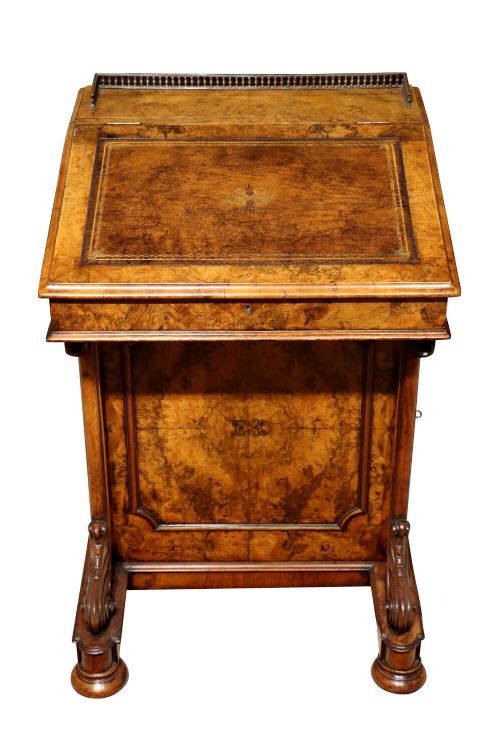
Makers of the era utilised figured timbers like burr walnut, sometimes enhanced with marquetry inlay or ebonised details, to elevate these compact writing cabinets into decorative pieces of furniture. Identifying marks and construction styles align closely with English Victorian cabinet-making traditions.
Materials and construction
Cabinet makers built these desks using solid wood foundations faced with burr walnut veneers, selecting timber with prominent swirling grain patterns for the exterior surfaces. Secondary woods and satinwood were utilised for internal drawer linings and writing compartment fittings.
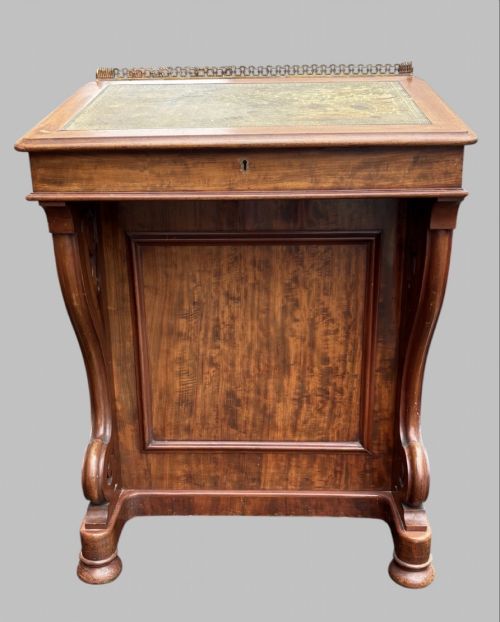
Brass fittings, including hinged stationery compartments and gallery rails, were integrated alongside leather writing inserts to provide durable functional surfaces. Inlay work involving wood and marquetry techniques adorned the desk lids and drawer fronts of finer examples.
Walnut Davenport Bureau Retail Price Guide 2026
Typical asking prices for walnut davenport bureau among the pieces listed under this phrase on Sellingantiques today, from the lower quarter to the upper quarter. They describe what is for sale here now, not the wider market.
Piano top davenports slide open like miniature keyboards, revealing hidden writing surfaces that spring forward with mechanical glee.
Judging quality and craftsmanship
Quality in a walnut davenport bureau rests upon the selection and matching of the burr walnut veneer across the writing slope and drawer fronts. Superior pieces exhibit continuous grain alignment and precise marquetry or wood inlay that remains flush with the surrounding timber.
The complexity of the interior mechanism, such as pop-up stationery compartments or piano top actions, separates standard production desks from exhibition examples. Cabinet-making standards show in the neatness of the interior satinwood joinery and the integration of functional brass hardware.
Gillows
The Walnut Davenport Bureau Glossary
- Burr walnut
- A type of wood veneer taken from the gnarled growth on a walnut tree, prized for its intricate and swirling grain patterns. It forms the primary decorative exterior of nineteenth-century davenport desks.
- Crossbanded
- A method of applying border veneers where the grain runs at right angles to the main surface. This technique frames the central burr walnut panels on the writing slope.
- Marquetry
- Decorative patterns formed by the insertion of different coloured wood veneers into a background veneer. It appears frequently on Victorian desk lids to create floral or geometric motifs.
- Satinwood
- A hard, yellowish timber from tropical trees used for interior secondary drawers and small fittings. It provides a bright contrast against the darker walnut exterior.
- Secretaire
- A piece of furniture containing a built-in writing drawer or fold-down writing surface. On a davenport, this describes the primary sloped writing compartment.
Walnut Davenport Bureau: Frequently Asked Questions
What is a walnut davenport bureau?
A walnut davenport bureau is a small Victorian writing desk featuring a sloping top and internal stationery storage above a set of drawers. These pieces were designed as compact writing stations for domestic use.
They combine a writing surface with enclosed storage for paper and ink, making them practical for small rooms while displaying decorative wood grains.
How were davenport desks used?
These desks served as private writing stations for correspondence and record keeping in nineteenth-century homes. The top compartment held stationery while the sloping lid provided a firm surface for writing letters.
Drawers positioned down one side of the pedestal allowed the user to remain seated close to the writing slope while accessing papers.
Where should I place a davenport in my home?
Because many nineteenth-century davenport desks are finished on all sides as freestanding pieces, they can sit away from walls in the centre of a room. Their compact footprint suits studies, bedrooms or sitting rooms where space is limited.
Ensure the desk is placed away from direct sunlight and heat sources to protect the burr walnut veneer and leather writing insert.
How do I date a Victorian davenport?
Davenports on this page date primarily from the mid-nineteenth century, specifically around eighteen-sixty during the Victorian era. Characteristics such as four-drawer pedestals, satinwood interiors, and marquetry inlay provide clues to their exact period of manufacture.
Construction methods, including dovetailing on the internal drawers and the type of wood used for secondary linings, help confirm the nineteenth-century origin.