

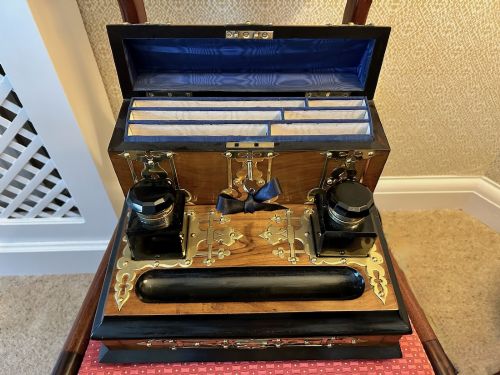
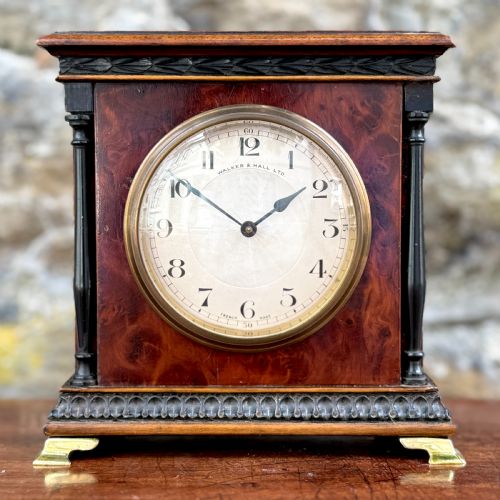


Ebonised Walnut Desk
An ebonised walnut desk brings together dark blackened finishes and rich figured timber to create a striking workspace for the home.
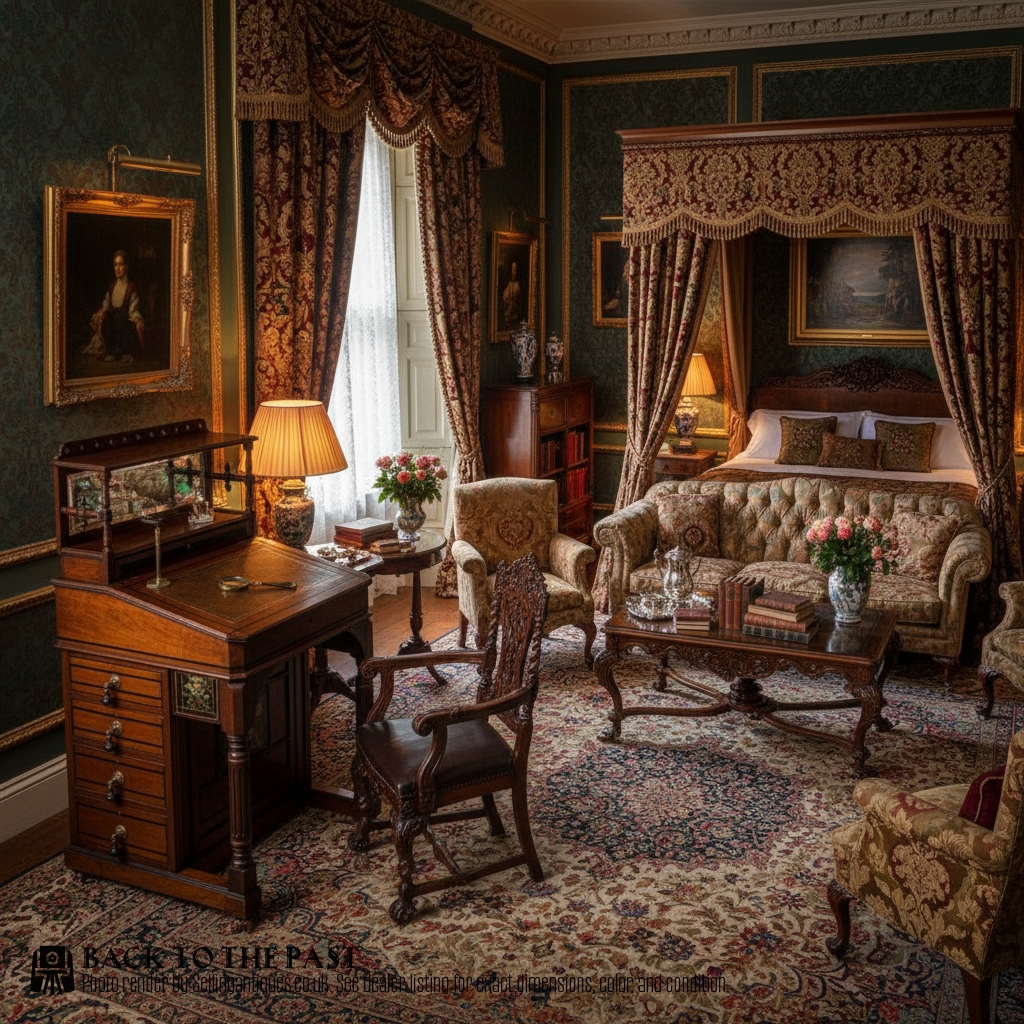
Ebonised Walnut Desk
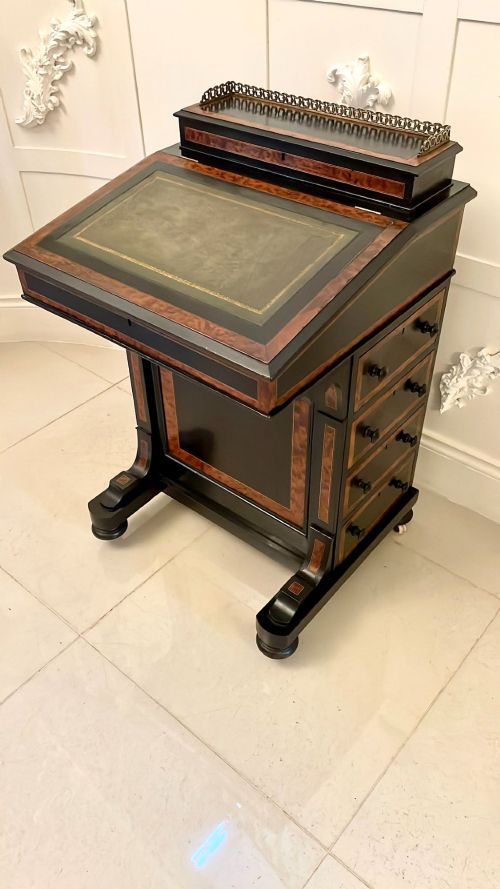
When you search for an ebonised walnut desk, you encounter pieces primarily from the nineteenth century, including Victorian examples and items from the Aesthetic Movement. These items range from compact writing tables and davenports to larger pedestal desks that combine dark ebonised framing with figured walnut surfaces.
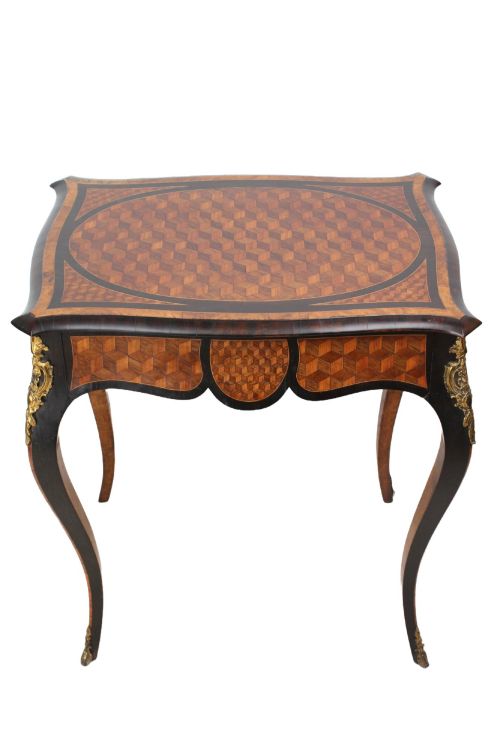
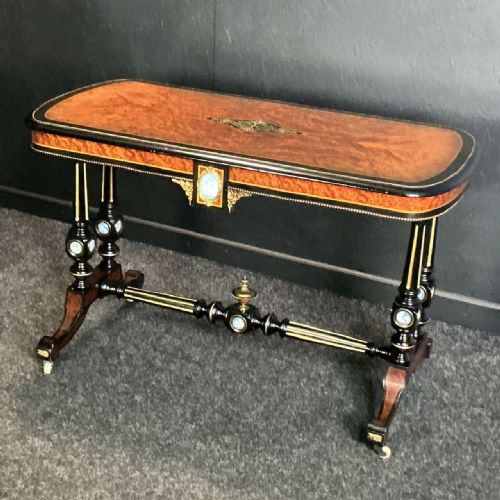
The selection on this page frequently includes nineteenth-century writing desks and writing tables that pair ebonised wood with burr walnut, sometimes incorporating crossbanding or marquetry inlay. Alongside standard desks, related forms such as bonheur du jour writing desks appear in walnut and ebonised finishes.
Makers and periods represented span Victorian English workshops and continental French influences, reflecting the widespread popularity of dark wood finishes during the 1860s and 1880s.
How they were made
Cabinet makers utilised solid walnut and burr walnut veneers, applying a dark ebonised finish to mouldings, legs, and structural frames to imitate ebony. Surfaces were often enhanced with crossbanding, marquetry inlay, and parquetry.
Metal mounts in ormolu and brass details, alongside leather writing inserts and porcelain plaques, were integrated into finer nineteenth-century examples to complement the contrasting dark and light timber tones.
Some nineteenth century desks hid compartments for inkwells and pens so cleverly that writers might spend minutes hunting for their stationery.
What varies in quality
Quality reveals itself in the depth of the timber figuring and the precision of the ebonised finish, where finer pieces display a smooth, consistent black ground that allows the grain of the underlying walnut to show through subtle contrast. The crispness of marquetry and parquetry inlay further separates standard production from superior cabinet work.
The integration of secondary materials such as ormolu mounts, brass hardware, and tooled leather inserts determines the tier of the piece, with heavier ornamentation and balanced proportions distinguishing exhibition-grade writing furniture from simpler domestic examples.
JAS Shoolbred·Paul Sormani
The Ebonised Walnut Desk Glossary
- Ebonised wood
- Timber treated with a dark stain or finish to resemble genuine ebony. This technique gained immense popularity during the Victorian era for contrast.
- Burr walnut
- Timber taken from a walnut tree growth, yielding highly figured and swirling grain patterns. It was frequently used for veneering desktop surfaces.
- Marquetry
- Decorative veneer patterns assembled from various woods to form pictorial or geometric designs. Craftsmen applied these intricate compositions to desk lids and table tops.
- Davenport
- A small compact writing desk featuring a sloped writing surface above a set of drawers. They were commonly produced in walnut during the nineteenth century.
- Crossbanding
- A border technique where veneer strips are laid perpendicular to the main grain direction. This frames the central panel of a desk top.
- Ormolu
- Gilt bronze ornamentation mounted onto furniture pieces. It provides metallic contrast against dark ebonised and walnut surfaces.
Ebonised Walnut Desk: Frequently Asked Questions
What is an ebonised walnut desk?
An ebonised walnut desk is a nineteenth-century writing piece that combines dark blackened wood framing with figured walnut panels or drawer fronts.
These items draw on Victorian and Aesthetic Movement design preferences, balancing deep exterior tones with the natural warmth of walnut timber.
How do I date an ebonised walnut desk?
Dating relies on stylistic clues, construction methods, and materials such as ormolu mounts or leather inserts typical of the nineteenth century.
Victorian and Aesthetic Movement pieces often feature specific brass hardware or marquetry patterns characteristic of workshops operating between the 1860s and 1880s.
Where were these desks used?
These desks served as functional writing furniture in private residences, libraries, and morning rooms during the nineteenth century.
Their decorative qualities allowed them to function both as practical workspaces and as statement furniture in prominent rooms.
How do I care for an ebonised walnut surface?
Maintenance requires gentle dusting with a soft cloth and avoiding direct sunlight or excessive moisture that might harm the veneer.
Preserving the ebonised finish and walnut grain involves occasional waxing using traditional furniture polish suited to antique wood.