

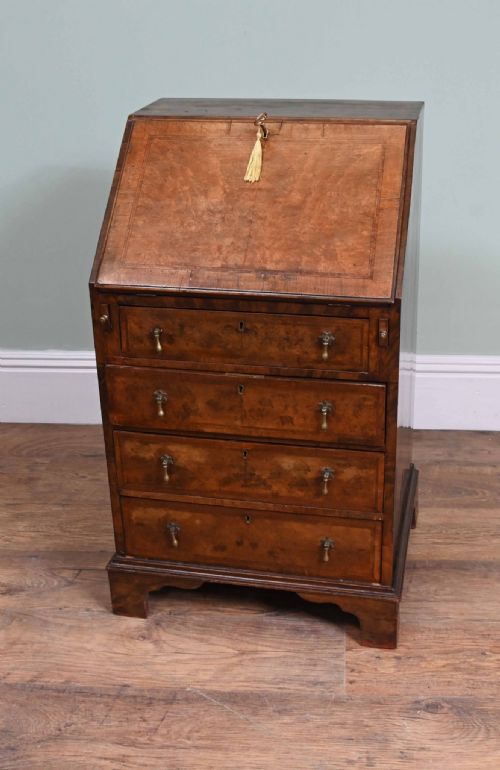
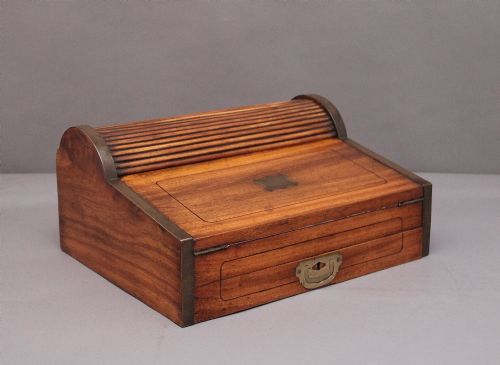


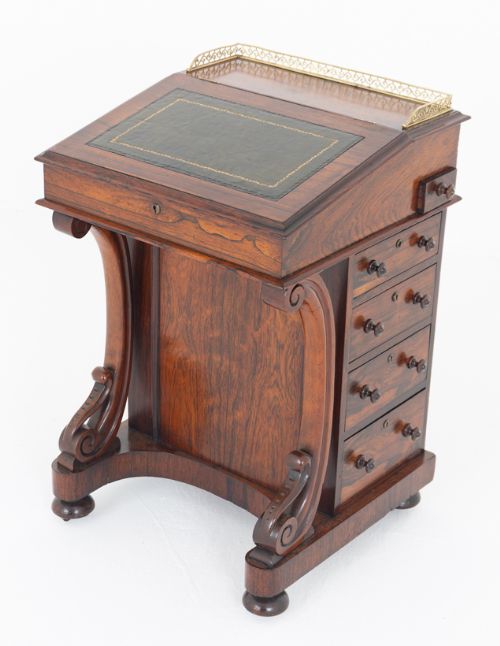


Victorian Slope Front Desk
A victorian slope front desk brings nineteenth-century craftsmanship into a modern study, offering dedicated writing space with built-in storage.
Victorian Slope Front Desk
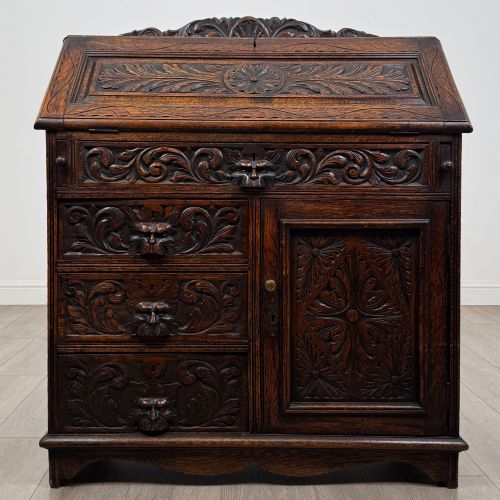
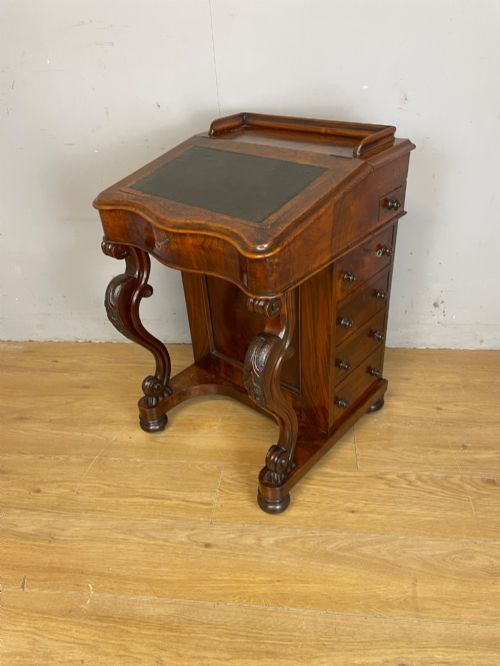
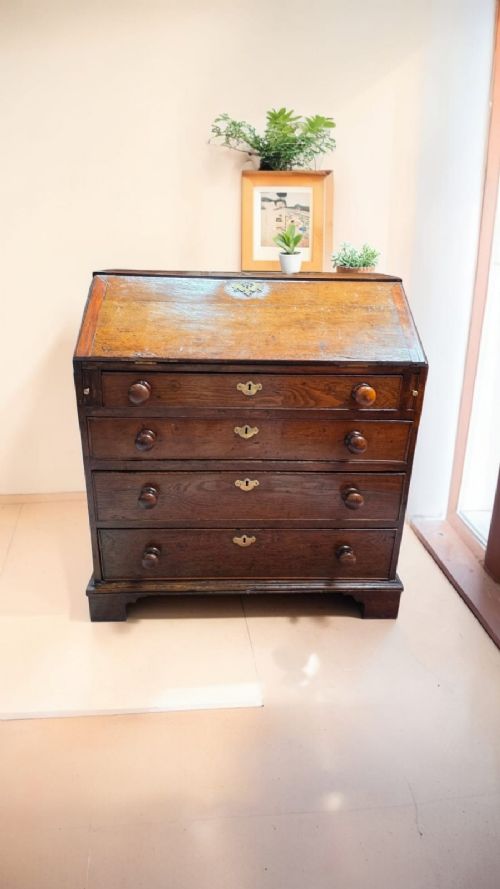
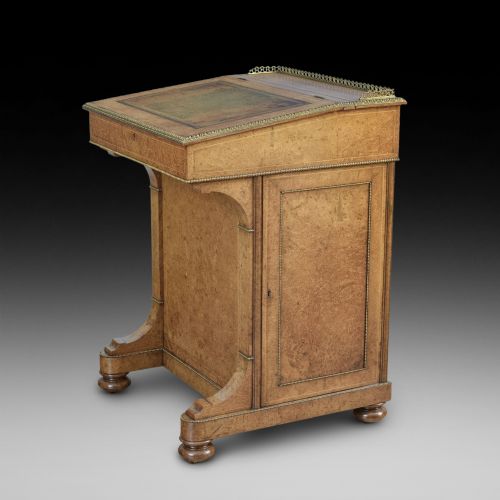
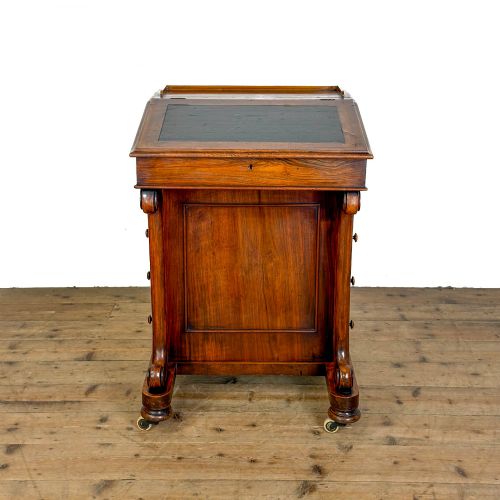
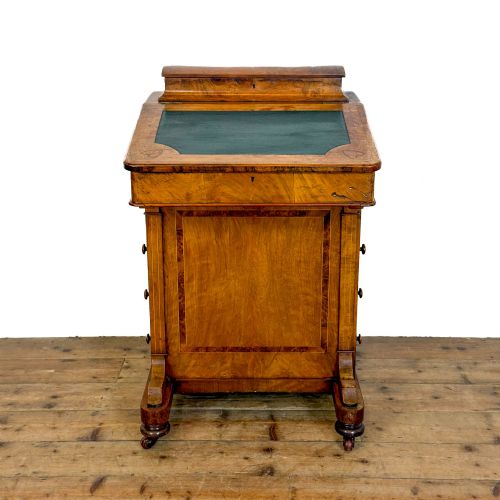
These pieces range from compact walnut Davenport desks featuring side drawers to substantial oak and mahogany bureaux with fitted pigeonholes. The selection includes stylistic variations running from Early Victorian and William IV pieces through to Louis XV revival and Gothic revival examples.
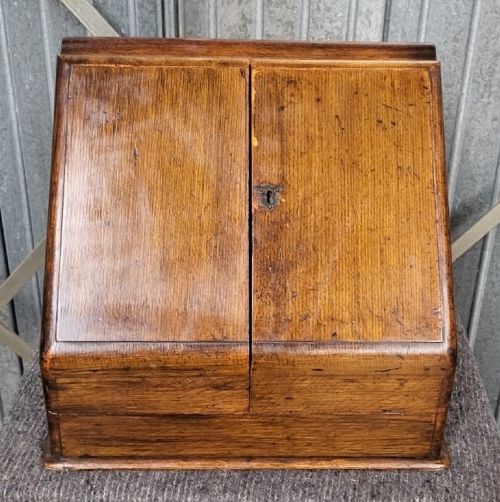
Smaller tabletop writing boxes and stationery cabinets also appear alongside larger freestanding writing tables. Originating primarily from the nineteenth century, these items reflect the domestic and professional writing habits of the era.
Materials and construction
Cabinet makers utilised dense hardwoods such as mahogany, oak, and rosewood, frequently applying burr walnut veneers to create striking figured surfaces on writing slopes and lids. Inlays of lighter timbers, satinwood, and marquetry decorate finer examples.
Brass mounts, handles, and hinges provide structural reinforcement and decorative contrast against the dark wood bodies. Leather inserts often line the writing surfaces, while internal compartments utilise smaller-scale secondary timbers for drawers and pigeonholes.
Current listings feature pieces spanning the Victorian period alongside Early Victorian and William IV examples, utilising walnut, burr walnut, mahogany, oak, and rosewood.
Quality and execution
The standard of execution depends heavily on the selection of timber veneers and the intricacy of the marquetry or brass inlay work. Pieces featuring matched burr walnut and finely hand-cut brass mounts occupy the upper tier of the range.
Internal complexity also distinguishes finer examples, where secret compartments, coordinated stationery boxes, and robust internal stationery fittings demonstrate superior craftsmanship. The precision of the joinery on the sloping writing lid and the retention of original hardware indicate the level of care invested in the piece.
Gillows
The Victorian Slope Front Desk Glossary
- Davenport desk
- A compact nineteenth-century writing desk featuring a sloping top and drawers accessed from the side. It typically rests on a pedestal base with a stationery compartment on top.
- Bureau
- A writing cabinet featuring an angled hinged flap that folds down to create a desk surface, concealing internal drawers and pigeonholes.
- Writing slope
- A portable box with a hinged sloping lid designed to hold writing paper and writing implements, often opening out to form a flat writing surface lined with leather.
- Bonheur du jour
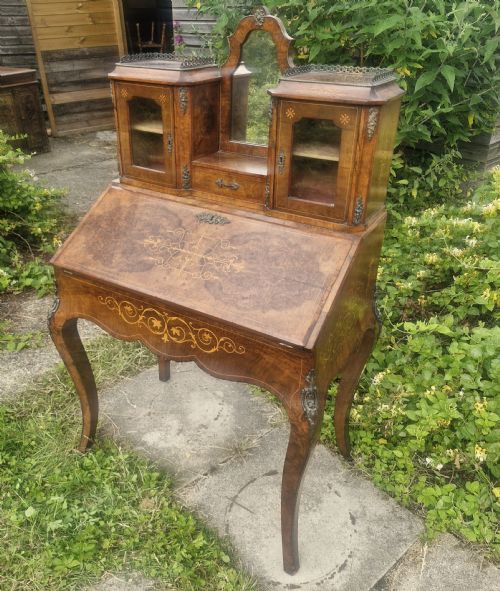
- A light lady's writing desk originating in the eighteenth century but appearing in Victorian variations, typically featuring a small cabinet or shelving superstructure on top.
- Marquetry
- Decorative patterns formed by inserting pieces of contrasting veneer into a wood foundation to create pictorial or geometric designs.
- Ormolu
- Gilded bronze mounts and decorative details applied to furniture to accent corners, locks, and handles.
Victorian Slope Front Desk: Frequently Asked Questions
What is a Davenport desk?
A Davenport desk is a compact form of Victorian writing desk featuring a sloping, leather-lined writing lid and a pedestal of drawers opening to the side. A small stationery box often sits fixed to the rear top surface.
First popularised in the early nineteenth century, this design offers practical workspace and storage while occupying a minimal footprint in a room.
How do I use a slope front desk today?
A slope front desk serves well as a laptop station or a dedicated spot for letter writing and household administration. The internal pigeonholes and small drawers organise modern stationery and small accessories efficiently.
Keeping the sloping lid clear allows the timber grain and marquetry details to remain visible as a decorative room feature when not in active use.
How can I tell a Victorian desk from later copies?
Examining the secondary timbers inside the drawers and the construction of the dovetails helps determine the age of the piece. Nineteenth-century examples display hand-cut joinery and signs of period wear appropriate to the materials used.
Hardware such as brass locks, hinges, and drawer pulls should match the manufacturing techniques and patination expected of the Victorian era.
What woods were commonly used for Victorian desks?
Cabinet makers relied heavily on mahogany, walnut, and oak for the primary carcasses of these desks. Burr walnut and amboyna veneers were frequently applied to create highly figured decorative surfaces on the exterior.
Secondary timbers such as pine or mahogany appear inside drawer construction, while rosewood and satinwood feature in specific revival styles and inlaid details.