





English Burr Walnut Desk
An English burr walnut desk brings rich, swirling grain and deep patination to a study, spanning eras from early Georgian craftsmanship to Art Deco lines.
English Burr Walnut Desk
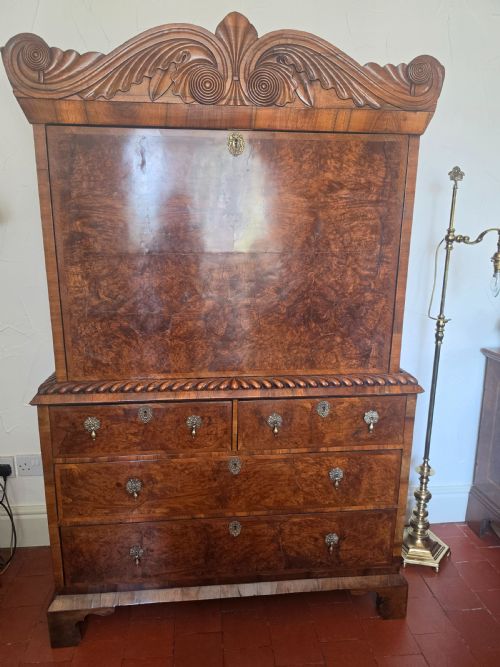
When you search for an english burr walnut desk, you encounter pieces designed for correspondence, administration, and display, ranging from compact writing slopes to grand pedestal forms and towering bureau bookcases. The selection balances early eighteenth-century forms with later nineteenth-century revival pieces and streamlined Art Deco interpretations.
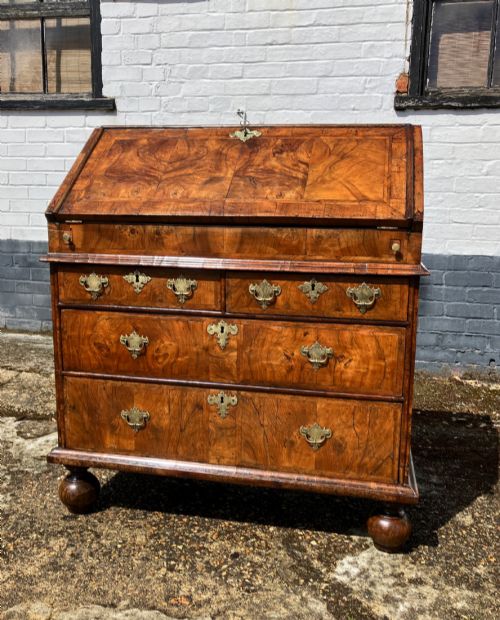
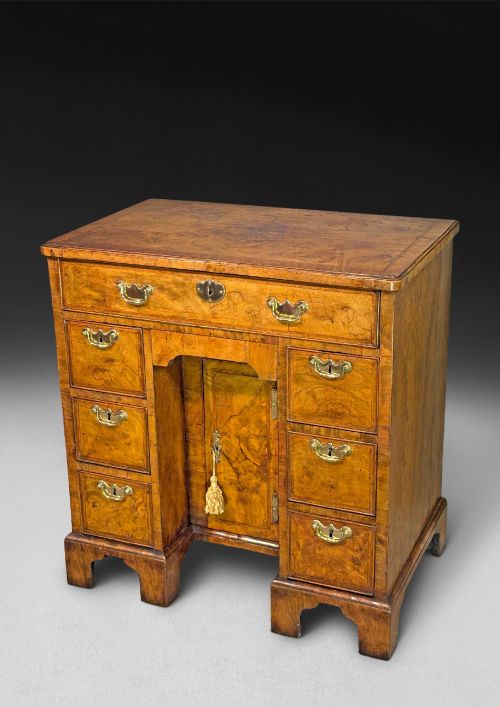
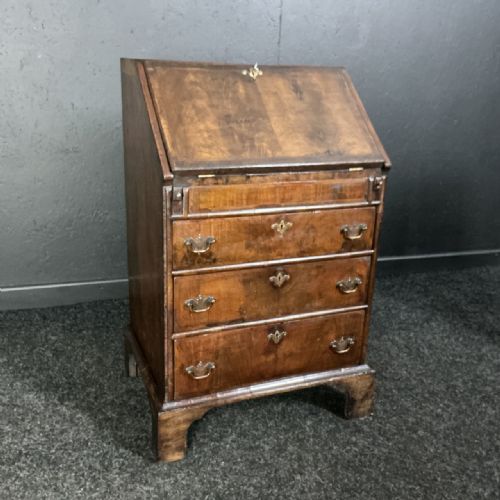
Early examples originate in the Georgian, Queen Anne, and William and Mary periods, presenting intricate cabinetwork with fall fronts or kneehole configurations. Later Victorian iterations favour the Davenport and pedestal formats, often integrating fitted leather writing surfaces and internal stationery compartments.
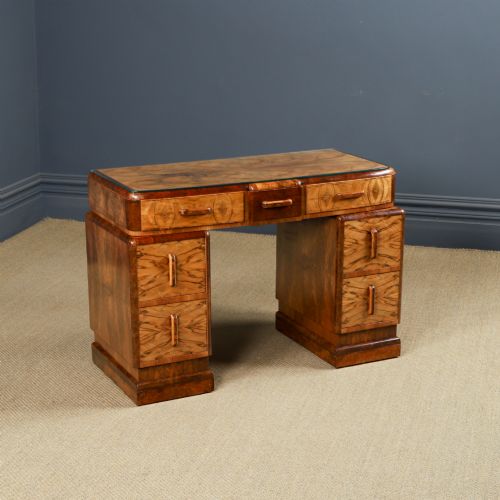
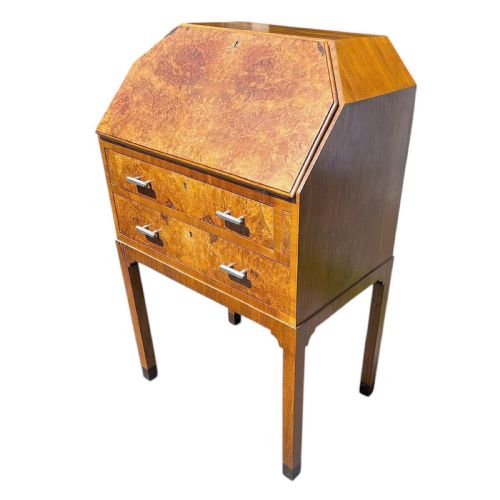
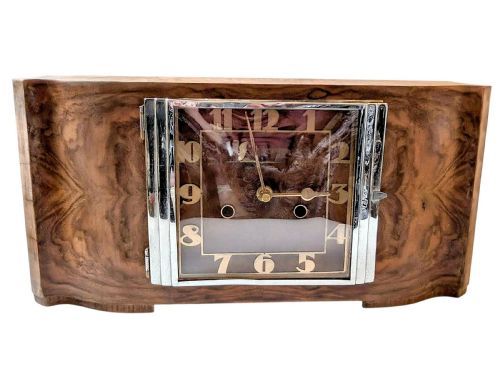
Art Deco variants introduce cloud-shaped silhouettes, chrome accents, and skyscraper pedestals while retaining the characteristic mottled figuring of the timber. Across all styles, secondary timbers such as oak frequently support the primary walnut construction.
Materials and Construction
Cabinetmakers constructed these pieces by applying thin veneers of highly figured burr walnut to more stable foundational woods, most commonly oak and mahogany. This technique displayed the intricate, swirling knot formations of the timber across flat surfaces and fall fronts without warping.
Joinery incorporated dovetailed drawer construction and brass hardware, including handles, escutcheons, and occasional campaign mounts. Leather inserts frequently lined the writing surfaces of later nineteenth-century tables, while glass doors featured on bookcase top sections.
English Burr Walnut Desk Retail Price Guide 2026
Typical asking prices for english burr walnut desk among the pieces listed under this phrase on Sellingantiques today, from the lower quarter to the upper quarter. They describe what is for sale here now, not the wider market.
The listings span multiple centuries, uniting early eighteenth-century Queen Anne and Georgian bureau bookcases with Victorian Davenport desks and Art Deco writing tables.
Factors That Distinguish Quality
Quality rests upon the density and placement of the burr walnut veneer, where symmetrical grain matching across drawer fronts denotes superior craftsmanship. The richness of the natural patina and the preservation of original surface finishes dictate the visual depth of the piece.
The integrity of internal secondary timbers, original brass fittings, and functional mechanisms such as writing slopes or secret compartments elevate a piece. Master cabinetmakers executed tight dovetails and precise marquetry that remain intact through centuries of use.
Charles Tozer·Druce And Co·Mappin And Webb·Waring And Gillow
The English Burr Walnut Desk Glossary
- Burr walnut
- A figured wood veneer harvested from the excrescences or burls of walnut trees, prized for its swirling, chaotic grain patterns. It provides the primary decorative surface on high-status furniture.
- Bureau
- A sloping desk with a hinged fall front that conceals a fitted interior of small drawers and pigeonholes. Early examples often rest upon a chest of drawers or a kneehole base.
- Kneehole desk
- A flat-topped writing desk featuring a recessed central cupboard flanked by pedestals of small drawers. This compact form emerged prominently during the early eighteenth century.
- Davenport
- A small, compact Victorian writing desk featuring a sloping, leather-lined desktop above a set of side drawers. The top section frequently incorporates a stationery compartment.
- Writing slope
- A portable or table-standing box with an angled lid designed for correspondence. When opened, the hinged surfaces reveal pen trays, inkwells, and a baize or leather writing surface.
- Bureau bookcase
- A tall cabinet combining a lower bureau desk with an upper shelving section enclosed by panelled or glass doors. These architectural pieces dominated elite interiors in the Georgian and Queen Anne periods.
English Burr Walnut Desk: Frequently Asked Questions
How do I date an antique desk?
Dating relies upon architectural style, construction methods, and secondary woods like oak. Eighteenth-century pieces exhibit pegged joints and candle slides, whereas Victorian models introduce mechanical fittings and leather inserts.
Hardware styles, dovetail fineness, and drawer linings also offer reliable indicators of period manufacture.
How do I care for burr walnut?
Burr walnut requires stable environmental conditions away from direct sunlight and extreme humidity. Sunlight fades the natural warm tones of the timber, while central heating causes veneer to dry and lift.
Application of traditional wax polish maintains the moisture and sheen of the original surface without sealing the wood.
What is a Davenport desk?
A Davenport is a compact Victorian desk featuring an inclined writing surface above a pedestal of side drawers. The top often incorporates a stationery well accessed by a hinged lid.
Designed for domestic letter-writing, their small footprint allowed them to sit comfortably in Victorian drawing rooms.