



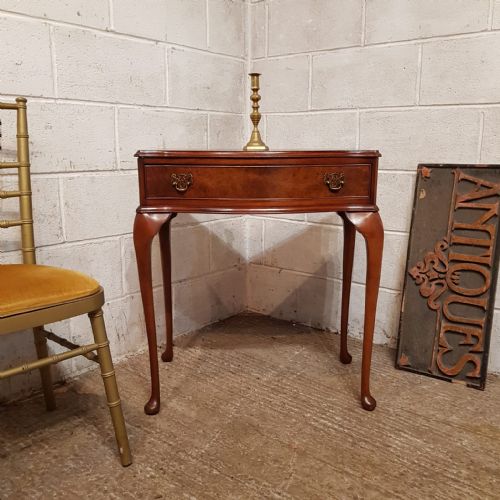


Walnut Cabriole Sofa
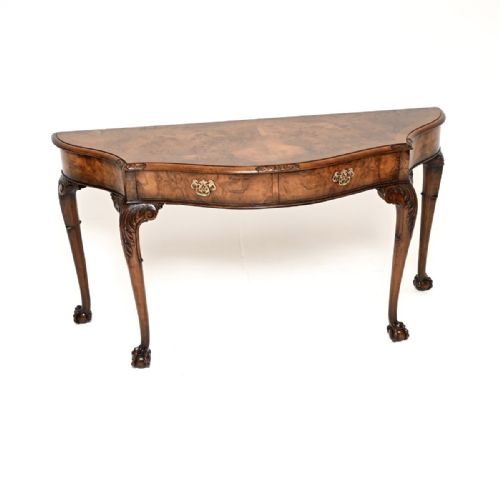
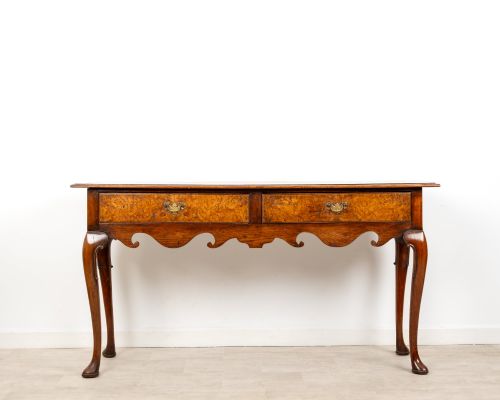
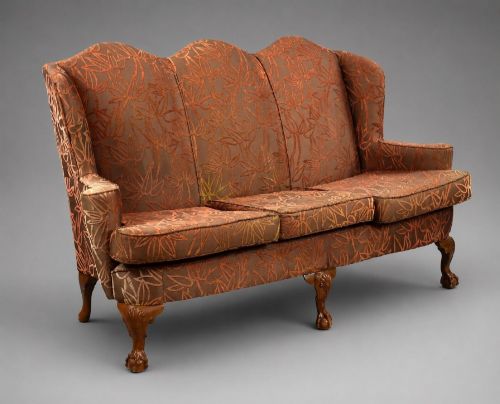
A walnut cabriole sofa brings unmistakable period presence to a room, uniting rich timber frames with flowing, curved legs.

Walnut Cabriole Sofa
A walnut cabriole sofa typically combines a sturdy timber frame with padded seating, spanning multiple eras from earlier Georgian-inspired designs to later revival pieces. When exploring this selection, buyers frequently encounter Queen Anne revival models alongside Victorian and Edwardian interpretations.
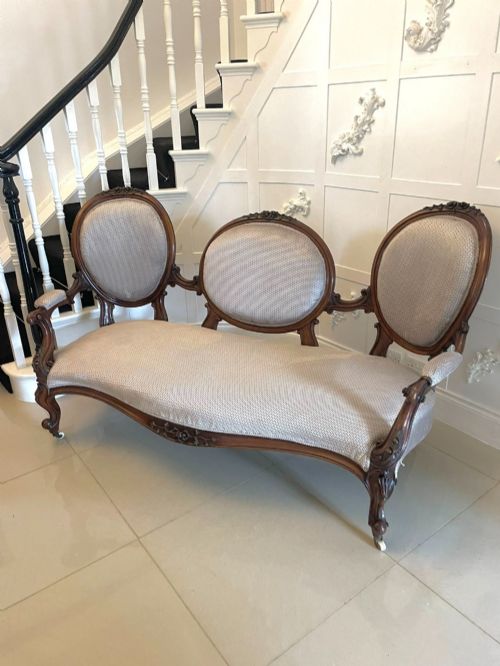
The form encompasses various seating capacities, ranging from compact two-seater settees to larger three-seater couches. Many examples reflect historical revivals, drawing heavily upon eighteenth-century aesthetics while utilising the rich grain of walnut.
Originating across different European traditions, these settees showcase distinct regional carving and upholstery details. The persistent appeal lies in the harmonious balance between the curving wooden supports and the upholstered body.
Assessing craftsmanship and finish
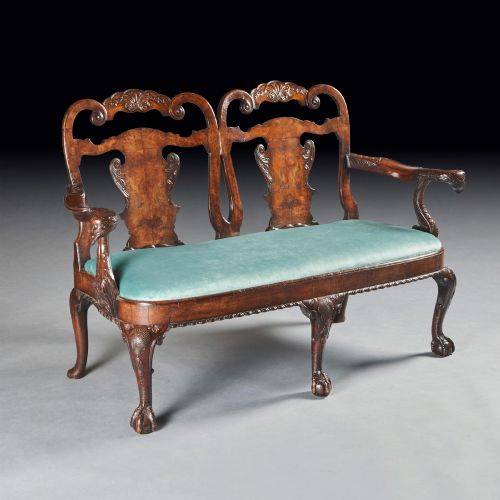
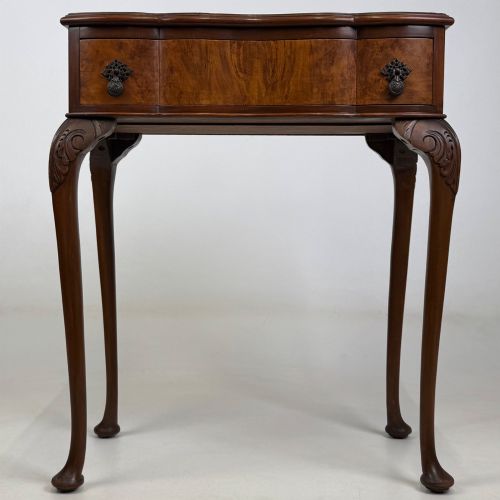
Quality rests upon the depth of the timber selection, particularly where figured burr walnut veneers or solid cuts display rich colour and consistent figuring. Superior pieces demonstrate crisp, unsoftened hand-carving along the shoulders and knees of the cabriole legs.
The integrity of the frame construction and the fidelity of the historical revival style determine the overall standing of an example. Finer pieces maintain balanced proportions and harmonious integration between the upholstered body and the wooden chassis.
Some nineteenth-century makers faithfully recreated eighteenth-century chair-back settees, proving that historical copying has kept craftsmen busy for generations.
The Walnut Cabriole Sofa Glossary
- Cabriole leg
- A furniture leg that curves outward at the knee and tapers inward toward the ankle, typically ending in a pad or claw foot. This distinctive shape derives from classical antiquity and gained prominence during the eighteenth century.
- Burr walnut
- A specialised wood veneer taken from the wart-like growths on walnut trees, prized for its swirling, intricate grain patterns. Cabinet makers applied these decorative sheets to prominent surfaces to create visual depth.
- Canapé
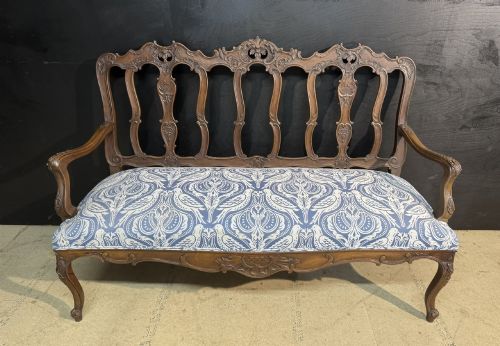
- A traditional French-style decorative sofa featuring an exposed wooden frame and upholstered seat and back. These forms often incorporate elaborate carving along the top rail.
- Bergère
- An enclosed upholstered armchair or sofa with wooden framing and cane-work side panels. The style emerged in France and offers a lighter visual weight than fully padded upholstery.
- George II design
- A heavy-set, architectural furniture style characterised by polished mahogany or walnut, bold carved details, and substantial proportions. Later revival pieces frequently emulate these distinct eighteenth-century motifs.
Walnut Cabriole Sofa: Frequently Asked Questions
How do I identify a revival period piece?
Revival pieces emulate earlier historical eras, such as the Queen Anne or Georgian periods, using nineteenth- or twentieth-century manufacturing techniques. Examination of the timber seasoning, secondary woods, and internal fixings usually reveals the actual production era.
Stylistic cues like machine-cut joinery or specific Victorian framing methods help distinguish later interpretations from genuine eighteenth-century work.
Where should I place a settee in a room?
These settees work effectively as primary seating in a drawing room or as decorative statement pieces in a spacious hallway. Their finished wooden frames and carved backs look striking when viewed from behind in an open-plan layout.
Consider pairing them with complementary side tables or occasional furniture in matching walnut finishes to create a cohesive arrangement.
What is the difference between a settee and a couch?
The terms are often used interchangeably, though historically a settee denotes a light, decorative wooden-framed seat for two or more people. Couches frequently imply heavier, more fully upholstered lounging furniture designed for relaxed seating.
In antique contexts, structured wooden frameworks with exposed cabriole legs are more commonly catalogued as settees or sofas.
How do I care for walnut wood frames?
Walnut benefits from occasional polishing with appropriate natural waxes to maintain the lustre of the grain and prevent the timber from drying out. Avoid placing wooden furniture in direct sunlight or near sudden heat sources that could cause the veneer to warp.
Gentle dusting with a soft, dry cloth preserves both the polished surface and any delicate hand-carved details.