

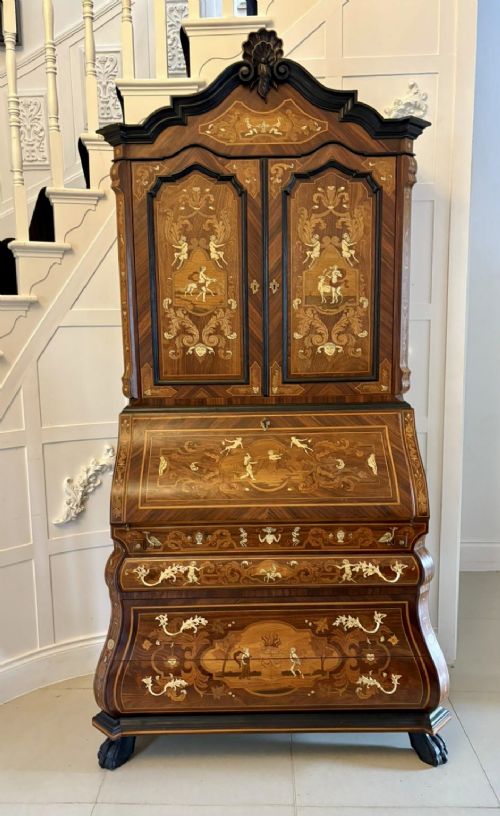
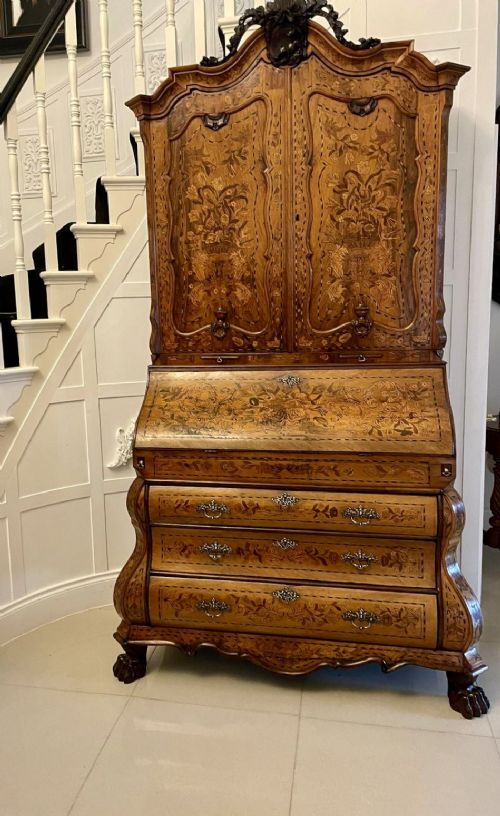

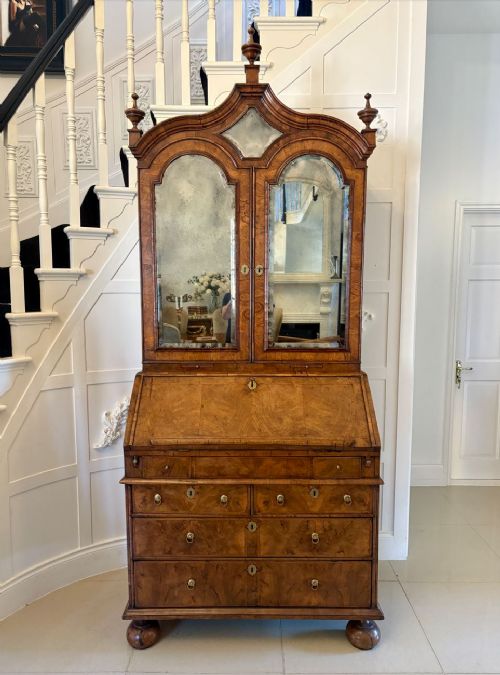
Walnut Bureau with Bookcase
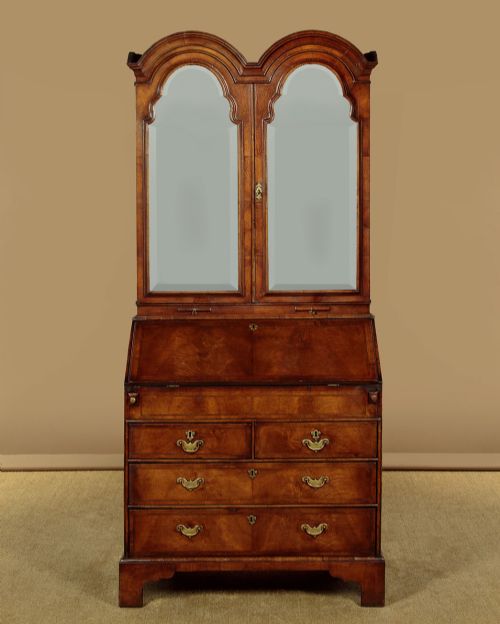
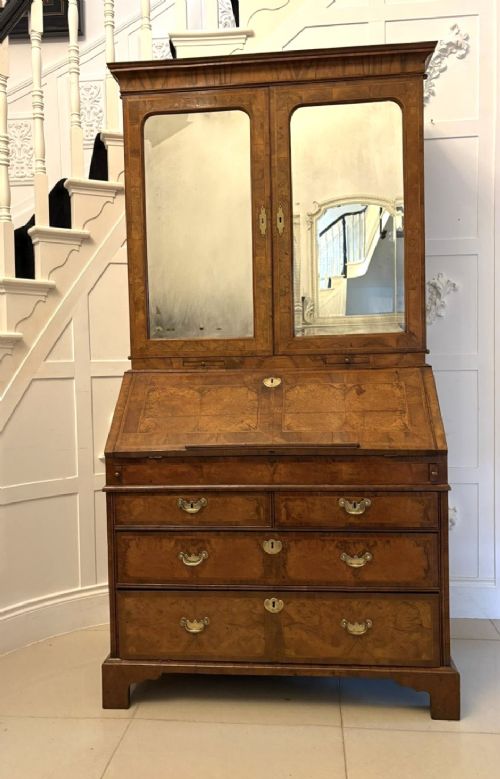
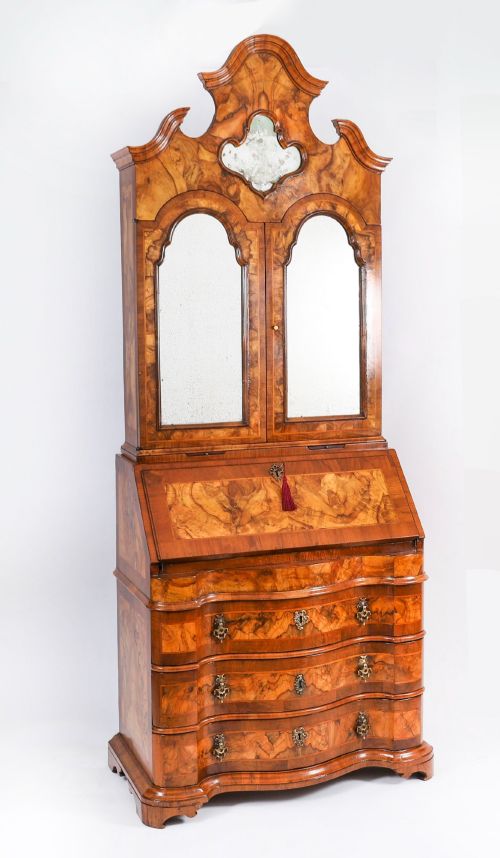
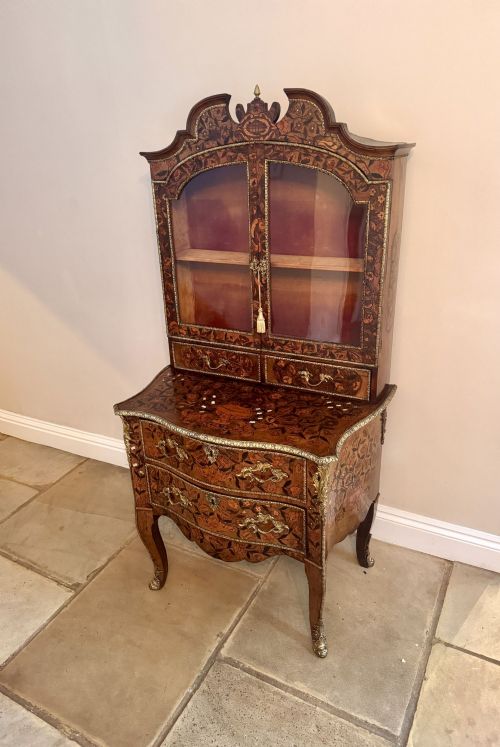
A walnut bureau with bookcase brings together a fitted writing slope and glazed upper shelving, offering dual storage and display.
Walnut Bureau with Bookcase
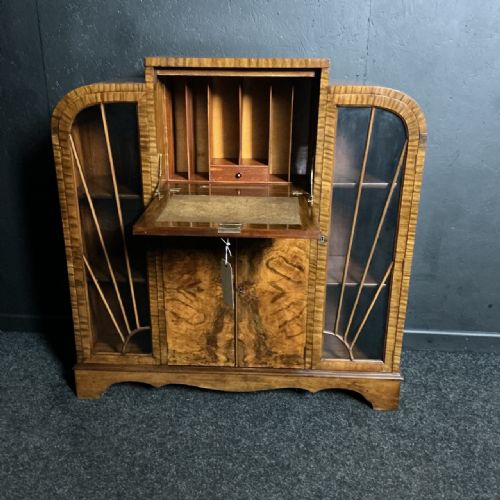
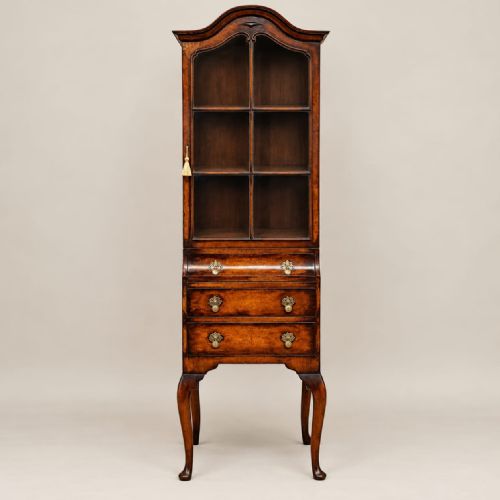
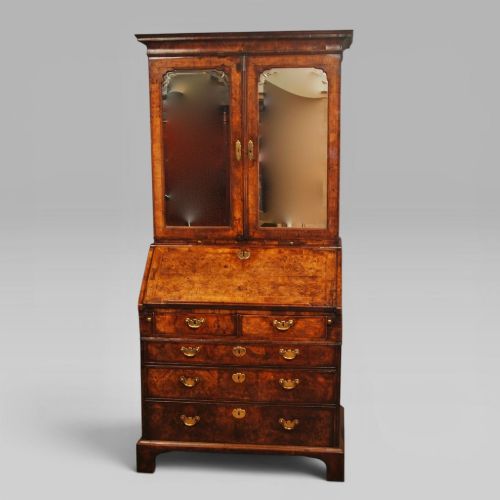
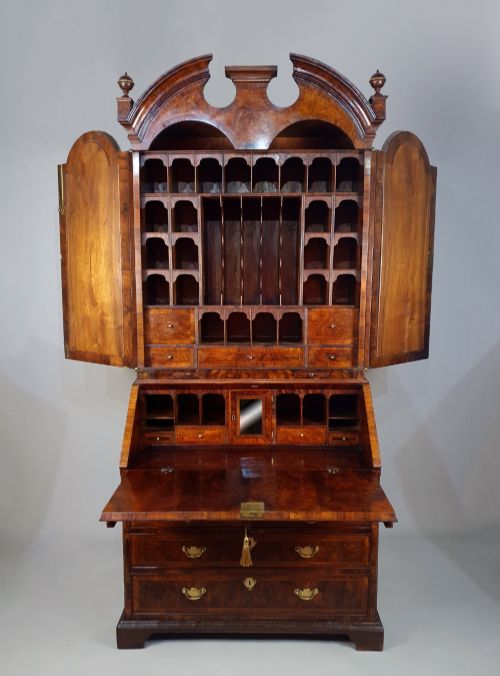
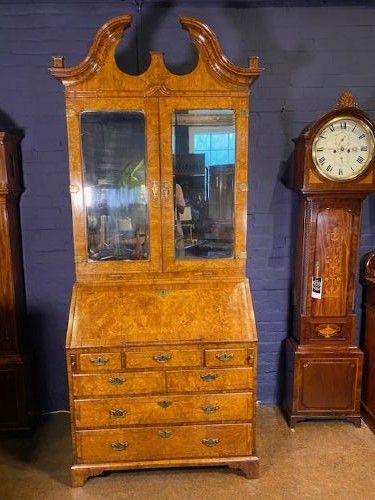
A walnut bureau with bookcase combines a lower desk section containing a fall-front writing flap and internal drawers with an upper glazed cabinet for books. These pieces serve both working and display functions within domestic interiors.
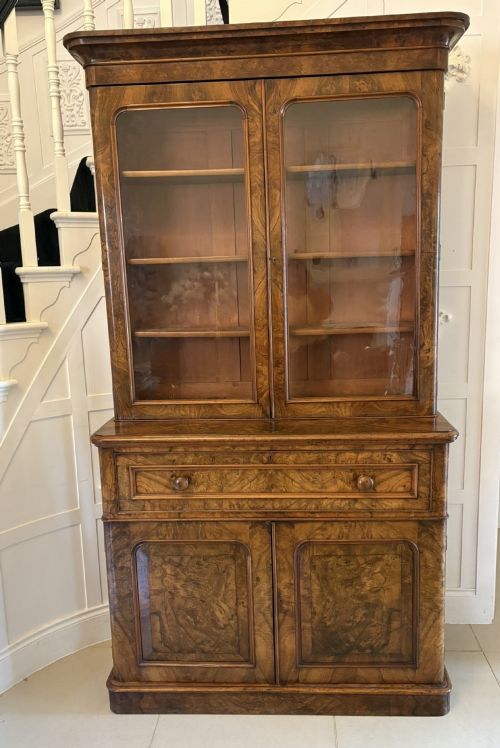
Most examples encountered on this page date from the eighteenth century, spanning the Queen Anne, George I, and George II periods, alongside later revivals from the Victorian, Edwardian, and twentieth-century eras.
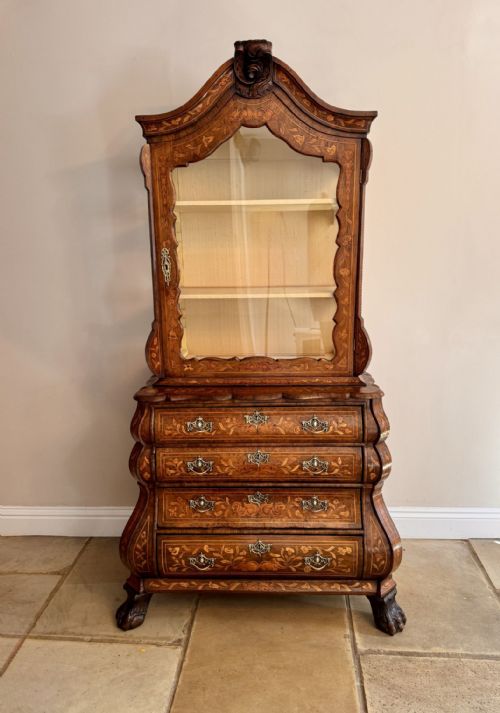
Regional variations appear alongside English forms, including South German Baroque, Dutch bombe, Venetian, and Italian marquetry-inlaid interpretations.
How they were made
Cabinet makers utilised solid walnut, oak as a secondary timber for drawer linings and internal framing, and burr walnut veneer applied to carcases. Fruitwood inlay and marquetry enrich specific surfaces.
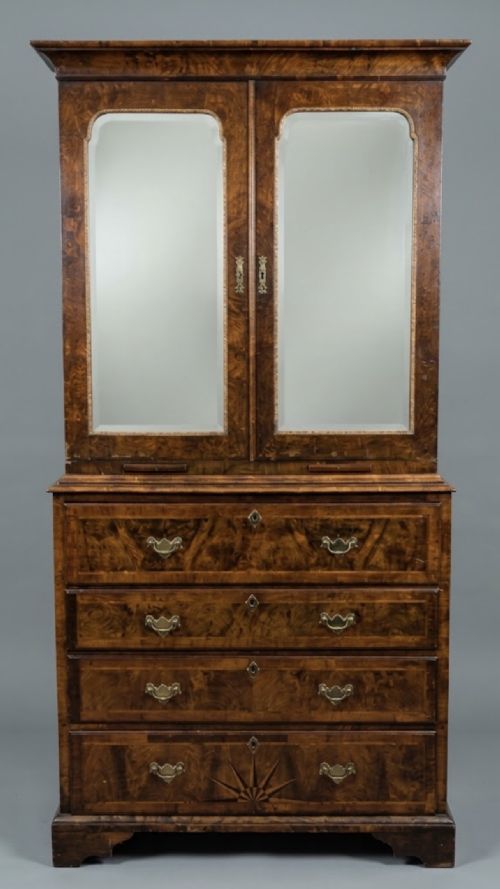
Glazed doors utilise glass panels held in wooden framing, occasionally paired with mirror glass or candle slides. Brass hardware, including drop handles and escutcheons, secures doors and drawers.
Structural elements incorporate double dome pediments, swan neck pediments, and blind fretwork carving, reflecting the stylistic preferences of Georgian and earlier makers.
Walnut Bureau with Bookcase Retail Price Guide 2026
Typical asking prices for walnut bureau with bookcase among the pieces listed under this phrase on Sellingantiques today, from the lower quarter to the upper quarter. They describe what is for sale here now, not the wider market.
Listings feature walnut, burr walnut veneer, oak, fruitwood inlay, and brass, spanning the eighteenth century to the twentieth century.
What varies in quality
The choice and grain configuration of the timber establish the visual impact, with figured burr walnut and symmetrical veneers marking the upper tiers of craftsmanship. The retention of original patination and brass hardware alters the historical integrity.
Internal joinery standards separate workshops, visible in the dovetailing of small drawers within the bureau interior and the execution of secret compartments. The complexity of the upper cabinet architecture, from simple flat tops to double domed cornices, dictates the level of ambition in the original commission.
The Walnut Bureau with Bookcase Glossary
- Burr walnut
- A figured wood veneer taken from the excrescence on a walnut tree, prized for its swirling patterns. Cabinet makers selected it for principal facades to create decorative surface movement.
- Fall-front
- A hinged writing flap that drops down to form a horizontal desk surface. It conceals pigeonholes and small drawers when closed.
- Double dome
- An upper pediment shape featuring two rounded arches side by side. This architectural roofline appears on high-status eighteenth-century cabinet work.
- Candle slide
- A pull-out wooden board mounted beneath the bookcase doors designed to hold lighting. It provides illumination for the writing surface below.
- Marquetry
- A decorative technique arranging thin veneer pieces to form pictorial or geometric patterns. Italian and Dutch workshops frequently employed this method.
Walnut Bureau with Bookcase: Frequently Asked Questions
How do I date a walnut bureau bookcase?
Dating relies on stylistic markers such as bracket feet, pediment shape, and handle design, moving from Queen Anne and George I walnut pieces towards later Victorian interpretations.
Secondary woods like oak in the drawer linings and construction methods also help establish the period of manufacture.
What were candle slides used for?
Candle slides pull out from beneath the upper bookcase to hold lighting for the writing desk below. They offer direct illumination onto the fall-front flap during evening use.
Their presence indicates a piece designed for active correspondence before the advent of electricity.
How do I care for burr walnut veneer?
Burr walnut requires stable room humidity and protection from direct sunlight to prevent veneer lifting and fading. Regular dusting with a dry cloth maintains the polished surface.
Harsh chemical cleaners should be avoided to preserve the historical finish.
What is the difference between bureau cabinets and bureau bookcases?
Bureau bookcases feature glazed or mirrored upper doors intended for displaying volumes. Bureau cabinets may enclose the upper section behind solid wooden doors rather than glass.
Both types combine a lower writing desk with upper storage.