

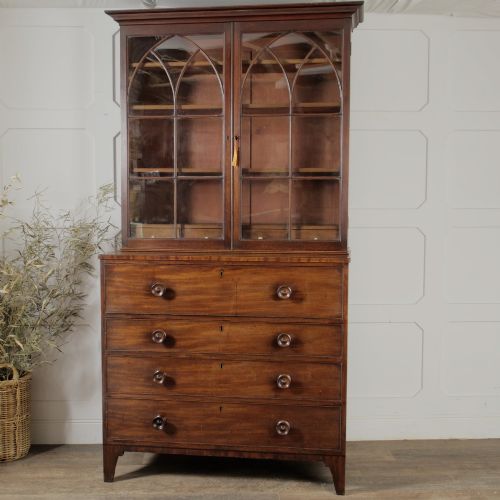


Georgian Arched Bureau Bookcase
A georgian arched bureau bookcase is a commanding writing cabinet with glazed upper doors, built to organise correspondence and display prized volumes.
Georgian Arched Bureau Bookcase
Buyers seeking a georgian arched bureau bookcase encounter grand forms spanning the eighteenth and early nineteenth centuries, executed in rich hardwoods. These architectural cabinets combine a fitted bureau writing compartment below with enclosed shelving above, crowned by distinctive arched glazing bars.
Examples on this page draw from the Georgian, Regency, and George I periods, alongside select later interpretations. The construction unites bureau cabinets, secretaire bookcases, and traditional bureau bookcases into a cohesive tradition of domestic utility and display.
Walnut and mahogany dominate the offerings, occasionally enhanced by burr walnut veneer or marquetry inlay. The scale demands dedicated wall space, serving as the architectural anchor of a traditional library or study.
Construction and Materials
Cabinet makers utilised dense primary timbers such as mahogany and walnut, applying figured veneers over sturdy secondary woods to create rich surface movement. Glass was laboriously hand-blown and leaded or framed within timber astragals to form the characteristic arched upper doors.
Internal bureau fittings required meticulous joinery, incorporating pigeonholes, secret drawers, and leather-lined writing surfaces. Brass hardware, including escutcheons and drop handles, secured the heavy doors and fitted drawers.
Georgian Arched Bureau Bookcase Retail Price Guide 2026
Typical asking prices for georgian arched bureau bookcase among the pieces listed under this phrase on Sellingantiques today, from the lower quarter to the upper quarter. They describe what is for sale here now, not the wider market.
Current listings span the eighteenth and nineteenth centuries, demonstrating the enduring popularity of walnut and mahogany across the Georgian and Regency periods.
Markers of Quality
Superior quality rests in the selection of timber figures, where matched burr walnut veneers or dense mahogany grain flow harmoniously across the fall-front and drawer facades. The crispness of the arched glazing bars and the depth of the interior joinery distinguish ambitious workshops from standard production.
Proportion and architectural balance dictate the visual success of each cabinet, with finer pieces maintaining delicate sightlines in the astragals despite the heavy weight of the glass. Original brassware and undisturbed timber patination further elevate the standing of a piece.
GILES GRENDY
The Georgian Arched Bureau Bookcase Glossary
- Bureau bookcase
- A dual-purpose furniture form featuring a sloping writing flap above drawers, surmounted by an enclosed bookcase cabinet. This combination serves both study and storage needs.
- Secretaire bookcase
- A tall cabinet housing a fitted writing drawer with a drop-front mechanism instead of a sloping desk flap. The interior conceals small drawers and pigeonholes for correspondence.
- Astragal
- A moulded timber strip used to hold individual panes of glass within a sash door. In these pieces, they form the signature arched profile.
- Burr walnut veneer
- A thin slice of figured walnut timber taken from the gnarled growth of a tree. It yields intricate, swirling grain patterns across large surfaces.
- Escutcheon
- A protective brass plate surrounding a keyhole. They prevent the timber from wearing around the lock.
Georgian Arched Bureau Bookcase: Frequently Asked Questions
How do I date these cabinets?
Dating relies on timber choice, architectural style, and construction methods. Walnut predominated in the early eighteenth century, while mahogany gained preference later in the Georgian period.
Secondary woods, handle types, and the profile of the arched glazing bars offer further chronological clues. Examining internal drawer construction reveals the working methods of the period.
Where should I place one?
These tall cabinets require stable wall placement away from direct heat sources and strong sunlight. Their imposing height makes them suitable for libraries, studies, or spacious living rooms.
Ensure adequate floor space is available for the fall-front desk or secretaire drawer to open fully. The upper glass doors also need clearance for routine cleaning.
How do I care for the wood?
Maintain a stable room temperature and humidity to prevent the timber veneers from cracking or lifting. Dust regularly with a soft, dry cloth and avoid silicone-based polishes.
Occasional application of appropriate wax feeds the old wood and preserves the surface sheen. Protect the leather writing surface from sharp implements and damp objects.