
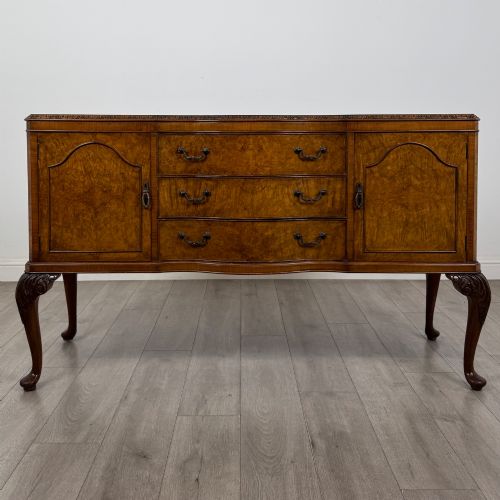
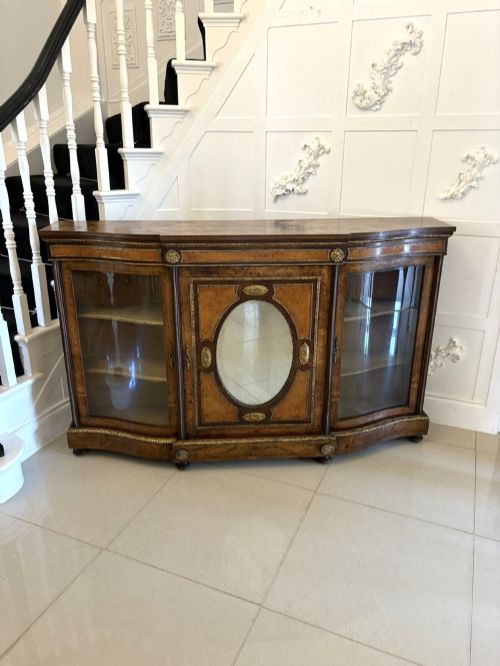
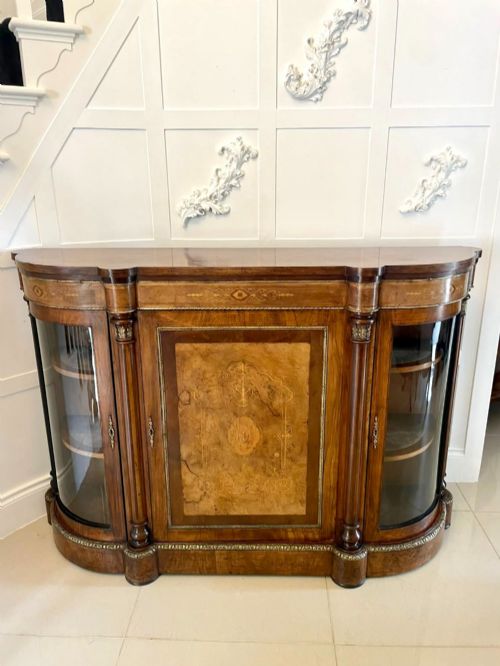
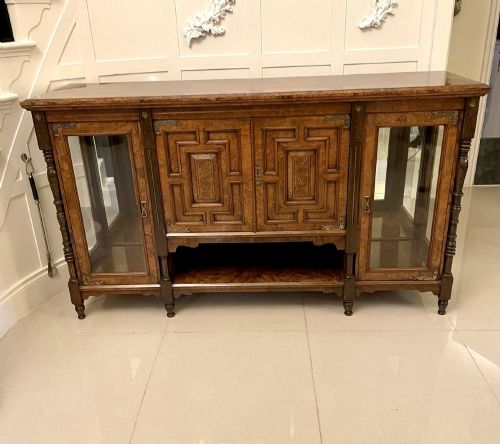


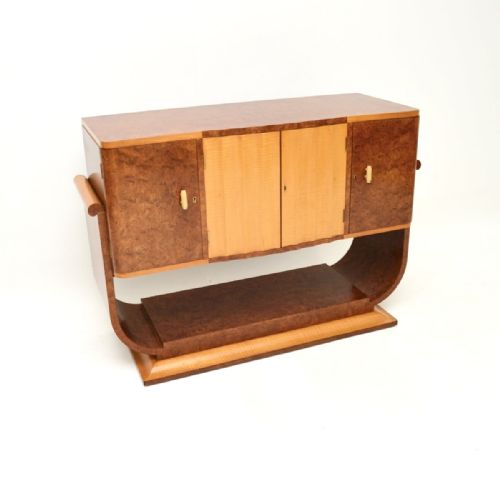
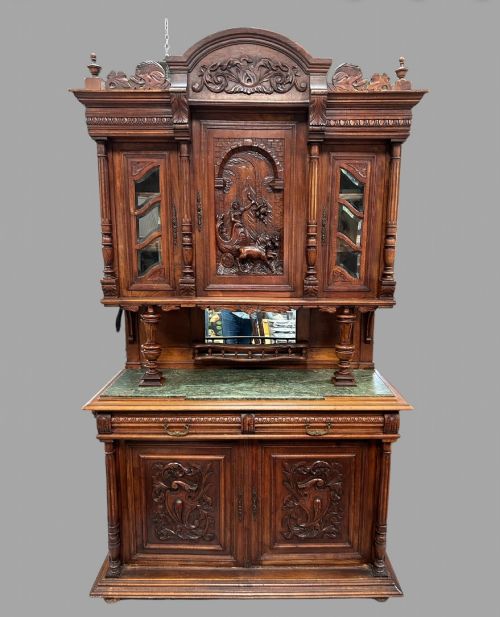
Walnut Buffet Cabinet
A walnut buffet cabinet brings substantial presence and rich grain to a dining room, combining generous storage with formal display.
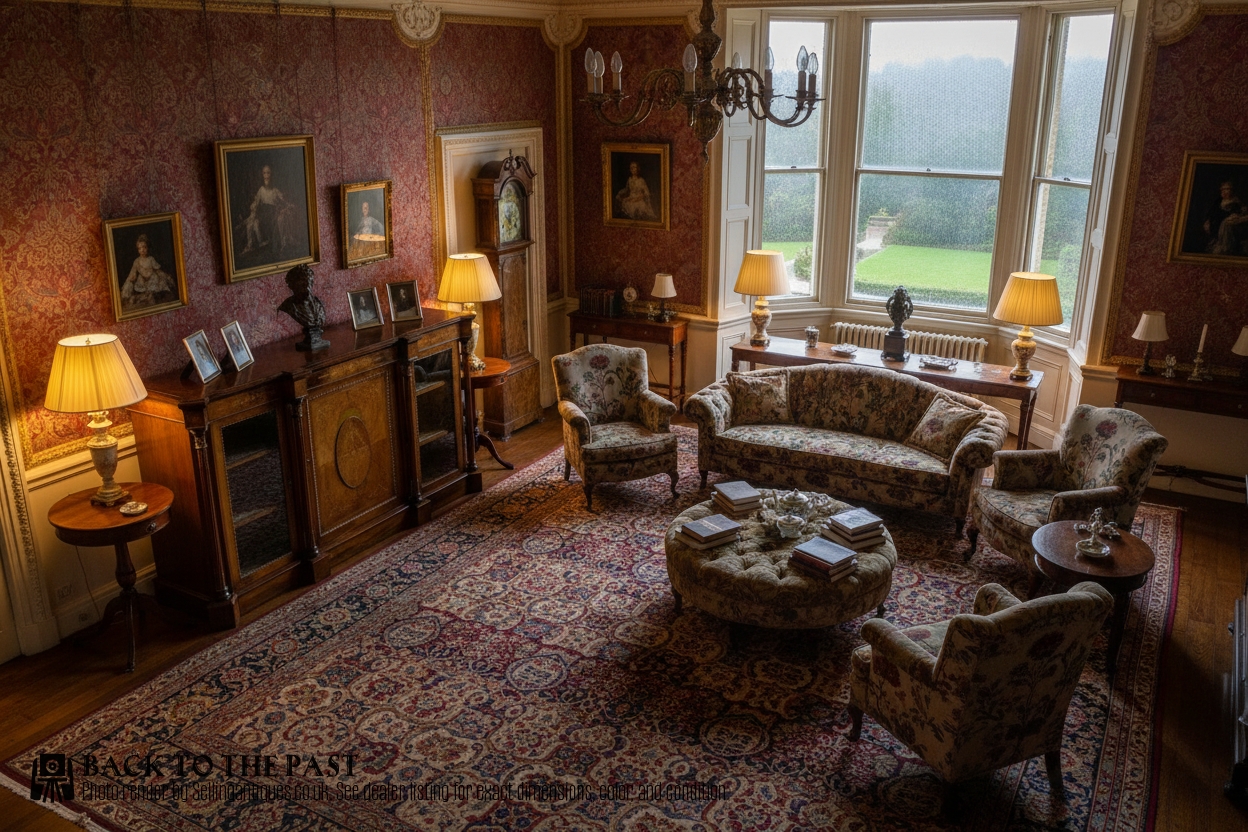
Walnut Buffet Cabinet
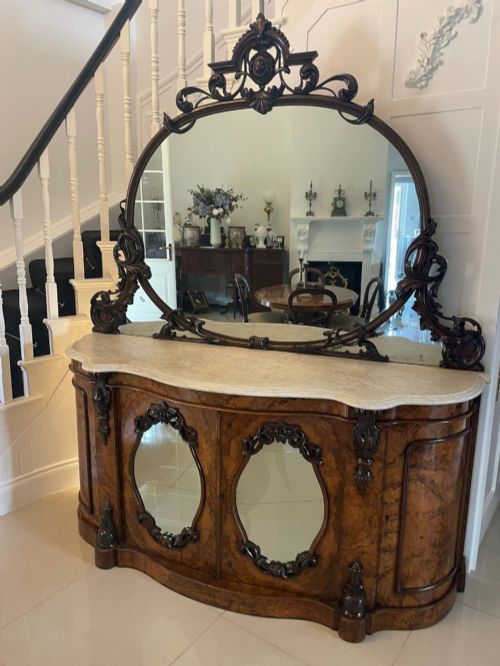
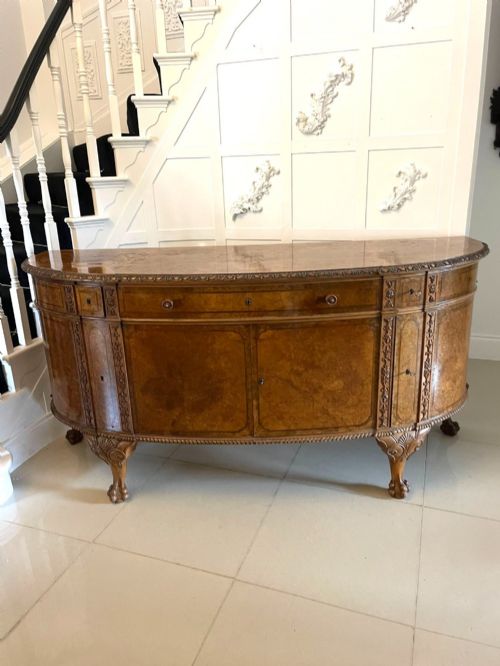
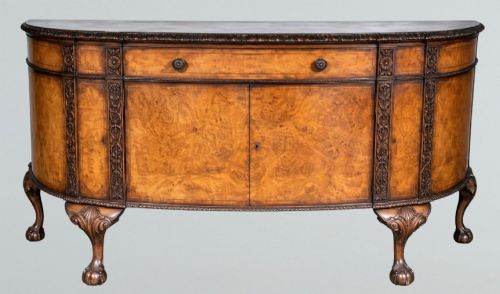
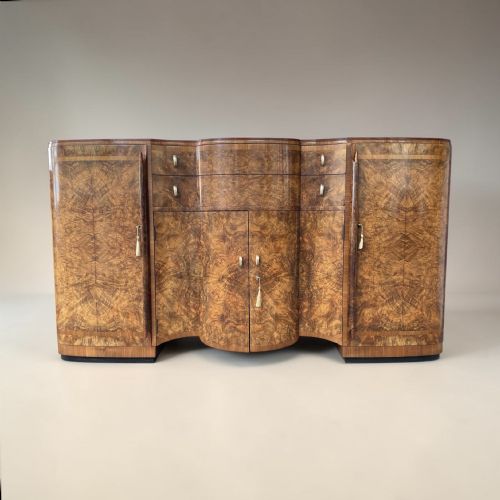
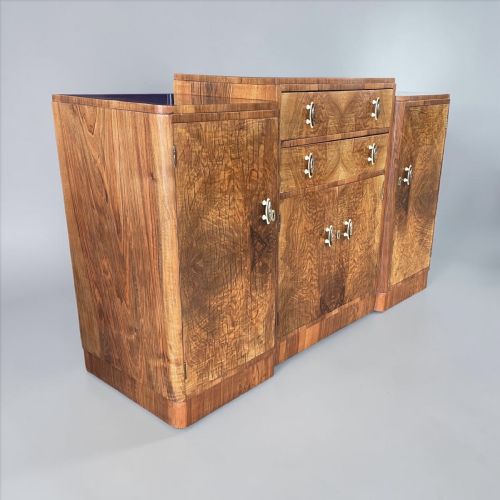
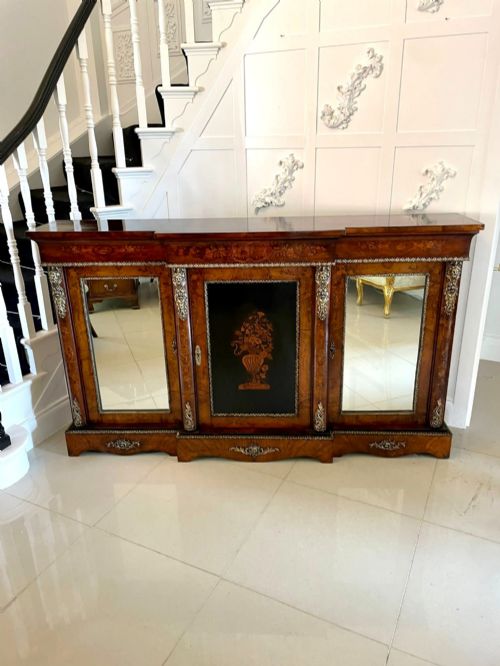
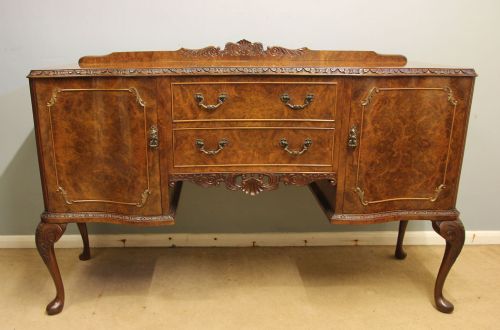
A walnut buffet cabinet spans several distinct historical periods, appearing primarily as Victorian credenzas, Edwardian sideboards, and sleek Art Deco server units. These pieces function as large storage vessels, often incorporating cupboards, drawers, and display surfaces designed for dining rooms and formal reception spaces.
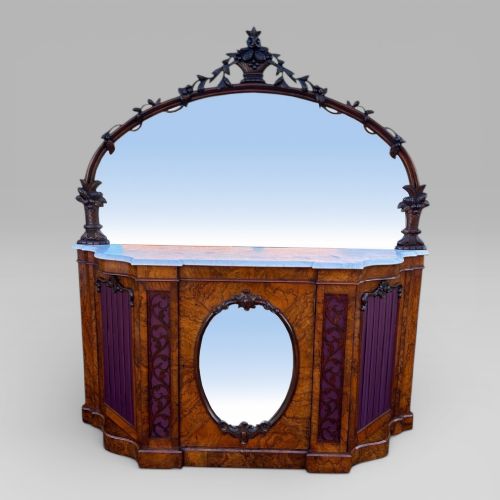
The materials and forms vary widely according to the decades of production, moving from heavily carved mid-nineteenth-century Revival designs to streamlined twentieth-century geometric surfaces. Buyers encounter everything from serpentine-fronted sideboards to marble-topped credenzas fitted with glass doors and mirrored backs.
The selection ranges across British and French cabinet-making traditions, encompassing Edwardian refinement, Victorian marquetry, and Cotswold School craftsmanship. Each piece reflects the prevailing domestic requirements of its era, balancing utility with decorative impact.
How They Were Made
Cabinet makers utilised solid timber alongside wood veneer, applying highly figured burr walnut across primary surfaces to create dramatic swirling grain patterns. Secondary timbers provided internal structural stability for heavy frames and large shelving compartments.
Decorative embellishments frequently included cast or chased ormolu mounts, intricate floral marquetry, and mother-of-pearl inlay set directly into the walnut ground. Marble tops appeared on French and Victorian variants, providing a durable and cool surface for serving food.
Glass doors, carved mirror backs, and brass hardware completed the construction, requiring precise joinery to house heavy bevelled glass and hinged cabinet doors securely.
Walnut Buffet Cabinet Retail Price Guide 2026
Typical asking prices for walnut buffet cabinet among the pieces listed under this phrase on Sellingantiques today, from the lower quarter to the upper quarter. They describe what is for sale here now, not the wider market.
Victorian and 1930s pieces dominate the available inventory, reflecting shifts from highly ornamental marquetry to clean geometric forms.
What Varies in Quality
The selection of the timber veneer dictates the visual impact of the piece, with tightly curled burr walnut commanding greater visual presence than plain grain. The complexity of the marquetry and the crispness of any hand carving separate standard production items from exhibition-grade work.
Hardware and secondary materials also indicate the standard of manufacture, distinguishing between simple brass fittings and heavy ormolu mounts or marble tops with intricate edge profiles. Structural joinery and the smoothness of drawer operations reveal the underlying competence of the workshop.
Maurice Adams·Edward Barnsley·Harry and Lou Epstein·Hille·Bath Cabinet Makers
The Walnut Buffet Cabinet Glossary
- Burr walnut
- A prized timber harvested from the irregular growth knot of a walnut tree. It yields highly decorative swirling grain patterns used extensively for veneering premium furniture fronts.
- Credenza
- A low dining room cabinet or sideboard, frequently featuring mirrored doors and side display cupboards. Originating in Italy, it became a staple of Victorian formal interiors.
- Marquetry
- The art of applying thin pieces of wood veneer and other materials to a structure to form decorative patterns. Craftsmen use it to create floral or geometric motifs across cabinet doors.
- Ormolu
- Gilded bronze mounts applied to furniture for decorative effect. It gained popularity during revival periods to accent corners, friezes, and key escutcheons.
Walnut Buffet Cabinet: Frequently Asked Questions
How do I date a walnut cabinet?
Dating relies on observing stylistic markers, construction methods, and materials used in the carcass. Victorian pieces often feature heavy carvings and marquetry, whereas Art Deco examples display geometric symmetry and smooth walnut veneers.
Secondary woods and hardware styles further refine the timeline. Consulting maker stamps or historical records provides definitive manufacturing windows for marked pieces.
Where should I place a sideboard?
These cabinets suit dining rooms, large hallways, or spacious living areas where their storage capacity and display surfaces remain accessible. They function effectively against solid walls that can support their visual weight and proportions.
Avoid positioning them in direct sunlight or near heat sources to protect the wood veneer and polish from drying out or fading over time.
How do I care for walnut veneer?
Maintain the surface by dusting regularly with a soft, dry cloth and avoiding silicone-based polishes or harsh chemical cleaners. Applying a traditional beeswax periodically nourishes the wood and preserves the lustre of the finish.
Keep humidity levels stable in the room to prevent the veneer from lifting or cracking across the large expanses of the cabinet doors.
What is the difference between a credenza and a sideboard?
A credenza traditionally stands lower and often includes glass-fronted side cabinets alongside a central cupboard, originating as a serving and display piece. Sideboards generally offer a broader workspace surface with an arrangement of drawers and lower cupboards.
Over time, makers blended these forms, leading to overlapping terminology in many nineteenth and twentieth-century cataloguing systems.