





Walnut Bombe Chest
A walnut bombe chest brings sculptural presence and rich grain into a room through its swelling, curvaceous silhouette.
Walnut Bombe Chest
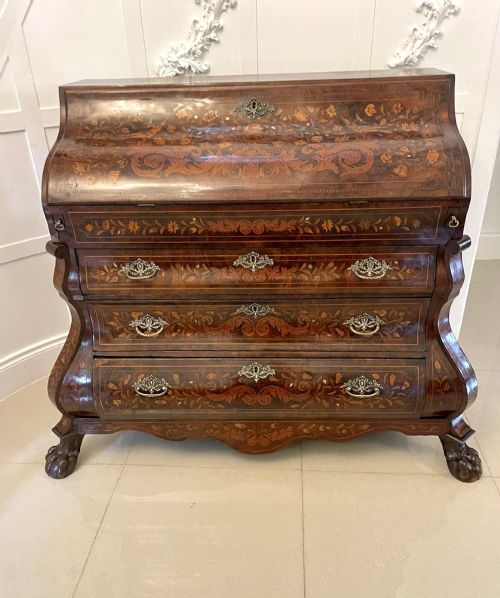
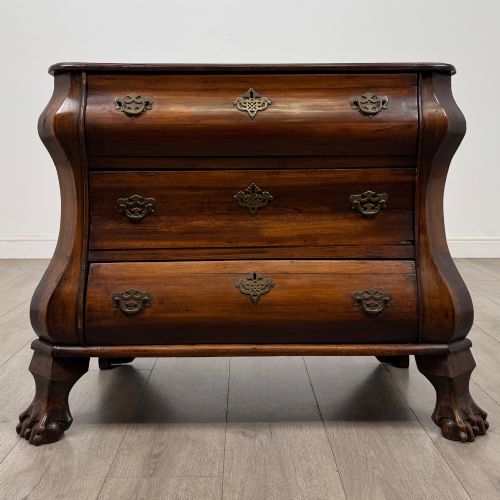
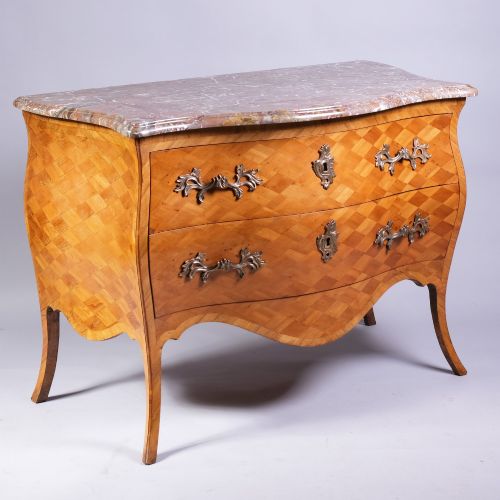
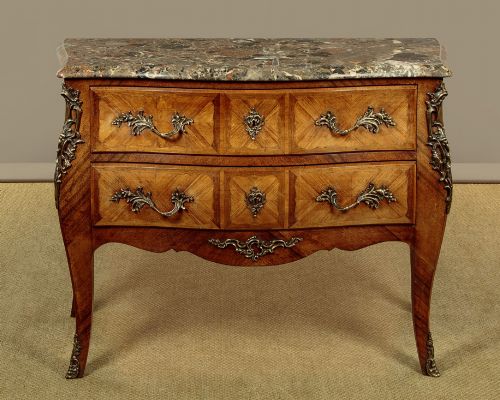
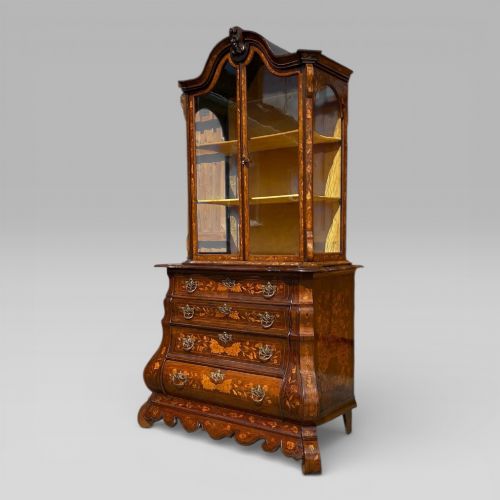
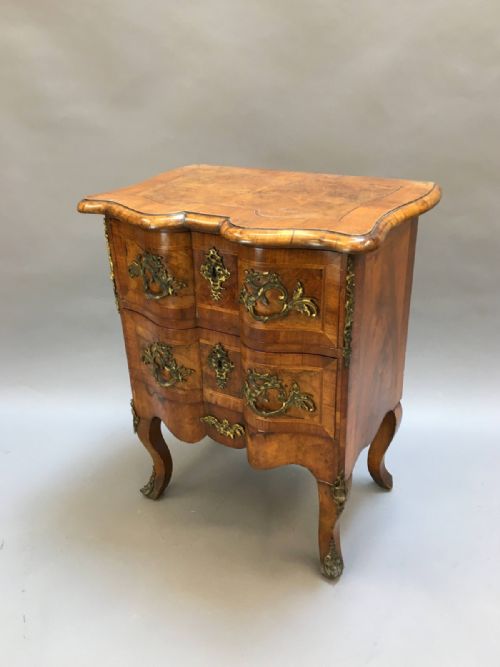
A walnut bombe chest presents a distinct swelling, outward-curving front and sides that demand considerable space and architectural confidence in a room. These pieces span centuries of continental craftsmanship, appearing frequently in Dutch, French, and Italian iterations across this selection.
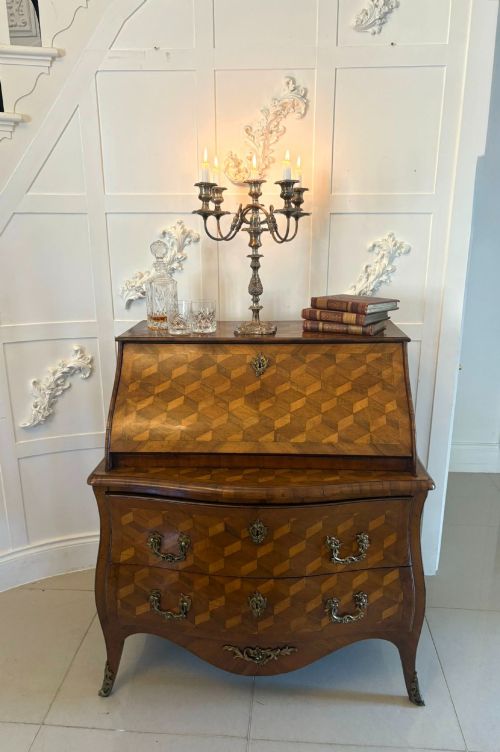
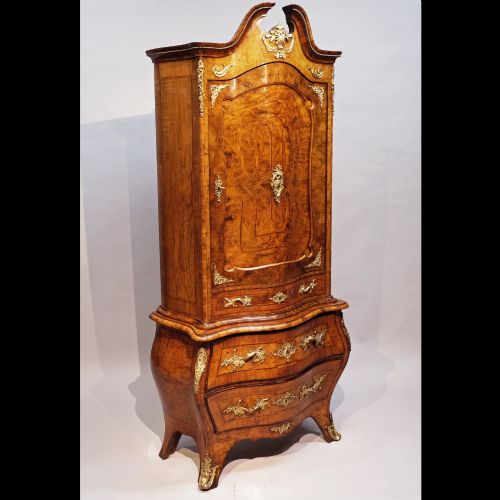
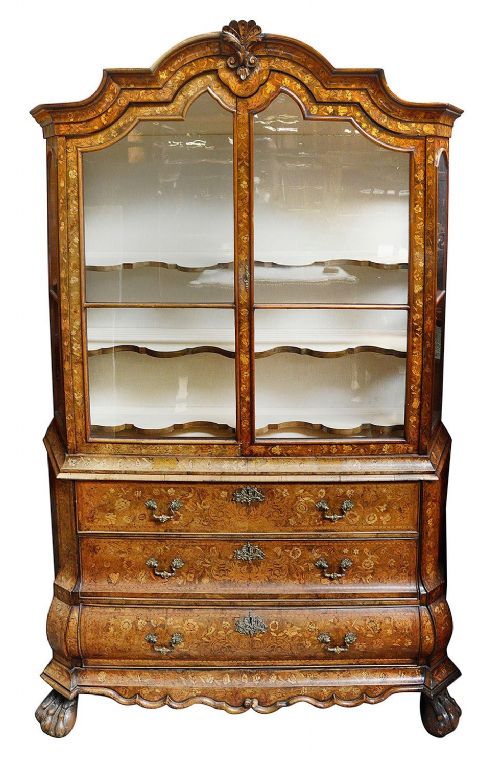
Buyers encounter numerous forms incorporating this swelling profile, ranging from dedicated chests of drawers and commodes to more complex bureau bookcases, bedside cabinets, and display cabinets. 18th century examples often display elaborate floral marquetry, whereas later 19th and early 20th century revivals lean into figured burr veneers and ormolu mounts.
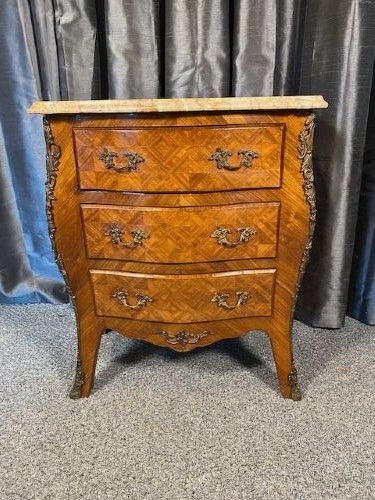
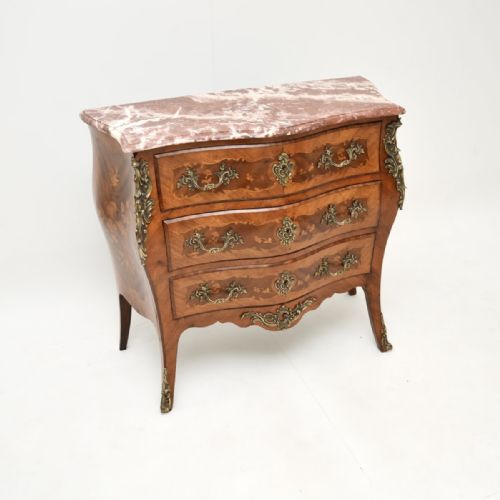
The most common formats on this page combine the classic three-drawer commode configuration with marble tops or intricate floral inlays. Originating largely from continental workshops, these pieces function as commanding focal points rather than quiet storage solutions.
Materials and construction
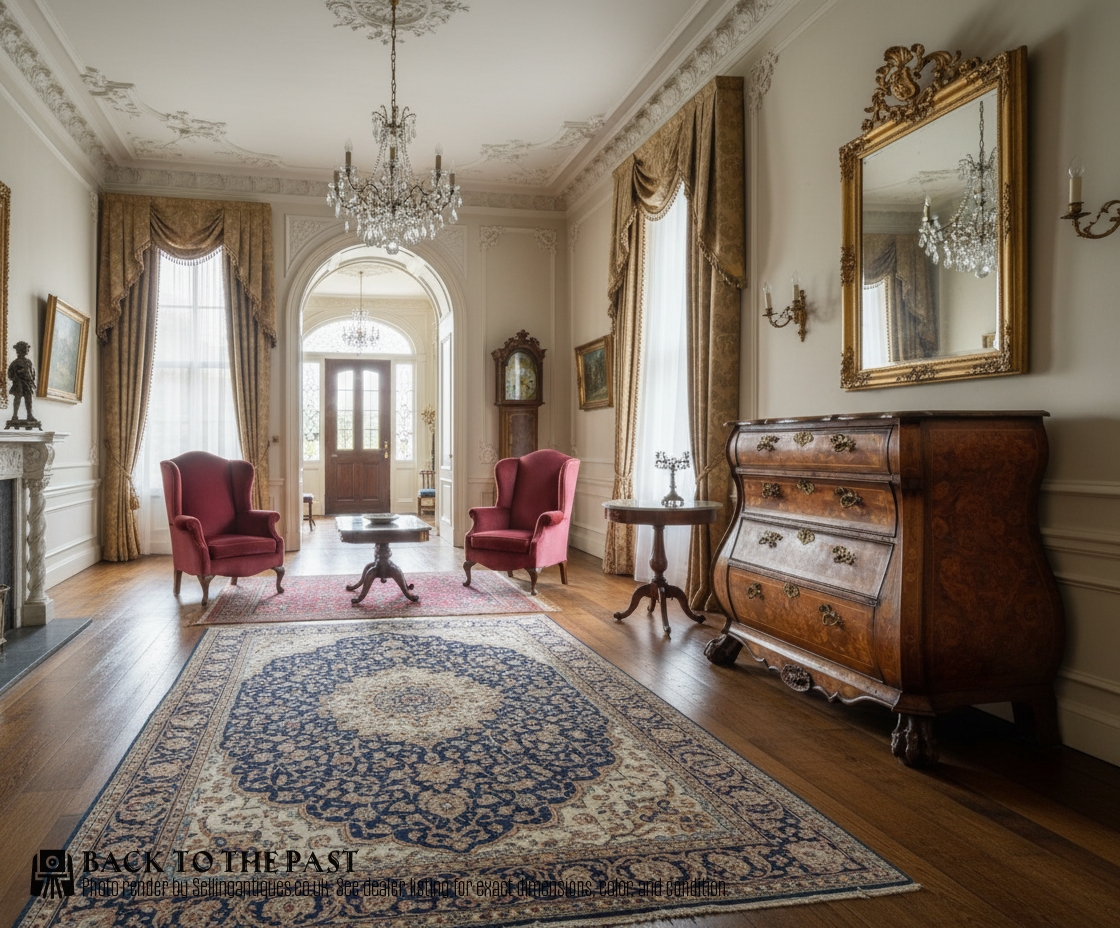
Cabinetmakers constructed the carcase using sturdy secondary woods like oak before applying prized veneers of plain and burr walnut across the undulating surfaces. The dramatic swelling form required substantial timber blocks shaped by hand to achieve the signature outward curvature.
Marquetry and parquetry patterns in fruitwood and lighter timbers create floral and geometric displays across the drawer fronts and top surfaces of Dutch and French pieces. Cast ormolu mounts and marble slabs frequently finish the 19th century and Louis XV style iterations, adding weight and contrasting texture to the polished timber.
Walnut Bombe Chest Retail Price Guide 2026
Typical asking prices for walnut bombe chest among the pieces listed under this phrase on Sellingantiques today, from the lower quarter to the upper quarter. They describe what is for sale here now, not the wider market.
Even the tea caddies of this period insisted on swelling out at the sides, proving that Georgian tea took its curves very seriously.
Judging quality in walnut bombe chests
The sophistication of the timber selection dictates the visual hierarchy, with dense, highly figured burr walnut commanding greater appreciation than plain grain. Finely articulated floral marquetry featuring varied fruitwoods demonstrates superior handwork compared to repetitive or mechanical inlay.
The integrity of the swelling carcase and the precision with which drawers follow the compound curves define the maker's skill. Superior execution ensures doors and drawers maintain alignment despite the inherent stress of wide veneered surfaces over centuries.
Edwards & Roberts
The Walnut Bombe Chest Glossary
- Bombe
- A swelling or outward-curving furniture profile popular in continental baroque and rococo design. This undulating shape requires advanced cabinetmaking to construct the curved carcase and fit operational drawers.
- Marquetry
- Decorative veneer work forming pictorial or floral patterns using various tinted woods. Artisans meticulously cut thin slices of fruitwood and walnut to assemble intricate displays.
- Parquetry
- Geometric wood inlay forming repetitive patterns such as cubes or chequers. This technique highlights the natural colour variations of the timber.
- Ormolu
- Gilt-bronze mounts applied to furniture edges and corners for decorative accent. These metal additions protect vulnerable areas while enhancing the richness of the polished walnut.
- Commode
- A low chest of drawers, typically of French origin. The term encompasses grand marble-topped pieces as well as smaller bedside variants.
Walnut Bombe Chest: Frequently Asked Questions
What is a bombe chest?
A bombe chest is a storage piece featuring distinct convex, swelling fronts and sides that curve outward. This bold silhouette emerged strongly during the Baroque and Rococo periods.
Cabinetmakers utilised shaped wooden framing to achieve these complex contours, creating furniture with strong visual depth and movement.
How do I style a walnut bombe chest?
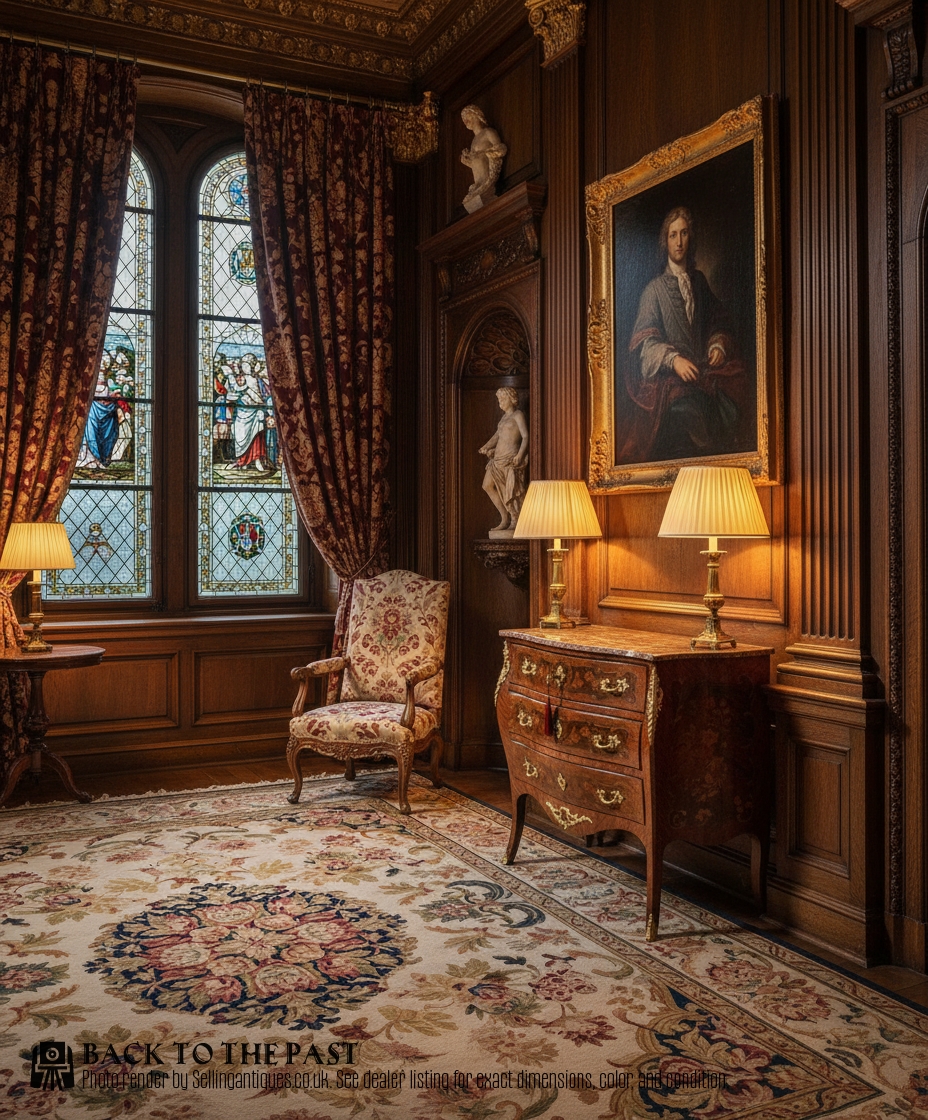
Place the piece against a substantial wall where its curved profile can be appreciated without obstruction. Because of its visual weight, it holds a room well on its own.
Keep surface accessories restrained to allow the burr walnut grain or floral marquetry to remain the primary focus.
Are these pieces French or Dutch?
The selection includes prominent examples from both traditions, alongside Italian and Swedish pieces. Dutch examples frequently feature elaborate floral marquetry inlays.
French pieces, particularly those in the Louis XV style, often incorporate marble tops and cast ormolu mounts alongside parquetry.
How can I tell an 18th century chest from a revival piece?
Eighteenth century pieces typically show construction traits such as hand-cut dovetails, oak secondary woods, and natural ageing in the walnut grain and marquetry. Revival pieces from the 19th or early 20th century often utilise different internal construction methods and cleaner, more uniform veneers.
Examining the interior drawer linings and the underside provides clear clues regarding the manufacturing period.