





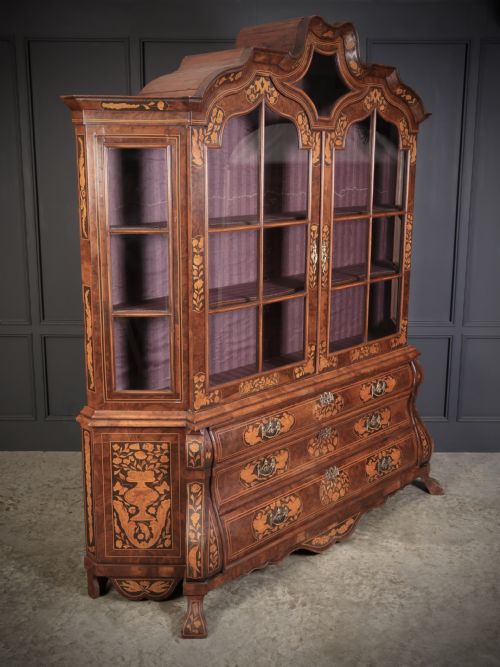


Walnut Bombe Bureau
A walnut bombe bureau brings together swelling curves and rich timber figures, offering a substantial writing desk with deep historical roots.
Walnut Bombe Bureau
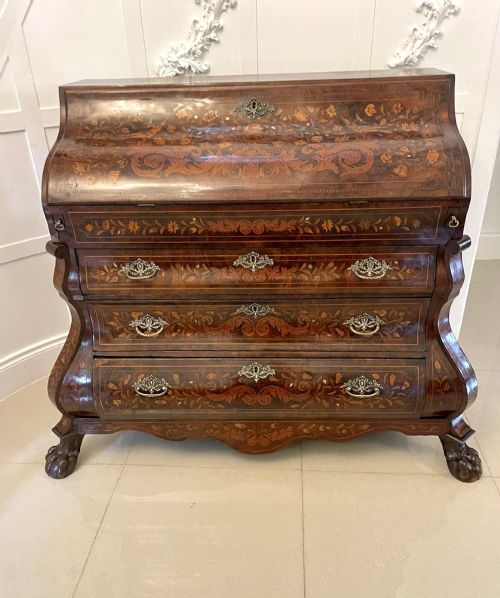
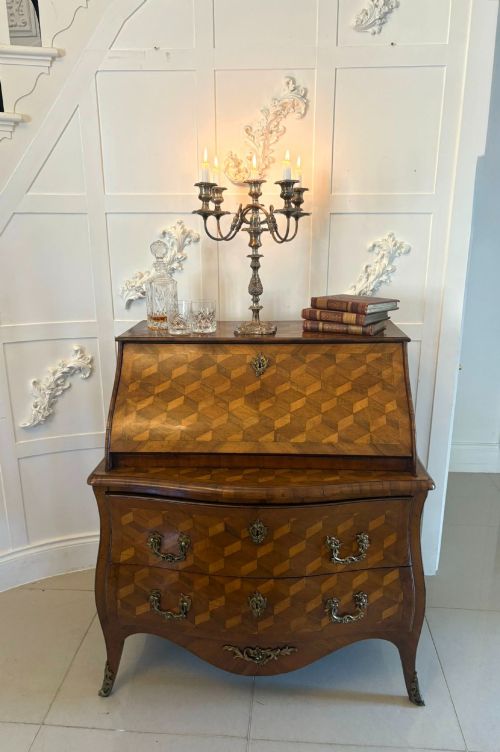
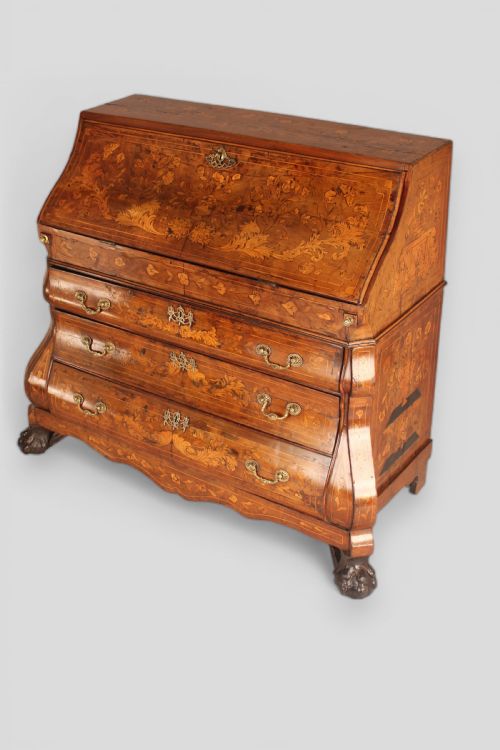
A walnut bombe bureau presents a distinct swelling silhouette to the front and sides, housing a sloping fall-front desk above deep drawers. The form appears primarily across pieces originating in Dutch workshops from the eighteenth century, alongside later revivals.
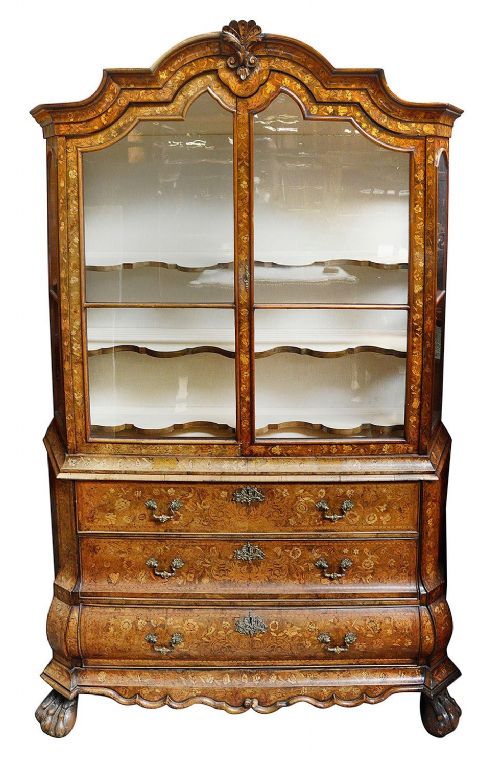
The selection includes standard slant-front desks as well as taller bureau bookcases and display cabinets sharing the characteristic serpentine profile. Buyers encounter examples spanning the Georgian period and the nineteenth century, built with pronounced outward-curving lower sections.
Materials and Technique
Cabinetmakers constructed these writing pieces using solid oak or fruitwood carcases overlaid with figured walnut veneers and burr walnut sections. Many surfaces incorporate intricate floral marquetry and parquetry using contrasting fruitwoods inlaid directly into the grain.
Brass hardware, including drop handles and escutcheons, fastens across the fall-fronts and drawer fronts. Glass panels appear on associated bookcase and vitrine variants, while internal compartments utilise smaller drawers and pigeonholes set behind the sloping lid.
Some bureau bookcases hide secret interior compartments behind dummy pigeonholes for safeguarding correspondence.
Grading the Workmanship
Quality rests on the density and selection of the burr walnut veneer and the precision of the fruitwood marquetry. Superior examples display balanced floral patterns that flow seamlessly across the swelling angles of the bombe frame.
Construction standards appear in the fit of the fall-front desk and the smooth operation of the deep lower drawers. The articulation of the curved mouldings dictates whether a piece holds structural harmony or appears heavy.
Morison of Edinburgh
The Walnut Bombe Bureau Glossary
- Bombe
- A swelling or bulging contour applied to the front and sides of furniture, prevalent in Dutch cabinetmaking. This curved profile requires skilled veneer work to follow the compound angles.
- Marquetry
- Decorative patterns formed by inserting pieces of contrasting wood veneer into a prepared ground. Floral motifs in fruitwood are typical of eighteenth-century Dutch bureau decoration.
- Parquetry
- Geometric wood inlay arranged in regular patterns such as cubes or stripes. It provides a formal contrast to organic floral marquetry.
- Burr walnut
- Timber taken from the warted growths of walnut trees, yielding highly figured grain patterns with swirling eyes. It forms the primary decorative surface on superior desks.
- Fall-front
- The hinged sloping lid of a bureau that lowers to serve as a writing surface. It conceals internal drawers and pigeonholes when closed.
Walnut Bombe Bureau: Frequently Asked Questions
What is a bombe bureau?
A bombe bureau is a writing desk featuring outward-curving, bulbous sides and drawer fronts. The swelling profile distinguishes it from standard flat-fronted case furniture.
Most examples provide a sloping writing flap that opens above multiple graduated drawers. The form developed significantly in eighteenth-century continental workshops.
How do I identify Dutch marquetry?
Dutch marquetry involves elaborate floral and urn motifs laid in lighter fruitwoods against a darker walnut background. The inlay typically extends across the entire front and sides of the bureau.
Examining the crispness of the floral engraving helps distinguish eighteenth-century work from later nineteenth-century interpretations.
Where were these bureaus made?
The majority of these pieces originate from Dutch workshops influenced by Baroque and Rococo design. French examples also occur, sharing the characteristic serpentine shaping.
Regional cabinetmakers adapted these continental styles through subsequent centuries, leading to later British and European revival pieces.
How should I care for burr walnut veneer?
Burr walnut veneer requires stable indoor humidity and protection from direct sunlight to prevent timber shrinkage and fading. Gentle cleaning with a dry cloth maintains the polished surface.
Avoid placing these desks near direct heat sources, which can dry out old glues beneath the delicate marquetry.