



Walnut Art Deco Bar
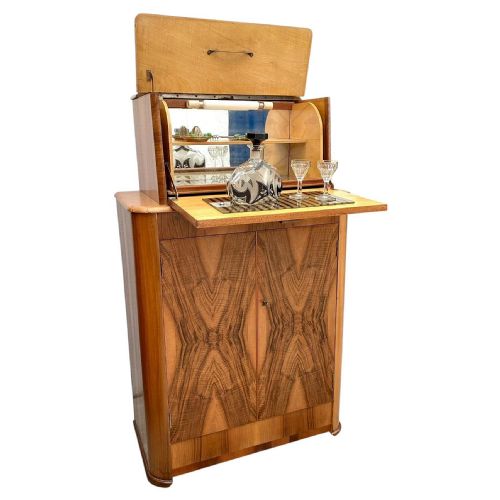
A walnut art deco bar brings serious theatrical flair to hosting, combining clever engineering with rich, figured timber.
Walnut Art Deco Bar
A walnut art deco bar encompasses freestanding cocktail cabinets, dry bars, and serving trolleys designed for entertaining at home. These pieces date predominantly from the interwar years, appearing frequently alongside occasional items from the Victorian period and the nineteen-ten decade.
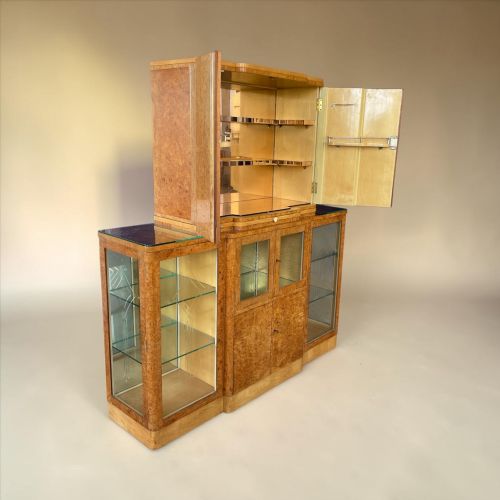
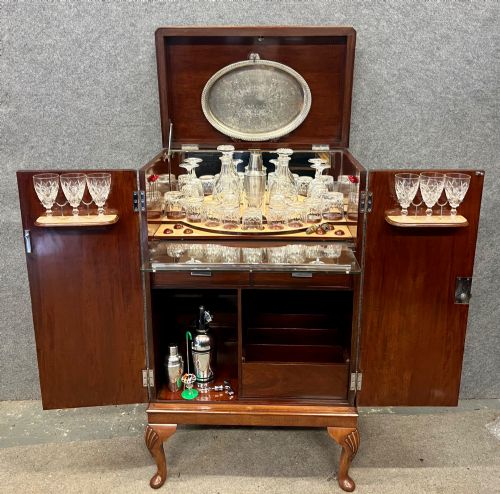
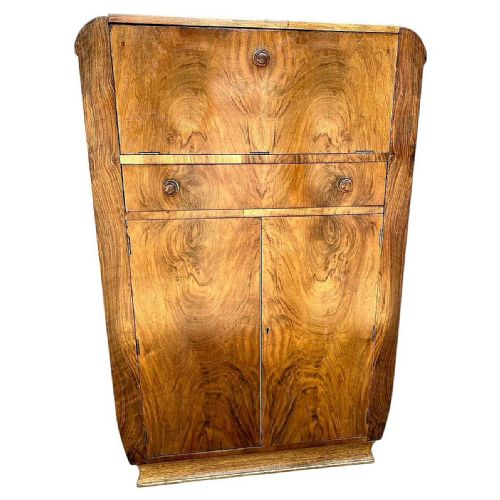
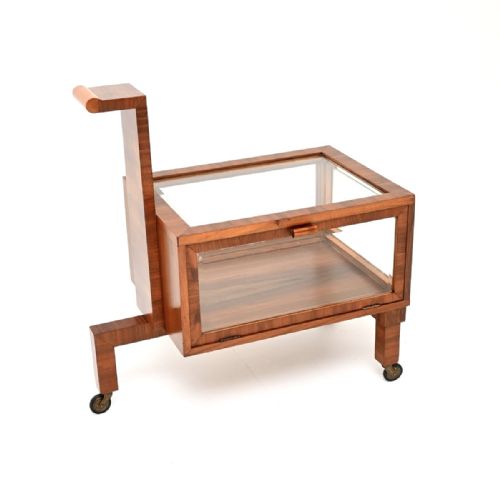
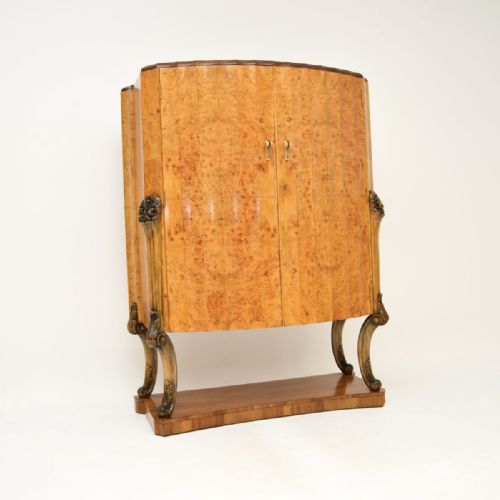
The most common format encountered here is the dedicated cocktail cabinet or dry bar, often fitted with drop fronts, revolving mechanisms, or illuminated interiors. Alongside these upright cupboards, circular drink carts, metamorphic serving tables, and bar stools surface regularly.
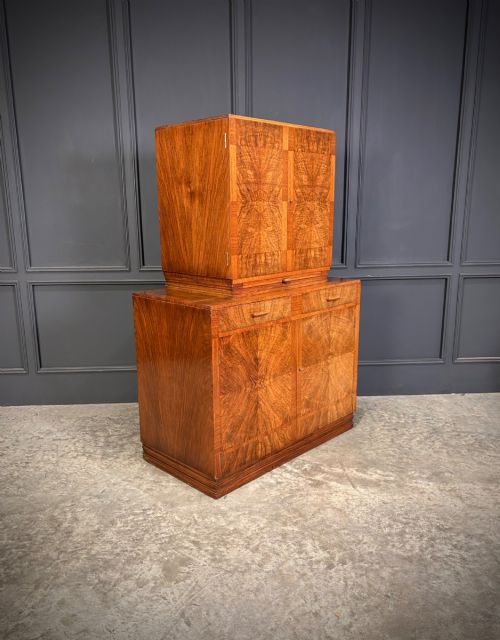
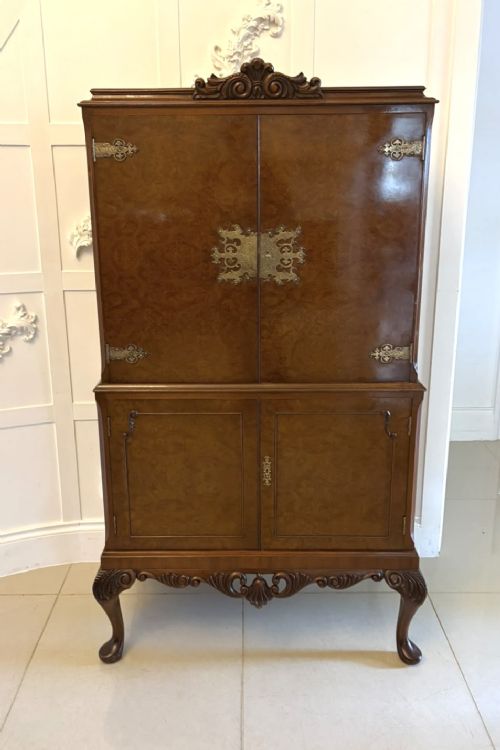
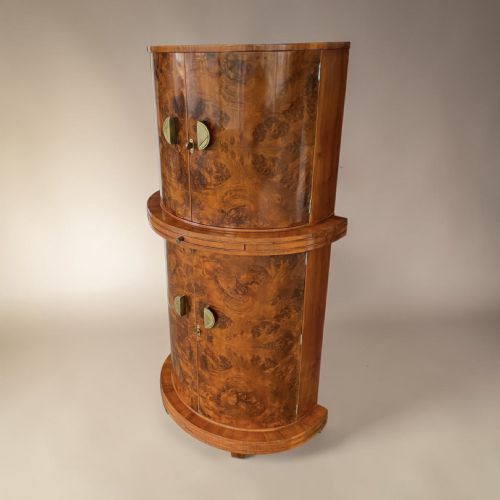
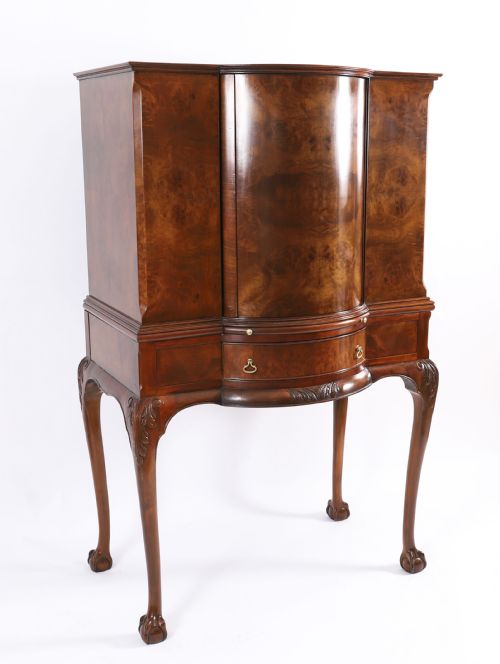
Originating largely from English workshops, these items serve primarily to store glassware, bottles, and bar accessories behind decorative facades. Their forms range from streamlined rectangular carcasses to bold double bow fronts and cloud-shaped silhouettes.
How they were made
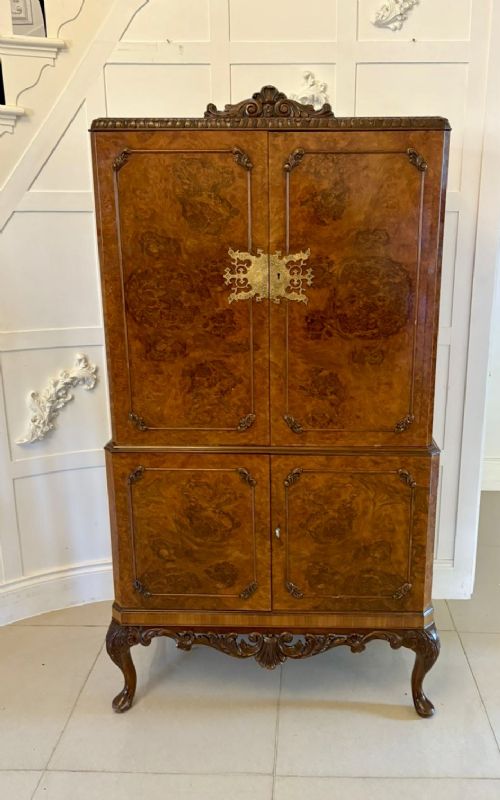
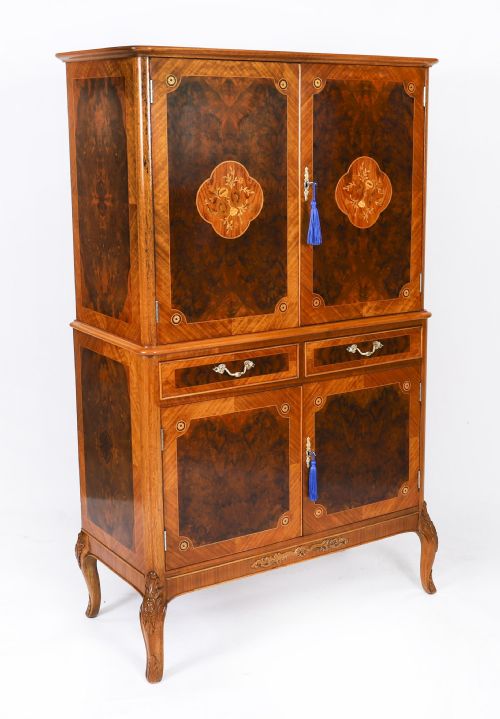
Cabinet makers utilised solid framing timbers such as oak as a structural base, applying figured walnut and burr walnut veneers to external surfaces to create striking grain patterns. Marquetry inlay appears on select examples, adding linear contrast to the rich brown timber tones.
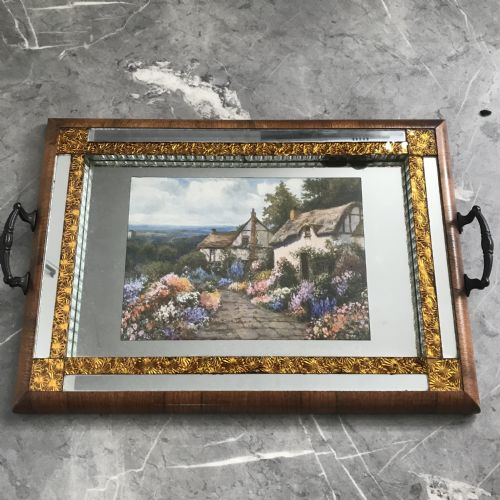
Metal components played a structural and decorative role, with brass and chrome utilised for hardware, handles, gallery rails, and trolley frames. Mirrored glass and polished plate glass frequently line the interior serving surfaces and back panels of the cabinets.
Complex mechanical designs required specialised joinery, seen in metamorphic action serving tables, pop-up mechanisms, and revolving dry bars. These functional elements often integrated electrical wiring for internal illumination upon opening.
Walnut Art Deco Bar Retail Price Guide 2026
Typical asking prices for walnut art deco bar among the pieces listed under this phrase on Sellingantiques today, from the lower quarter to the upper quarter. They describe what is for sale here now, not the wider market.
Listings feature cocktail cabinets and serving trolleys spanning the nineteen-ten decade through the nineteen-forties, constructed primarily in walnut with brass and glass.
What varies in quality
The selection of the walnut veneer dictates much of the visual impact, with highly figured burr patterns and book-matched grains representing superior cabinet work. Plain timber surfaces lack the depth and movement seen in top-tier examples.
Internal engineering distinguishes standard production from exceptional workshop output. Smooth operation in metamorphic trolleys, reliable pop-up actions, and intact original glass or mirrors indicate meticulous original construction.
Attribution to prominent firms elevates a piece, as does the survival of original internal fittings such as specialised glassware and lighting. Pieces carrying documented maker marks demonstrate higher grade construction throughout the internal compartments.
Epstein·Hille·Waring and Gillow·Harry and Lou Epstein·Short and Mason
The Walnut Art Deco Bar Glossary
- Burr walnut
- A prized veneer sliced from tree growths containing knot clusters, creating swirling, highly decorative grain patterns. This material forms the primary visual draw on many luxury cabinets.
- Metamorphic
- Describing furniture that transforms from one form into another through hinged mechanisms or sliding sections. These pieces change from a compact side table into an extended serving station.
- Dry bar
- A household cabinet or trolley designed specifically for holding bottles and glassware without a built-in plumbed sink. They often feature mirrored backs and dedicated bottle racks.
- Book-matched
- A technique where adjacent veneer leaves are opened like pages to mirror each other's grain pattern. This creates symmetrical, decorative designs across cabinet doors.
- Fall front
- A hinged door panel that drops down into a horizontal position to serve as a mixing shelf or serving surface. It usually conceals a fitted interior with glass holders and mirror panels.
Walnut Art Deco Bar: Frequently Asked Questions
What is a walnut art deco bar used for?
These pieces serve as dedicated home entertainment stations for storing spirits, liqueurs, and glassware. The internal compartments often include specialised racks for bottles and mirrored ledges for mixing drinks.
During the interwar period, they were essential furniture for hosting guests in the living room or dining room. Today, they function both as practical drinks cabinets and statement decorative antiques.
How do I identify a nineteen-thirty cocktail cabinet?
Nineteen-thirty cabinets typically display streamlined silhouettes, symmetrical burr walnut veneers, and geometric decorative lines. Many feature drop-down fall fronts or curved bow fronts characteristic of the period.
Interior fittings often include chrome hardware, mirrored glass panels, and sometimes electric lighting that activates when opened. These design traits separate them clearly from earlier Victorian revival pieces.
Are serving trolleys considered bars?
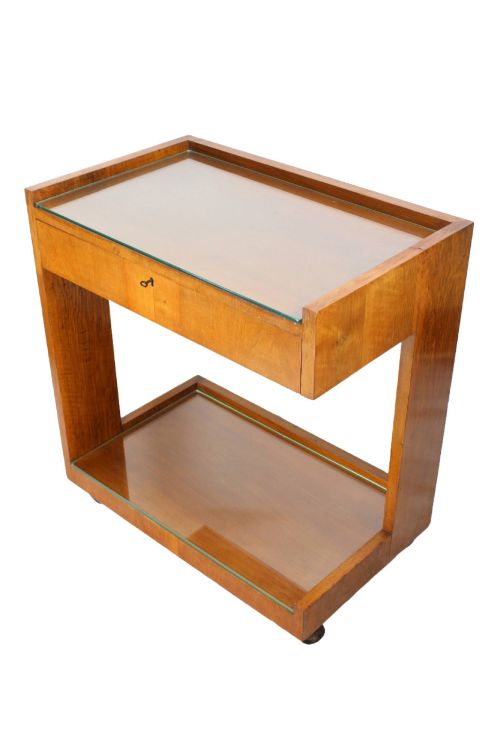
Serving trolleys and bar carts form a distinct mobile subset of the broader bar category. They feature two or three tiers, often with wheel castors, designed for moving drinks around a room.
While they lack the enclosed storage cupboards of a cocktail cabinet, they share the same walnut construction, brass detailing, and art deco styling.
How should I care for a walnut veneer surface?
Walnut veneer requires protection from direct sunlight and extreme humidity fluctuations to prevent fading and lifting. Regular dusting with a soft, dry cloth maintains the polished finish without moisture damage.
Avoid placing damp glasses directly on the wooden surfaces by utilising coasters and the original mirrored pull-out trays provided within the cabinet.