

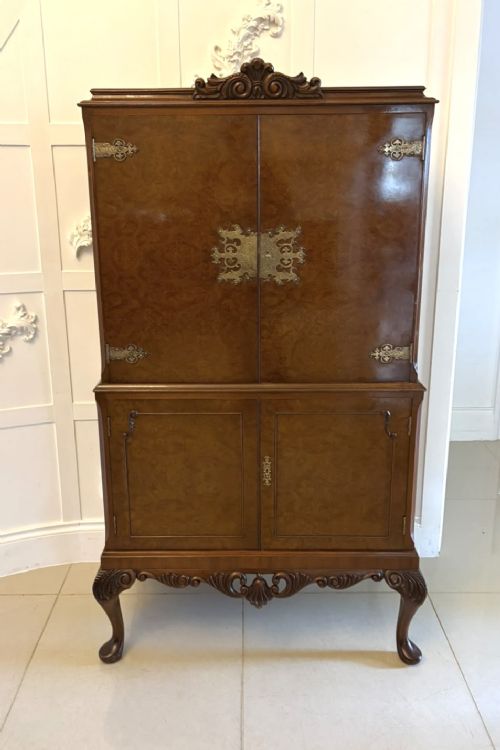
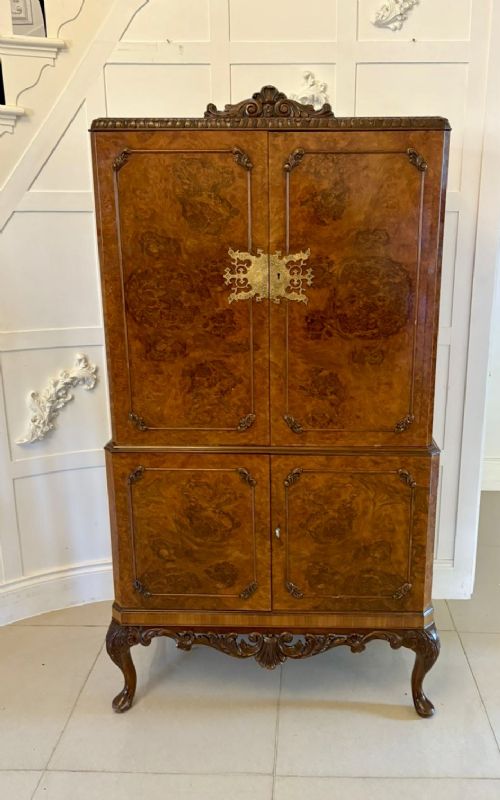

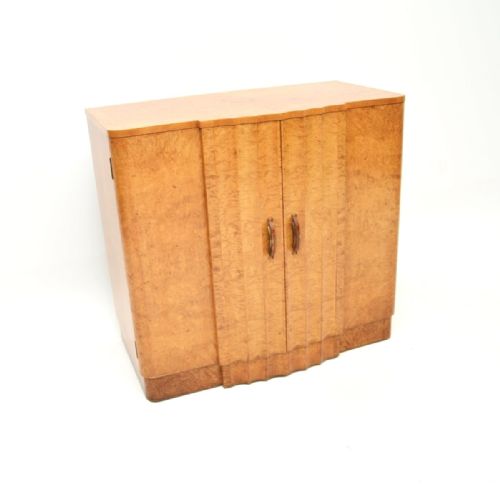
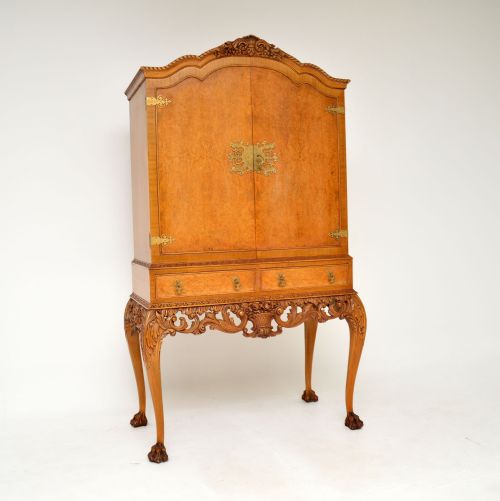
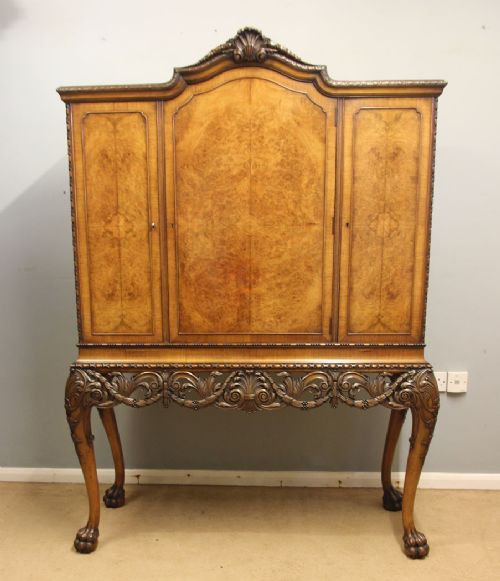
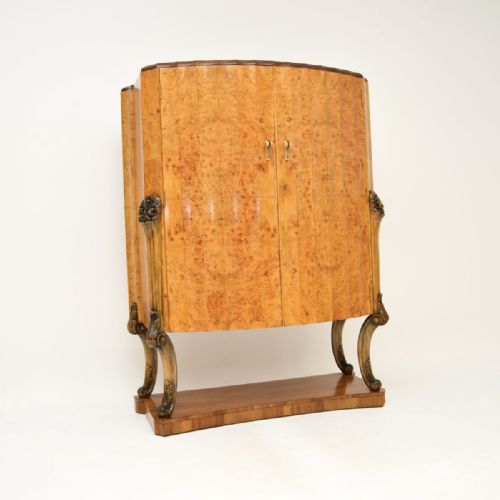


Golden Walnut Drinks Cabinet
These golden walnut drinks cabinet pieces bring striking burr figures and period glamour to a room, offering sophisticated storage for glassware and bottles.
Golden Walnut Drinks Cabinet
A golden walnut drinks cabinet serves as a sophisticated focal point for entertaining, designed specifically to house bottles and glassware in style. When you search for a golden walnut drinks cabinet, you encounter cocktail cabinets, side cabinets, and sideboards shaped by distinct historical periods.
The pieces appearing on this page span the Edwardian era, the nineteen-twenties, and nineteen-thirty. Stylistic expressions range from Queen Anne revival and Victorian French revival to bold Art Deco designs.
Most examples rely on cocktail cabinet and side cabinet forms to organise drinks equipment efficiently. They offer compartments tailored for bottles, mixing surfaces, and glassware display.
How they were made
Cabinet makers utilised walnut, burr walnut veneer, and wood veneer over solid timber carcases to achieve rich surface patterns. The distinctive grain patterns come from burr walnut veneers carefully laid across the main doors and panels.
Construction techniques combine traditional cabinet making with veneering methods particular to Art Deco, Edwardian, and revival workshops.
Golden Walnut Drinks Cabinet Retail Price Guide 2026
Typical asking prices for golden walnut drinks cabinet among the pieces listed under this phrase on Sellingantiques today, from the lower quarter to the upper quarter. They describe what is for sale here now, not the wider market.
Listings feature items spanning the Edwardian period, 1920, and 1930, showcasing Art Deco and Queen Anne Revival styles.
What varies in quality
Quality rests upon the selection and matching of the burr walnut veneer across the doors and facade. Pieces designated as exhibition quality display superior grain symmetry and meticulous timber preparation.
The reputation of the maker heavily influences distinction, with specific attribution to workshops such as Harry and Lou Epstein elevating a piece. Structural integrity, original brass hardware, and the preservation of internal fitments determine the standing of each cabinet.
Harry and Lou Epstein·Epstein
The Golden Walnut Drinks Cabinet Glossary
- Burr walnut
- A prized timber veneer showing swirling, knotty grain patterns harvested from walnut tree growths. It provides the decorative surfaces characteristic of these cabinets.
- Art Deco
- A design style spanning the nineteen-twenties and nineteen-thirty, known for streamlined geometry and sleek surfaces. Pieces from this era often feature clean architectural lines.
- Queen Anne revival
- A furniture style drawing inspiration from early eighteenth-century motifs, often featuring cabriole legs and traditional proportions. It appears on revival drinks cabinets from the nineteen-twenties.
- Demi-lune
- A half-moon shape used for the footprint of certain side cabinets and drinks cabinets. This curved form suits corner placement or tight spaces.
- Veneer
- A thin layer of superior wood adhered to a base timber carcase. Burr walnut veneer creates the decorative exterior figures without relying entirely on solid burr timber.
Golden Walnut Drinks Cabinet: Frequently Asked Questions
What is a golden walnut drinks cabinet?
A golden walnut drinks cabinet is a specialised storage piece designed to hold bottles, decanters, and glassware for entertaining.
These cabinets typically feature dedicated internal compartments, drop-down mixing flaps, or glass-fronted display areas tailored for social gatherings.
Which periods do these cabinets come from?
The pieces originate from the Edwardian period, the nineteen-twenties, and nineteen-thirty.
Designs reflect the aesthetic preferences of those decades, moving from revival styles to bold Art Deco geometry.
What materials are used in their construction?
Makers utilised walnut, burr walnut veneer, and wood veneer laid over solid carcase timbers.
Brass and metal hardware provide functional hinges and decorative accents, while glass appears in doors and internal shelving.
How do I identify an Art Deco drinks cabinet?
Art Deco examples from the nineteen-thirty period display streamlined forms and dramatic burr walnut grain patterns.
They often bear attribution to makers like Harry and Lou Epstein and avoid traditional revival ornamentation in favour of sleek modernism.