



Wall Mounted Display Shelves
Wall mounted display shelves bring order and elevation to domestic walls, offering practical architecture for cherished ceramics and books.
Wall Mounted Display Shelves
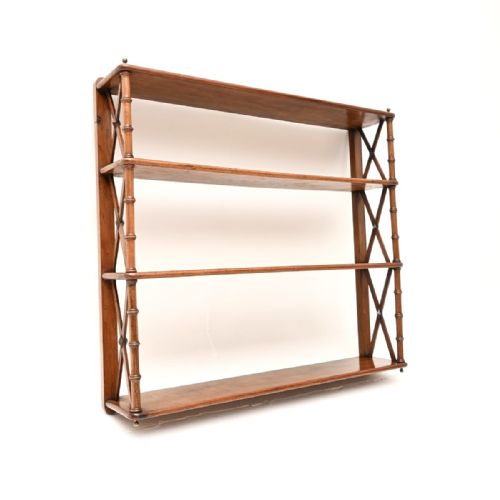
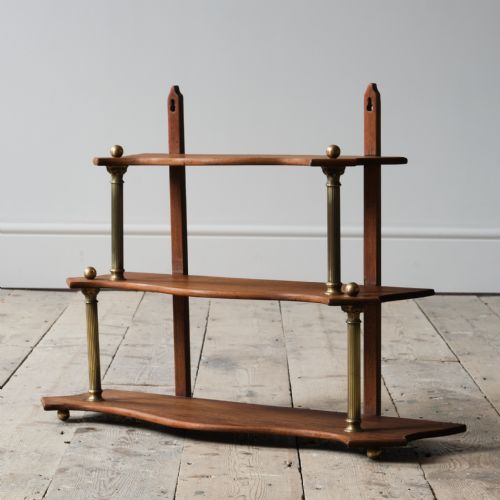
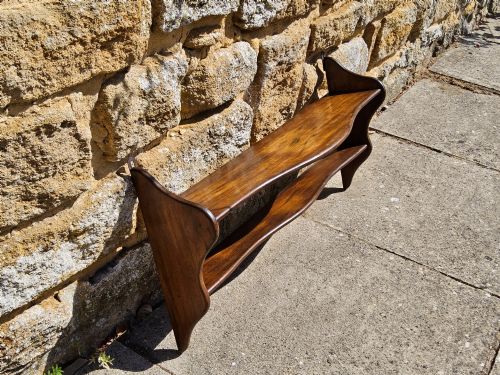
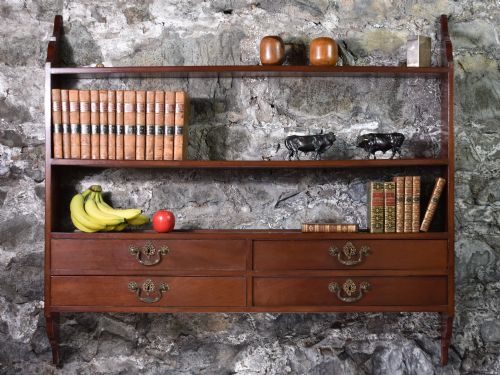
Wall mounted display shelves serve as functional architectural timber architecture designed to hold books, plates, and small curiosities off the floor. They range from simple timber boards fixed to vertical uprights to enclosed cabinets and tiered hanging bookcases.
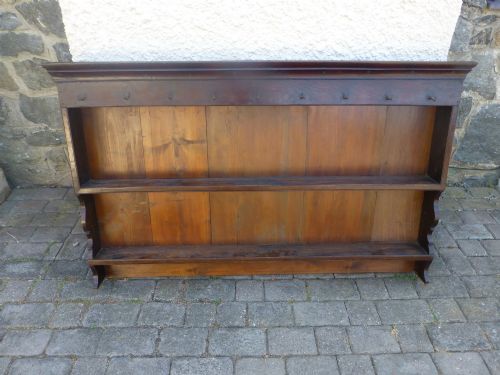
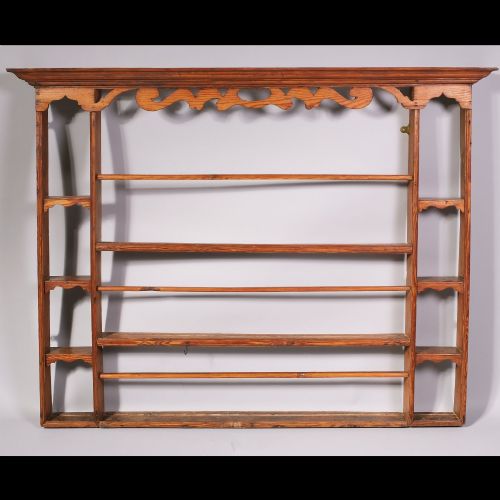
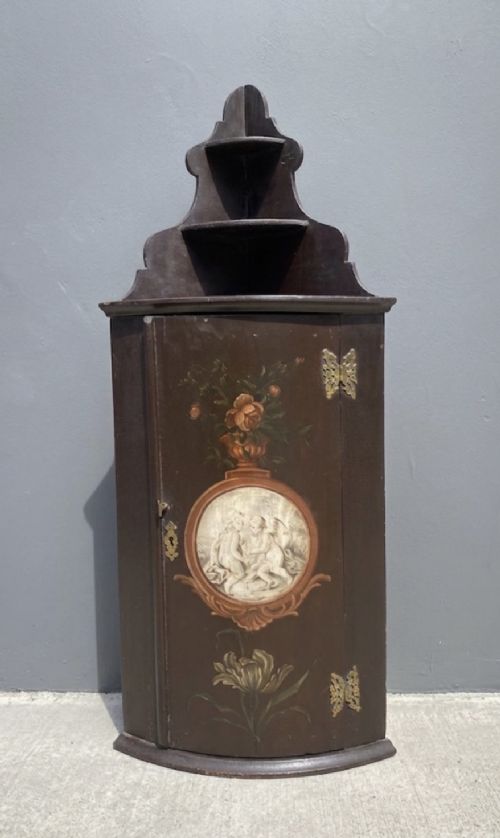
The pieces on this page span several centuries of woodworking tradition, with the eighteenth and nineteenth centuries providing the majority of examples. Common forms include oak plate racks, mahogany hanging shelves, and walnut corner cupboards designed to utilise vertical space.
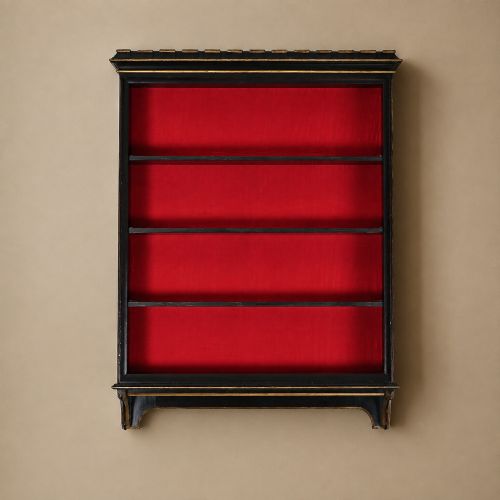
Buyers encounter variations running from rustic pine and country oak country pieces to refined mahogany and satinwood specimens from the Georgian, Victorian, and Edwardian eras. These fixtures combine domestic utility with period decorative styles such as Gothic Revival and Regency.
Materials and construction
Cabinet makers utilised native and imported hardwoods like mahogany, oak, walnut, and pine, often combining timbers within a single piece such as oak frames with pine secondary elements. Brass fittings, hooks, and gallery rails frequently appear on nineteenth-century examples to secure displays and add decorative contrast.
Construction techniques follow traditional joinery methods including pegged mortise and tenon joints for earlier oak examples and precise dovetailing for later mahogany and satinwood drawers or carcases. Surfaces were finished with wax, polish, or historic paint layers that record centuries of domestic maintenance.
Several shelves retain traces of historic kitchen steam and old polish, reminding us they once held Sunday dinners.
Markers of distinction
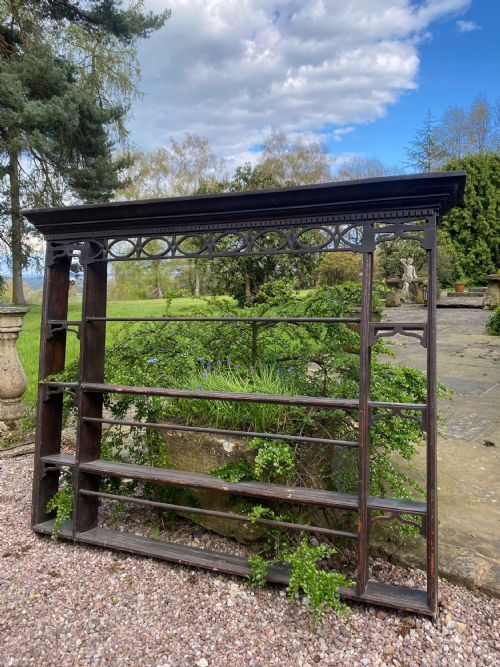
The distinction between ordinary utility items and superior examples lies in the selection of timber figures, such as dense mahogany grain or quarter-sawn oak, and the crispness of mouldings like dentils or corbels. Architectural details such as shaped friezes, inlaid marquetry, and turned columns elevate standard functional boards into considered furnishings.
Proportion and integrity dictate overall quality, where untouched historic surfaces, original brass hardware, and sound structural joinery preserve the piece's character. Pieces retaining their original hanging mechanisms and backboards demonstrate greater survival of authentic form.
George Edmund Street
The Wall Mounted Display Shelves Glossary
- Plate rack
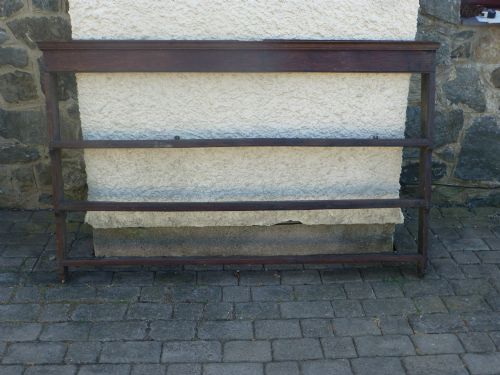
- A wall-mounted rack featuring horizontal slats or grooved shelves designed to display plates upright. These functional pieces are typically constructed from oak or pine.
- Whatnot
- An open set of multi-tiered shelves used for displaying ornaments and small possessions. They often feature delicate upright supports and corner brackets.
- Marquetry
- Decorative veneer work forming intricate patterns using various coloured woods. This technique appears on select nineteenth-century display pieces.
- Ebonised
- Timber treated with a dark finish to imitate ebony. This treatment is frequently encountered on Victorian Gothic Revival pieces.
- Corbel
- A structural bracket projecting from a wall to support a shelf or weight above. They often feature carved decorative profiles on period cabinetry.
Wall Mounted Display Shelves: Frequently Asked Questions
How were wall mounted display shelves fixed?
Historic hanging shelves typically utilise built-in wooden suspension brackets, rear fixing plates, or iron screw eyes secured directly into wall studs or masonry.
Buyers should inspect the original mounting points on the reverse to ensure they match modern wall stability requirements.
What is the difference between a plate rack and a bookshelf?
Plate racks feature narrow, stepped ledges or retaining rails designed specifically to hold ceramic plates upright without sliding forward.
Bookshelves provide deeper, flat horizontal planes intended to store books vertically rather than display ceramics.
How do I identify a Georgian wall shelf?
Georgian pieces generally exhibit solid mahogany or oak construction, clean architectural proportions, and traditional hand-cut joinery.
They frequently incorporate understated mouldings like cornices without the heavy ornamentation found in later Victorian revivals.
Can these shelves support heavy items?
Load capacity depends entirely on the original timber thickness, the soundness of the wall fixings, and the structural integrity of the joints.
Lighter specimens like satinwood or pine hanging shelves suit small curiosities and books, while robust oak and mahogany carcases handle heavier volumes.