




Tiered Wall Shelves
These tiered wall shelves bring vertical display space to a room, offering functional ledges for books and small objects.
Tiered Wall Shelves
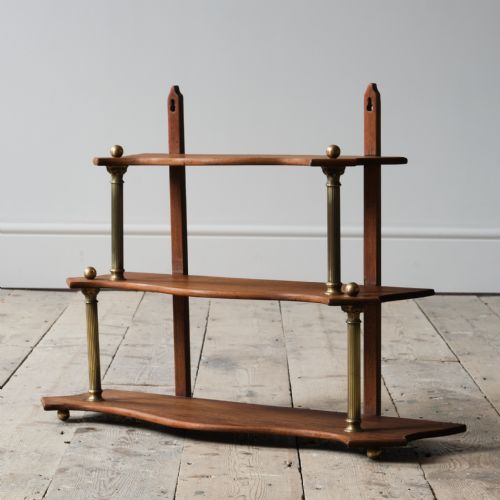
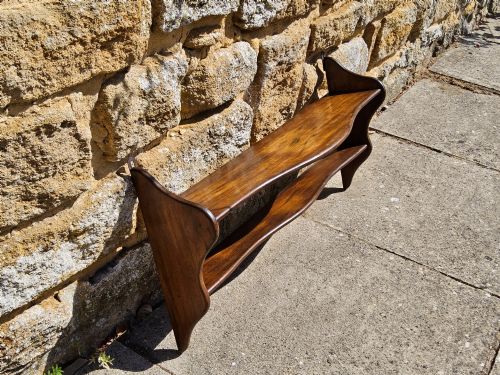
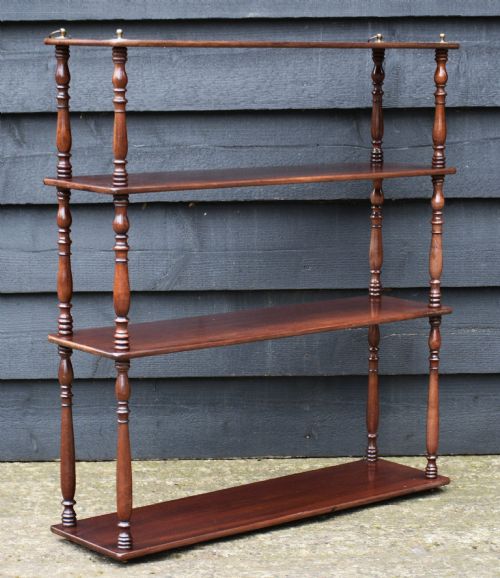
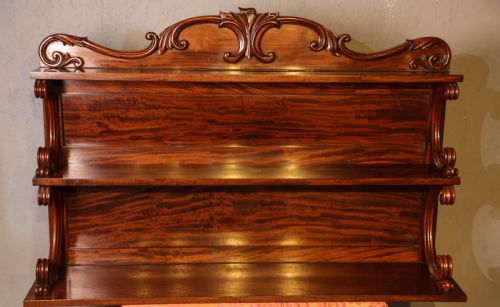
Tiered wall shelves provide stacked hanging storage across multiple levels, designed to mount directly onto vertical surfaces. You will regularly encounter mahogany and walnut versions spanning Georgian, Regency, and Victorian periods.
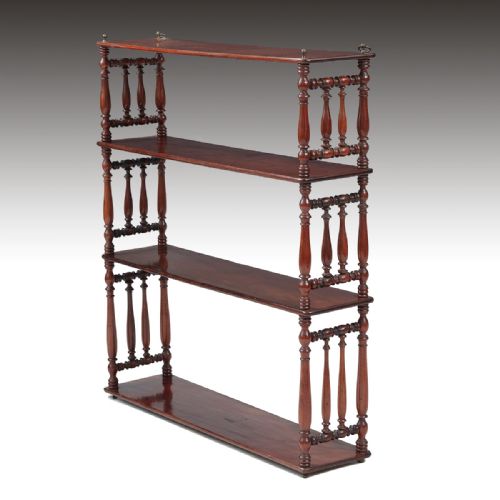
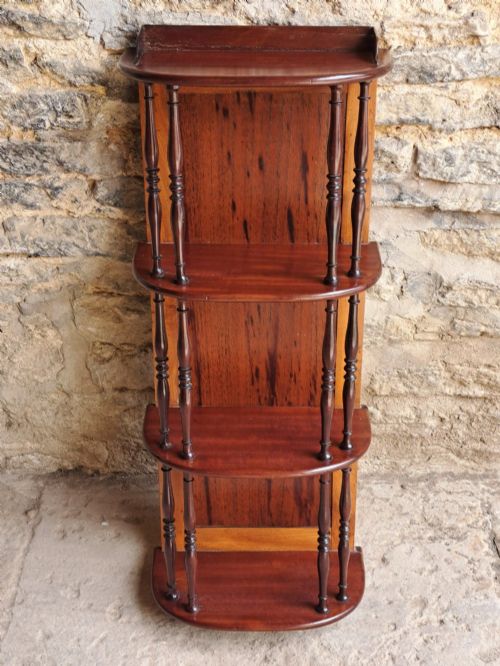
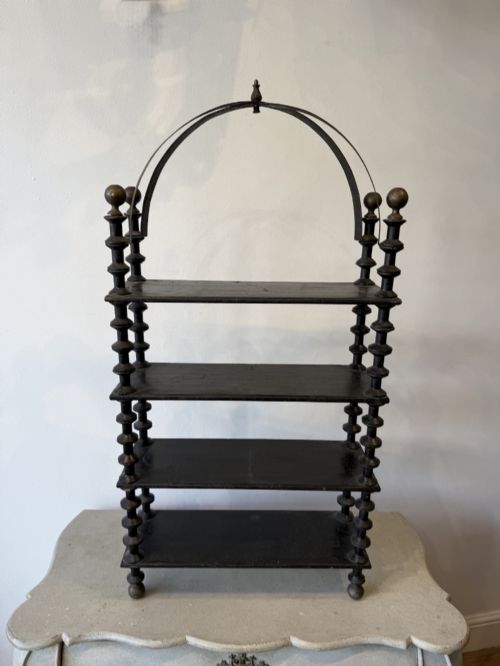
The form ranges from simple book ledges and bobbin shelves to mirrored display cabinets and étagères. Most pieces utilise two or three tiers to hold books, ceramics, or small ornaments without occupying floor space.
How they were made
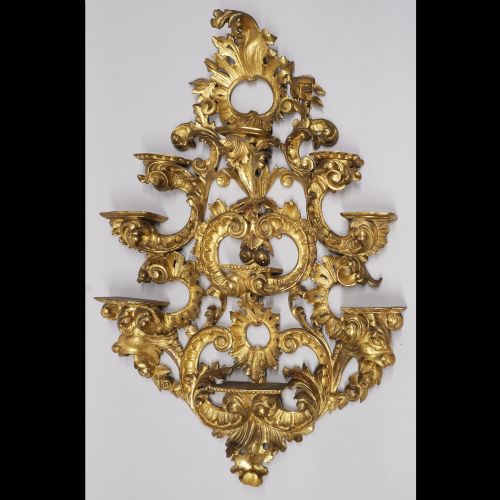
Cabinetmakers constructed these shelves primarily in solid mahogany, walnut, satin birch, and cherry wood, often enhancing the timber with brass galleries, wirework, or giltwood and gesso enrichment. Joinery relies on traditional hanging brackets and fixed tier supports to bear the weight of books and display items.
Fretwork cutouts, ebonised finishes, and turned bobbin turnings give particular examples their decorative character. Surfaces receive polished finishes that highlight the natural grain of the underlying hardwoods.
Some nineteenth-century ship's shelves arrived with chunky brass galleries specifically designed to keep your books from sliding off during a choppy swell.
What varies in quality
The quality of tiered wall shelves depends upon the selection of timber figures and the crispness of carved or turned details. Superior examples exhibit fine dovetail joints, robust brass galleries, and well-balanced proportions across every tier.
Secondary woods and simpler construction methods appear on utilitarian pieces, whereas ornate designs incorporate gilded gesso mouldings, mirrored backs, or intricate fretwork panels that elevate the piece from basic storage to decorative display.
The Tiered Wall Shelves Glossary
- Etagere
- A piece of furniture consisting of a set of open shelves for displaying small objects or ornaments. These units can stand on the floor or hang upon a wall.
- Bobbin shelves
- Shelving featuring turned woodwork resembling a string of bobbins or spools along the upright supports. This decorative turning technique appears frequently on nineteenth-century wall furniture.
- Giltwood
- Wood that has been coated with gold leaf or gold paint for decorative effect. It provides a bright metallic contrast against dark walnut or mahogany tiers.
- Brass gallery
- A low metal rail fitted around the edge of a shelf to prevent items from sliding off. These fixtures add structural definition and a polished accent to the timber tiers.
- Fretwork
- Ornamental perforated wood design cut in patterns with a scroll saw. It decorates the side panels or brackets of many period hanging shelves.
Tiered Wall Shelves: Frequently Asked Questions
How do I hang antique wall shelves safely?
Tiered wall shelves require secure fixings into wall studs or solid masonry to support the combined weight of the timber tiers and displayed objects. Hanging brackets attached to the rear frame distribute the load evenly across the structure.
Check the integrity of the original joints and hanging loops before mounting any heavier hardwood or mirrored cabinet. Modern concealed fixings can supplement older hanging points if extra stability is necessary.
What periods do these shelves come from?
The available pieces span the Georgian, Regency, Victorian, and Edwardian eras, encompassing styles from French chateau to Gothic revival and Chippendale influence. Woods and decorative motifs typically reflect the prevailing taste of their specific decade.
Nineteenth-century examples frequently employ mahogany, walnut, and ebonised finishes, while eighteenth-century pieces lean towards simpler Georgian proportions. Construction details and wood selection help identify the manufacturing period.
Can these shelves hold heavy books?
Portable bookshelves and sturdy mahogany or oak tiers handle moderate book collections when properly anchored to a wall. Lighter pieces featuring delicate fretwork or bobbin turnings suit decorative objects and small volumes rather than heavy reference books.
Inspect the depth of each tier and the strength of the side supports to determine suitable weight limits. Shallower ledges work best for displaying plates, small ornaments, or single rows of novels.
How do I clean mahogany and walnut shelves?
Dust timber surfaces regularly with a soft, dry cloth to prevent particulate buildup on polished mahogany and walnut grain. Avoid silicone sprays or harsh chemical cleaners that can damage traditional wax or shellac finishes.
Apply a quality beeswax periodically to nourish the wood and maintain a natural lustre across the shelves. Ensure brass galleries and giltwood details are wiped gently with dry brushes to protect metallic elements.