




Vintage Wall Etagere
These vintage wall etagere pieces offer tiered display space with distinct character, bringing functional wall storage and period charm to any room.
Vintage Wall Etagere
A vintage wall etagere provides open tiered shelving designed to be mounted directly onto a wall rather than resting on the floor. When searching for a vintage wall etagere, buyers encounter various forms including hanging shelves, wall mounting bookcases, and multi-tiered display units.
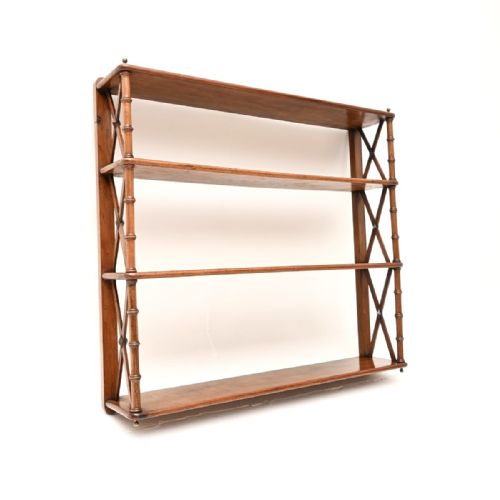
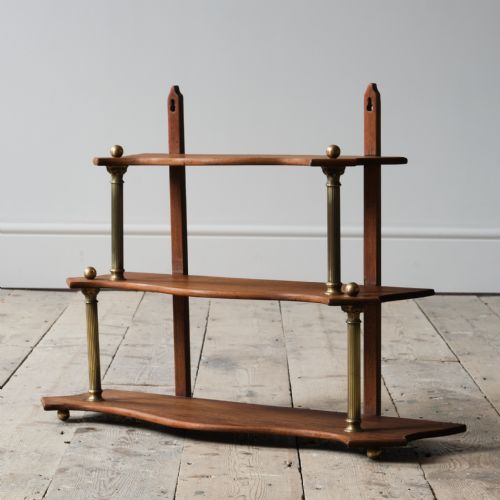
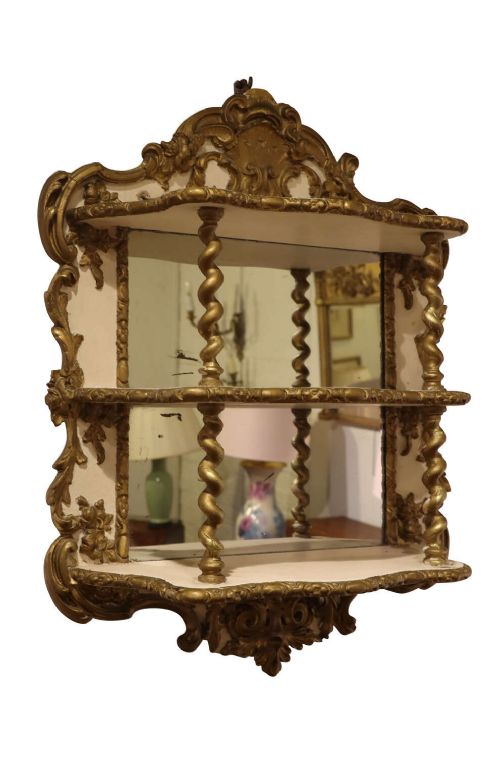
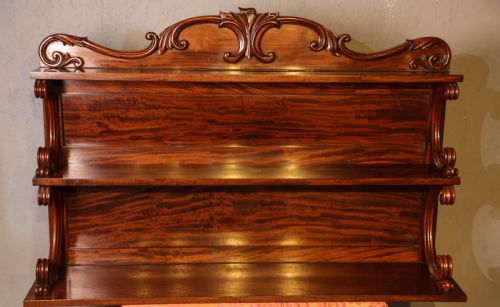
The pieces available span multiple eras and origins, from nineteenth-century English mahogany designs to French rococo revival painted and gilt specimens. Common formats include three-tier brass and painted mahogany hanging shelves, waterfall configurations, and portable bookshelves adapted for wall hanging.
How they were made
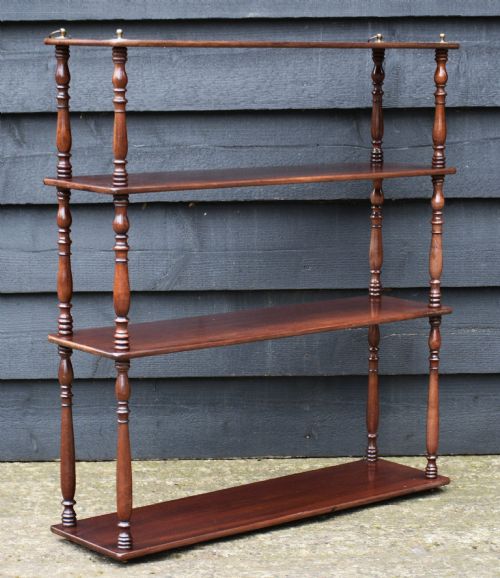
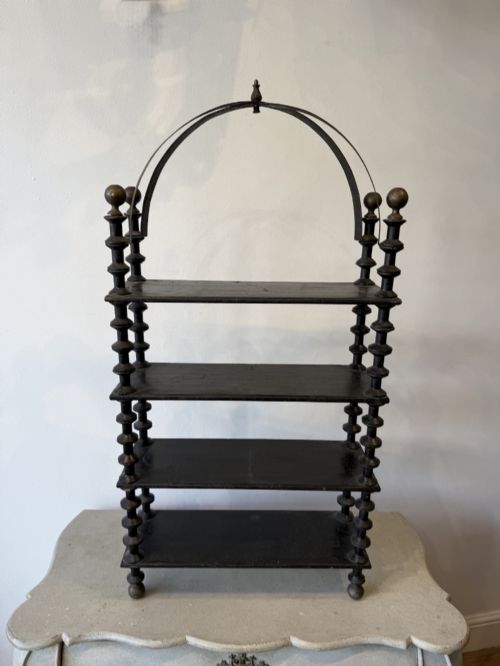
Cabinetmakers utilised timber such as mahogany, walnut, cherry wood, satin birch, and ebonised wood to build these hanging structures. Joinery often incorporates turned wooden elements like bobbin details alongside structural supports.
Surface finishes range from natural polished mahogany and rich walnut grains to painted and giltwood treatments. Brass fittings, metal accents, and glass mirror components appear across various nineteenth-century and early twentieth-century examples.
Some nineteenth-century portable bookshelves were cleverly adapted by makers to hang securely on walls, proving that clever space-saving is not a modern invention.
What varies in quality
The refinement of the carving and turning separates standard utility shelves from finer decorative items. Detailed giltwood ornament, delicate bobbin turnings, and sophisticated paint finishes indicate higher workshop standards.
Timber selection and construction integrity also define the grade of a piece. Well-figured walnut and solid mahogany assemblies exhibit greater structural resilience and deeper visual grain texture than simpler regional utility versions.
The Vintage Wall Etagere Glossary
- Étagère
- A piece of furniture consisting of a set of open shelves for small objects and ornaments. These hanging variants save floor space while offering multiple display tiers.
- Bobbin shelves
- Shelving supported by turned wooden columns resembling bobbins or spools. This decorative turning style appears frequently in nineteenth-century vernacular pieces.
- Giltwood
- Wood that has been thinly coated with gold leaf or gold paint. It adds reflective brightness to decorative nineteenth-century wall furniture.
- Waterfall shelves
- Shelving units where each lower tier steps outward in a cascading formation. This profile creates a distinctive stepped silhouette on the wall.
Vintage Wall Etagere: Frequently Asked Questions
What is the difference between a wall etagere and hanging shelves?
While both terms describe wall-mounted tier systems, an etagere traditionally emphasises decorative display and ornate styling like French rococo revival or giltwood flourishes. Hanging shelves can encompass simpler utilitarian bookcase structures.
Both forms serve to elevate books and ornaments off the floor, utilising vertical wall space in compact rooms.
What woods were commonly used for these shelves?
Mahogany and walnut predominate among the surviving examples, prized for their strength and rich grain patterns. Cabinetmakers also utilised cherry wood, satin birch, and ebonised wood.
Decorative pieces frequently incorporate applied giltwood or painted finishes over the primary timber.
How do I date an antique wall shelf?
Dating relies on examining construction methods, timber choice, and stylistic markers such as nineteenth-century bobbin turnings or neoclassical revival motifs. Reference dates provided in descriptions help place pieces within specific decades like the eighteen-nineties.
Patina, screw types, and wood seasoning also offer clues to the approximate age of the piece.