



Victorian Oak Plate Rack
A victorian oak plate rack brings practical timber warmth and kitchen utility to a wall, holding rows of plates securely in view.
Victorian Oak Plate Rack
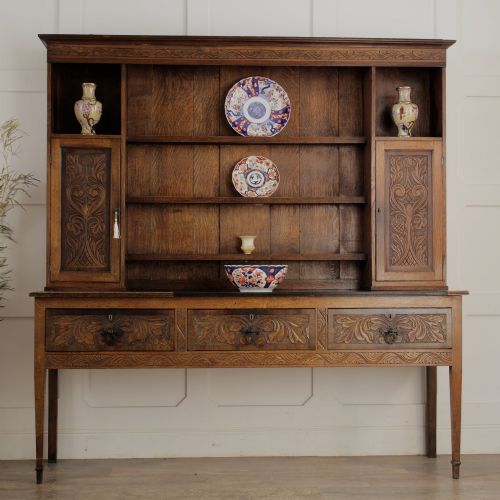
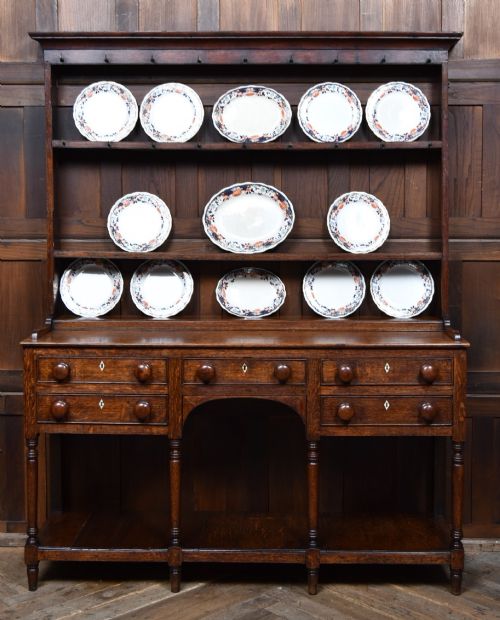
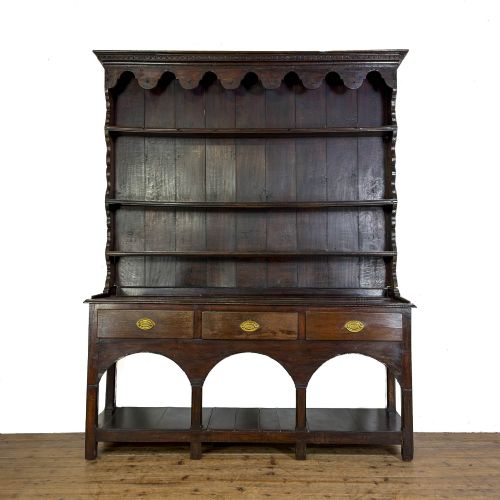
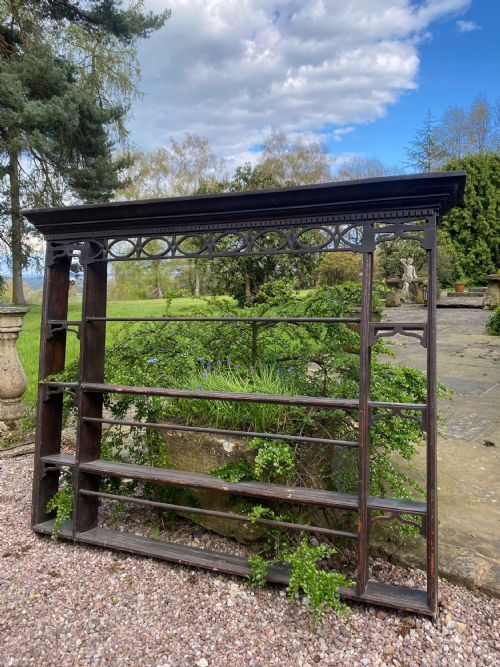
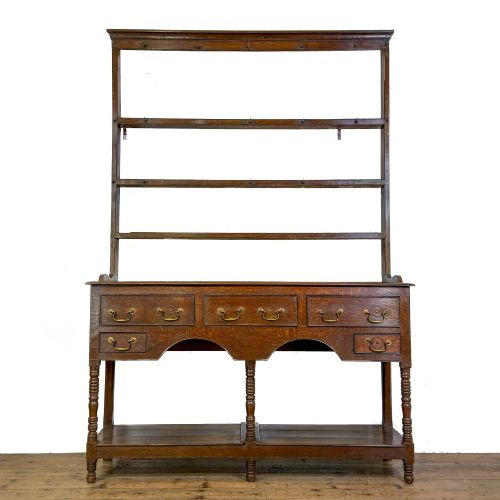
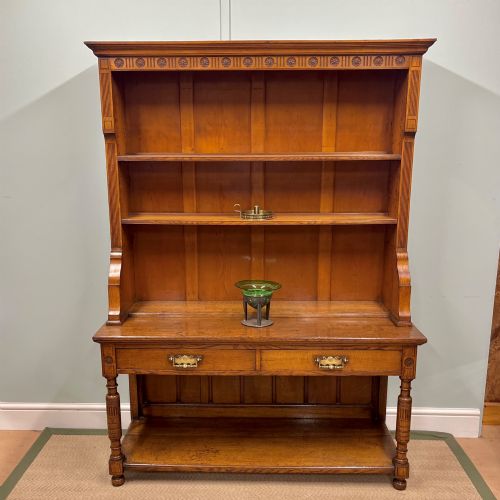
When you search for a victorian oak plate rack, you encounter wall-mounted shelves and the upper display tiers of larger kitchen dressers, mostly from the nineteenth century alongside pieces stretching from the seventeenth to the twentieth century.
The format centres on slatted wooden bars or upright spindles designed to prop ceramic plates upright against a backboard, keeping everyday crockery accessible in country kitchens and domestic dining spaces.
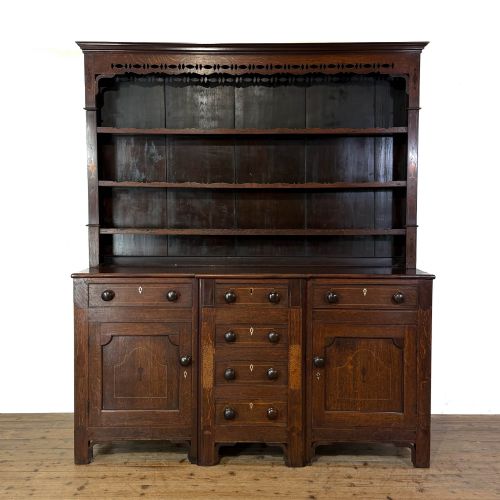
Most examples hail from English and Welsh vernacular traditions, ranging from simple wall-hanging shelves to monumental country house dressers fitted with open plate backs.
Materials and construction methods
Makers relied primarily on solid oak, chosen for its durability and strong grain, occasionally pairing it with secondary woods like pine or mahogany for internal linings and backing boards.
Construction involved traditional joinery such as pegged mortise and tenon joints for structural frames, alongside shaped sideboards and carved details like the Green Man motifs seen on late Victorian items.
One listed nineteenth-century Welsh dresser carries the distinct provenance of originating from Cafe Snowdon.
What separates the finest examples
Quality rests in the timber selection and the crispness of any carving, with dense honey oak and well-figured grain marking out superior regional pieces from simpler utilitarian carpentry.
Structural integrity of the slatted plate supports and original mounting fixtures dictate the standard, distinguishing honest vernacular workshop output from later alterations.
Benetfink and Co
The Victorian Oak Plate Rack Glossary
- Plate rack
- A wall-mounted or dresser-integrated frame featuring vertical slats or grooves to display plates upright. These fixtures kept heavy earthenware dry and ready for use in busy kitchens.
- Welsh dresser
- A large dining room or kitchen storage unit combining base cupboards or drawers with an open shelving rack above. They evolved as the primary display furniture for regional ceramics.
- Vernacular furniture
- Domestic pieces built by local regional carpenters rather than urban cabinetmakers, using native timbers like oak and ash. The style prioritises practical utility over fashionable court designs.
- Breakfront
- A piece of furniture whose central section projects forward from the flanking sides. This layout adds visual depth and divides bank drawers neatly.
- Green Man
- A sculptural architectural motif depicting a human face emerging from or entwined with foliage. It symbolises rebirth and appears frequently in nineteenth-century Revival carvings.
Victorian Oak Plate Rack: Frequently Asked Questions
Are these racks suitable for modern plates?
Standard Victorian slot spacing accommodates most everyday dinnerware, though very thick contemporary stoneware might not sit fully back in the grooves.
Measure the depth of the timber channels if you intend to display heavy modern ceramic collections.
How do I clean antique oak plate timber?
Dust the wood regularly with a dry cloth and apply a traditional beeswax balm occasionally to nourish the dry grain.
Avoid silicone-based sprays or excessive water, which can damage the aged patina of nineteenth-century surfaces.
How do I tell an 18th century rack from a Victorian one?
Earlier eighteenth-century pieces often display hand-sawn board marks and pegged joinery from regional workshops, while Victorian examples frequently show more uniform machine-sawn timber preparation.
Carving styles also shift, moving from simple geometric mouldings to heavier nineteenth-century Revival motifs.