
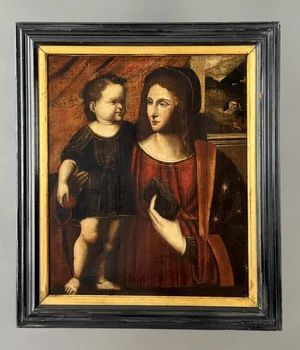
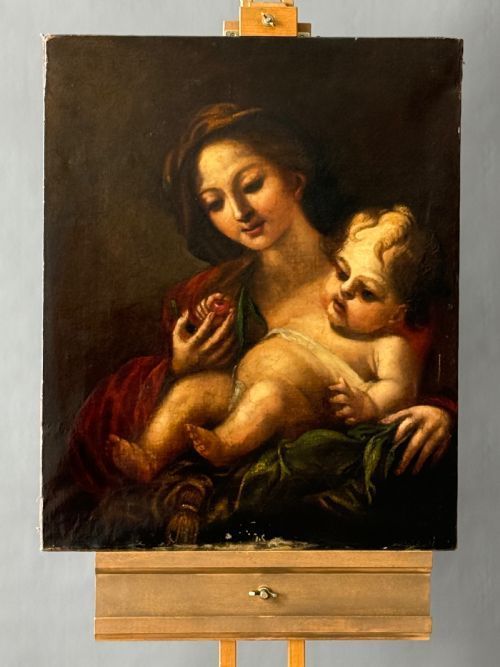
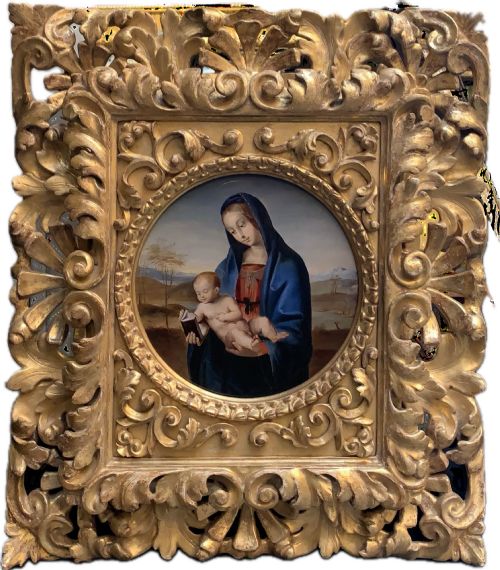
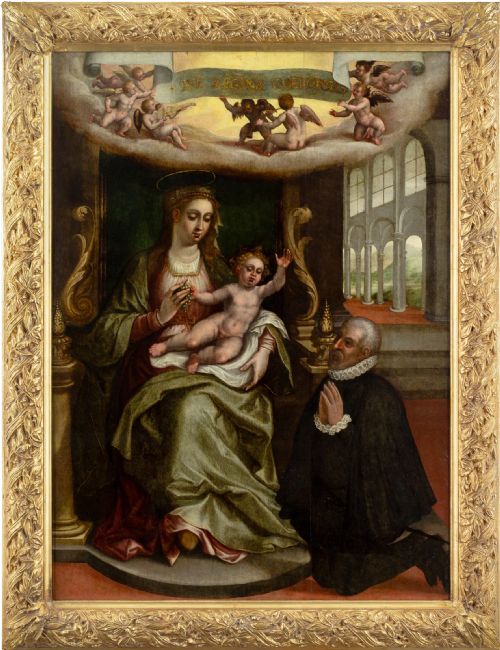


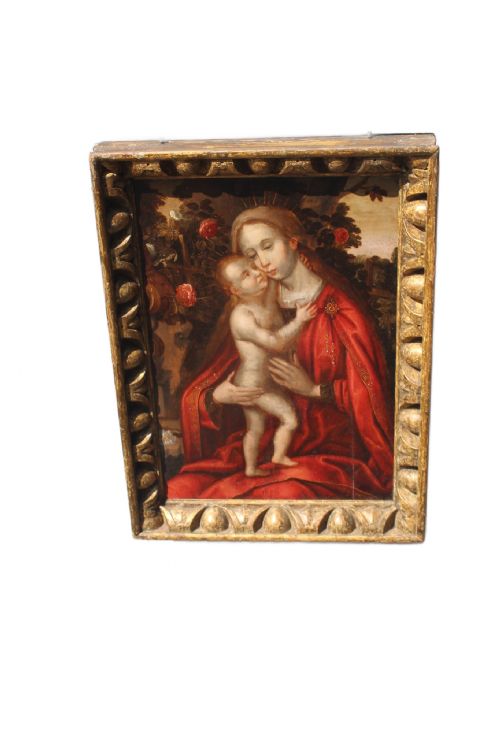
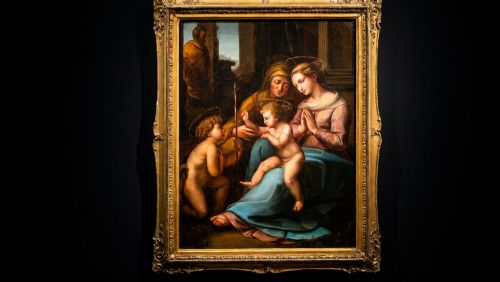


Virgin and Child Artwork
When you search for virgin and child artwork, you encounter centuries of devotional imagery capturing tender maternal bonds through oil, wood, and canvas.
Virgin and Child Artwork
When searching for virgin and child artwork, you examine devotional pieces spanning the sixteenth century to the mid-twentieth century. The selection ranges from Renaissance revival canvases and Italian Baroque oils to Victorian prints and outsider art sculptures.
You are most likely to meet oil paintings on canvas alongside framed prints reproducing famous compositions after Raphael and other masters. The forms encompass both traditional fine art paintings and wall art representing these sacred subjects.
Materials and Methods
The physical objects rely primarily on oil paint applied to canvas or wood panels, sometimes accented with gold leaf and giltwood frames. Paper prints utilise glass for protection within period framing.
Sculptural pieces bring in alternative mediums, while paintings demonstrate techniques ranging from meticulous old master followers to primitive art brut constructions.
The listings span eight distinct centuries, from the sixteenth century through to nineteen-forty.
Quality and Execution
Quality rests on the fidelity of the brushwork and the strength of the composition, distinguishing accomplished followers of established schools from simpler decorative prints. The depth of the pigment and the preservation of the canvas or wood surface dictate the visual impact.
Provenance and closeness to original sixteenth-century prototypes elevate certain pieces above later reproductions and revival works, though skilled nineteenth-century copies retain considerable presence.
Bernardino Luini·Miguel Barroso·Benvenuto Tisi·Francesco Solimena·Orsola Maddalena Caccia·Ambrious Benson·Bartolomé Murillo·Reynard Le Vieux
The Virgin and Child Artwork Glossary
- Old Master
- A European painter of skill who worked before the nineteenth century. These artists set the compositional standards that later painters copied and adapted.
- Renaissance Revival
- A nineteenth-century artistic movement that returned to the forms and ideals of the fifteenth and sixteenth centuries. Works in this style borrow heavily from classical Italian compositions.
- Baroque
- A period of artistic style starting around the seventeenth century characterised by dramatic movement and clear tension. These paintings use rich lighting effects to heighten emotional drama.
- Oil on Canvas
- Pigment mixed with drying oil applied to a stretched cloth support. This technique allows for rich blending of colours and enduring surface textures.
- Giltwood
- Wood carved and covered with a thin layer of gold leaf or powder. It provides reflective framing that enhances devotional paintings.
Virgin and Child Artwork: Frequently Asked Questions
What is virgin and child artwork?
These pieces comprise paintings, prints, and sculptures depicting the Virgin Mary holding the infant Jesus. They stem from diverse religious and artistic traditions across several centuries.
The listings include oil paintings by followers of Renaissance masters, devotional prints from the nineteenth century, and mid-century outsider art.
How were these devotional pieces used?
Historic works of this nature served as focal points for private prayer and contemplation in domestic or ecclesiastical settings. They provided visual aids for religious devotion.
Later prints and framed pieces continued this tradition of sacred decoration in homes, maintaining the visual heritage of earlier Italian and European schools.
How do I identify a 16th-century piece?
Sixteenth-century works typically show the distinctive handling of oil on panel or early canvas associated with Renaissance workshops and their immediate followers. Pigment analysis and panel construction help confirm the age.
Many examples on the market are later copies after masters like Raphael, so attribution usually points to a circle or follower rather than the primary hand.
What is the difference between an original and a print?
Originals feature hand-applied oil paint on canvas or wood, showing brushstrokes and texture unique to the artist's hand. Prints use mechanical or photographic reproduction methods on paper.
Framed prints from the nineteenth and twentieth centuries offer accessible ways to enjoy classic compositions without the materiality of an oil painting.
How do I care for antique religious paintings?
Protect oil paintings and giltwood frames from direct sunlight, high humidity, and rapid temperature fluctuations to prevent cracking or warping. Keep the glass on framed prints clean with gentle methods.
Avoid touching the painted surface directly, as natural oils from skin can damage old varnishes and pigments over time.