




Madonna and Child Canvas
A madonna and child canvas brings centuries of devotional portraiture into a room through oil paint on stretched fabric.
Madonna and Child Canvas
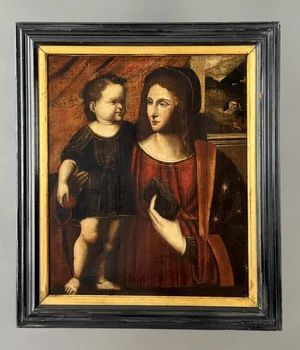
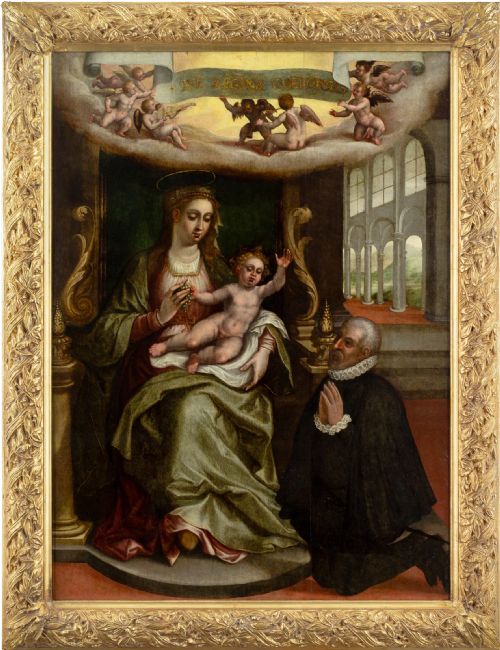
A madonna and child canvas presents the Virgin Mary holding the infant Christ, a subject central to centuries of European painting. When you search for a madonna and child canvas, you encounter works ranging from sixteenth-century Italian compositions to nineteenth-century revival pieces.
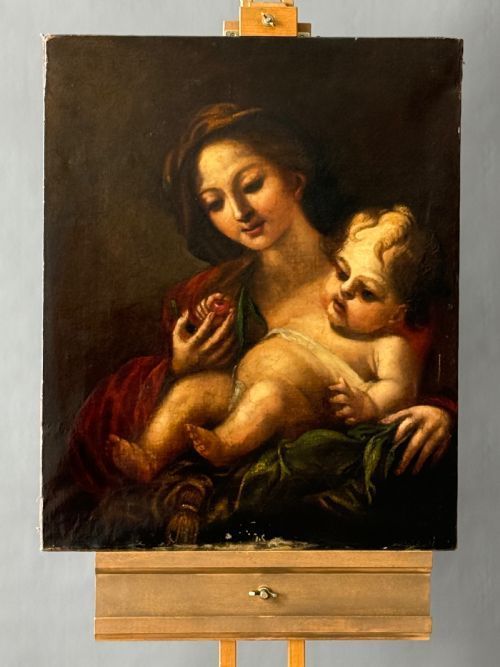
The selections span distinct periods, with seventeenth-century and eighteenth-century examples appearing frequently alongside sixteenth-century Italian school works and later interpretations. Many pieces reflect the influence of master painters such as Raphael, Correggio, and Murillo through contemporary workshop production or later copies.
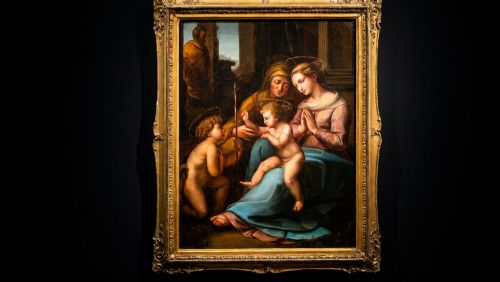
Formats vary from intimate devotional panels translated to canvas up to large-scale religious portraits suitable for prominent wall placement. These paintings often include auxiliary figures like Saint John the Baptist or Saint Joseph within the traditional triangular grouping.
Materials and construction
These works rely primarily on oil on canvas, utilising stretched textile grounds prepared with gesso. Artists applied rich oil pigments layer by layer to build luminosity in the drapery and flesh tones.
Many historical examples are housed in period frames constructed from wood with giltwood or gold leaf enrichment. The combination of oil paint and gesso on canvas allowed painters to achieve subtle gradations of light and shadow characteristic of Baroque and Renaissance traditions.
Cherries make an appearance in an eighteenth-century composition, offering the infant Christ a sweet snack that doubles as a symbol of future sacrifice.
Judging quality and execution
Quality in a madonna and child canvas rests upon the surety of the brushwork and the depth achieved in the pigment layers. Finer examples display careful anatomical rendering in the hands and faces, whereas simpler works rely on formulaic repetition.
The integration of the original canvas with its stretcher and frame contributes significantly to the integrity of the piece. Superior paintings maintain clear narrative cohesion and compositional balance inherited from their historical prototypes.
Miguel Barroso·Francesco Solimena·Orsola Maddalena Caccia
The Madonna and Child Canvas Glossary
- Oil on Canvas
- A painting medium where pigments suspended in drying oils are applied to a woven fabric support. This technique allowed artists to blend colours smoothly and work with greater flexibility than rigid wood panels.
- Gesso
- A white paint mixture consisting of a binder mixed with chalk, gypsum, or pigment, used as a prepared surface on canvas or wood before applying oil paint.
- Giltwood
- Wood that has been coated with thin gold leaf or powder, frequently seen on the decorative frames enclosing these historical paintings.
- Renaissance Revival
- An artistic movement during the nineteenth century that drew inspiration from the art and architecture of the fifteenth and sixteenth-century Italian Renaissance.
- Baroque
- A European style of the seventeenth and eighteenth centuries characterised by dramatic use of light, intense emotional expression, and dynamic composition.
Madonna and Child Canvas: Frequently Asked Questions
What is a madonna and child canvas?
A madonna and child canvas is an oil painting on fabric depicting the Virgin Mary and the infant Jesus. These works range from early Italian school paintings to later nineteenth-century interpretations of Renaissance compositions.
Such paintings served as objects of personal devotion or altarpieces in historical settings. Today they function as fine art focal points in domestic interiors.
How do I date an antique religious canvas?
Dating relies on examining the canvas weave, the preparation layer underneath, and the style of the oil painting. Pigment analysis and the construction of the wooden stretcher also provide clues to the period of origin.
Comparative analysis with known works by followers or workshops helps narrow down the century. Frame styles often correspond to the era in which the canvas was painted or subsequently rehoused.
What does after Raphael mean in a title?
When a painting is described as after Raphael, it indicates that the work is a later copy or adaptation of a composition by the Renaissance master Raffaello Sanzio. These pieces were often painted by students, followers, or later artists studying classical proportions.
Such works allowed collectors to own representations of famous museum pieces in domestic formats. They reflect the enduring influence of high Renaissance design across subsequent centuries.
How should I care for an oil painting on canvas?
Keep the canvas away from direct sunlight and dramatic fluctuations in temperature and humidity to prevent the paint layer from cracking. Maintain stable environmental conditions in your room to preserve the integrity of the textile and gesso.
Dust the surface gently with a soft, dry brush and avoid using liquid cleaners or touching the pigment directly. Consult a professional art conservator if the canvas requires cleaning or structural repair.