
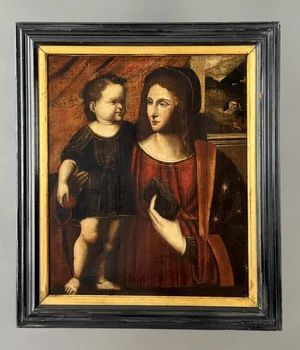
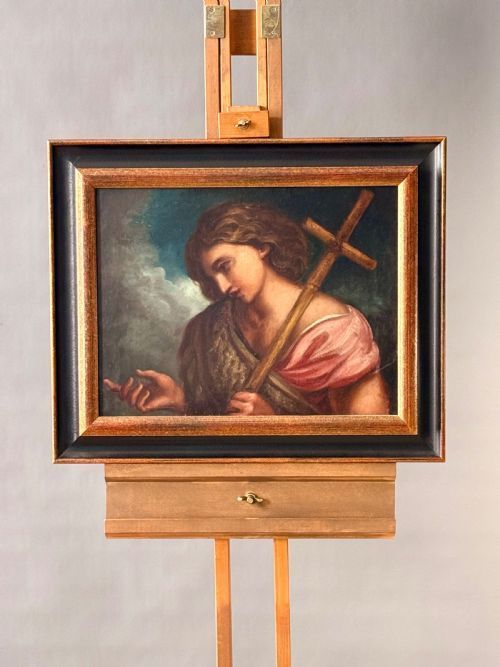
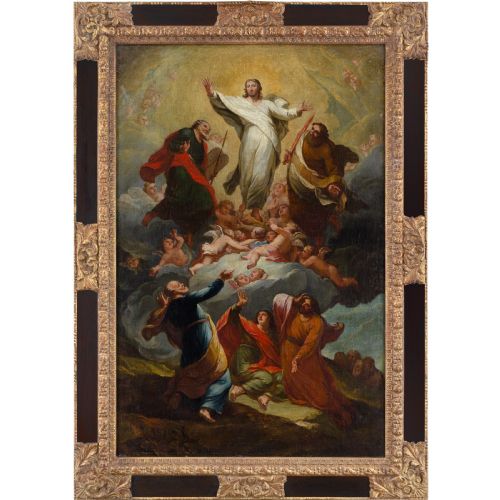
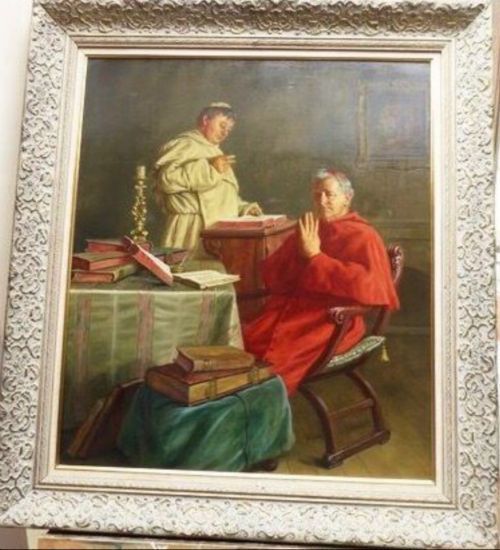
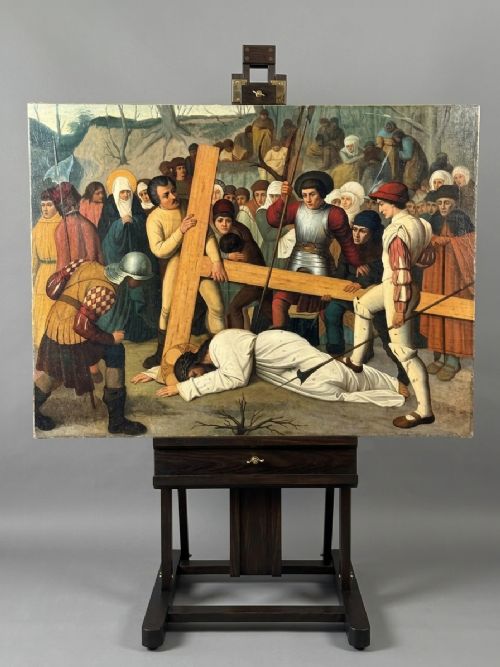
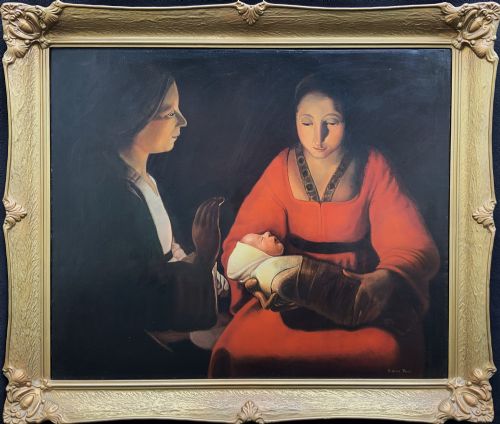
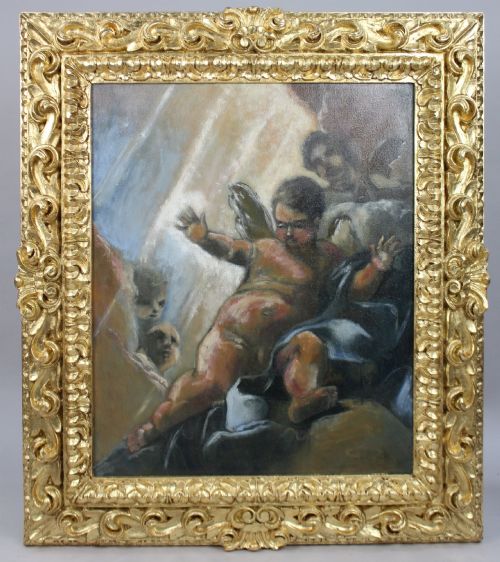
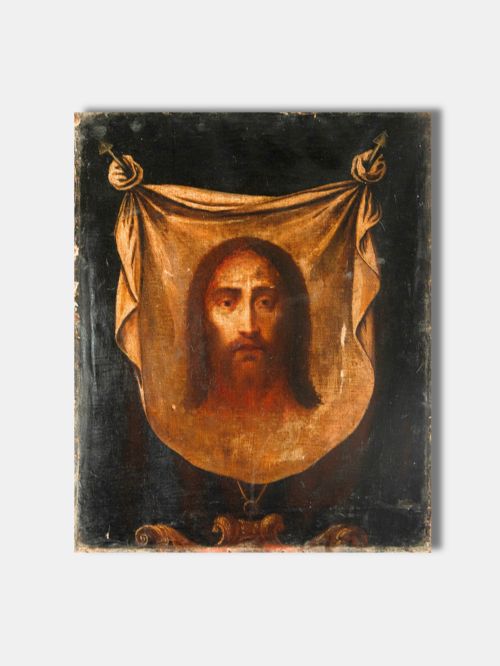

Antique Religious Wall Canvas
When you search for an antique religious wall canvas, you step into centuries of devotional art painted in oil upon stretched linen.
Antique Religious Wall Canvas
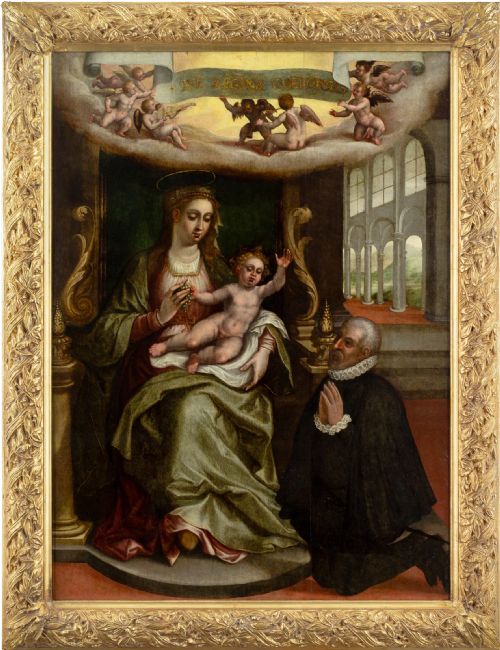
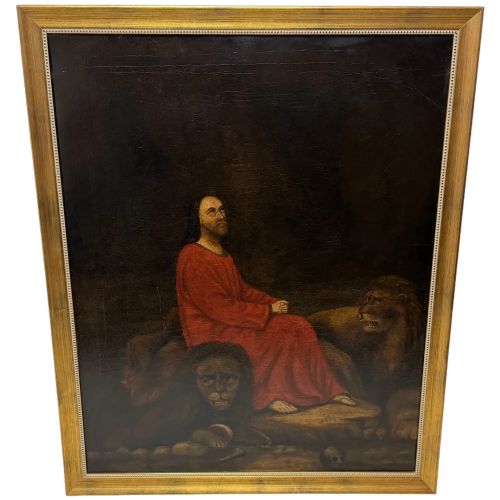
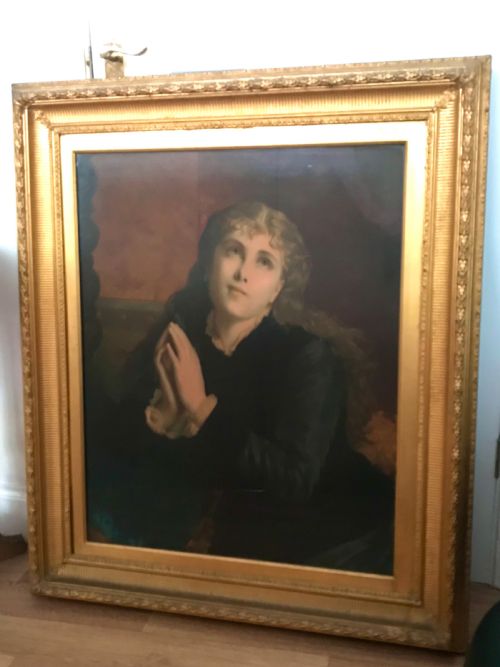
An antique religious wall canvas brings centuries of sacred iconography into a domestic space, shifting focus from secular decoration to contemplative art. These works span European schools from the sixteenth century through the nineteenth century, capturing biblical narratives, saints, and Marian devotion.
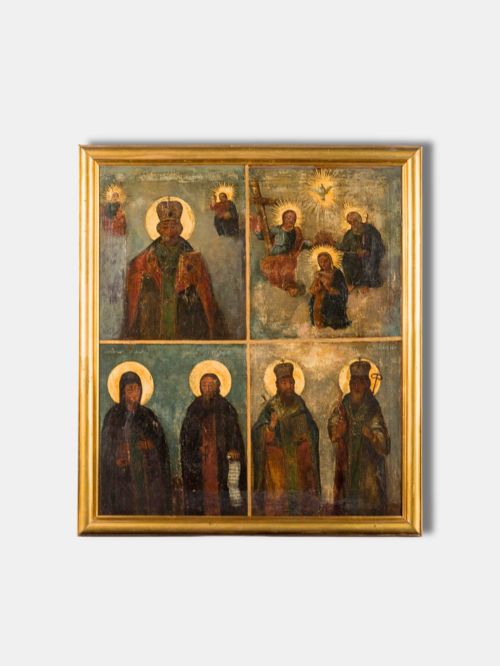
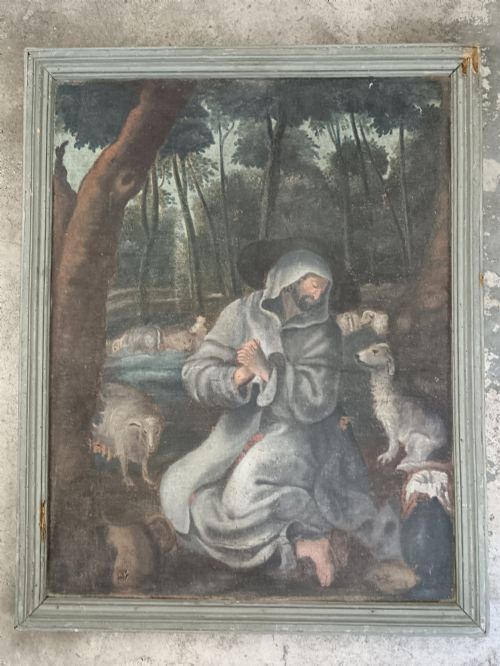
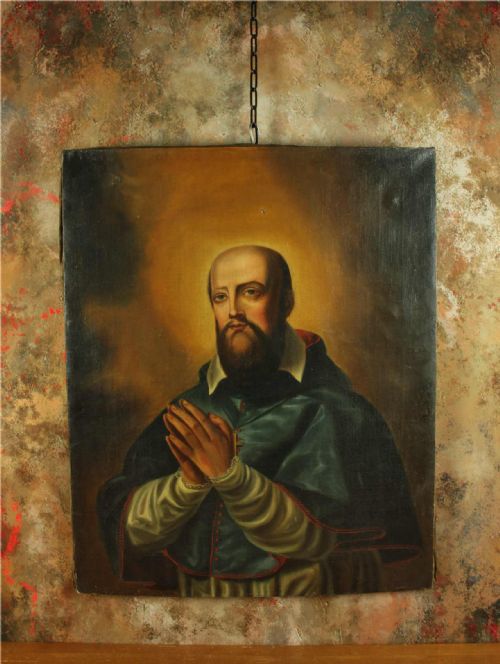
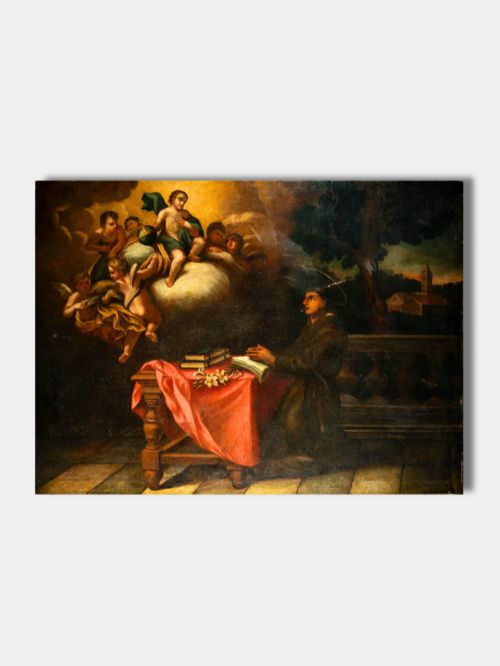
The pieces on this page appear predominantly as oil paintings on canvas, frequently housed within carved giltwood frames that amplify their visual weight. Subjects range from large devotional compositions depicting the Holy Family to intimate portraits of individual figures such as Saint Francis or Mary Magdalene.
Originating largely from Italian, Spanish, and French workshops, these works include both original compositions by regional masters and subsequent interpretations after Renaissance greats like Raphael and Correggio. Buyers encounter everything from monumental altarpiece studies to quieter devotional pieces intended for private prayer.
How They Were Made
Painters applied oil paint and occasionally tempera directly onto prepared canvas supports, building colour and depth through successive glazes and opaque layers. Some works incorporate gold leaf details, particularly in icons or panels where light reflection serves a theological purpose.
Substrates were stretched over sturdy wooden frames, and many surviving works retain their original or period-appropriate carved giltwood frames. Pigments derived from minerals and earth were ground by hand in early workshops, yielding the characteristic muted tones seen in seventeenth-century and eighteenth-century canvases.
Several seventeenth-century canvases reveal fascinating pentimenti, where saints' halos shifted sideways while the artist prayed and painted.
What Varies in Quality
Quality rests upon the handling of anatomy, drapery, and emotional expression within the composition, distinguishing masterworks from routine workshop output. A skilled hand renders the subtle play of light across a saint's robe or captures the tender interaction between figures with psychological depth.
The integrity of the canvas support and the preservation of the original paint layer determine the visual impact of the piece. Works that retain their authentic surface texture and early framing elements command greater attention from collectors of old masters.
Matthieu Elias·Francesco Solimena·Pompeo Batoni·Ernst Stierhof·Costantino Frixione
The Antique Religious Wall Canvas Glossary
- Canvas
- A heavy woven fabric, typically of linen or hemp, used as a support for oil paintings. It provides a flexible and durable surface that holds layered pigments securely.
- Giltwood
- Wood, often carved moulding or framing, that has been decorated with a thin layer of gold leaf or gold powder. It creates a luminous border that isolates the painted scene from the wall.
- Old Master
- A European painter of skill working before about eighteen hundred, or a painting by such an artist. These works form the backbone of historic religious fine art.
- Pentimento
- An alteration in a painting, evidenced by traces of previous work showing through the top layer of paint. It reveals the artist changing their mind during the creative process.
- Tempera
- A permanent, fast-drying painting medium consisting of coloured pigment mixed with a water-soluble binder agent, such as egg yolk. It produces a matte surface often found in earlier religious icons.
Antique Religious Wall Canvas: Frequently Asked Questions
What is a religious wall canvas?
A religious wall canvas is a historic painting on fabric depicting sacred figures, saints, or biblical scenes intended for devotional contemplation. These artworks were produced across Europe over several centuries for churches, monasteries, and private homes.
Today, they function as both historical artefacts and striking focal points in domestic interiors, bringing centuries of artistic tradition to modern walls.
How do I date an old canvas?
Dating relies on examining the style of the brushwork, the preparation of the canvas, the pigments used, and the framing construction. Seventeenth-century and eighteenth-century works often display characteristic earth palettes and dramatic chiaroscuro lighting.
Comparative analysis with known school paintings and workshop practices helps narrow down the decade or century of production. Expert attribution connects stylistic traits to specific regional schools of art.
Who painted these religious artworks?
Many pieces were created by named masters working within established European traditions, such as the Italian, French, or Spanish schools. Other works originate from studio followers or competent provincial artists painting in the manner of Renaissance masters.
Attributions often point to circles or workshops where assistants executed compositions under the supervision of a primary master painter.
How should I hang a canvas?
Religious canvases require stable wall environments away from direct sunlight, excessive heat sources, and high humidity fluctuations. Proper hanging involves secure wall anchors suited to the weight of the canvas and its substantial wooden frame.
Ensuring the piece hangs at eye level allows viewers to appreciate the fine details of the brushwork and the theological narrative of the scene.