


Antique Christian Wall Art
Antique christian wall art brings centuries of devotion into a room through traditional paintings, plaques, and devotional panels.

Antique Christian Wall Art
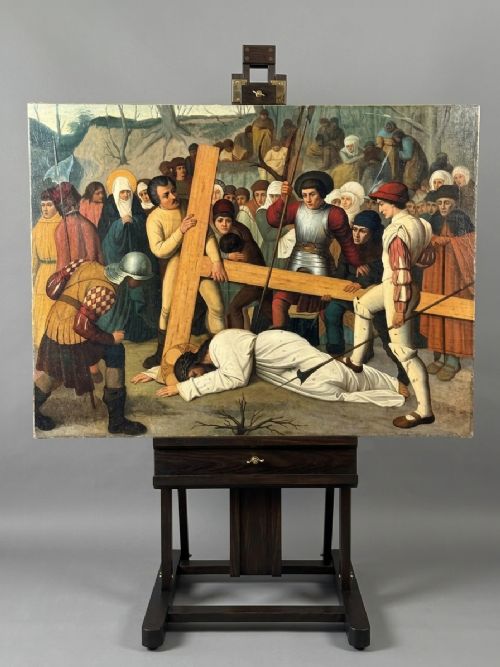
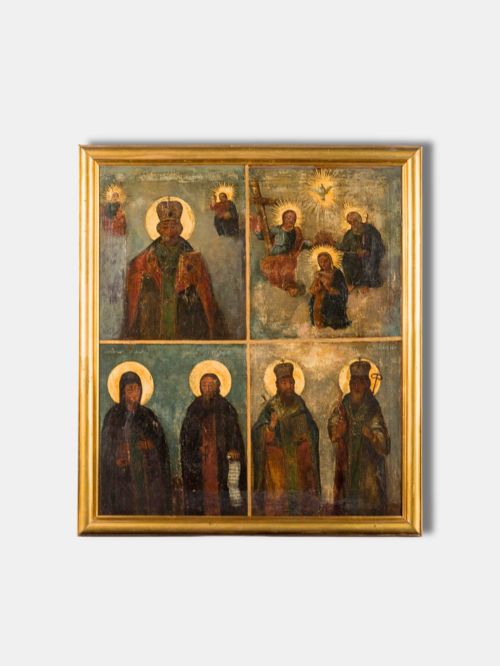
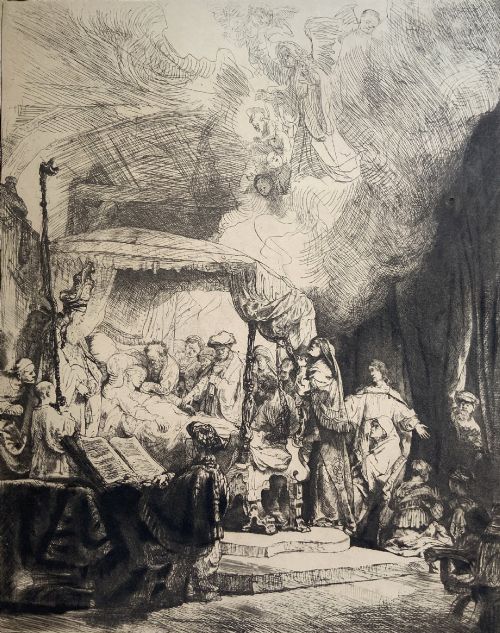
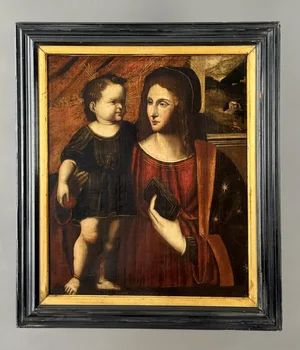
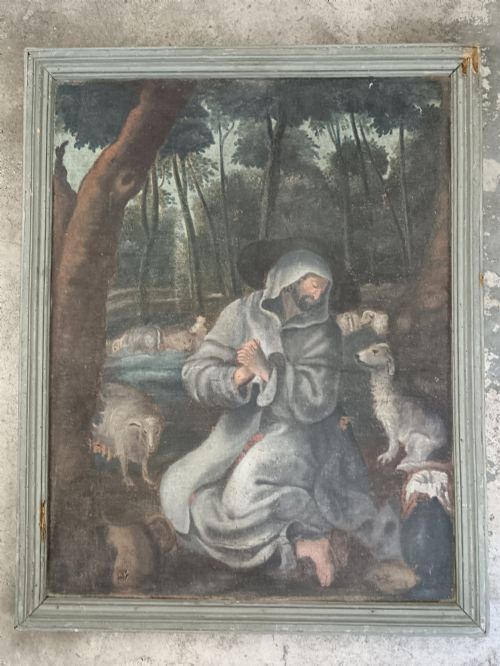
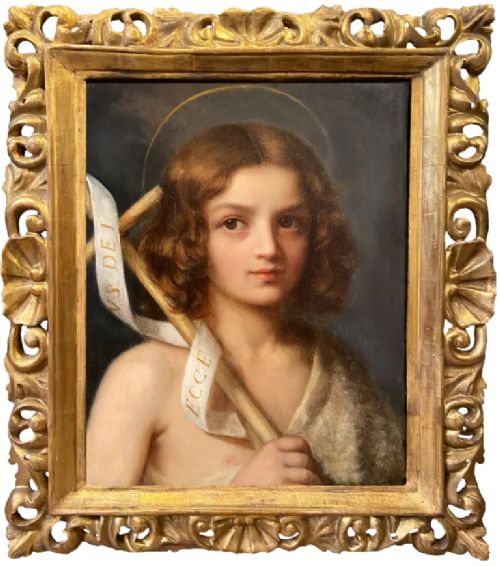
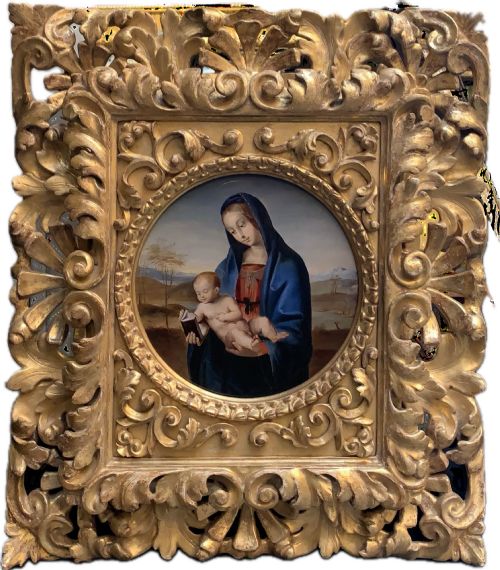
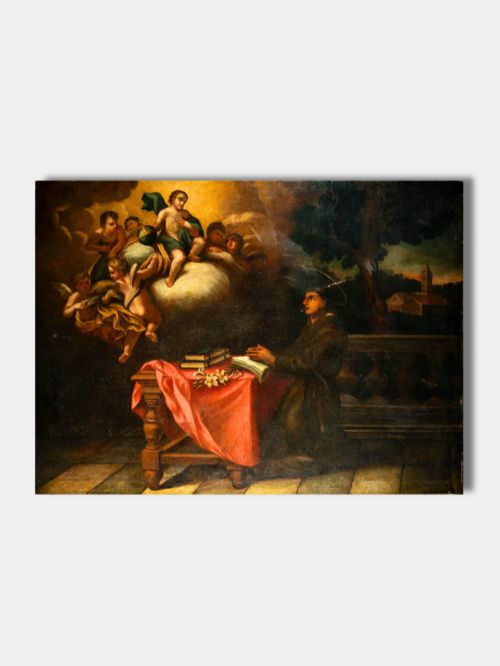
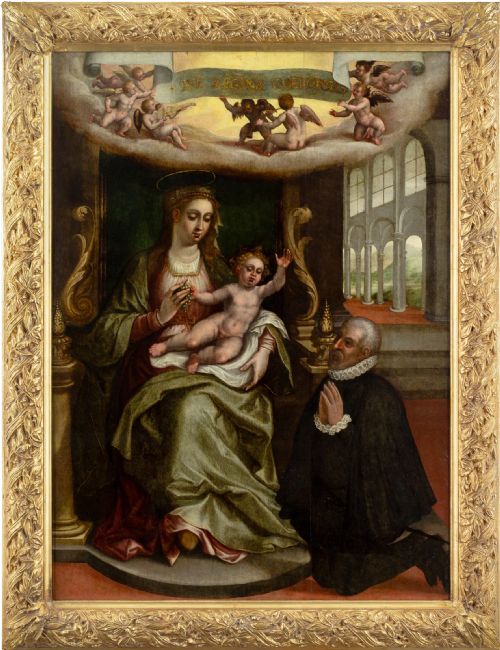
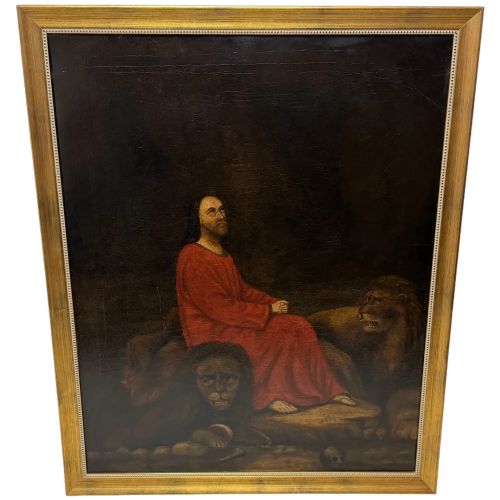
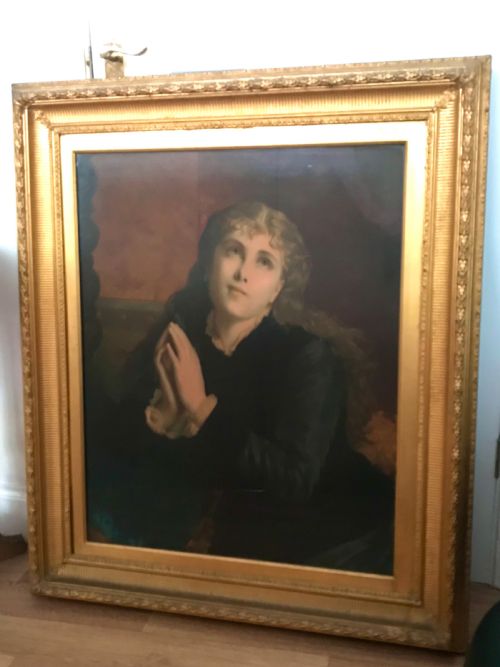
Antique christian wall art comprises devotional paintings, panels, and plaques produced across European schools from the sixteenth century to the Edwardian period. Buyers examining this category encounter oil paintings on canvas and wood, tempera icons, enamel plaques, and reverse glass pictures depicting sacred subjects. The selection centres heavily on oil paintings executed after Renaissance masters or by regional European workshops.
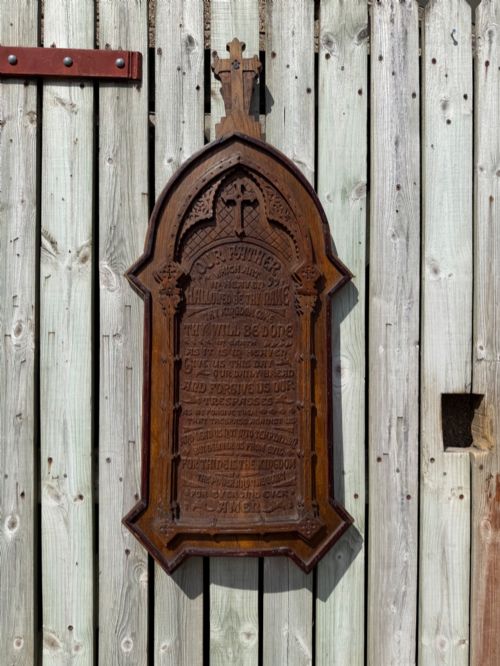
Religious iconography dominates the forms, featuring depictions of the Madonna and Child, the Holy Family, and various saints such as Saint John the Baptist and Saint Anthony of Padua. Pieces range from monumental canvases intended for chapel settings to smaller domestic plaques and framed paper signs designed for private prayer. Buyers seeking traditional devotional imagery find works reflecting Renaissance Revival, Baroque, and Gothic Revival styles.
How they were made
Artisans built these works using traditional grounds and media, applying oil paint, tempera, or enamel directly onto canvas, wood panels, copper, and glass. Canvases are frequently stretched over timber frames, while wood panels provide stable surfaces for detailed brushwork and gilding with gold leaf. Enamel and reverse glass techniques require precise firing or meticulous pigment placement behind protective panes.
Frames form an integral part of the construction, utilising carved wood, giltwood, and oak housing mother of pearl or paper inserts. Many works reflect the direct influence of workshop traditions, employing layered glazes and underdrawing techniques visible in pentimenti.
Antique Christian Wall Art Retail Price Guide 2026
Typical asking prices for christian wall art among the pieces listed under this phrase on Sellingantiques today, from the lower quarter to the upper quarter. They describe what is for sale here now, not the wider market.
Listings feature wood, canvas, glass, and paper supports spanning the seventeenth through the nineteenth centuries.
What varies in quality
Quality in these devotional works rests upon the fidelity of the execution and the strength of the composition, particularly in pieces created after earlier masters. Works attributed to named circles or workshops often display superior handling of light, anatomical proportion, and facial expression compared to simpler naive or provincial interpretations.
The integrity of the original materials, from the stability of the canvas and wood support to the preservation of giltwood frames and enamel surfaces, dictates the standing of an individual piece. Finer examples maintain their original pigment depth and structural framing without extensive overpainting.
Jozef Jansessens·Bernardino Luini·Miguel Barroso·Francesco Solimena·Raffaello Sanzio·Christian Lindner·Antonio Allegri·Scipione Pulzone·Orsola Maddalena Caccia·Bartolomé Murillo·Gian Federigo Bonzagna
The Antique Christian Wall Art Glossary
- Pentimento
- An alteration in a painting, evidenced by previous strokes or shapes showing through the top layer of paint. This phenomenon often reveals the artist changing their composition during the creative process.
- Tempera
- A permanent, fast-drying painting medium consisting of coloured pigments mixed with a water-soluble binder material, usually egg yolk. It provides a luminous surface often enhanced with gold leaf in early religious panels.
- Reverse glass painting
- An art form consisting of applying image layers to a glass pane and viewing the finished creation through the unpainted side. It requires the artist to paint details in reverse order, starting with the foreground.
- Enamel plaque
- A small decorative plate created by fusing powdered glass to a substrate like copper through high-temperature firing. Limoges served as a notable centre for this intricate technique.
- Oleograph
- A mechanical colour lithograph produced on canvas to imitate an oil painting, popular during the Victorian era. It utilises textured rollers to replicate the canvas weave and brush marks.
Antique Christian Wall Art: Frequently Asked Questions
How do I date an old religious painting?
Dating relies upon examining the preparation of the canvas or wood panel, the composition style, and the framing materials. Stylistic markers often point to specific revivals or centuries of production.
Physical inspection of the reverse side, stretcher bars, and pigment characteristics provides further clues to the era of manufacture.
What is the difference between an icon and a painting?
Icons follow strict theological canons and traditional mediums like tempera and gold leaf on wood panels, intended primarily as windows for prayer. Paintings on canvas allow for greater artistic latitude in perspective, secular influence, and narrative depth.
Both forms serve devotional functions but originate from distinct regional and liturgical traditions.
How should I hang antique wall art safely?
Ensure the wall structure can support the weight of heavy giltwood frames and solid wood panels. Utilise appropriate fixings matched to the weight and hanging hardware already secured to the antique frame.
Position pieces away from direct sunlight and fluctuating heat sources to protect delicate oils, paper signs, and enamels.
Are reverse glass pictures fragile?
Reverse glass pictures require careful handling because the paint layer sits directly behind a fragile glass substrate. Impacts can cause the pigment to flake away from the glass pane.
Mounting them securely prevents vibration and protects the historic picture surface from accidental contact.