


Vintage Wrought Iron Table
A vintage wrought iron table brings robust metalwork and timeless utility into domestic and garden spaces alike.
Vintage Wrought Iron Table
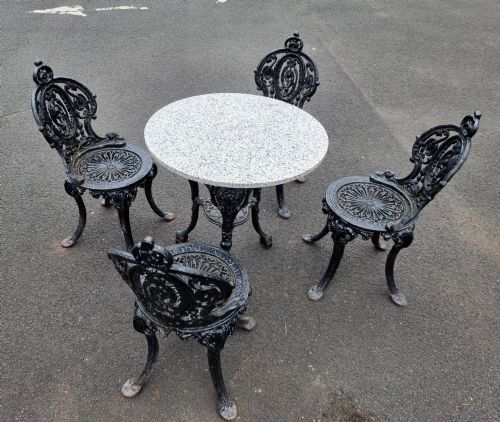
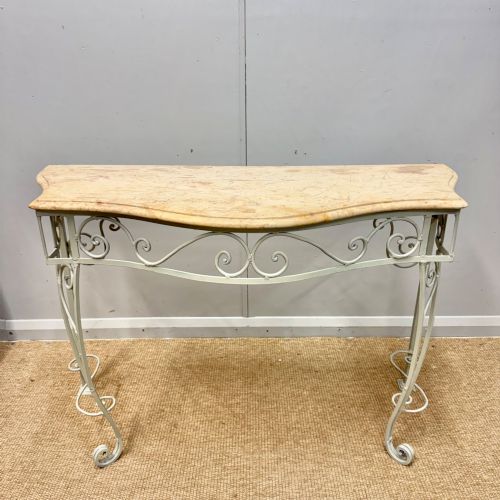
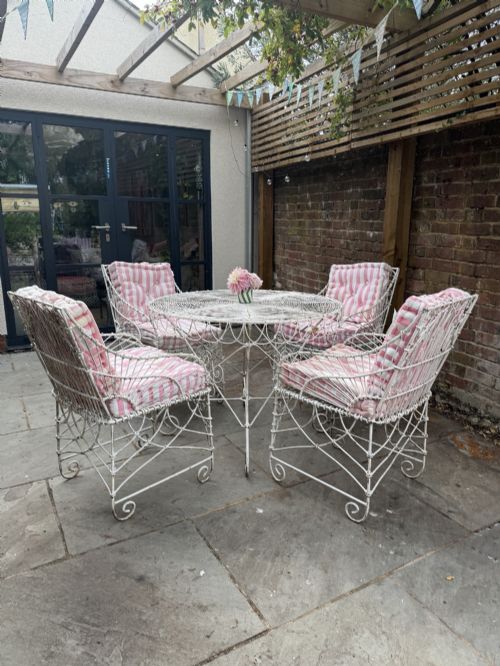
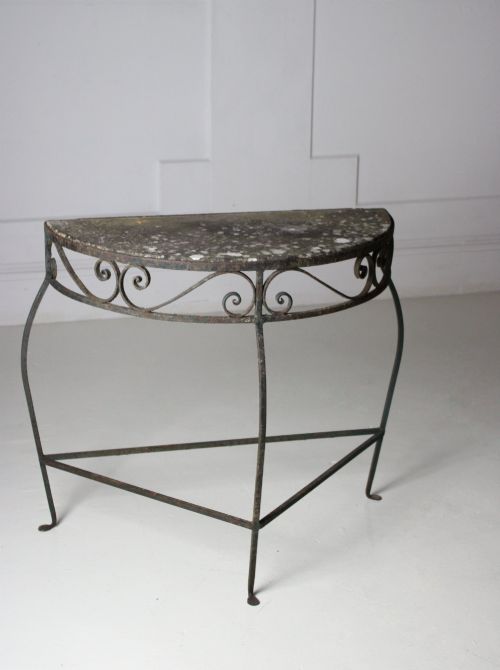
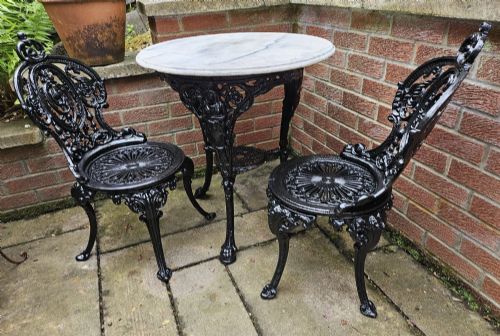
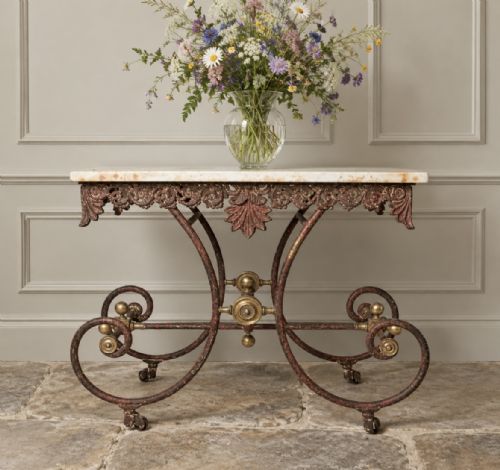
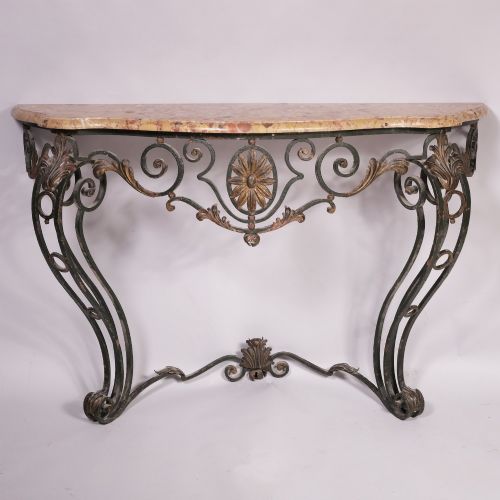
A vintage wrought iron table encompasses practical furniture designed for gardens, conservatories, and interiors, drawing heavily on French country, industrial, and Art Deco traditions. When searching for this phrase, buyers encounter everything from modest bistro sets and low coffee tables to grand console tables topped with marble.
The selections span from the nineteenth century through the Edwardian era and into the interwar decades of the 1920s, 1930s, and 1940s. French Provincial designs and estate-made garden tables dominate the forms, frequently accompanied by matching chairs or architectural plant stands.
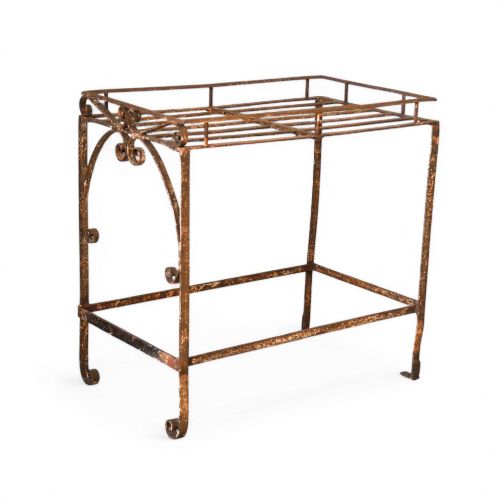
Beyond standard dining and side tables, the category extends to specialised pieces such as butchers' tables and work tables that combine heavy metal framing with wooden or zinc surfaces. These items reflect both utilitarian origins and decorative domestic applications across European workshops.
How they were made
Construction relies heavily on hand-hammered and forged wrought iron or cast iron frameworks, providing sturdy structural support for diverse surfaces. Blacksmiths and estate artisans shaped the metal with decorative scrolls, twists, and structural rivets characteristic of the period.
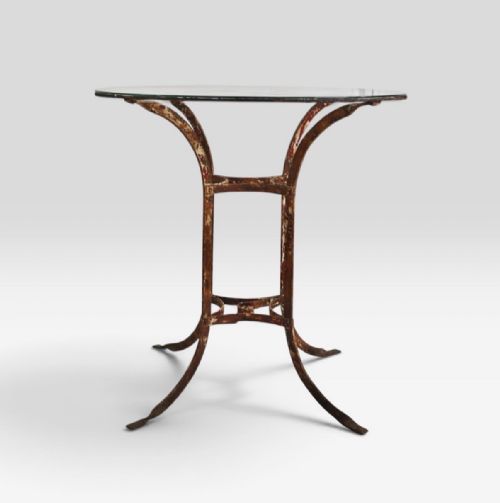
Table tops utilise contrasting materials such as heavy marble, zinc, oak, pine, and glass to pair industrial strength with refined surfaces. Marble and stone slabs rest securely within iron frames, while wooden tops utilise oak and pine secured by traditional joinery.
Listings feature pieces spanning from the 1860s through the 1940s, uniting iron and wrought iron with marble, glass, oak, and brass.
What varies in quality
Quality rests in the precision of the forging and the integrity of the materials combined with the iron frame. Hand-hammered detailing and estate-made provenance elevate individual pieces above standard production items.
The harmony between the iron base and the fitted top - whether serpentine marble, thick glass, or patinated wood - determines the visual success of the piece. Superior examples maintain original structural components without mismatched replacements.
Lacroix·Lalique·Schneider·Daum·Degue
The Vintage Wrought Iron Table Glossary
- Wrought iron
- A tough, malleable form of iron that can be heated and hammered into decorative scrolls and structural shapes. It differs from cast iron by containing less carbon and exhibiting fibrous slag inclusions.
- Console table
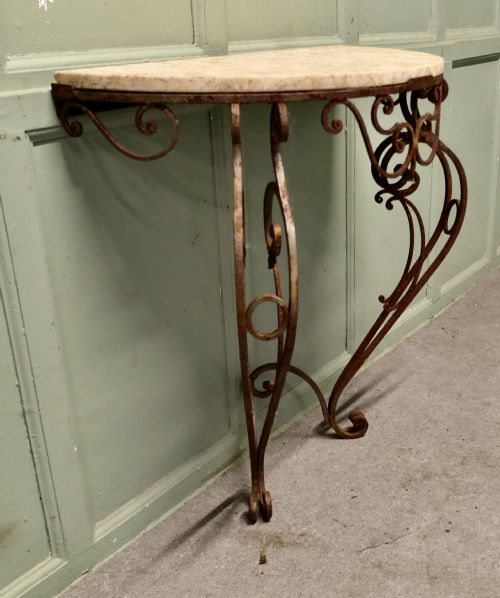
- A table designed to stand against a wall, frequently supported by decorative brackets or legs. In this category, they often feature heavy marble tops.
- Bistro set
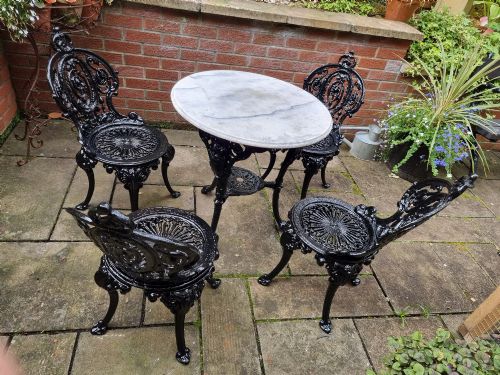
- A small table accompanied by matching chairs intended for casual dining or garden use. These sets frequently combine cast iron bases with wooden or metal surfaces.
- Art Deco
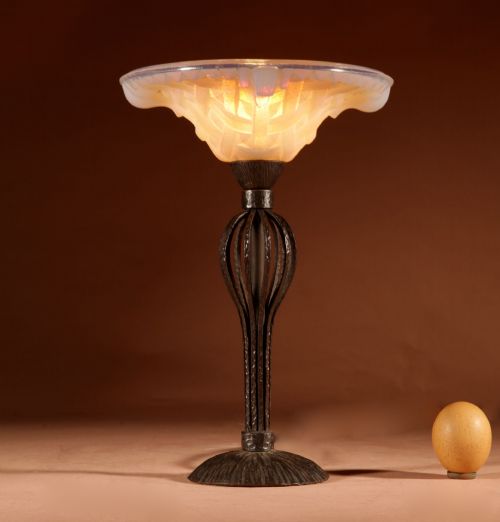
- A design style popular in the 1920s and 1930s characterised by sleek geometric forms and stylised motifs. Pieces from this era often pair wrought iron with moulded glass.
Vintage Wrought Iron Table: Frequently Asked Questions
Are vintage wrought iron tables suitable for outdoor use?
Many examples originate as garden furniture, bistro sets, or estate pieces built to withstand outdoor conditions. They handle weather well provided the metal is maintained.
However, pieces featuring delicate glass components, polished marble, or antique wood tops benefit from shelter during harsher seasons to preserve their surfaces.
How do I identify the period of an iron table?
Dating relies on stylistic clues, manufacturing techniques, and accompanying materials. Nineteenth-century examples often feature heavy hand-hammered or cast elements associated with Victorian or French provincial designs.
Later pieces from the 1920s and 1930s frequently incorporate Art Deco geometric lines, while Edwardian items lean toward wire work and conservatory aesthetics.
What maintenance do marble and iron tables require?
Iron frames need occasional checks for surface corrosion, which can be treated with appropriate waxes or protective coatings. Keeping the metal clean preserves the original forged texture.
Marble tops require sealing to prevent staining from liquids, especially when used in dining or conservatory settings.
Can I use a console table indoors?
Console tables function exceptionally well in hallways, living rooms, and dining areas as display surfaces. Their narrow profiles suit smaller spaces.
Those with heavy marble tops and ornate iron bases create strong focal points against interior walls.