


Vintage Writing Companion
A vintage writing companion brings order to correspondence through fitted inkstands, slope boxes and stationery cabinets.
Vintage Writing Companion
A vintage writing companion covers the diverse apparatus used for correspondence across the Georgian, Victorian and Edwardian eras. Buyers search this phrase when seeking functional desk furnishings that combine multiple accessories into a single cohesive piece.
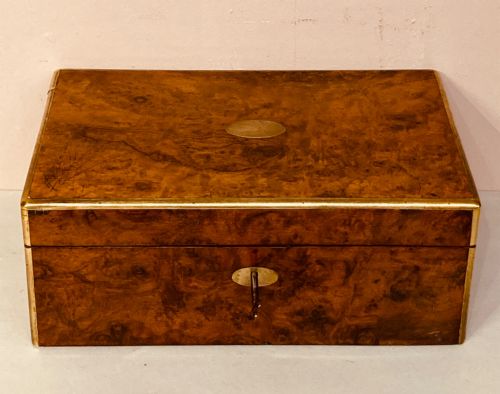
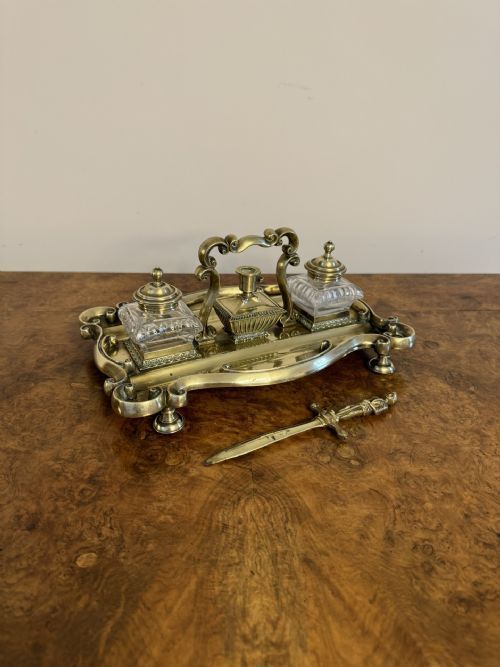
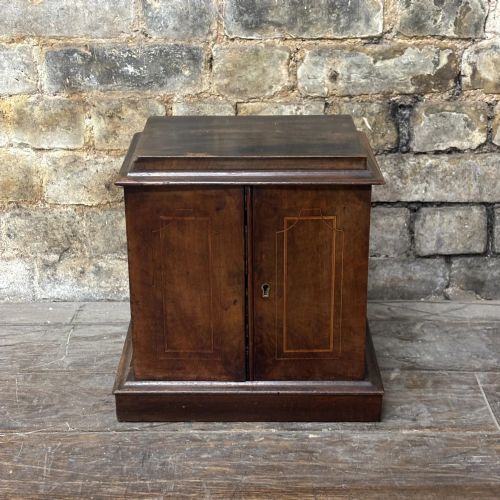
The most common forms encountered on this page include mahogany and burr walnut writing slopes, brass-mounted desk sets, and oak stationery cabinets. These items originate from periods spanning the nineteenth century through the early twentieth century.
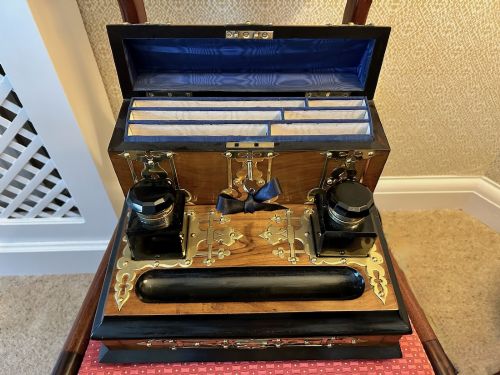
Portable writing slopes and desktop tidies offer compartments for paper, pens and inkwells, reflecting the physical demands of handwritten correspondence in historical interiors. Each object serves to organise the workspace while displaying the decorative tastes of its period.
Materials and Construction
Cabinet makers utilised dense hardwoods such as mahogany, oak, walnut and rosewood, often applying burr veneers to visible surfaces. Brass mounts, hinges and handles reinforce the corners and edges of portable slopes and stationery boxes.
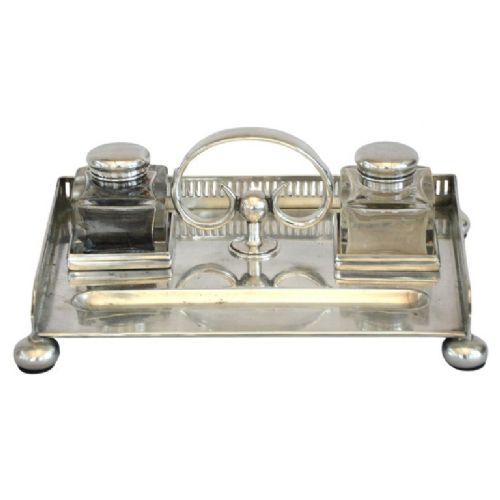
Leather interiors provide a writing surface within folding slopes, while intricate carving and inlay decorate ebony and rosewood examples. Metalwork elements include silver plate and silver gilt applied to inkstands and desk accessories.
Listings span the 19th century, Victorian, Edwardian, and Regency periods, utilising brass, mahogany, oak, and silver plate.
Distinctions in Quality
Quality reveals itself in the selection of timber, such as highly figured burr walnut or substantial mahogany, matched with precise cabinet joinery. Superior examples integrate multiple writing functions seamlessly, incorporating secret drawers, double-opening mechanisms, and matched cut-glass inkwells.
The sophistication of the hardware and mounts distinguishes finer pieces, with heavy cast brass, detailed engraving, and original maker fittings elevating a desk set. Poorer items rely on simpler construction and replacement components that lack historical harmony.
Walker And Hall·Marson & Jones
The Vintage Writing Companion Glossary
- Writing slope
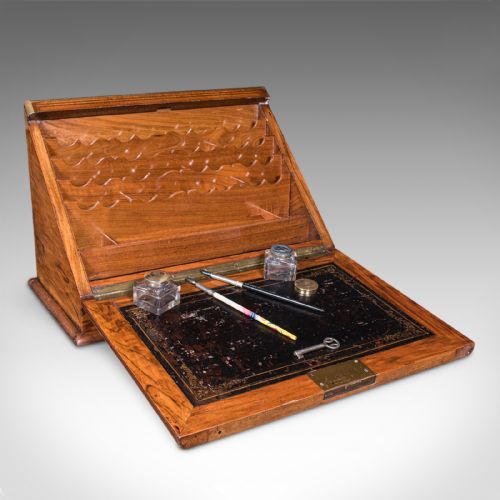
- A portable box with a sloping hinged lid that opens to form a desk surface and reveals internal compartments for writing materials.
- Inkstand
- A tray or stand holding one or more inkwells, often accompanied by pen rests and a sander or stamp box.
- Stationery cabinet
- An upright desktop box with doors or a drop-front designed to hold envelopes, paper, and correspondence.
- Desk tidy
- A small desktop accessory combining compartments for pens, ink, and letters to keep a workspace organised.
- Burr walnut
- A prized wood veneer showing swirling grain patterns caused by growths on the walnut tree, used on high-status nineteenth-century boxes.
Vintage Writing Companion: Frequently Asked Questions
What is a writing slope?
A writing slope is a portable wooden box that opens to reveal a slanted leather-lined writing surface and internal storage for paper and pens.
These pieces allowed writers to set up a stable desk anywhere in the home or while travelling.
How do I clean brass mounts?
Brass mounts on Victorian desk sets benefit from gentle dusting with a soft cloth to preserve their aged appearance.
Harsh metal polishes should be avoided to protect the surrounding wood and retain the historical patina.
Where were stationery cabinets placed?
Stationery cabinets sat on large partner desks or writing tables in studies, libraries, and drawing rooms.
They held correspondence ready for use throughout the Georgian and Edwardian periods.
How are periods identified?
Periods are identified through a combination of timber choice, hardware style, and construction techniques like dovetailing.
Georgian and Regency pieces lean towards classical lines, while Victorian and Edwardian examples often feature heavier brass mounts and varied materials.