
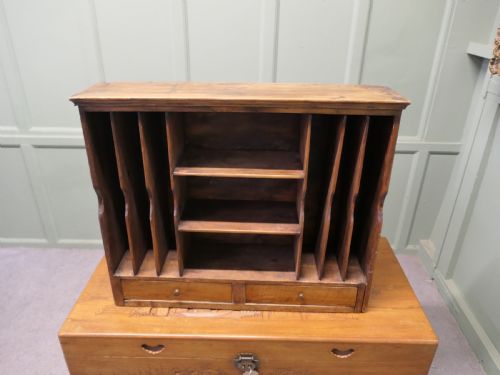


Antique Office Organiser
An antique office organiser puts your desk in order with the solid craftsmanship of past centuries.
Antique Office Organiser
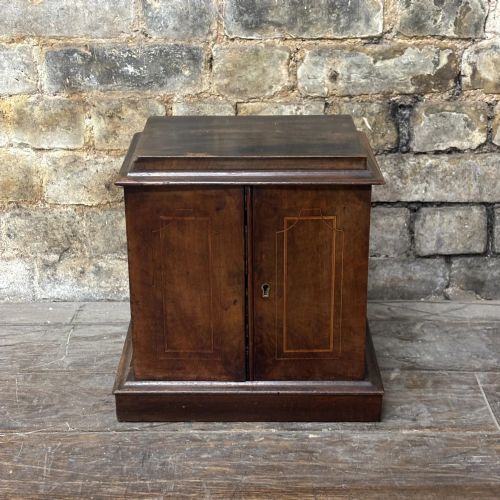
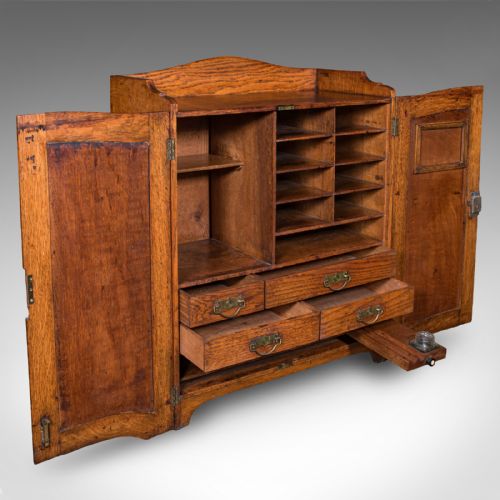
An antique office organiser brings order to papers and correspondence through practical forms like pigeon holes, stationery cabinets, and desk tidies. These pieces range from compact tabletop accessories to large floor cabinets.
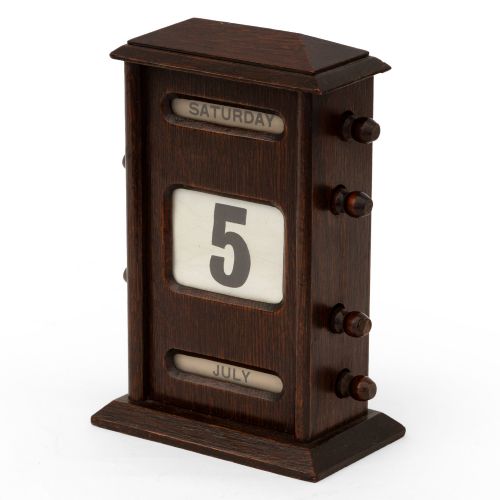
You will most frequently encounter nineteenth century and early twentieth century examples in wood such as mahogany, oak, and pine. The selection includes specialist items like perpetual calendars, filing cabinets, and letter racks.
The styles span Victorian and Edwardian designs alongside industrial and Art Deco pieces. Whether you need a simple desk tidy or a substantial post office cupboard, the variety reflects the working practices of the period.
Materials and construction
Makers utilised timber such as mahogany, oak, pine, and rosewood to build durable office furniture and desktop accessories. These woods were often polished or left in their natural state depending on the intended setting.
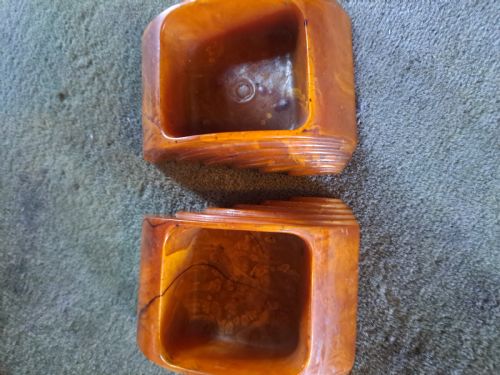
Metal and brass components appear frequently for hinges, clips, and handles, while marble and bronze feature in decorative desk tidies. Bakelite and catalin emerge in later Art Deco pieces alongside paper and paint finishes.
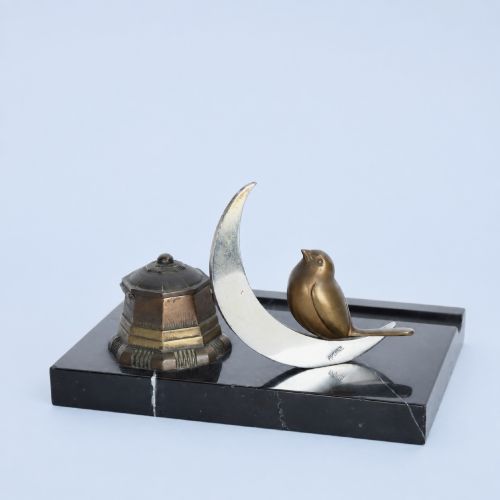
A bird and a crescent moon keep watch over your pens on an Art Deco black marble desk tidy.
What separates the better pieces
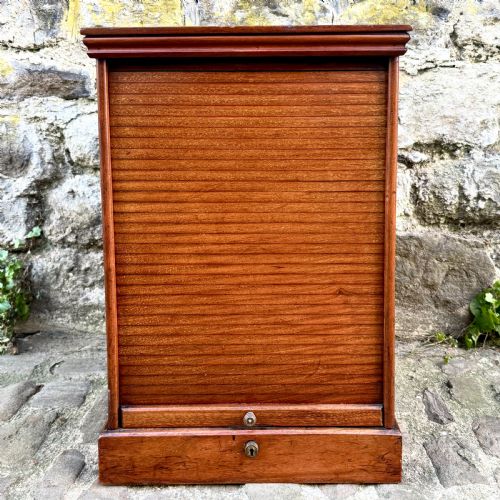
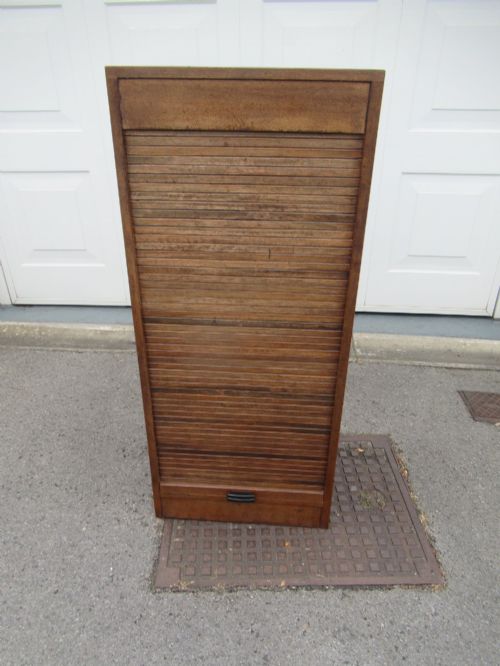
Quality shows in the choice of cabinet timbers and the precision of the joinery within pigeon holes and drawers. Superior pieces maintain smooth operation in tambour fronts and filing mechanisms.
The presence of original hardware, working calendars, and intact marble bases distinguishes finer examples. Finer items also display thoughtful proportion and careful finishing across the back and interior surfaces.
Amberg
The Antique Office Organiser Glossary
- Pigeon holes
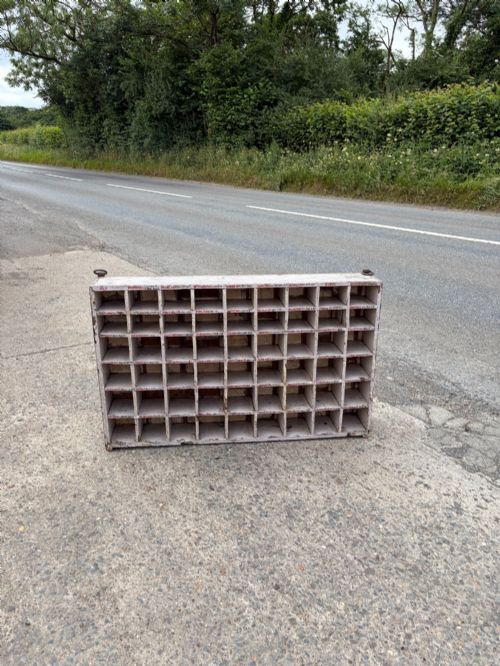
- Compartments arranged in rows for sorting letters and documents. They form the core of many desktop storage units.
- Tambour front
- A sliding door made of narrow slats of wood glued to a canvas backing. It runs in tracks to conceal filing drawers or shelves.
- Desk tidy
- A compact accessory designed to hold pens, ink, and stationery on a desktop. These often incorporate letter racks or perpetual calendars.
- Stationery cabinet
- An enclosed wooden box with internal shelves or slots for paper and envelopes. They frequently feature panelled doors and sloping fronts.
Antique Office Organiser: Frequently Asked Questions
What is an antique office organiser used for?
These pieces serve to sort letters, files, and stationery on desks or tables. They keep workspace clutter under control.
Historically, clerks and agents relied on them to manage daily correspondence and paperwork efficiently.
How do I identify a Victorian organiser?
Victorian examples typically feature dark timbers like mahogany or oak with traditional joinery. They often take the form of pigeon holes or letter racks.
Later pieces from the Edwardian period or the nineteen-thirties introduce lighter woods and different hardware styles.
Where can I place these in a modern home?
Desktop models fit easily onto modern study desks or sideboards for sorting post. Larger cabinets work well in home offices for storage.
Pine cupboards and pigeon holes also function in kitchens or hallways for everyday organisation.
Are these pieces difficult to maintain?
Maintenance requires only basic dusting and occasional application of appropriate furniture wax. Keeping them away from direct heat protects the timber.
Moving parts such as tambour doors benefit from gentle handling and occasional checks on their tracks.