




Wooden Correspondence Cabinet
These wooden correspondence cabinets are practical desk accessories designed to organise letters and papers, appearing mostly in Victorian and Edwardian styles.
Wooden Correspondence Cabinet
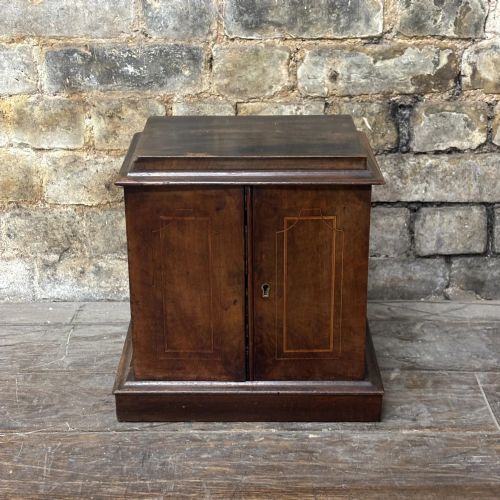
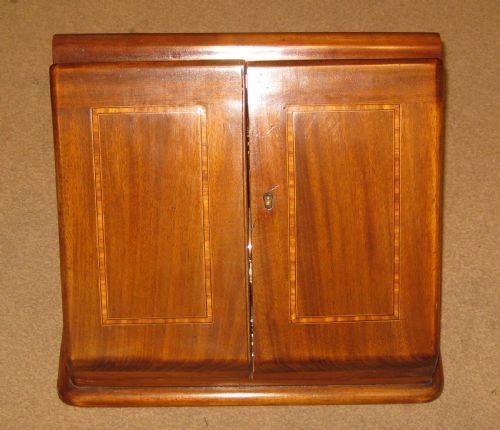
A wooden correspondence cabinet is a compact tabletop storage piece intended for holding letters, envelopes and writing paper. Buyers examining this page encounter pieces catalogued variously as stationery cabinets, stationery boxes, correspondence chests and writing boxes.
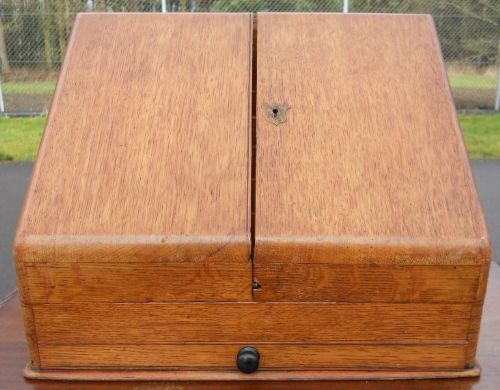
The selection ranges from simple oak boxes to sophisticated inlaid specimens. Most examples date from the nineteenth century and the Edwardian period, built to sit upon a library desk or writing table.
Forms include traditional hinged boxes, tambour-fronted cabinets and novelty letter boxes with drop-down writing desks. These pieces reflect the heavy correspondence of their eras, providing dedicated compartments for answered and unanswered mail.
How they were made
Cabinetmakers utilised hardwoods such as mahogany, oak and walnut as the primary structural materials. Finer examples incorporate satinwood and boxwood for decorative stringing and inlay work.
Metal fittings such as brass hinges, escutcheons and carrying handles provide both structural reinforcement and visual contrast against the dark timber. Mother-of-pearl accents occasionally appear on the exterior surfaces of select boxes.
The listings on this page span several decades, featuring oak, mahogany and walnut pieces built between eighteen sixty and nineteen twenty.
What varies in quality
Quality rests upon the selection of timber and the precision of the joinery. Mahogany and walnut pieces with deliberate grain patterns and tight corner joints sit at the higher end of the range.
Decorative embellishments differentiate standard utility boxes from superior ones. Finely executed inlay, brass binding and specialised interior dividers for stationery indicate skilled craftsmanship.
The Wooden Correspondence Cabinet Glossary
- Stationery cabinet
- A tabletop container designed specifically to hold writing paper and envelopes in upright compartments. These pieces usually feature a sloping lid or opening doors.
- Campaign style
- A portable design aesthetic utilising flush brass handles and corner brackets intended for travel. Pieces built in this manner prioritized rugged durability.
- Inlay
- A decorative technique where contrasting woods or materials like boxwood and satinwood are inserted into the primary timber surface. This creates geometric patterns or floral motifs.
- Escutcheon
- A protective brass plate surrounding a keyhole. It prevents the wood from splitting around the lock.
Wooden Correspondence Cabinet: Frequently Asked Questions
How do you date a wooden correspondence cabinet?
Dating relies on examining the timber, construction methods and stylistic markers present in the piece. Victorian models frequently employ heavy mahogany or walnut, sometimes featuring elaborate brass binding.
Edwardian and later twentieth-century examples often utilise lighter oak finishes or simpler lines. Inlay styles and hardware also provide clues to the decade of manufacture.
Where were these cabinets used?
These cabinets sat upon large desks in studies, libraries and drawing rooms of private homes. They served the daily writing needs of households managing heavy social and business correspondence.
Portable writing boxes and campaign styles also allowed travellers to maintain their correspondence while away from home.
What materials are common in these cabinets?
Mahogany and oak form the structural foundation for the majority of these pieces. Walnut and satinwood also appear regularly, particularly in decorative veneer work.
Brass hardware provides functional reinforcement, while boxwood and mother-of-pearl frequently supply surface ornamentation.