

Vintage Wooden Folding Table
A vintage wooden folding table provides portable surface space with hinges or collapsible frames, offering clever utility and period character for modern interiors.
Vintage Wooden Folding Table
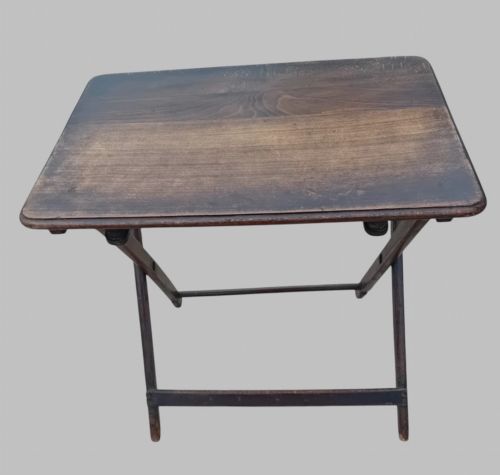
A vintage wooden folding table spans centuries of practical design, ranging from Georgian campaign pieces to Edwardian tea stands and vernacular oak gateleg tables. These items serve flexible household roles, functioning as side surfaces, serving trays on stands, or compact dining units that pack away when not in use.
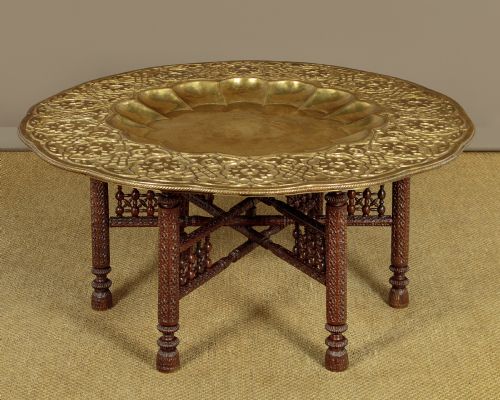
The selections on this page draw from periods including the eighteenth, nineteenth, and early twentieth centuries, encompassing Victorian, Edwardian, and Regency styles alongside Anglo-Indian and continental workshops. Oak, mahogany, and walnut appear frequently, often paired with ingenious folding mechanisms designed for travel, hospitality, or compact rooms.
How they were made
Cabinetmakers utilised solid hardwoods like oak, mahogany, walnut, and padauk alongside specialised materials such as brass hinges, iron brackets, and inlaid mother of pearl or marquetry. Timber selection prioritised durability for transport or daily domestic service, ensuring that folding actions and hinges withstood frequent movement.
Construction techniques include drop-leaf gatelegs, removable trays resting on X-frame folding stands, and complex sliding or pivoting hinges. Joinery relied on traditional methods to keep the collapsible elements stable while maintaining elegance when assembled.
Periods represented span from the 17th century through the 18th, 19th, and early 20th centuries.
What varies in quality
Quality rests in the precision of the folding mechanism and the integration of hardware into the timber frame. Superior examples display seamless movement in their hinges and leaves without wobble, whereas lesser versions rely on loose joints or replacement brasswork.
The grade of timber and the intricacy of decoration also define the tier of a piece, from plain utilitarian oak gatelegs to finely figured mahogany, burr walnut, or elaborate Hoshiarpur and Sorrento ware marquetry.
The Vintage Wooden Folding Table Glossary
- Gateleg table
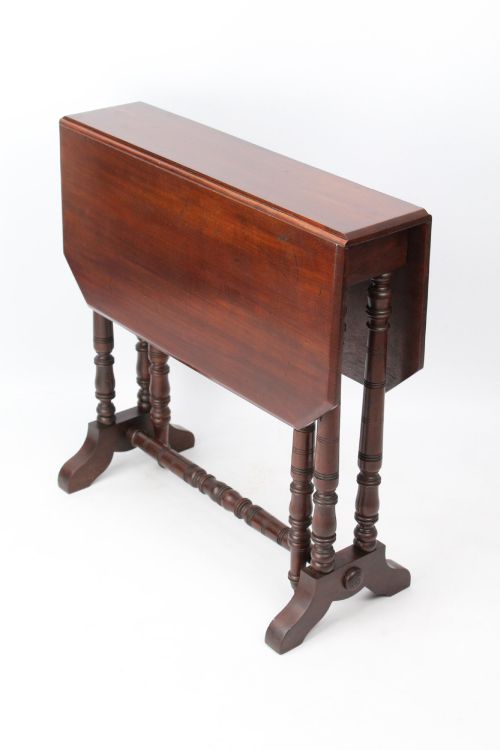
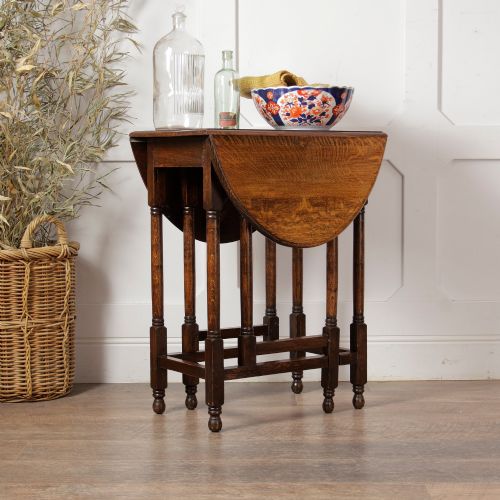
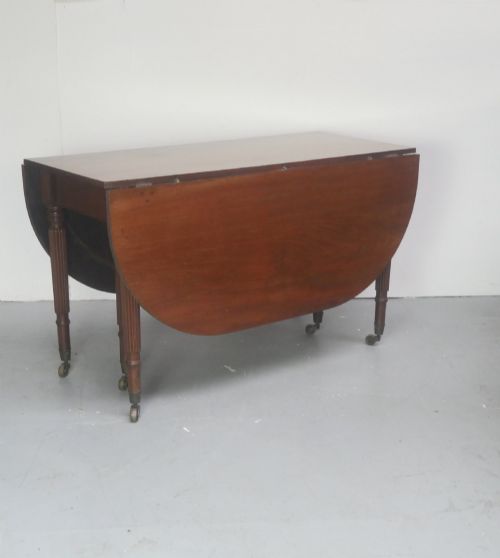
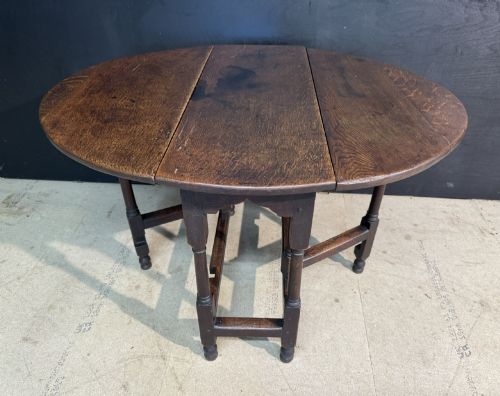
- A drop-leaf table where hinged legs swing out from the centre frame to support the raised leaves. This form dates back centuries and provides a wide surface that collapses into a narrow footprint.
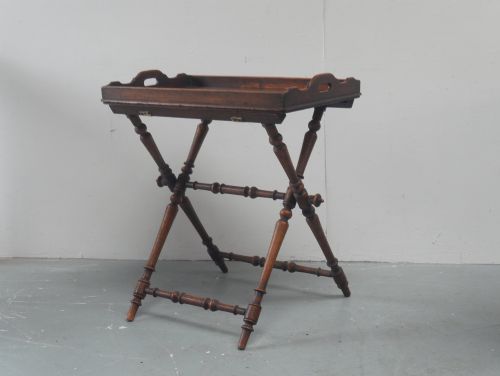
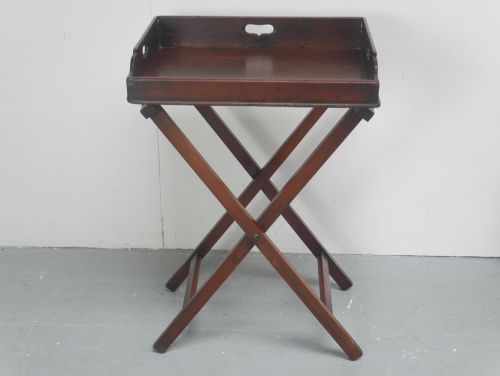
- Butler's tray
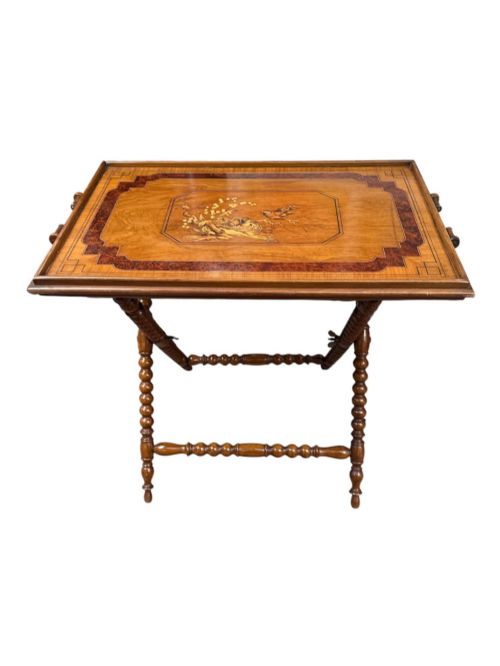
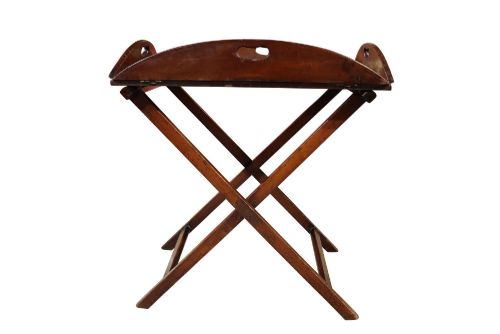
- A rectangular wooden tray with hinged or shaped sides, traditionally lifted off a folding X-frame stand for serving. The stands themselves fold flat for easy storage.
- Campaign style
- Portable furniture constructed for travel by military officers or travellers during the eighteenth and nineteenth centuries. These pieces typically feature folding frames, recessed brass handles, and robust hardwoods.
- Sutherland table
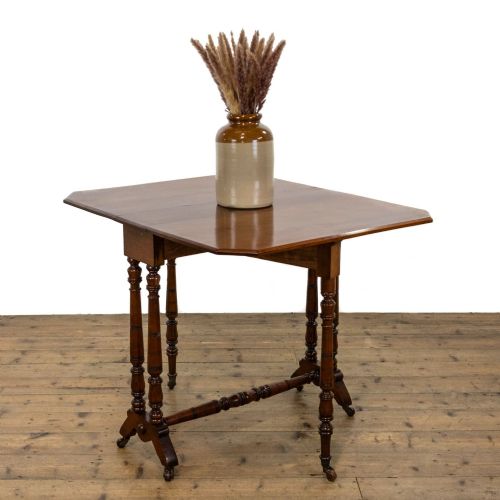
- A narrow drop-leaf table with exceptionally slender leaves and folding gatelegs, popular during the Victorian and Edwardian eras. When folded down completely, the top is minimal in width.
Vintage Wooden Folding Table: Frequently Asked Questions
How do I use a folding table in a small room?
These pieces fit well against walls or behind sofas when folded, offering a slim profile until extra surface area is required. Drop leaves or tray tops lift into place quickly for dining or serving drinks.
Their historical portability makes them adaptable for shifting around a home, moving easily from a hallway to a sitting room without dominating the floor space.
Are these tables sturdy enough for daily use?
Most period folding designs were built for active service, whether military travel or busy household entertaining. Solid hardwoods provide strong foundations when the legs or gate supports are fully locked into position.
Care should be taken with delicate inlays or antique hinges during movement, but structurally sound examples handle regular domestic routines comfortably.
What is the difference between a gateleg and a butler's table?
A gateleg table relies on hinged legs built directly into the frame that swing outward to hold up drop leaves. The legs remain attached to the table structure at all times.
A butler's tray consists of a removable tray top resting on a separate folding X-shaped wooden stand. The tray lifts completely off its base for carrying.
How do I identify the period of a folding table?
Dating relies on timber choice, hardware style, and construction traits such as hand-cut joints or brass campaign mounts. Georgian and Regency examples often feature dense mahogany and simple lines, while Victorian and Edwardian pieces introduce varied veneers and marquetry.
Maker's marks, specific regional inlays like Hoshiarpur work, or patent brass hinges also offer clues to the exact decade of manufacture.