


19th Century Folding Table
A 19th century folding table brings clever engineering and adaptable surfaces into a room, offering clever concealment of function when space demands thrift.
19th Century Folding Table
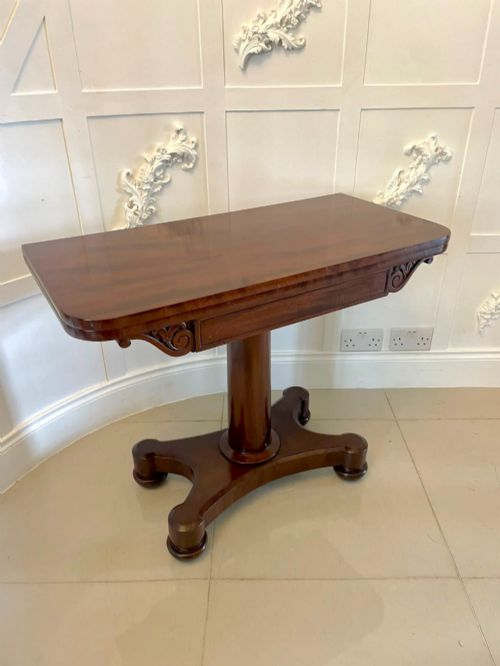
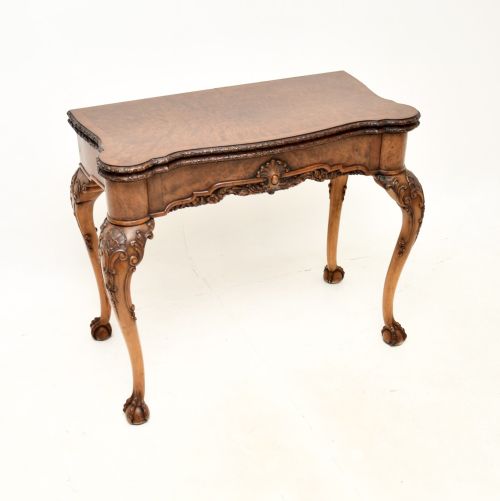
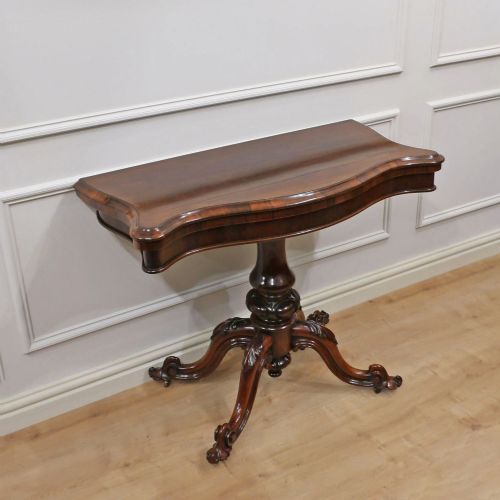
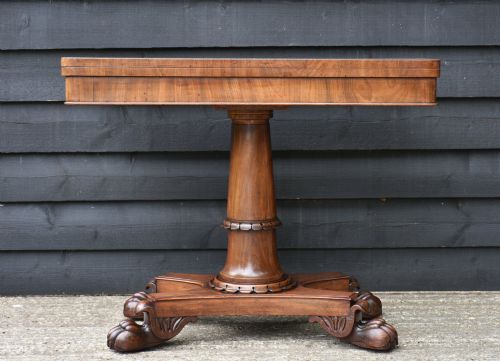
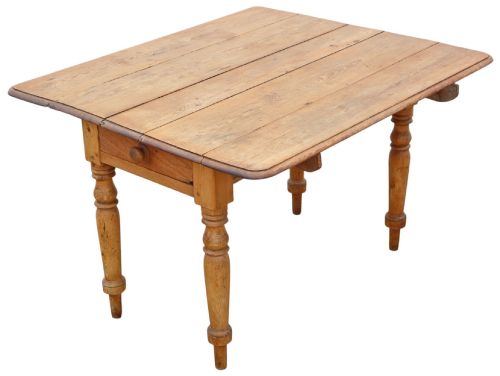
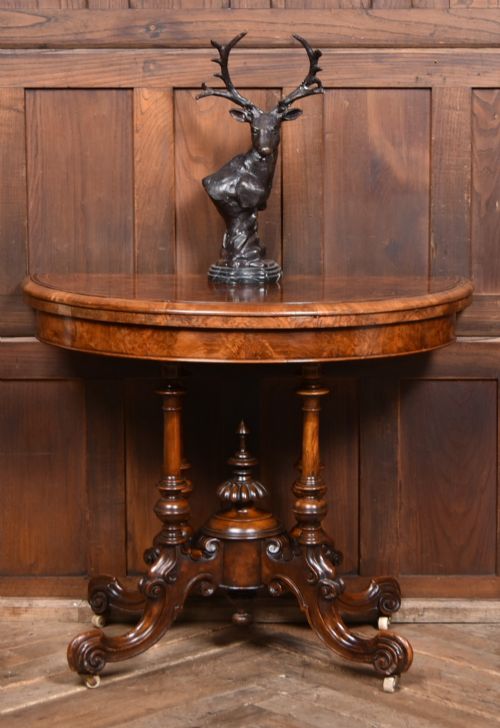
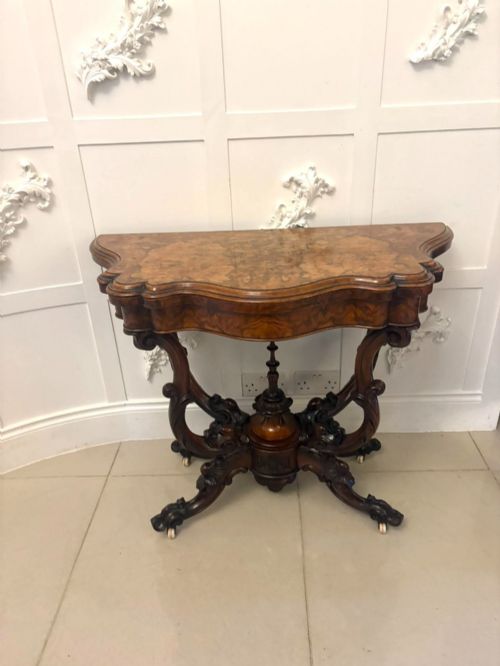
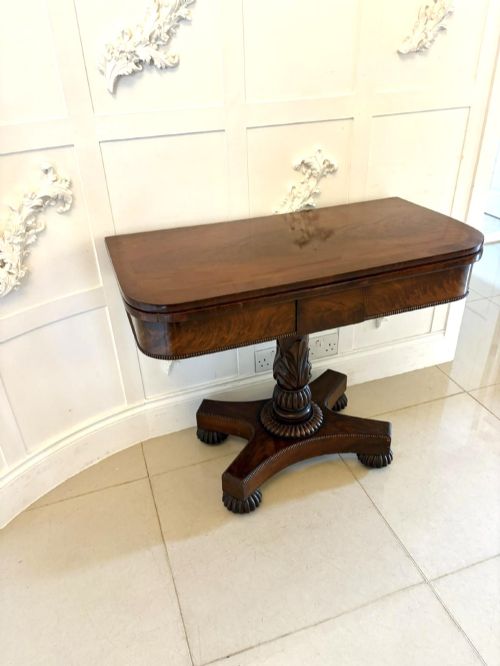
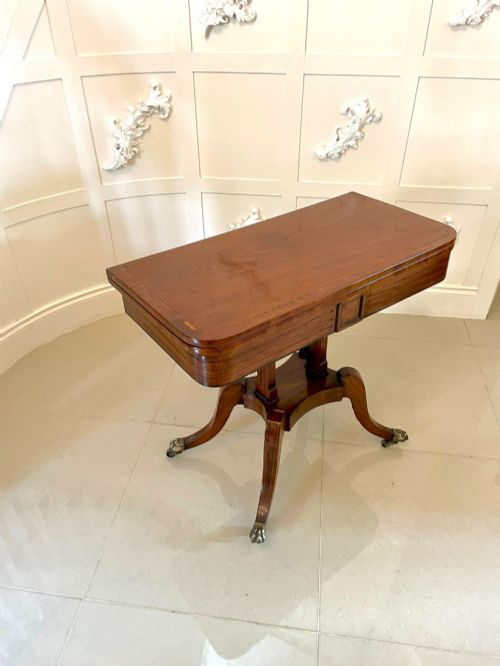
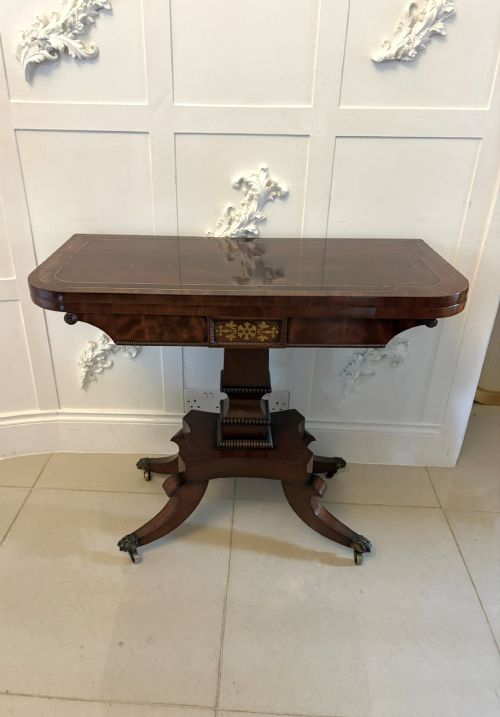
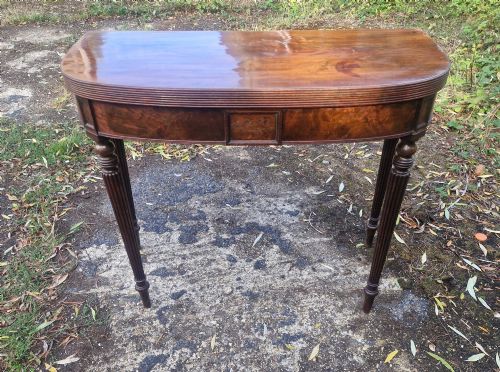
A 19th century folding table appears across this selection in numerous guises, predominantly as card tables, games tables, and tea tables designed to expand when guests arrive. You will regularly encounter Victorian and Regency examples alongside William IV and late Georgian pieces, reflecting the shifting domestic demands for versatile furniture.
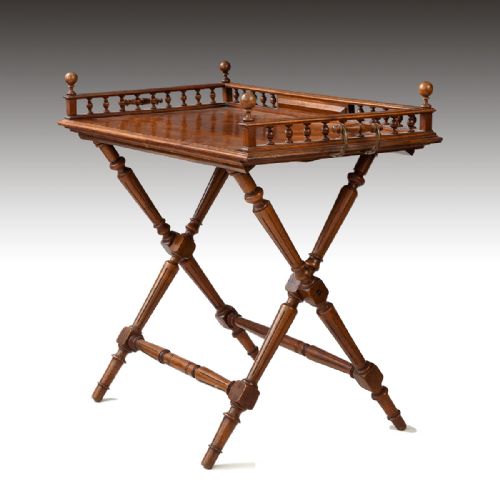
Beyond formal card and tea tables, the evidence includes practical utility forms such as butler trays on stands, coaching tables, and Sutherland tables with drop leaves. These pieces served domestic staff and travellers alike, proving that portability did not require a sacrifice of elegance.
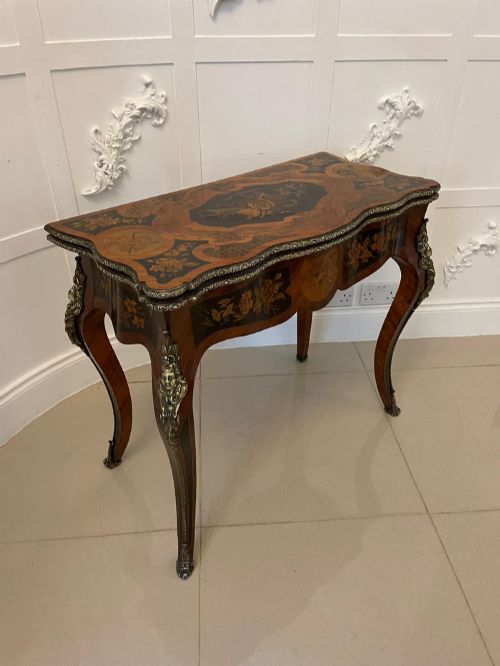
Stylistic influences span traditional English mahogany and rosewood designs to continental French Louis XV styles, ebonised finishes, and Anglo-Indian inlaid occasional pieces. Each variation demonstrates how cabinet makers adapted a simple folding mechanism to suit formal drawing rooms and casual chambers alike.
Materials and Construction
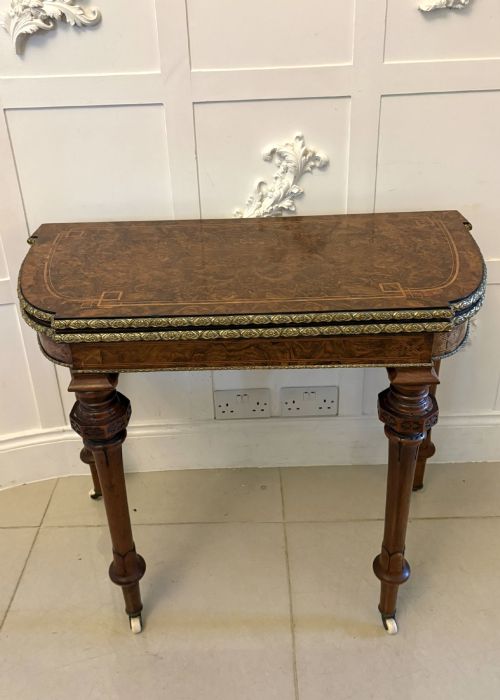
Makers relied heavily on dense hardwoods like mahogany, walnut, and rosewood, frequently enhancing plain surfaces with burr walnut veneers, satinwood, and intricate wood inlay. Brass fittings, ormolu mounts, and specialised hinges provided the mechanical support necessary for turning, concertina, or scissor actions.
The structural integrity of a folding mechanism depended on precise joinery, whether dealing with a swivel top, a fold-over leaf, or a removable tray resting on a folding stand. Cabinet makers utilised crossbanding and marquetry to decorate the expanses exposed when the tables opened for use.
Some clever folding tables feature secret compartments designed specifically to hide winnings from tax collectors or disapproving spouses.
Distinctions in Execution
Quality reveals itself in the seamless operation of the folding action and the stability of the timber when open, separating robust workshop engineering from loose or wobbly joints. Finer examples display superior grain selection in flame mahogany or burr walnut, ensuring the figure matches symmetrically across the fold.
The precision of secondary decorative elements, such as hand-cut brass inlay, crisp carved bases, and finely fitted concertina frames, separates standard utilitarian pieces from high-end cabinet work produced by notable makers.
Antoine Lampre·Shoolbred
The 19th Century Folding Table Glossary
- Concertina action
- An expanding frame mechanism that pulls outward on hidden hinges to support a fold-over top evenly. This design provides unobstructed legroom while holding heavy timber leaves securely.
- Crossbanding
- A decorative border of veneer laid with the grain running perpendicular to the main surface. It frames the central panel of a table top.
- Marquetry
- The art of forming decorative patterns using thin pieces of wood veneer and other materials. Craftsmen assemble these elements to create intricate pictorial or geometric designs on tabletops.
- Sutherland table
- A narrow drop-leaf table featuring exceptionally slender hinged leaves and folding gatelegs. The design folds down into a compact footprint when not in use.
- Turnover top
- A tabletop style featuring two matching leaves hinged together to rotate and fold flat over a frieze base. When opened, it reveals a baize-lined surface for card games or writing.
19th Century Folding Table: Frequently Asked Questions
How do card tables work?
These tables typically feature a turnover top or a swivel mechanism that reveals a concealed compartment for storing cards and counters beneath the surface. The hinged leaves open outward to rest upon a pivoted rear leg or a concertina frame.
When closed, the piece functions as a console or side table against a wall. The hidden cavity often retains its original baize or leather playing surface.
Where were butler trays used?
A butler tray sat upon a separate folding wooden stand, allowing domestic staff to transport refreshments easily between rooms. The raised gallery edges prevented glassware and ceramics from sliding off during transit.
Once the tray was cleared, the stand folded flat for compact storage behind doors or in hallways. This mobility suited the fluid entertaining habits of large 19th-century households.
How do I spot a Regency piece?
Regency tables generally display clean architectural lines inspired by classical antiquity, often executed in dark mahogany or rosewood. Look for brass stringing, sabre legs, and restrained carved details rather than heavy Victorian ornamentation.
Proportions tend to be crisp and formal, reflecting the aesthetic preferences of the early decades of the century. The construction often incorporates brass castors concealed beneath the feet.
Can I use these for dining?
Most folding tables from this era are scaled for cards, tea, or occasional use rather than heavy family meals. Tea and card tables provide a compact surface that expands temporarily for guests.
Using them for daily dining risks damaging delicate veneers or antique polished finishes. Protective covers help preserve the surface if you use them for occasional gatherings.