


Vintage Wooden Coffer Drawers
Vintage wooden coffer drawers combine deep storage trunks with integrated compartments, offering traditional utility and robust timber construction.
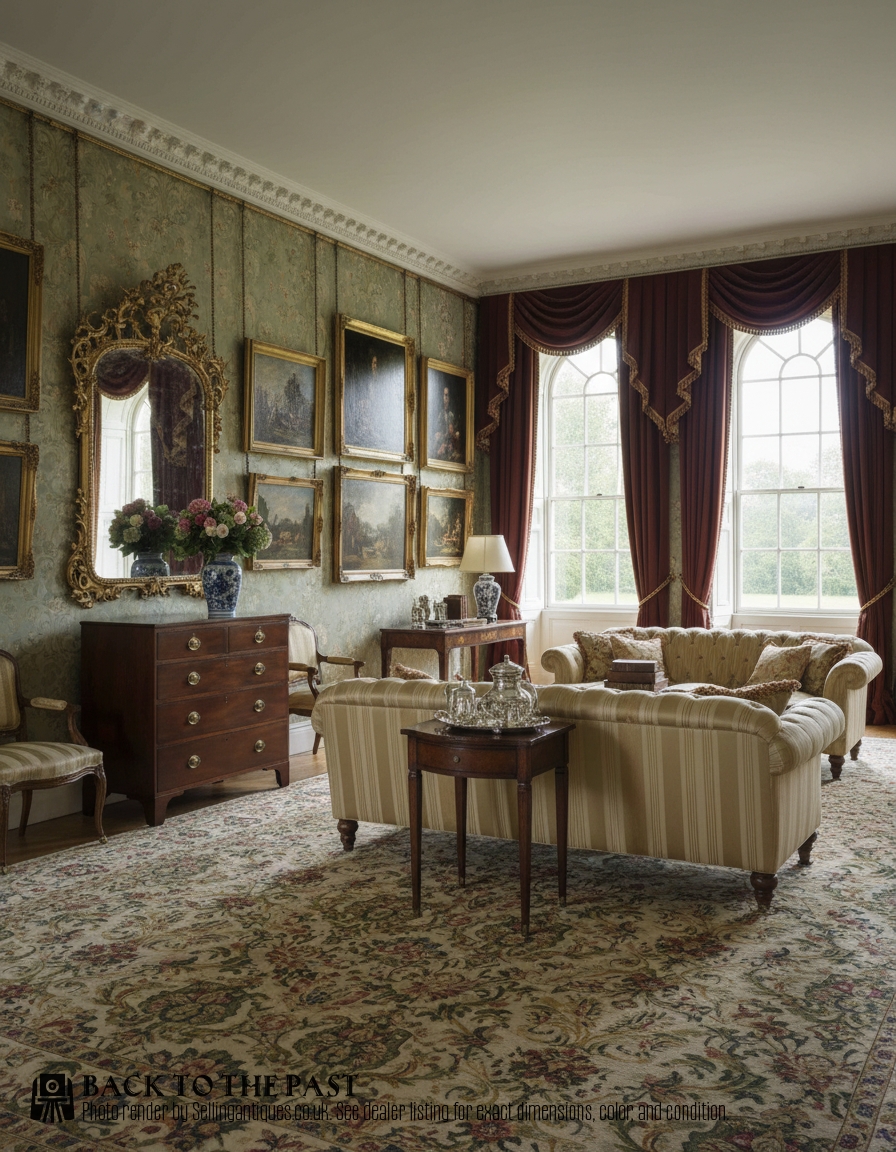
Vintage Wooden Coffer Drawers
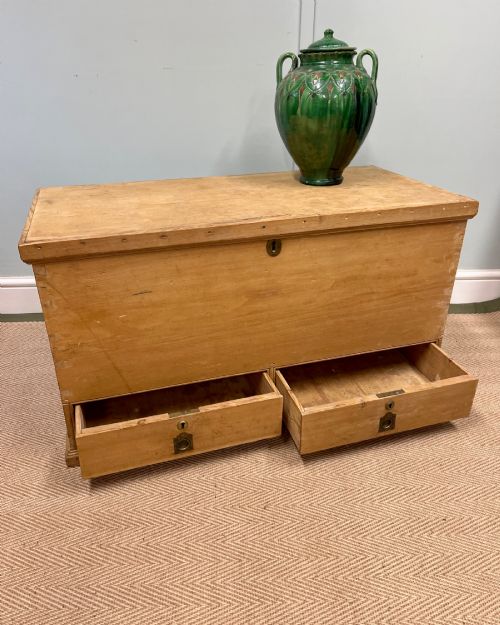
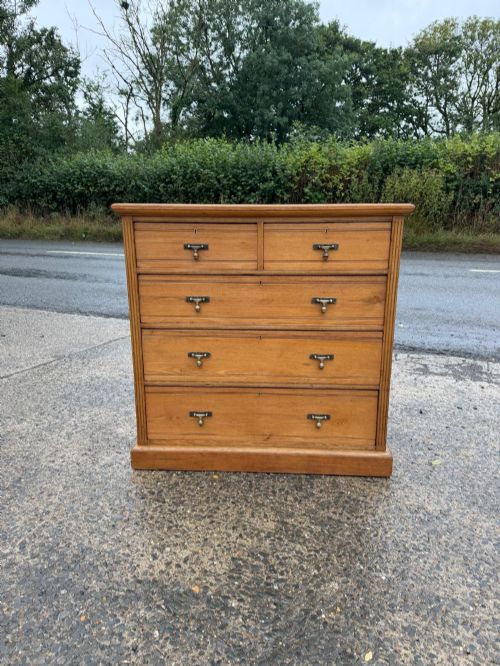
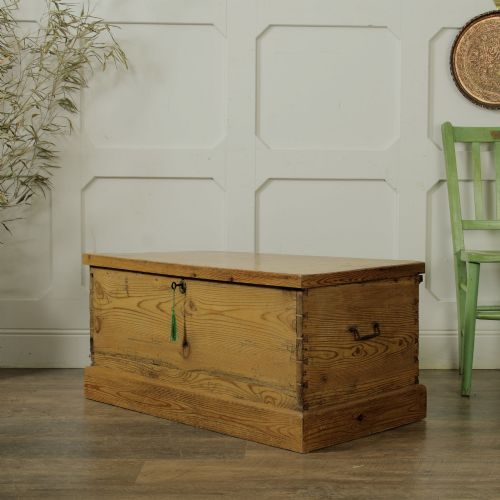
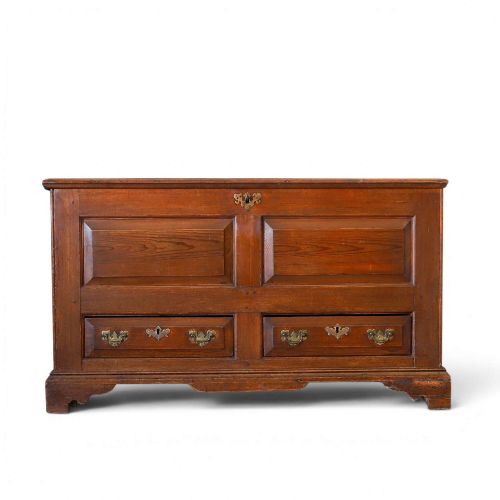
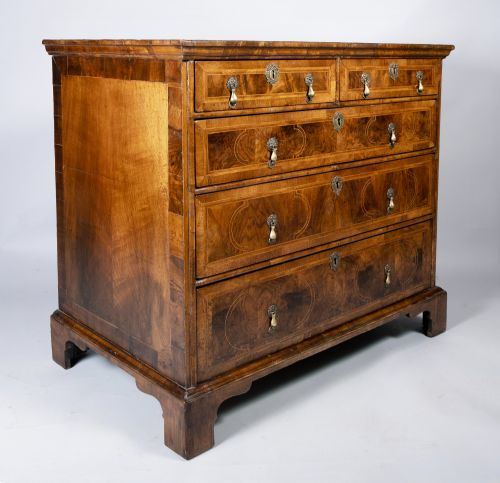
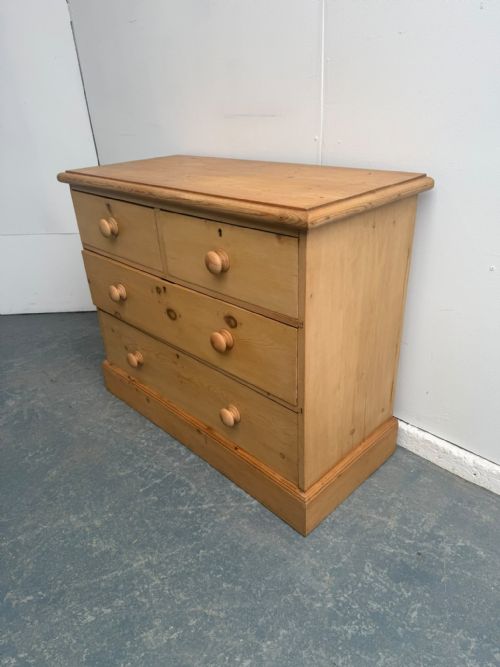
When searching for vintage wooden coffer drawers, buyers encounter a crossover category comprising traditional chests of drawers, mule chests, and coffers with internal storage compartments. These pieces span multiple centuries, originating from periods such as the 17th century, Georgian era, and Victorian times.
The items listed on this page appear under various classifications including storage chests, trunks, and commodes. Buyers most frequently meet oak and mahogany examples, alongside pine and walnut pieces originating from English, French, Swedish, and wider international workshops.
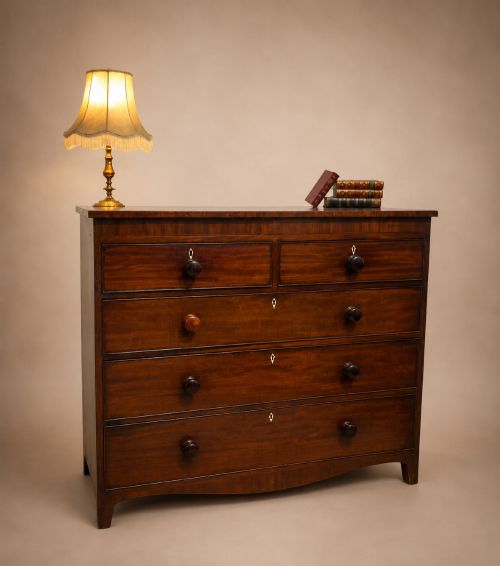
Forms range from straight-front and bow-front chests of drawers to coffer chests featuring lower drawers and panelled construction. Each variation serves the core function of heavy-duty household storage whilst displaying period-specific joinery and timber grain.
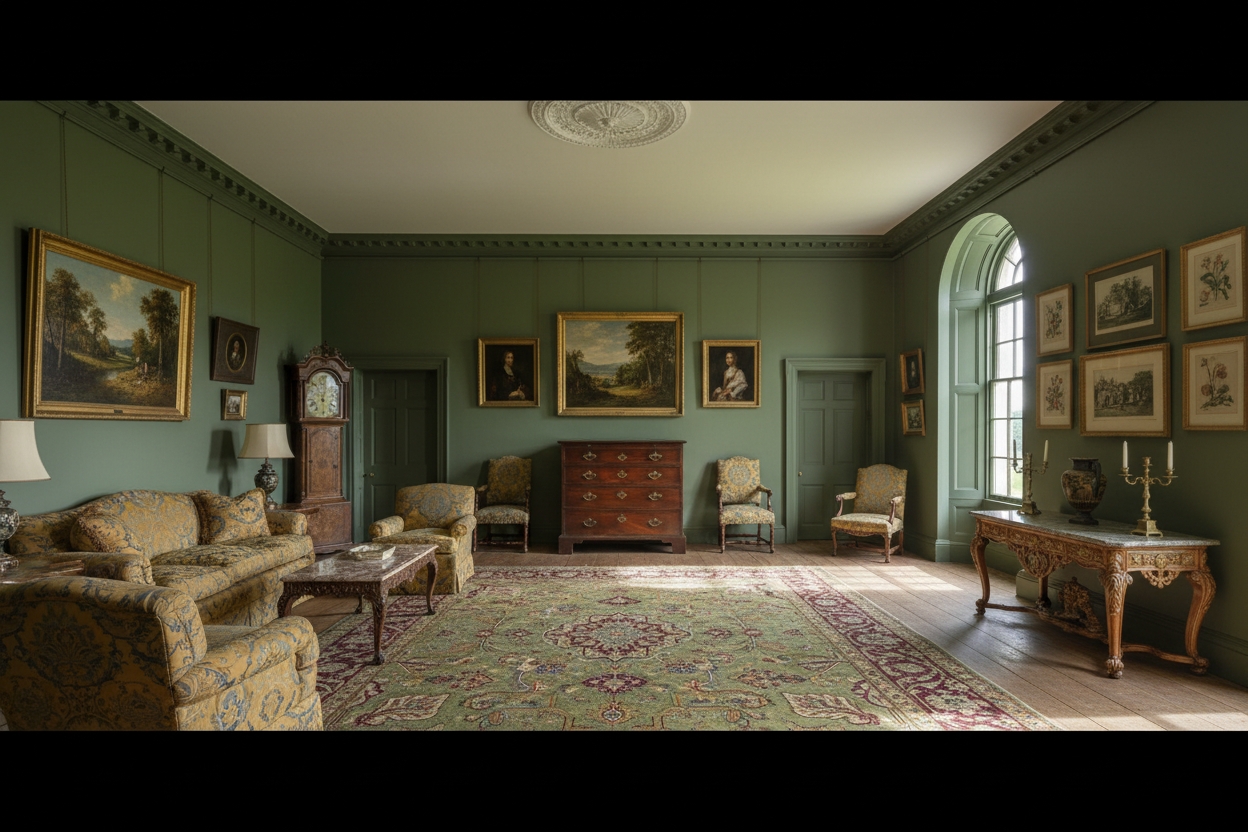
Materials and construction methods
Joiners and cabinet makers constructed these pieces primarily using native and imported hardwoods like oak, walnut, and mahogany, alongside softer timbers such as pine. Timber selection dictated the structural integrity, with dense oak providing a sturdy framework for early coffers and figured mahogany enhancing later polished drawer fronts.
Construction techniques relied on traditional hand-cut joinery, including dovetail joints for drawer boxes and mortise and tenon frames for panelled coffer bodies. Artisans incorporated brass hardware, iron fittings, and intricate inlay work to secure and finish the pieces.
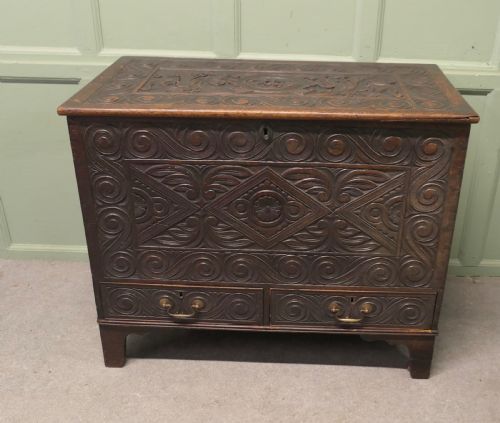
Green Man carvings occasionally peer from the woodwork of sturdy country oak mule chests.
Factors determining quality
Quality rests upon the selection and preservation of the timber, where finely figured flame mahogany or deeply patinated early oak command greater appreciation. The integrity of the original construction, visible in tight dovetailing and uncompromised internal drawer structures, separates standard utility items from finer examples.
Proportion and decorative restraint also define the upper tier of pieces. Clean lines, balanced proportions, and restrained carving or brass work indicate superior workshop origin compared to heavier, unrefined regional pieces.
The Vintage Wooden Coffer Drawers Glossary
- Coffer
- A large wooden chest used for storing valuables, often fitted with a hinged lid.
- Mule chest
- A traditional storage chest featuring one or more drawers at the base beneath a primary compartment.
- Dovetail
- A joint formed by interlocking wedge-shaped fingers, commonly used in drawer construction.
- Flame mahogany
- Timber veneer cut from the fork of a mahogany tree to produce a distinctive rippled pattern.
- Commode
- A French-origin term for a low chest of drawers used for domestic storage.
Vintage Wooden Coffer Drawers: Frequently Asked Questions
What is a mule chest?
A mule chest is a hybrid storage piece that combines a traditional hinged-lid coffer with one or more functional drawers built into the base.
This design evolved to provide easier access to smaller items without requiring the user to lift the entire top lid.
How do I date an oak chest?
Dating an oak chest involves examining the construction methods, tool marks, and hardware used in the framework.
Early pieces from the 17th and early 18th centuries typically display hand-split panels, pegged joints, and heavy mouldings rather than machine-cut timber.
Are internal drawers original?
Internal drawers inside coffers and trunks were often built in by period makers to segregate smaller valuables and documents from the main well.
Examining the wood species and secondary joinery inside the chest helps determine if these compartments were part of the initial construction.
Where were these chests made?
These storage pieces originate from diverse domestic and international workshops, spanning English country houses, Swedish provinces, and overseas trading posts.
Regional timber preferences and decorative motifs usually indicate the specific geographic origin of each piece.