


Vintage Wooden Barrels
These vintage wooden barrels and coopered vessels bring honest utility and robust craftsmanship into the home.
Vintage Wooden Barrels
When you search for vintage wooden barrels, you encounter a robust selection of coopered vessels and utilitarian objects spanning the nineteenth century through the early decades of the twentieth century. These pieces encompass practical items designed for domestic or naval storage, alongside adapted forms intended for the hallway or parlour.
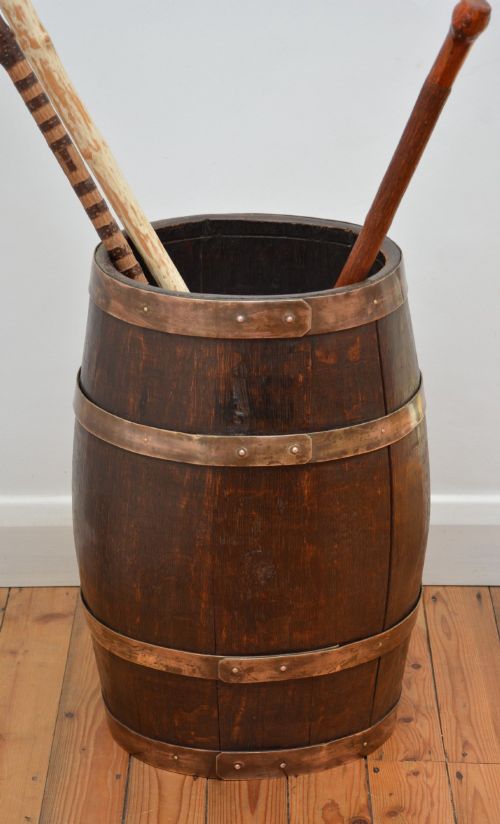
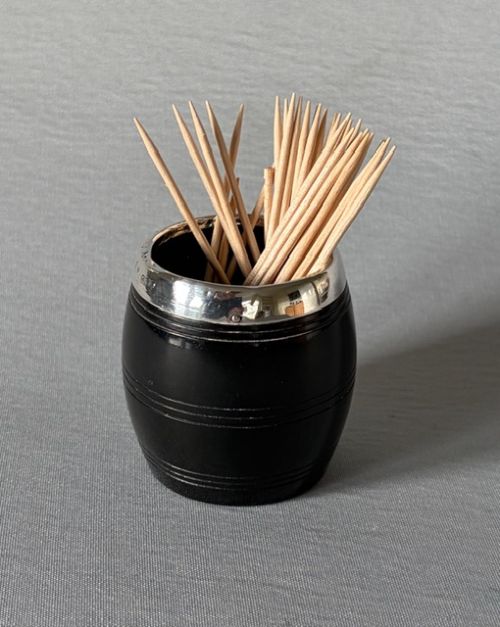
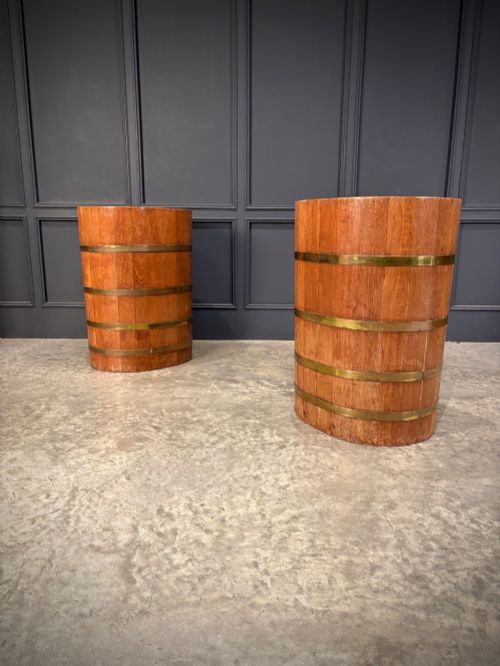
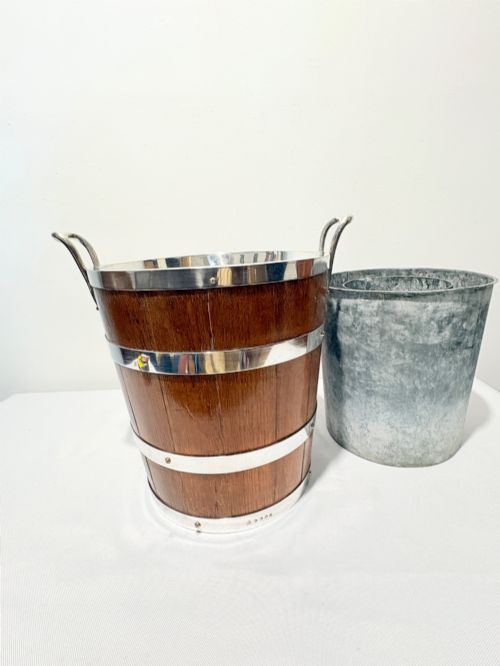
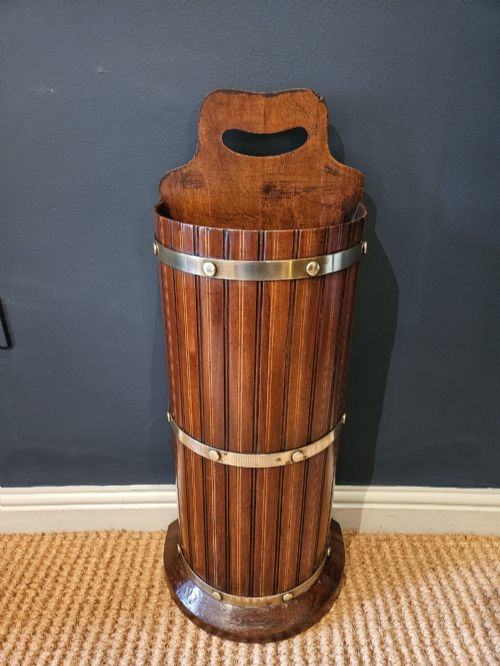
The objects most frequently met on this page include sturdy umbrella and stick stands, alongside coal buckets, small storage vessels, and decorative table pieces. These functional items reflect the traditional cooper's trade, translating robust structural forms into domestic utility across Victorian, Edwardian, and Georgian periods.
Originating largely from British and Scandinavian contexts, these pieces demonstrate traditional country and rustic styles such as English Country, Rustic Farmhouse, and Scandinavian Country. The inventory captures both straightforward utilitarian vessels and refined pieces integrated with metal mounts for domestic display.
Materials and construction
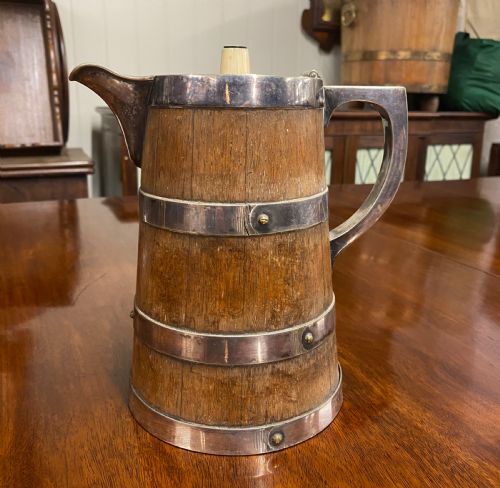
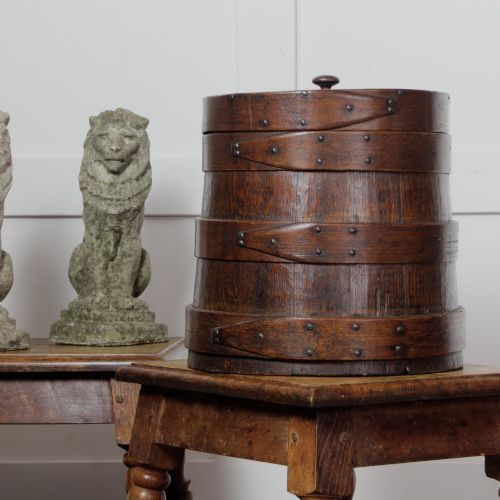
The construction of these vessels relies primarily on solid hardwoods such as oak, mahogany, fruitwood, yew-wood, and pine, shaped into curved staves by traditional woodworking methods. These wooden staves are held tightly in place by exterior metal bands, hoops, or braces formed from brass, copper, iron, or silver plate.
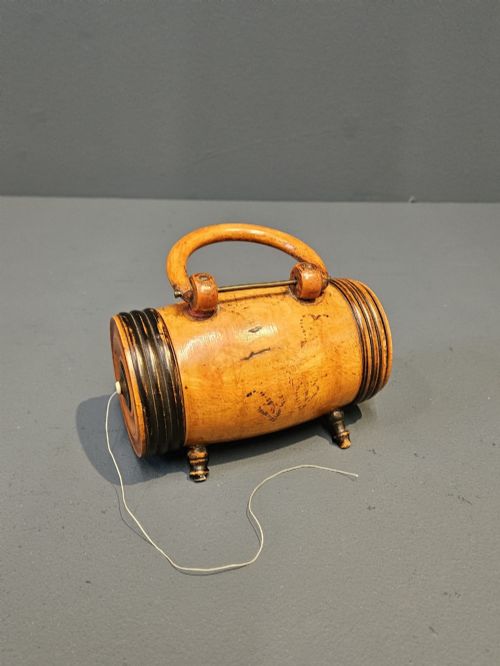
Coopered techniques form the structural backbone of these items, joining individual tapered staves edge-to-edge to create watertight or structurally sound cylindrical and oval bodies. Additional reinforcement often includes applied handles, hinged lids, or fitted interior liners designed to handle moisture or dry storage alike.
Vintage Wooden Barrels Retail Price Guide 2026
Typical asking prices for vintage wooden barrels among the pieces listed under this phrase on Sellingantiques today, from the lower quarter to the upper quarter. They describe what is for sale here now, not the wider market.
Listings feature oak, pine, fruitwood, and yew-wood materials bound with brass, copper, iron, and silver plate.
Judging quality in coopered vessels
The distinction between ordinary utility items and superior examples lies in the tightness of the stave joints and the fidelity of the cooper's geometric shaping. Tighter seams, well-balanced proportions, and uniform thickness across individual staves indicate a higher standard of traditional workshop execution.
The quality of the secondary materials also dictates the standing of a piece, particularly the weight and finish of the brass, copper, or iron banding. Heavier, securely fitted metal braces and original handles demonstrate a greater initial investment in domestic display rather than purely industrial service.
The Vintage Wooden Barrels Glossary
- Coopered
- Constructed from curved wooden staves bound together by hoops of metal or wood to form a hollow vessel. This traditional method forms the structural basis for barrels, buckets, and certain umbrella stands.
- Stave
- One of the narrow, shaped strips of wood that form the sides of a barrel or tub. Staves are bevelled on the edges so they fit tightly together when bound by metal hoops.
- Brass bound
- Fitted with exterior hoops or braces made of brass to secure the wooden staves. This treatment often signals a piece intended for domestic or parlour use rather than bulk commercial storage.
- Stick stand
- A piece of furniture designed to hold walking sticks and umbrellas, frequently utilising adapted barrel forms in hallway settings. These objects often incorporate metal drip pans at the base.
- Fruitwood
- Timber sourced from fruit-bearing trees such as apple, pear, or cherry, known for a fine grain and warm tone. It appears in smaller turned or coopered decorative items.
Vintage Wooden Barrels: Frequently Asked Questions
What were wooden barrels originally used for?
Historic wooden barrels served as primary storage and transport vessels for dry goods, liquids, gunpowder, and rations in domestic, naval, and commercial settings.
Over time, many of these sturdy containers were adapted into household furnishings, such as umbrella stands or coal buckets, once their initial utilitarian life concluded.
How do I identify a Victorian barrel?
Victorian examples often feature characteristic heavy oak construction paired with decorative brass or copper bands, reflecting a mid to late nineteenth-century preference for robust hallway furnishings.
Look for traditional coopered staves alongside period design elements like turned umbrella loops or maker-stamped hardware typical of British workshops.
Can I use an antique barrel as an umbrella stand?
Many surviving coopered vessels from the nineteenth century were specifically adapted or originally built to serve as umbrella and stick stands in country houses.
Ensure the interior is dry and consider placing a modern saucer or tray inside the base to protect the historic wood from lingering moisture.
What is the difference between oak and pine barrels?
Oak barrels generally offer a heavier, denser construction with pronounced grain patterns, frequently seen in British domestic umbrella stands and decorative table items.
Pine barrels, particularly those originating from Scandinavian traditions, tend to feature softer wood tones and are often utilised for larger storage vessel formats.