

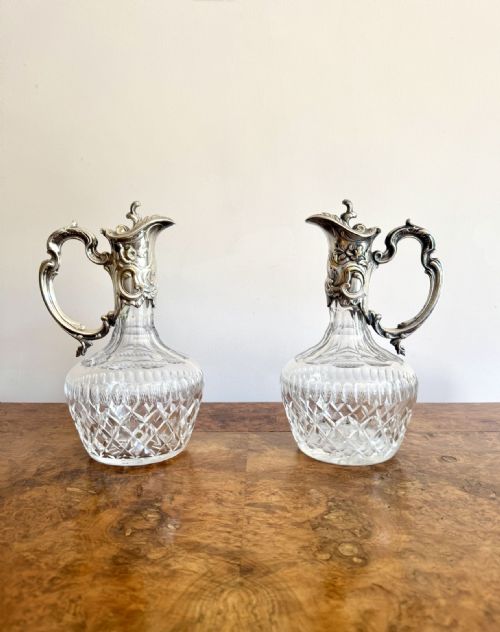


Vintage Wine Pitcher
A vintage wine pitcher serves as a striking table centrepiece, combining practical pouring with decorative glass and metalwork.
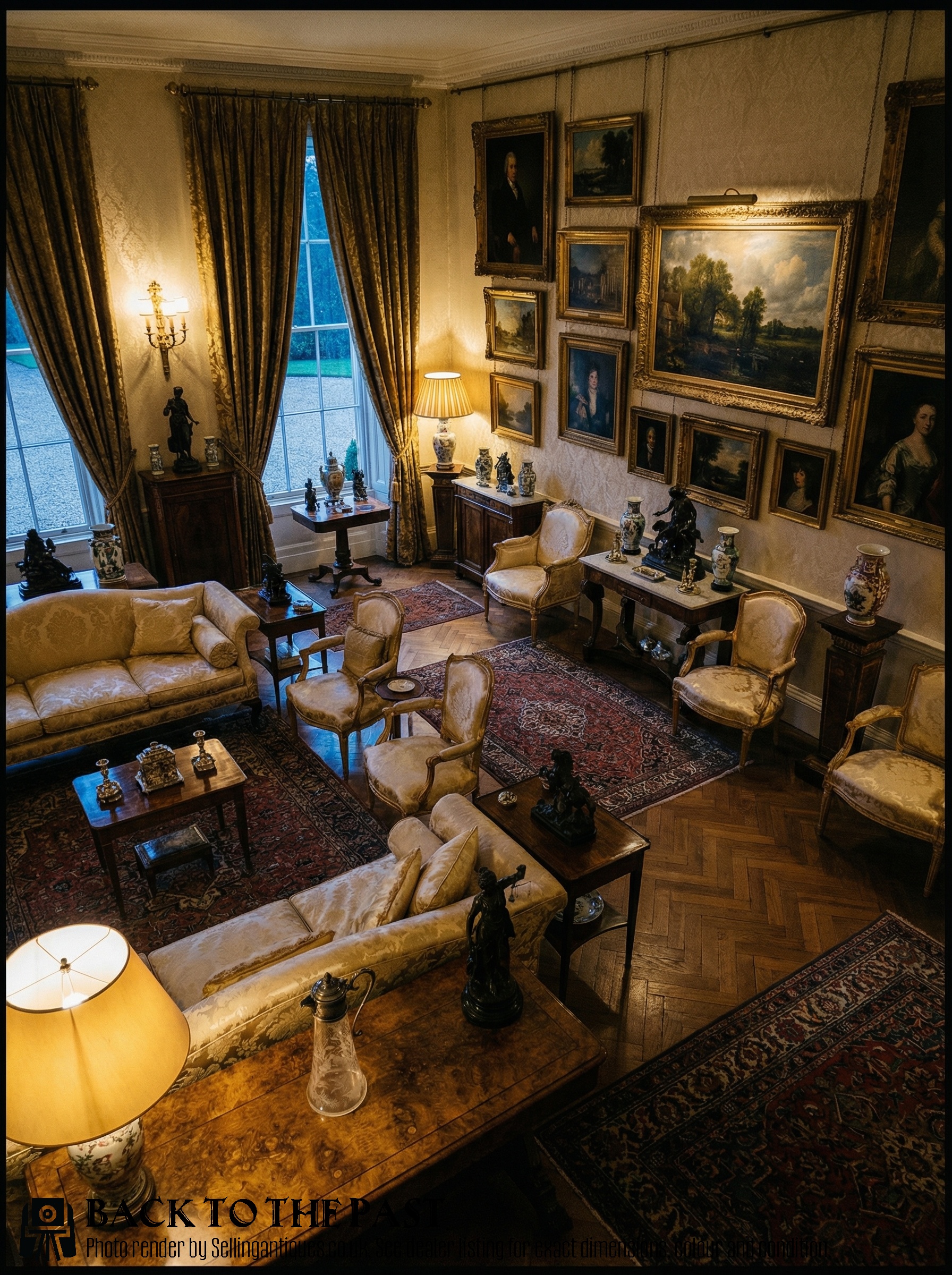
Vintage Wine Pitcher
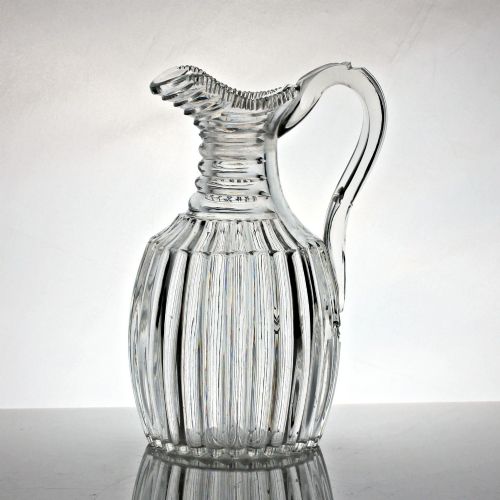
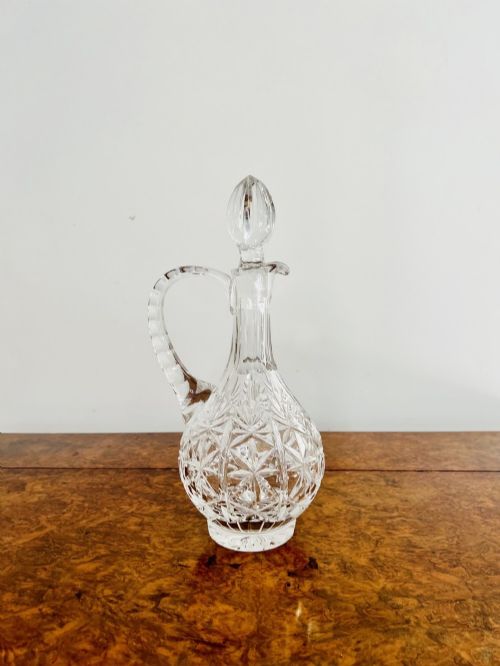
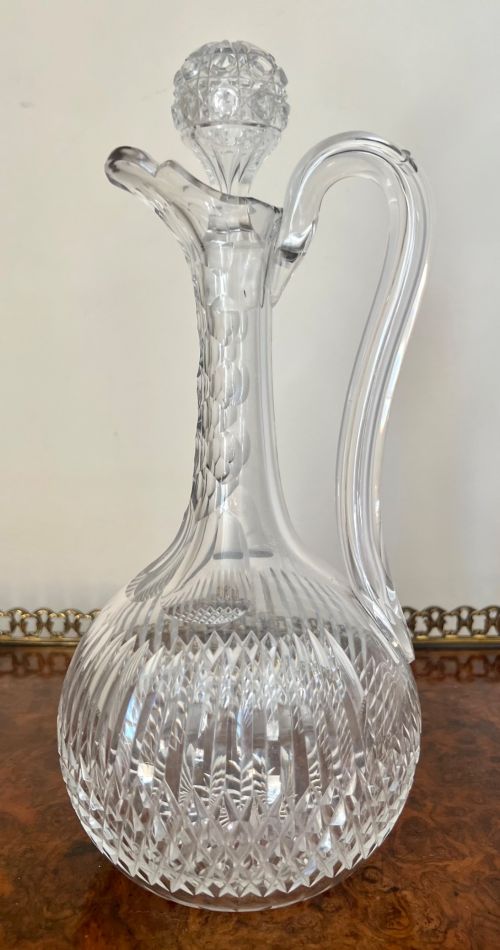
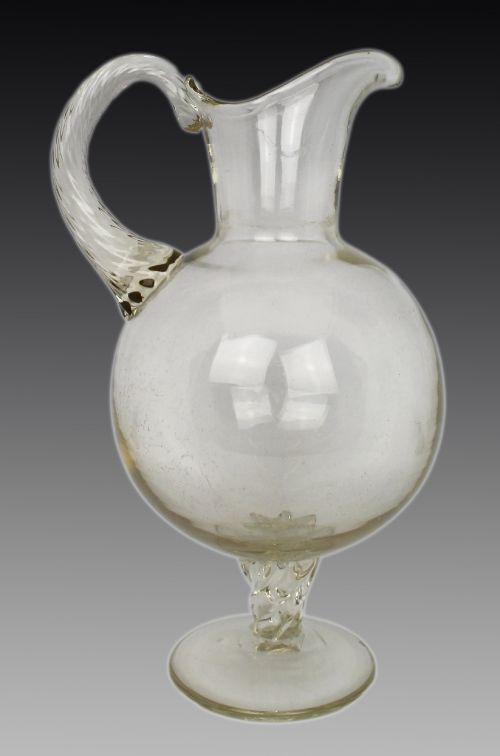
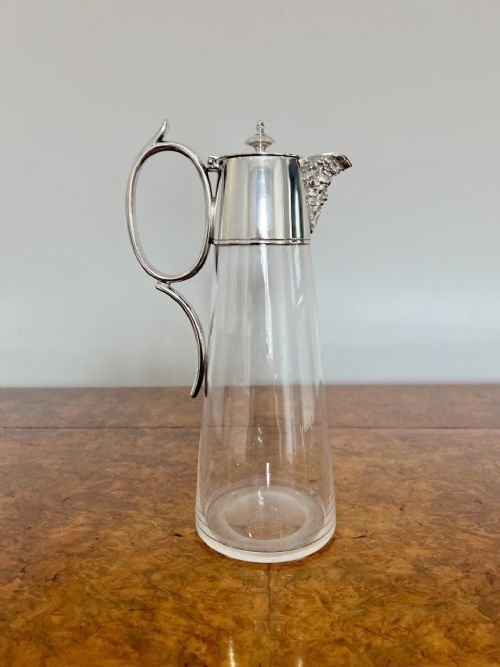
A vintage wine pitcher encompasses various vessels designed for serving wine, frequently appearing on this page as Victorian and Edwardian claret jugs, ewers, and decanters. These pieces combine functional drinkware with decorative arts, originating primarily from the nineteenth and early twentieth centuries. Buyers encounter diverse stylistic influences, ranging from ornate Victorian silver plating to sleek Art Deco crystal and Bohemian glass.
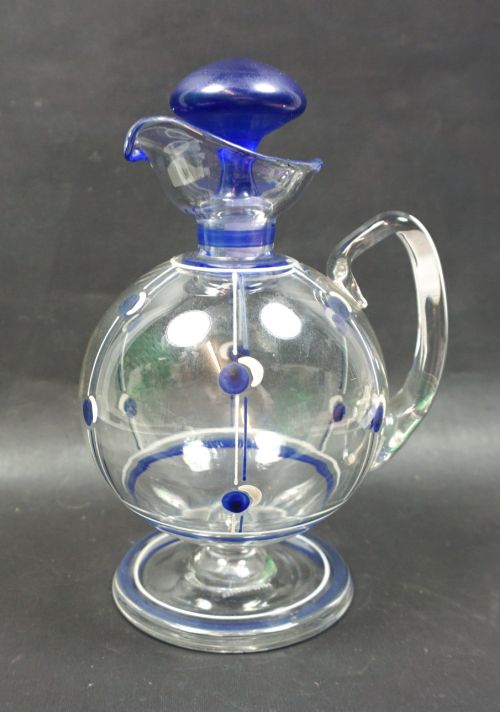
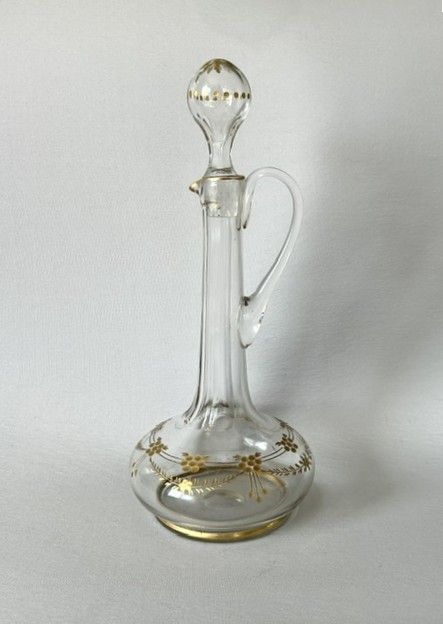
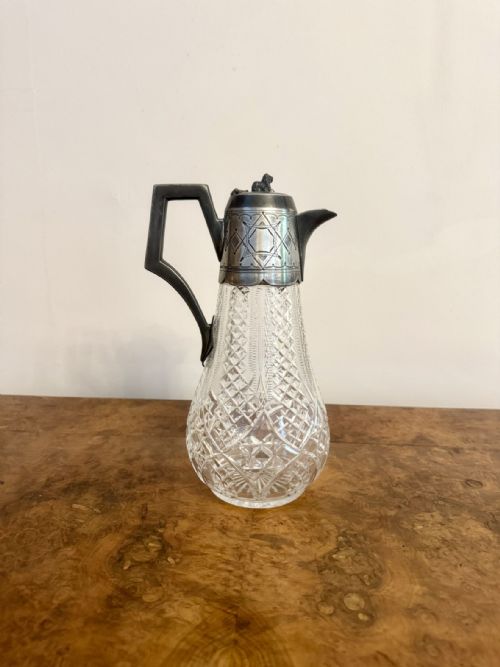
The selection ranges from tall glass ewers with intricate wheel-cut patterns to silver-mounted crystal flagons and coloured glass jugs. Many examples integrate silver plate with clear or tinted glass, while others showcase hand-painted enamel, gilding, or etched motifs depicting grapes and vines. Forms extend from traditional nineteenth-century claret jugs to continental European pieces, including Italian hand-blown glass and Czechoslovakian crystal.
Materials and manufacturing techniques
Makers utilised high-quality materials, pairing blown or moulded glass and lead crystal with silver plate, sterling silver, or pewter mounts. Glass bodies often received deep pillar and prism cuts, wheel engraving, or surface etching to catch the light during service. Coloured glass variants incorporate amber, green, or red hues, sometimes decorated with enamel painting or applied gilding.
Metal mounts and handles required skilled silversmithing and electroplating, securing tightly around the glass necks and lips with hinged lids. Techniques such as hand-blowing produced organic, fluid shapes in Italian and Bohemian workshops, whereas mass production in British factories introduced standardised silver-plated collars and mounts.
Vintage Wine Pitcher Retail Price Guide 2026
Typical asking prices for vintage wine pitcher among the pieces listed under this phrase on Sellingantiques today, from the lower quarter to the upper quarter. They describe what is for sale here now, not the wider market.
Listings feature periods spanning from the eighteenth century through the Victorian, Edwardian, and Art Deco eras, utilising cut glass, silver plate, and enamel.
Distinctions in quality
Quality rests upon the weight and clarity of the glass, the depth of hand-cut facets, and the integrity of the silver plating or solid silver mounts. Superior pieces display crisp, precise engraving, heavy lead crystal construction, and robust, well-fitted metal lids that seal securely.
Artisanal touches such as hand-painted enamel details, intricate intaglio work, or distinct maker engineering elevate a piece above standard production items. The harmony between the glass vessel and its metal mount indicates the standard of craftsmanship invested in the object.
Hukin & Heath·Charles Meigh·Webb Corbett
The Vintage Wine Pitcher Glossary
- Claret jug
- A specialised vessel designed specifically for serving red wine, usually featuring a pourer, handle, and hinged lid. These often combine silver-plated mounts with cut glass bodies.
- Ewer
- A large jug with a wide spout and a bulbous body, historically used for water or wine. They frequently appear in decorative glass or ceramic forms.
- Intaglio
- A technique where design elements are incised or sunken beneath the surface of the glass. This creates a low-relief carved effect when viewed.
- Silver plate
- A layer of silver fused to a base metal substrate, commonly used for the mounts, handles, and lids of nineteenth-century glass jugs.
- Rock crystal
- A term used for highly transparent, flawless quartz or top-grade lead crystal that has been meticulously cut and polished by hand.
Vintage Wine Pitcher: Frequently Asked Questions
How do I clean a vintage wine pitcher?
Wash glass vessels gently by hand using warm water and mild detergent, avoiding abrasive sponges that might scratch etched surfaces.
Keep silver-plated mounts polished with a dedicated cloth while preventing metal polish from contacting the interior glass or enamel.
Can I use these pitchers for serving wine?
Most glass and silver-mounted jugs remain fully functional for serving wine at the table, provided the interior is thoroughly rinsed before use.
Inspect the condition of the inner seals and joints to ensure the liquid contacts only clean glass and sound metal.
How do I identify a Victorian claret jug?
Look for heavy cut glass bodies paired with ornate silver-plated mounts, often featuring naturalistic grape and vine motifs characteristic of the period.
Examine the style of the handle and lid mechanism, which typically follows nineteenth-century aesthetic preferences for elaborate domestic silver.
What is the difference between a decanter and a pitcher?
Decanters generally feature stoppers and serve to aerate and store wine, whereas pitchers and jugs incorporate handles and spouts for direct pouring.
Claret jugs bridge this category by functioning as open-pour vessels equipped with hinged lids rather than removable stoppers.