


Vintage Wine Flagon
These vintage wine flagon examples range from heavy Victorian glass to early salt-glazed stoneware, offering practical service and decorative presence for the table.
Vintage Wine Flagon
A vintage wine flagon covers heavy glass decanters, silver-plated claret jugs, pewter communion vessels and early stoneware bottles. The selection spans the seventeenth, eighteenth, nineteenth and twentieth centuries.
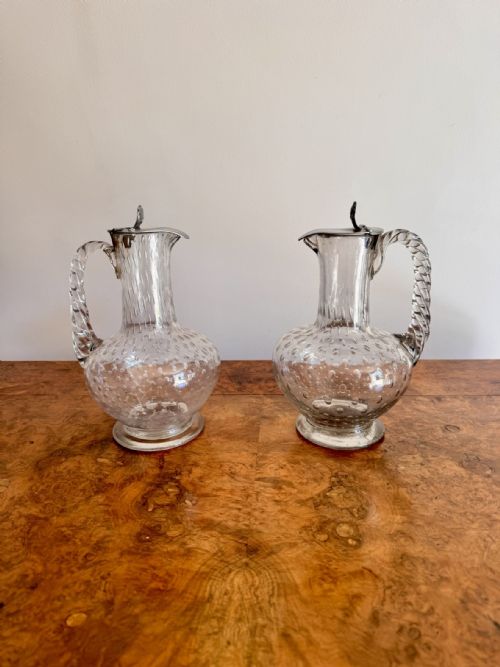
Most items you meet on this page date from the Victorian and Edwardian periods, typically taking the form of cut glass ewers or silver-mounted crystal decanters. Earlier salt-glazed German vessels and heavy pewter flagons appear less frequently.
Forms shift from functional tavern bottles to elaborate dining table service pieces fitted with metal handles, hinged lids and decorative pours.
Materials and construction methods
Makers utilised clear lead crystal, blown glass and ruby or cranberry glass overlays, often finishing vessels with deep brilliant-cut facets or engraved decoration. Metal mounts in silver plate, Old Sheffield plate and pewter provide sturdy handles, collars and hinged spouts.
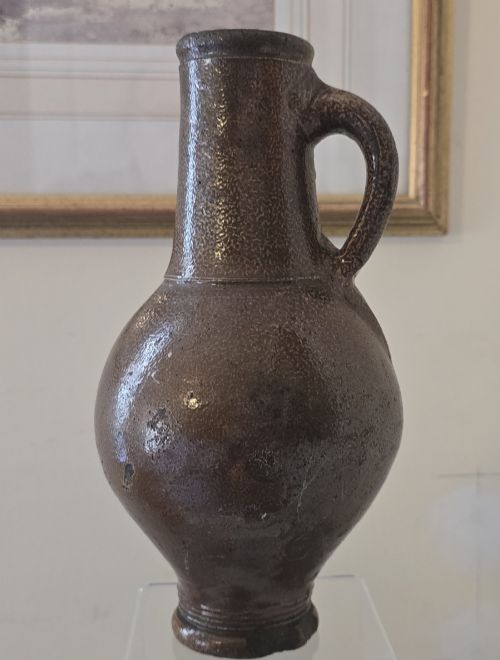
Stoneware pieces like the Fulham and German examples rely on salt-glazing techniques applied to dense clay bodies, forming durable jugs equipped with looped handles for secure pouring.
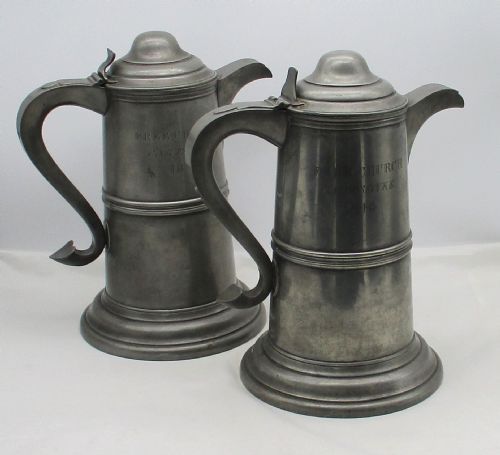
One towering German pewter beer flagon comes complete with decorative hops, ready for a very substantial toast.
Judging the standard of execution
Quality rests upon the crispness of the glass cutting, the weight of the lead crystal and the structural integrity of any silver-plated or pewter mounts. Superior pieces display deep, sharp facets and perfectly balanced handles.
The relationship between the glass body and its metal collar dictates overall refinement, where tight fitting and balanced proportions separate utilitarian vessels from high-end dining table accessories.
John Dwight Fulham Pottery·Orfèvrerie Produx Saint Hilaire
The Vintage Wine Flagon Glossary
- Claret jug
- A specialised pouring vessel designed for red wine, usually featuring a glass body with a metal handle, collar and hinged lid.
- Flagon
- A large vessel with a handle and spout or lid, traditionally used for holding and pouring liquids.
- Ewer
- A large jug with a wide-spouted mouth, used historically for pouring water or wine at table.
- Salt glaze
- A glassy, pitted texture formed on stoneware by throwing common salt into the kiln during high-temperature firing.
Vintage Wine Flagon: Frequently Asked Questions
What is the difference between a flagon and a decanter?
A flagon generally includes a handle and a spout or hinged lid, designed primarily for pouring at table. Decanters often lack handles, relying on a neck grip for service.
Traditional flagons originated for communal or tavern use, whereas glass decanters evolved specifically for serving wine in domestic dining rooms during the eighteenth and nineteenth centuries.
How do I care for antique glass vessels?
Wash glass flagons by hand in warm water with mild detergent, avoiding sudden temperature changes that can crack old material. Dry them promptly with a lint-free cloth.
Keep metal mounts polished with appropriate non-abrasive cleaners, taking care not to let polish residue contact porous glass or crystal surfaces.
Are pewter flagons safe for serving wine?
Historical pewter often contained lead, meaning antique pieces suit decorative display or dry storage better than regular consumption use. Modern usage requires testing or limiting exposure to acidic liquids like wine.
Many nineteenth-century pewter vessels were produced for ceremonial or ecclesiastical service rather than everyday dining table requirements.
How do I identify a Victorian silver-plated claret jug?
Victorian examples typically combine heavy cut glass bodies with ornate silver-plated mounts featuring cast floral, naturalistic or geometric motifs. Look for hinged lids and detailed handles securely fixed to the glass neck.
Maker marks or quality stamps often appear on the metal collar or thumbpiece, indicating the plating firm active during the nineteenth century.