

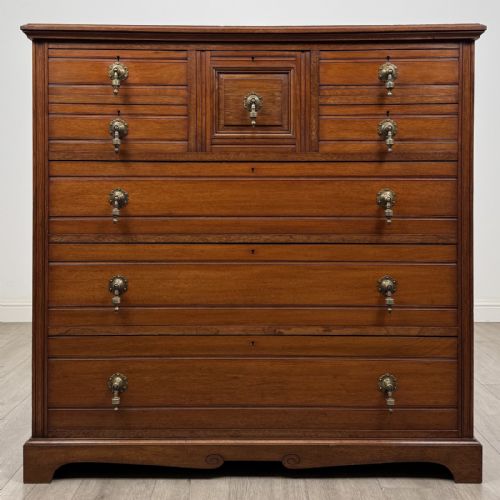
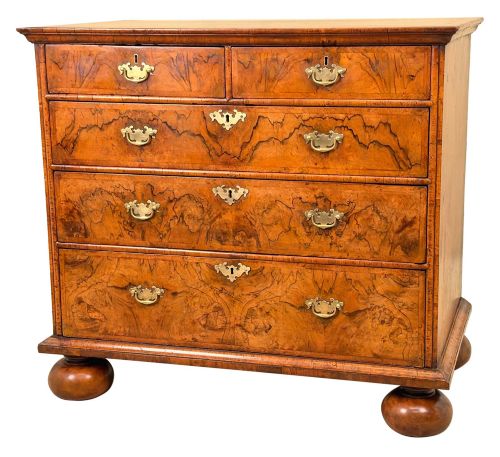
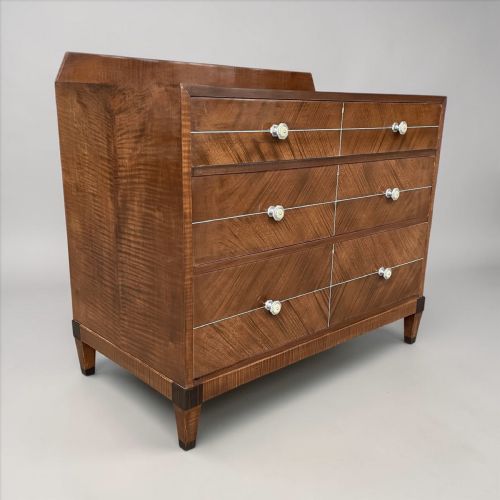
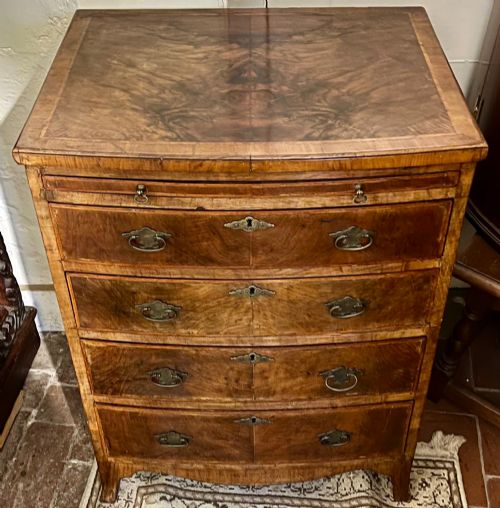
Vintage Walnut Tallboy
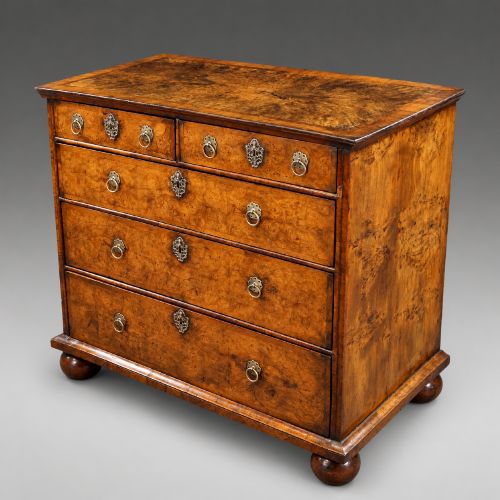
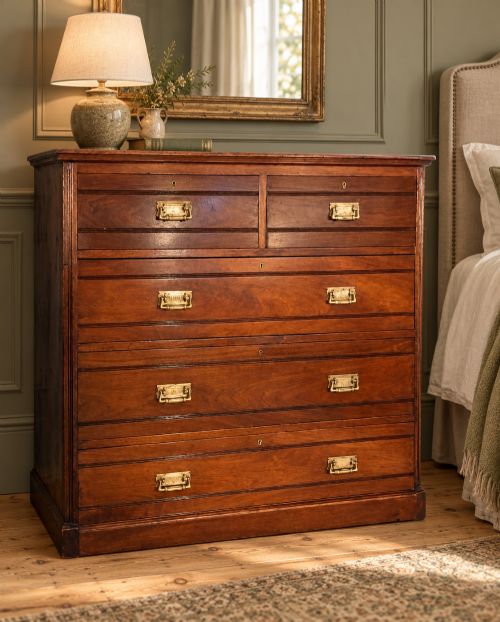
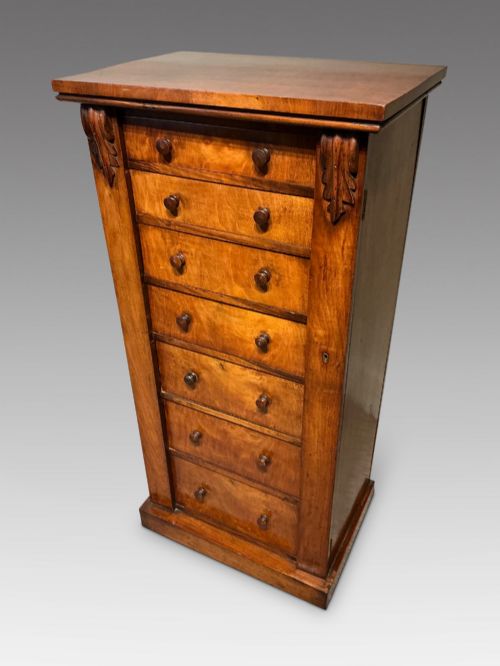
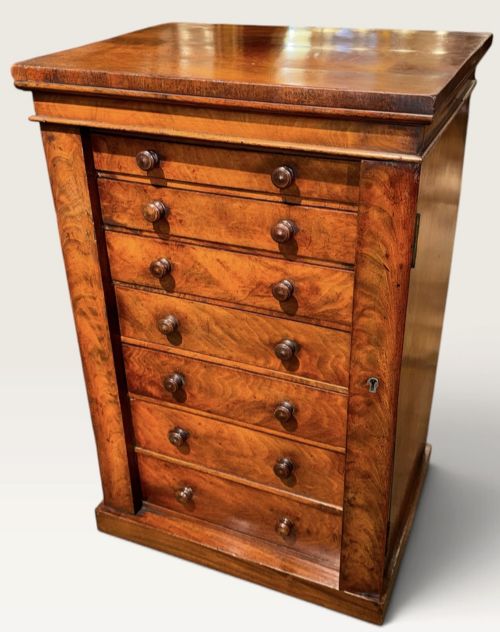
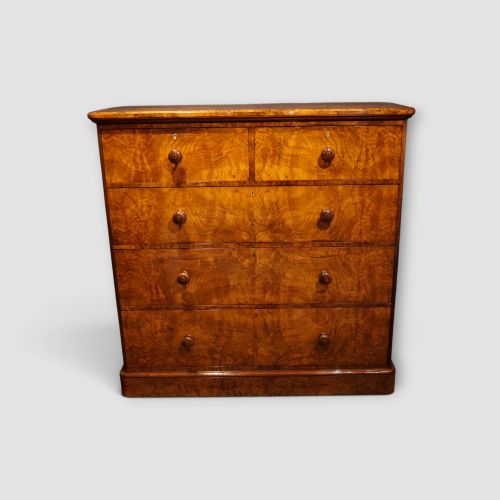
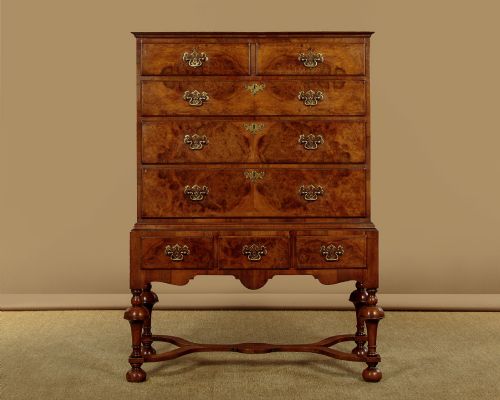
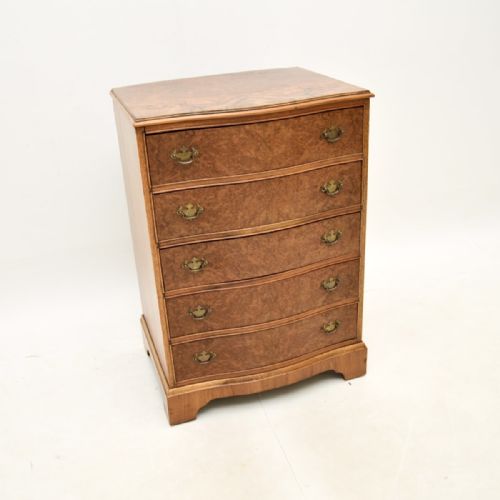
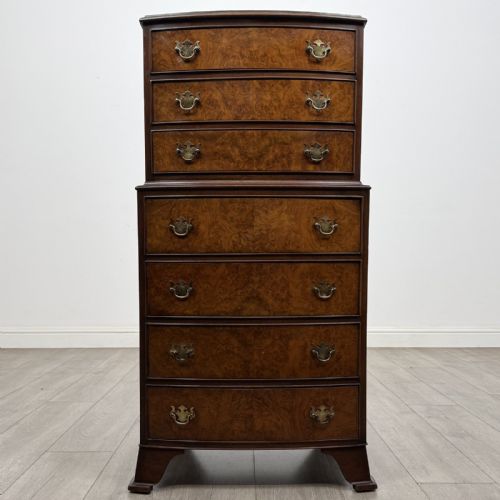
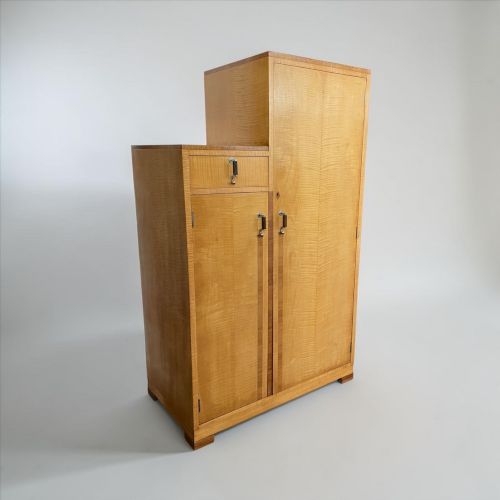
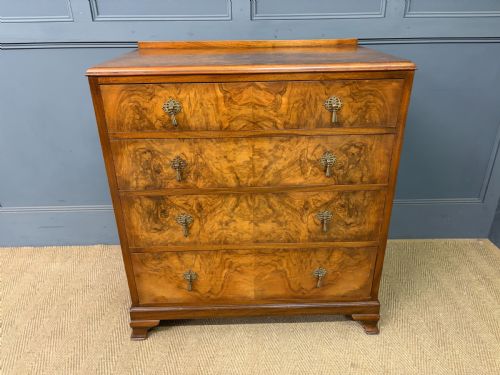
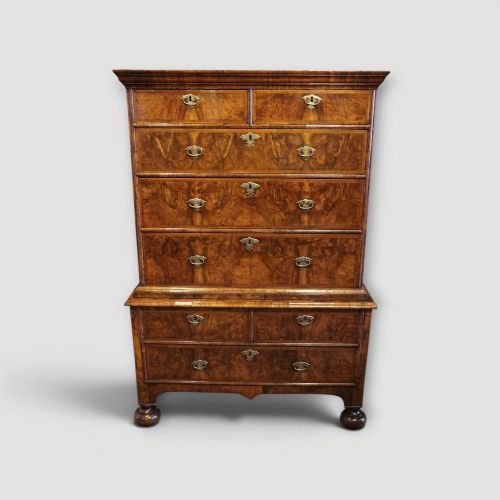
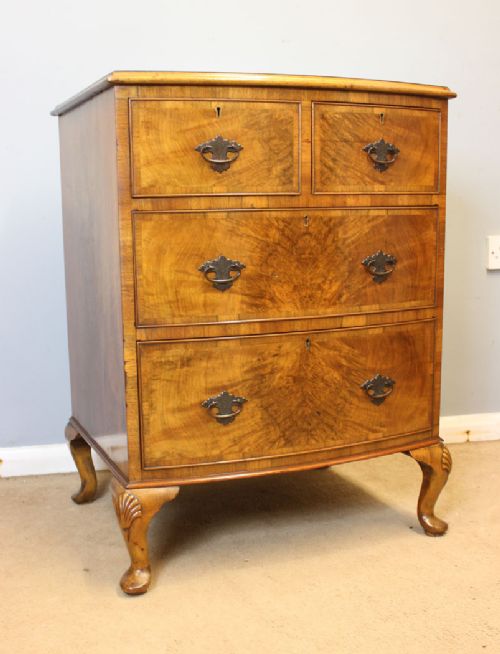
These vintage walnut tallboy examples combine height with deep storage, offering the rich grain of burr and figured walnut.
Vintage Walnut Tallboy
A vintage walnut tallboy brings together vertical storage and substantial capacity through various forms including chests on stands, chests on chests, and traditional tall chests of drawers. Buyers searching this phrase encounter pieces ranging from early eighteenth century Georgian origins up to Art Deco designs from the 1930s.
The selection on this page relies heavily on early twentieth century interpretations, particularly pieces from the 1920s and 1930s built in the Queen Anne revival and Art Deco styles. Alongside these, genuine eighteenth century examples appear, offering classic proportions and heritage construction.
Materials and construction methods
Construction relies primarily on solid oak and secondary timbers faced with walnut, burr walnut, and figured walnut veneer to create striking patterns across the drawer fronts and top surfaces. Cabinetmakers utilised precise techniques such as herringbone banding and crossbanding to frame the rich timber grains.
Hardware plays a distinct functional and decorative role, with brass handles and escutplements fitted to drawers that range from bow front to serpentine outlines. Metal and occasionally bakelite details appear on later twentieth century interpretations.
Vintage Walnut Tallboy Retail Price Guide 2026
Typical asking prices for vintage walnut tallboy among the pieces listed under this phrase on Sellingantiques today, from the lower quarter to the upper quarter. They describe what is for sale here now, not the wider market.
Listings feature periods spanning from the early 18th century through to the 1940s, with a strong representation of 1920 and 1930 pieces.
Distinctions in quality
Quality rests significantly on the choice and matching of timber veneers, where symmetrical burr walnut figures indicate higher grade cabinet work compared to plain walnut surfaces. The intricacy of banding, such as fine herringbone inlay work, marks out superior workshops.
Structural finesse also separates standard pieces from exceptional ones, seen in the proportion of the mouldings, the crispness of the carving on Queen Anne style cabriole legs, and the smooth operation of multiple drawer tiers.
Jas Shoolbred
The Vintage Walnut Tallboy Glossary
- Tallboy
- A tall chest of drawers, often constructed in two sections with a chest sitting upon a lower base or stand. This form maximises vertical storage while maintaining floor space.
- Burr Walnut
- A specialised wood cut from the burl growth of a walnut tree, prized for its swirling, highly figured grain patterns. Cabinetmakers use it as a decorative veneer on prominent surfaces.
- Herringbone Banding
- A decorative inlay pattern formed of small pieces of veneer laid diagonally to resemble the skeleton of a fish. It frequently frames the edges of drawer fronts on period furniture.
- Bow Front
- A convex, curved front profile popular on chests of drawers and tallboys from the Georgian period onward. This curved shape softens the rigid lines of case furniture.
- Serpentine
- A furniture front featuring a concave centre flanked by two convex curves, creating a gentle undulating wave. This shape requires advanced woodworking skill to execute properly.
Vintage Walnut Tallboy: Frequently Asked Questions
What is a vintage walnut tallboy?
A tall chest of drawers designed to provide substantial vertical storage while occupying a modest footprint on the floor. These pieces frequently feature prominent walnut or burr walnut veneers.
They span multiple eras, encompassing both early Georgian originals and twentieth century revivals influenced by Art Deco and Queen Anne styles.
How do I date a walnut tallboy?
Dating relies on examining construction methods, timber choice, and stylistic cues such as bracket feet, handles, and veneer patterns. Eighteenth century examples show different internal drawer construction compared to 1920s or 1930s revivals.
Hardware fixtures, locks, and secondary timbers like oak also provide reliable clues to the manufacturing decade.
Where should I place a tallboy?
Their vertical orientation makes them well suited to bedrooms, dressing rooms, or hallways where floor space is limited yet storage capacity is required. They pair effectively with other walnut or dark wood furniture.
Ensure placement avoids direct sunlight to protect the figured veneers from fading over time.