

Vintage Walnut Seats
Vintage walnut seats bring rich timber grain and period charm to a room, spanning styles from ornate Victorian dining chairs to streamlined Art Deco club chairs.
Vintage Walnut Seats
Vintage walnut seats encompass a diverse range of domestic furniture, from single stools and nursing chairs to complete dining sets and large sofas. When searching for vintage walnut seats, buyers encounter pieces originating from the nineteenth century through to the interwar Art Deco period.
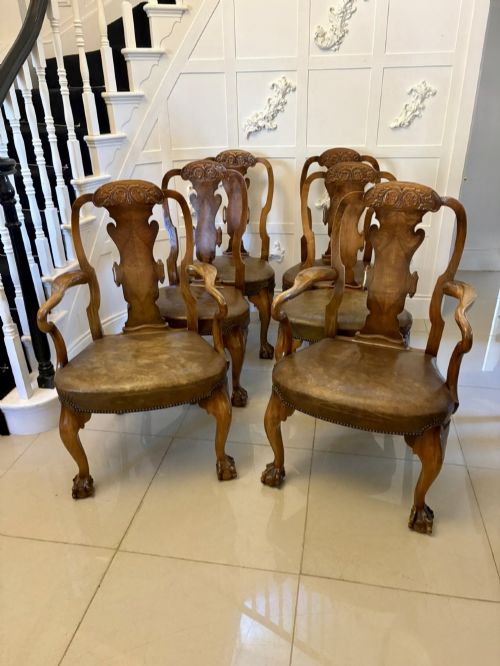
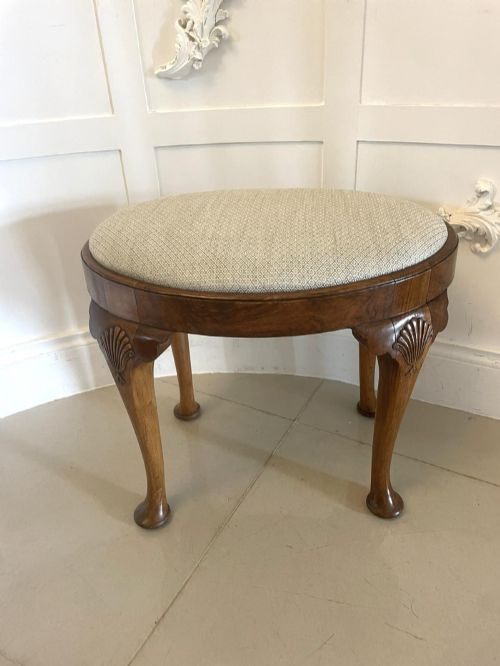
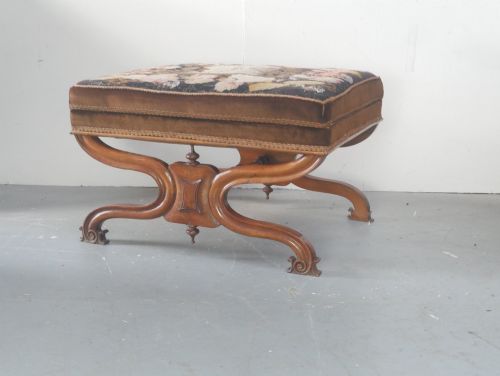
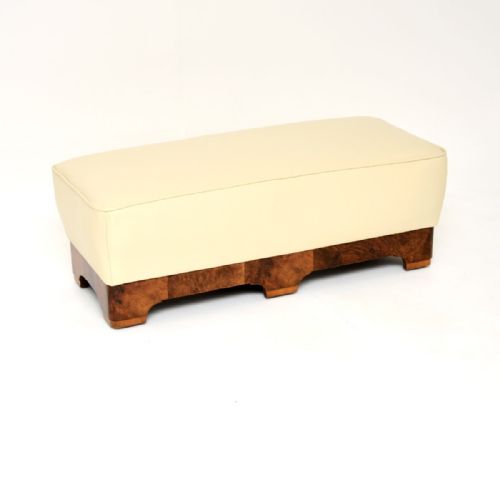
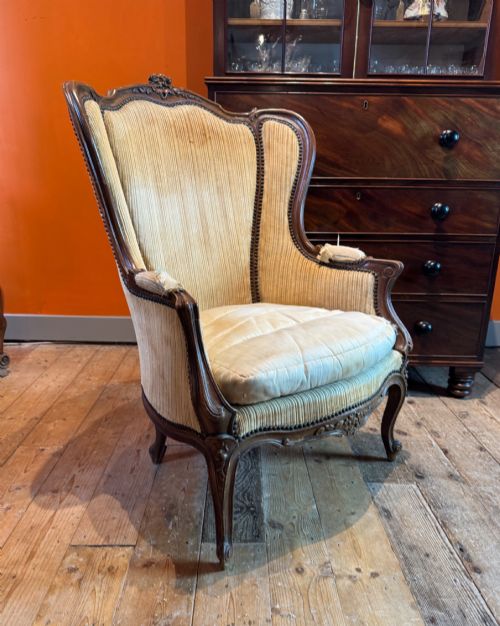
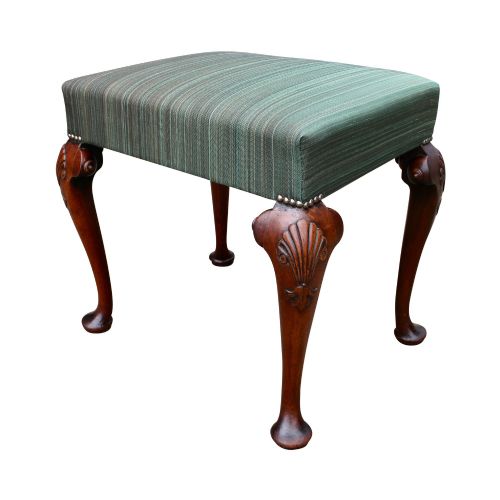
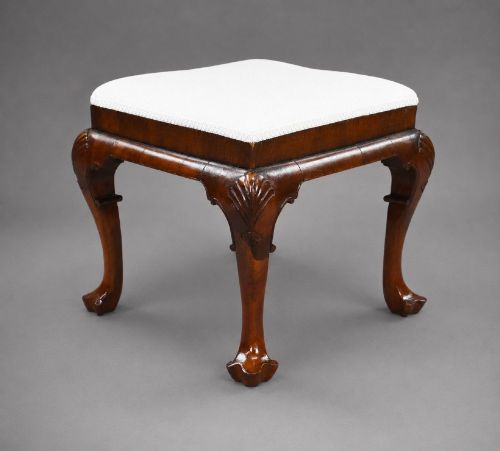
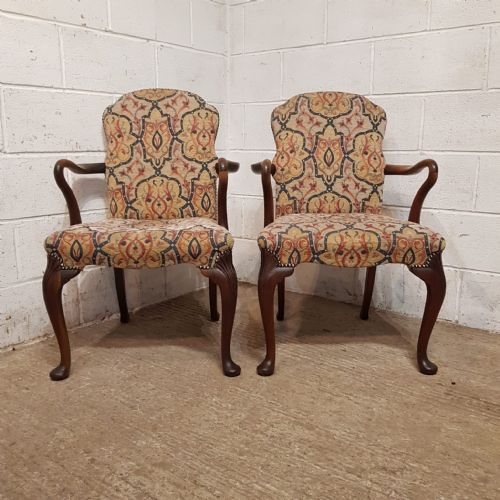
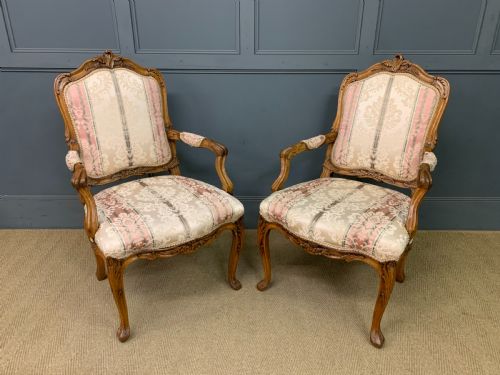
The selection on offer leans heavily toward upholstered armchairs, occasional chairs, and dining seating built in styles that look back to Queen Anne, Louis XV, and Carolean designs. Stools and benches also appear frequently, providing compact alternatives to larger armchairs.
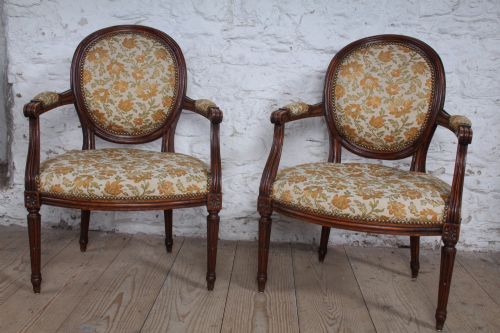
Origins vary between British workshop traditions and continental European design, particularly French styles like the bergere and neo-rococo. Buyers often find matching pairs of armchairs alongside individual library chairs and office swivels.
How they were made
Frames rely predominantly on solid walnut or burr walnut veneers, prized for their deep colour and distinctive swirling grain patterns. Woodworkers shaped these frames using traditional carving techniques, visible on Victorian dining chairs and French open armchairs alike.
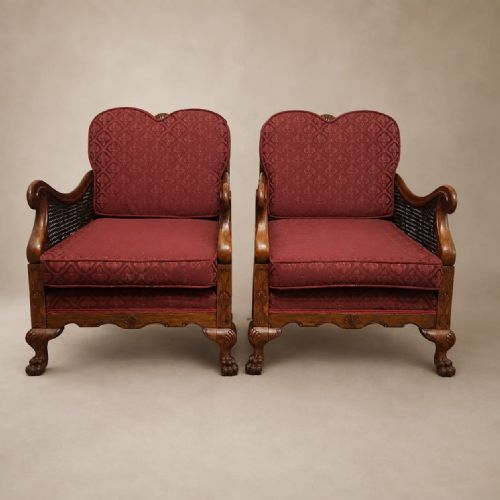
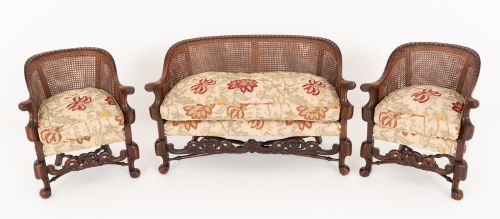
Upholstery materials play a major role in the construction, incorporating leather, velvet, fabric, and textile coverings supported by traditional stuffing and occasionally feather cushions. Split cane work also appears on bergere frames, woven tightly into the walnut structure for backrests and panels.
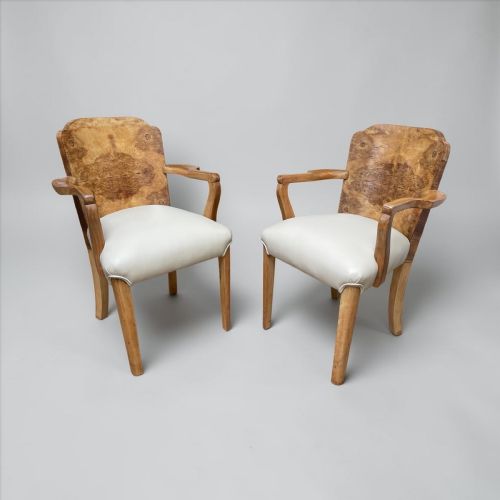
Brass fittings and hardware occasionally accent the woodwork, particularly on swivel desk chairs and movement-heavy pieces. Lacquered finishes protect the timber on Edwardian examples, while polished surfaces highlight the natural figure of the burr walnut on Art Deco pieces.
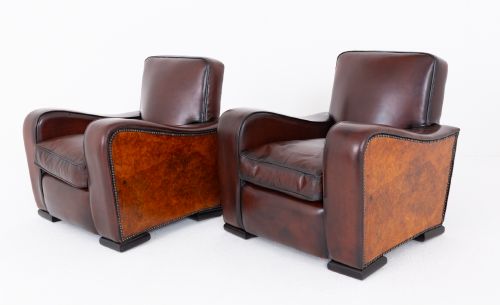
Cloud chairs offer a plump, pillowed invitation to sit, proving that 1930s designers understood the art of relaxation.
What varies in quality
The crispness and depth of the timber carving set apart standard production from exceptional examples, especially on pieces drawing on Queen Anne or French revival styles. Sharply defined acanthus leaves and fluted legs demonstrate superior cabinet-making skills compared to soft, rounded mouldings.
The selection of the walnut timber itself dictates visual impact, with richly figured burr veneers marking out high-end Art Deco and Edwardian pieces. Plain, straight-grained walnut frames offer a quieter aesthetic but still rely on solid joinery for structural longevity.
Upholstery execution and the preservation of original materials, such as split cane panels or button-backed textiles, influence the overall integrity of the seating. Pieces retaining their original leather or textile coverings show how well the furniture was maintained through successive decades.
Hille·Harry and Lou Epstein
The Vintage Walnut Seats Glossary
- Bergere
- An enclosed upholstered armchair with wooden framing, often featuring cane work on the sides and back. This French style gained popularity in various forms throughout the nineteenth and twentieth centuries.
- Burr walnut
- A specialised timber veneer taken from the warted growths on walnut trees, yielding highly ornamental swirling grain patterns. Makers utilised this finish to create striking surfaces on Art Deco and Edwardian furniture.
- Cassapanca
- A traditional Italian wooden bench with a high back and storage compartment beneath the seat, frequently carved from solid walnut. These substantial pieces served multiple domestic functions in period interiors.
- Nursing chair
- A low-seated armchair designed in the Victorian era to allow a person to sit comfortably while tending to infants. They typically feature upholstered button-backs and absence of high armrests.
- Queen Anne style
- A graceful furniture design characterised by cabriole legs, pad feet, and curved lines that revived periodically through the nineteenth and twentieth centuries. Walnut served as the primary timber for this aesthetic.
Vintage Walnut Seats: Frequently Asked Questions
How do I identify Art Deco walnut seats?
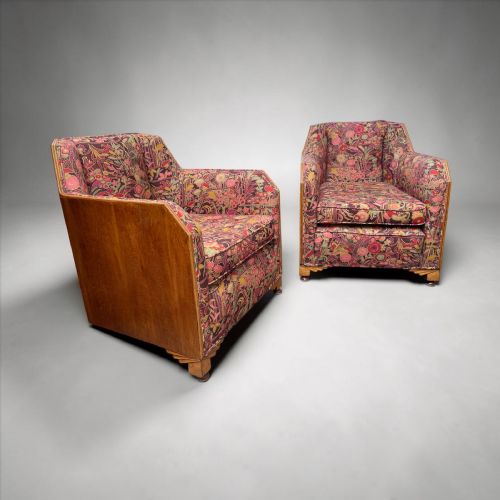
Art Deco walnut seats often feature streamlined, geometric forms with smooth polished burr walnut surfaces and leather upholstery. They frequently date from the 1930s and discard heavy period ornamentation in favour of clean architectural lines.
Look for club chairs, cloud suites, and occasional chairs that emphasise the natural figure of the wood rather than applied carving. These pieces usually feel substantial and low-slung compared to Victorian or Edwardian seating.
Are walnut dining chairs sturdy for daily use?
Solid walnut dining chairs constructed during the nineteenth and early twentieth centuries generally offer robust structural integrity for everyday seating. Their hardwood frames withstand regular movement when the joints remain tight and well-maintained.
Carved Victorian sets and Edwardian dining chairs rely on traditional joinery that holds up well under normal domestic conditions. Inspecting the stability of the legs and stretcher connections ensures they remain fit for purpose.
What is a bergere armchair?
A bergere armchair is an upholstered seat featuring exposed wooden framing and woven cane panels along the back and armrests. Originating in France, these chairs combine soft cushions with rigid structural support.
They appear in various historic revivals, including Louis XV styles and 1920s interpretations. The combination of cane work and polished walnut creates a lighter visual profile than fully upholstered club chairs.
How should I care for vintage walnut furniture?
Vintage walnut furniture benefits from placement away from direct sunlight and strong heat sources to prevent the timber and veneers from drying out. Regular dusting with a soft, dry cloth preserves the polished surface without building up residue.
Conditioning the leather or fabric elements according to their specific material requirements keeps the upholstery supple. Avoiding moisture accumulation on cane panels helps maintain their structural tension over time.