


Vintage Wall Lights
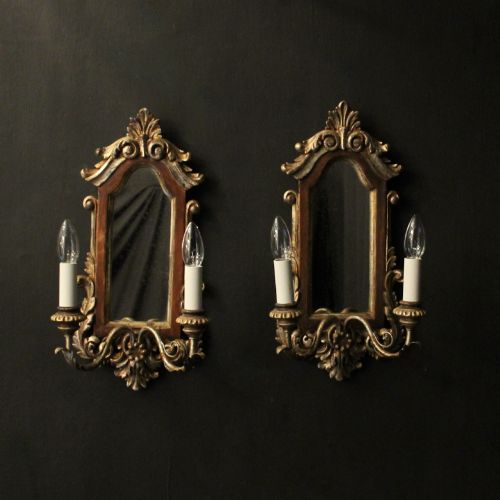
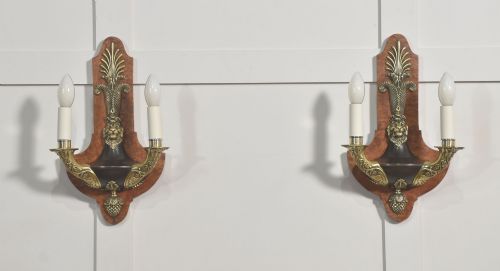
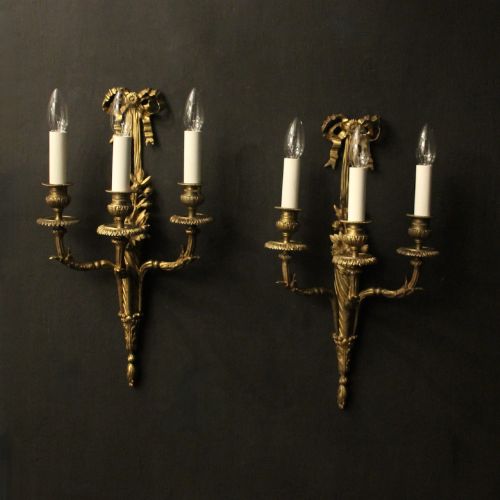
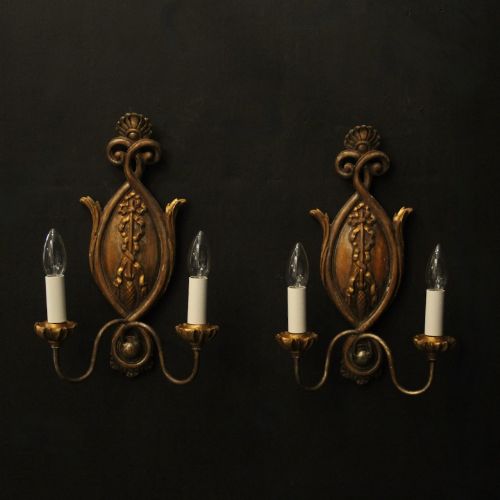
These vintage wall lights span brass, bronze, and giltwood forms designed to illuminate interiors with period character.
Vintage Wall Lights
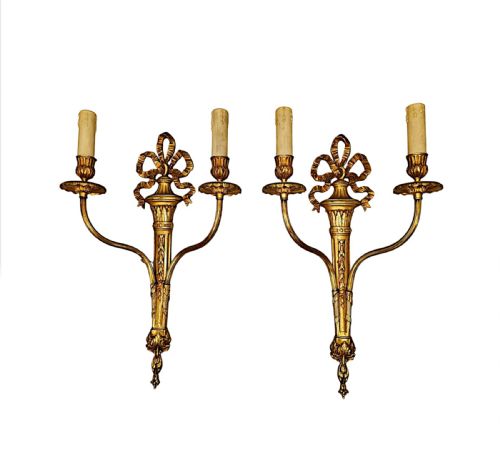
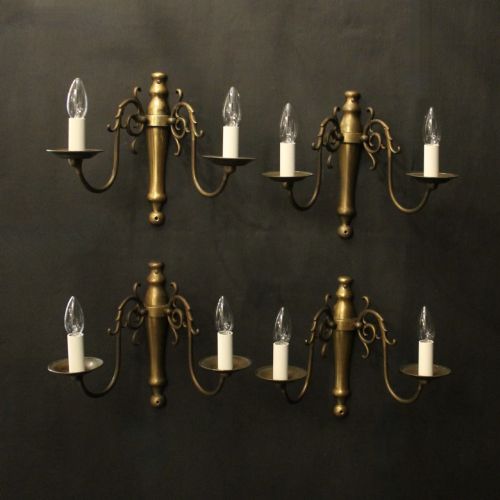
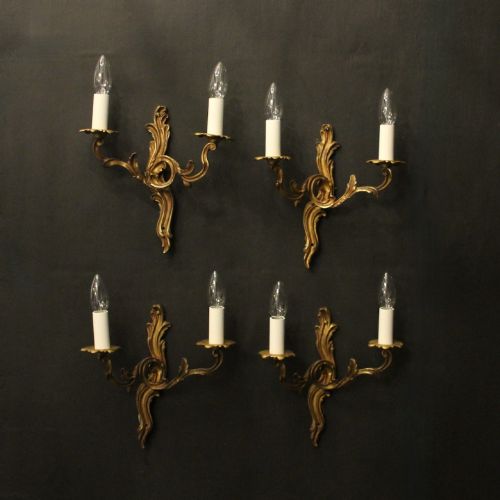
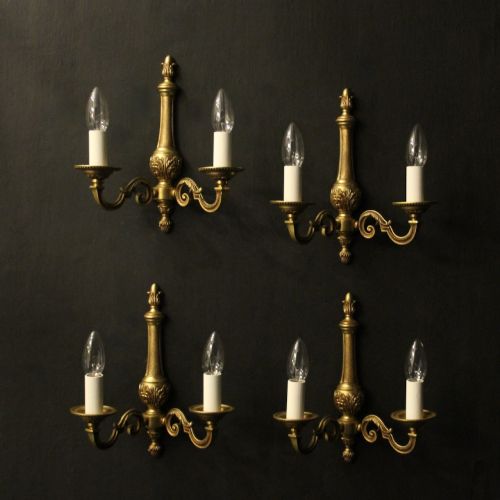
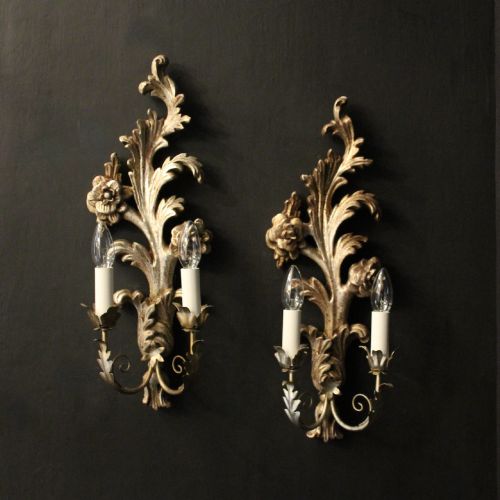
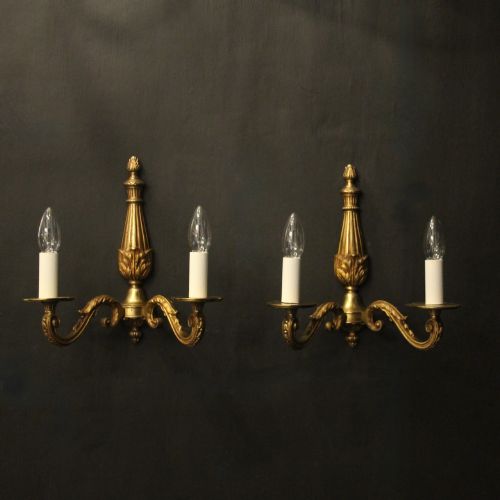
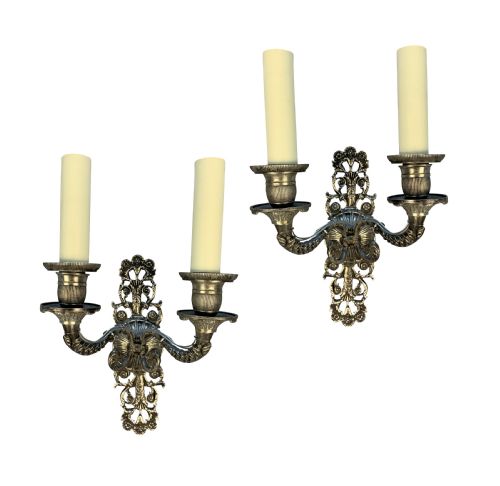
Vintage wall lights encompass sconces, lanterns, and candelabra designed to mount directly onto interior walls for ambient and task illumination. The selection frequently includes French gilt brass, bronze, and Florentine giltwood pairs dating from the late nineteenth century through the 1930s. Buyers often encounter matched sets of twin-arm fixtures alongside single-arm and multi-armed decorative variants.
The objects derive from diverse stylistic traditions, ranging from French Empire and Rococo revivals to Arts and Crafts copper pieces and early twentieth-century industrial designs. Many examples incorporate glass, cut crystal, or mirrors to reflect and amplify the light cast from candles or early electric bulbs. These lighting fixtures bring period authenticity and architectural interest to domestic spaces.
Origins span English, French, and Italian workshops, reflecting distinct regional aesthetics in metalwork and carved wood. French pieces often display elaborate gilt bronze or brass casting, while Florentine items favour carved and gilded wood girandoles. English makers contribute brass adjustable designs and utilitarian Pullman or hotel lanterns.
How they were made
Makers utilised cast brass, bronze, copper, and wrought iron as the foundational metallic structures for many fixtures, shaping them through casting and hand-working. Gilding, silver plating, and polishing finishes were applied to metals to enhance reflective qualities and visual warmth. Wood elements such as maple, oak, and carved giltwood received similar attention through joinery and surface gilding.
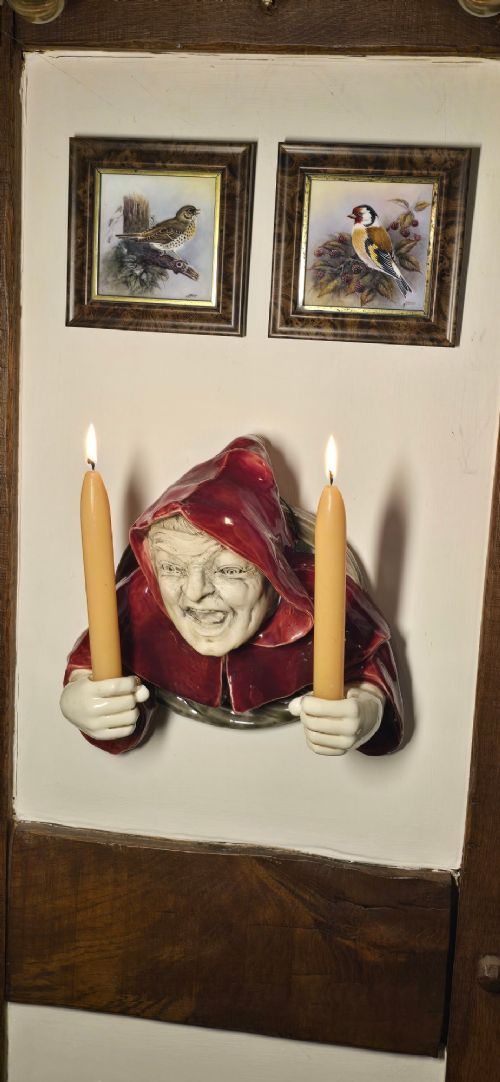
Glass and cut crystal components were integrated into sconces and lanterns to diffuse and refract illumination effectively. Artisans combined these materials with ceramic elements, such as Delft pottery, or incorporated mirrors behind branches to maximise the spread of light within a room.
Periods represented span 1800s Victorian times through the 1930s, including Edwardian and Art Deco eras.
What varies in quality
The distinction between tiers rests upon the crispness of the metal casting, the depth of hand-chasing, and the integrity of the original gilding. Finer examples display meticulous detailing in foliate mounts and structural joints, whereas simpler utilitarian pieces prioritise robust function over ornate decoration.
Material selection and assembly methods further differentiate the range, with heavier cast bronze and solid brass assemblies outlasting lighter plated alternatives. The survival of original glass crystals, backplates, and matching components dictates the overall coherence and desirability of the fixture.
W.A.S. Benson·Maison Baguès·Villeroy & Boch·Casier
The Vintage Wall Lights Glossary
- Sconce
- A wall-mounted lighting fixture designed to carry candles or electric lamps. These pieces often feature decorative backplates and extending arms.
- Girandole
- An ornamental wall mirror equipped with candle branches or light arms attached to the frame. The mirrored glass reflects the flame to amplify the illumination.
- Gilt bronze
- Bronze metal that has been coated with a thin layer of gold or gold-coloured alloy. It is frequently associated with ornate French decorative arts.
- Ormolu
- Gilded bronze ornamentation applied to furniture, ceramics, or lighting fixtures. The technique provides a durable, lustrous golden finish.
- Arts and Crafts
- A design movement valuing handcraftsmanship, simple forms, and honest materials. Pieces from this tradition often feature hammered copper or wrought iron.
Vintage Wall Lights: Frequently Asked Questions
How were vintage wall lights originally powered?
Early versions relied on wax candles or oil before subsequent adaptations incorporated electric wiring during the late nineteenth and early twentieth centuries.
Many surviving pieces retain converted fittings or original electrical components suited to period interiors.
How do I identify the period of a wall light?
Stylistic indicators such as Rococo curves, Empire symmetry, or Arts and Crafts hammering provide primary clues to the era of manufacture.
Construction materials, screw types, and mounting brackets offer additional physical evidence for dating.
Can antique wall lights be wired for modern use?
Most metal and wood fixtures accommodate modern electrical wiring with appropriate safety checks by a qualified professional.
Original backplates and arm structures generally allow internal cable routing without altering the exterior appearance.