


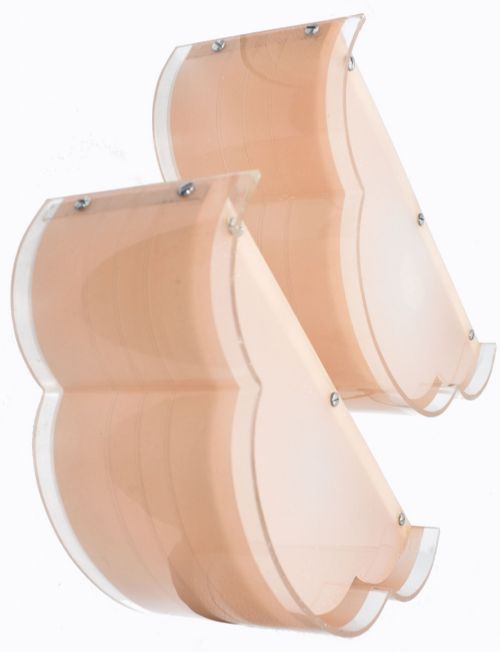


Pair Art Deco Sconces
These pair art deco sconces bring 1930s lighting into modern interiors with matching metal and glass forms.

Understanding pair art deco sconces
Makers from this period produced wall lights in distinct geometric and organic shapes, including skyscraper, flame, crescent, and trumpet forms. French examples often incorporate sculptural elements such as nude figures or soft coral shell designs.
The inventory consists entirely of matching pairs, ensuring uniform styling for flanking mirrors, doorways, or fireplaces. Most examples date specifically to the 1930s Art Deco period.
Materials and construction
Workshops utilised polished chrome and metal for the structural frames and backplates, pairing them with glass shades. Glass types recorded include frosted, opaline, moulded, opaque, and acrylic materials.
Details feature contrasting textures through the use of Bakelite and Catalin components alongside metal frameworks. Shades were formed into specific profiles like tubular, crescent, and flame designs to diffuse light effectively.
Retail Price Guide 2026
Typical UK retail prices for pair art deco sconces, calculated from the Sellingantiques database of over a million retail prices indexed since 2003. This retail price guide relies exclusively on Sellingantiques data; no external sources or auction records are used, so the figures do not describe the wider market.
All listed pieces date from the 1930s and utilise combinations of chrome, frosted glass, Bakelite, and metal.
Judging quality in period lighting
Quality differentiates through the weight and finish of the metalwork, alongside the clarity and moulding depth of the glass shades. Substantial chrome plating and crisp glass casting distinguish finer output.
Design complexity also plays a role, moving from simple tubular forms to sculptural figural elements such as moulded glass nudes or layered skyscraper tiers. The integration of original materials like Bakelite contributes to the integrity of the piece.
Arthur Wood·Ezan·Sabino France
The Pair Art Deco Sconces Glossary
- Art Deco
- A design style of the 1930s characterised by geometric shapes, streamlined forms, and modern industrial materials.
- Chrome
- A metal plating applied to steel or brass frames to provide a bright, reflective, and durable finish.
- Bakelite
- An early form of thermosetting plastic utilised for switch housings, bases, and decorative trim in 1930s electrical fittings.
- Opaline Glass
- A milky, semi-translucent glass that softens and diffuses bulb illumination evenly across the room.
- Sconce
- A wall-mounted light fixture designed to project illumination outward and upward or downward into a space.
Frequently Asked Questions
How do I wire 1930s wall sconces?
Period wall lights require modern rewiring to meet current electrical safety standards before installation in a domestic setting. A qualified electrician can adapt the internal fittings while retaining the original external metal and glass components.
Most fixtures connect directly to standard household wall wiring behind the backplate. Ensure the chosen location can support the weight of metal and glass assemblies.
Are these sconces matching pairs?
Yes, the listings comprise matched pairs designed specifically to be installed together on either side of a architectural feature. Each pair shares identical materials, dimensions, and shade configurations.
Symmetrical placement enhances the visual balance of a room. Using matched pairs creates a cohesive lighting scheme characteristic of 1930s interior design.
What bulbs do these lights take?
Original fittings generally accept standard modern SES or CES screw-cap bulbs, though older sockets may need replacement with certified equivalents. Low-heat LED bulbs work well inside enclosed glass shades to prevent excessive heat buildup.
Consult an electrician to verify socket compatibility and maximum wattage ratings for vintage fixtures.
How do I clean frosted and opaline glass?
Wash glass shades gently in warm, soapy water using a soft cloth to remove dust and surface grime. Avoid abrasive cleaners or scouring pads that can scratch frosted or textured surfaces.
Dry the glass thoroughly before reattaching it to the chrome or metal frame. Handle moulded shades carefully during removal to prevent chipping.