


Five Light Sconce
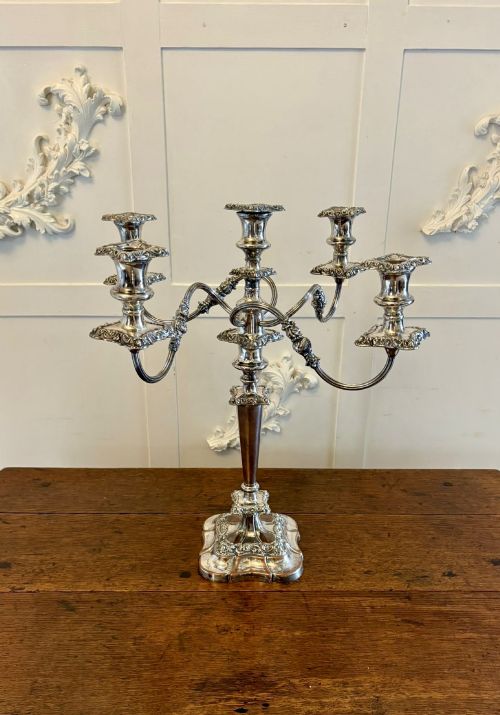
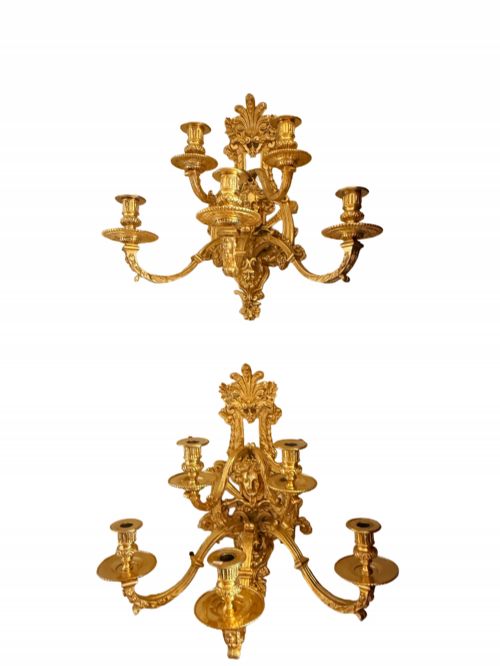
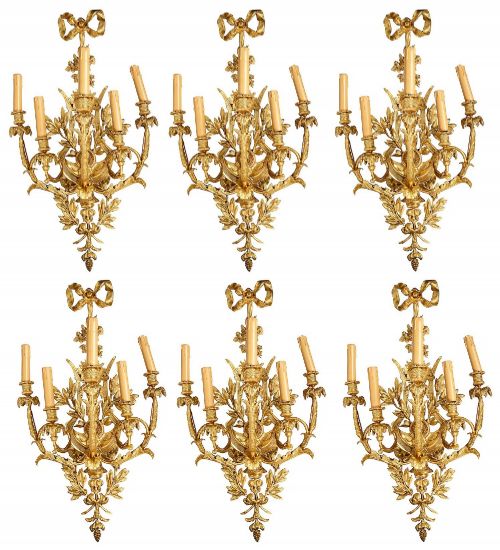
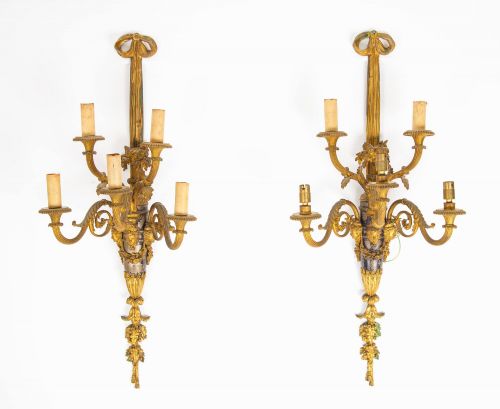
These five light sconce pieces bring layered illumination to a room, offering the classic forms of French and Victorian wall lighting.
Five Light Sconce
A five light sconce provides wall-mounted illumination using five branches, arms, or candelabra points to hold candles or electric fittings. When you examine a five light sconce on this page, you meet pieces ranging from French Rococo Revival and Louis XIV styles to rustic wrought iron.
The materials span gilt bronze, ormolu, cast brass, silver plate, and wrought iron, with French origin appearing frequently. Dating stretches from the eighteenth century through the nineteenth century and into the twentieth century, alongside Victorian examples.
Materials and construction methods
Metalworking dominates these pieces, utilising cast brass, wrought iron, and bronze finished with fire-gilding or ormolu. Artisans shaped molten or beaten metal into scrolling arms and ornate backplates, sometimes combining glass or silver plate.
Earlier pieces rely on forged iron and hand-finished bronze, whilst later nineteenth-century examples often employ precision casting and heavy plating techniques to achieve uniform decorative detail.
The documented styles span French Rococo Revival, Louis XIV, Louis XVI, Bohemian, and rustic European traditions.
Assessing quality in wall lighting
Quality depends upon the crispness of the chasing in bronze and ormolu, where finer hand-tooling creates depth and definition in acanthus leaves and scrolling motifs. Heavier castings hold their detail better across multiple branches than lighter, mass-produced alternatives.
The integrity of the assembly matters, as superior pieces feature tightly fitted joints and substantial backplates that support the weight of five branches without sagging. Surface finishes also distinguish work, with genuine fire-gilding ageing differently from modern applied paints.
Henri Vian
The Five Light Sconce Glossary
- Ormolu
- Gilded bronze produced through mercury amalgamation, creating a durable golden surface common in French decorative arts. This technique was widely practiced in Paris workshops during the eighteenth and nineteenth centuries.
- Candelabra
- A branched candlestick holder designed to support multiple candles simultaneously. In wall lighting, this term often describes fixtures with prominent, radiating arms.
- Gilt Bronze
- Bronze metal coated with a thin layer of gold or gold-coloured leaf. It provides the warmth of gold without the full weight and cost of solid precious metal.
- Louis XVI Style
- A neoclassical design vocabulary characterised by straight lines, symmetry, and classical motifs like urns and swags. It emerged in France during the eighteenth century and saw robust revival periods later.
Five Light Sconce: Frequently Asked Questions
How do I hang a heavy sconce?
Heavy bronze and brass fixtures require direct attachment to wall studs or appropriate masonry anchors to bear the substantial weight safely. Using standard plaster fixings alone will cause the piece to pull away from the wall over time.
Ensure that the electrical wiring box behind the wall light aligns securely with the backplate mounting bracket before final installation.
Were these originally for candles or electricity?
Many of these pieces began life holding wax candles before being adapted later for electric illumination during restoration. Evidence of original drip pans and wick residues often remains visible on earlier examples.
When modern wiring is added, internal channels are typically threaded through the existing arms without altering the outer decorative metalwork.
How do I clean gilt bronze safely?
Dust gilt bronze gently with a soft, dry brush to remove surface particles without disturbing the delicate metallic finish. Avoid using harsh chemical cleaners or abrasive polishes that can strip away the original ormolu surface.
Professional conservation cleaning is recommended if tarnish obscures the underlying detail of the chasing.
How do I date a brass wall light?
Dating relies on examining the casting marks, assembly screws, and stylistic details such as the symmetry of Louis XIV designs versus Victorian ornamentation. Hand-finished surfaces and irregular tool marks generally point towards earlier manufacturing dates.
Comparing the patina and wear patterns on the backplate with the fixing points also helps establish the age of the piece.