



Brass Five Lamp
These brass five lamp pieces are multi-arm lighting fixtures designed to illuminate grand spaces with period elegance.
Brass Five Lamp
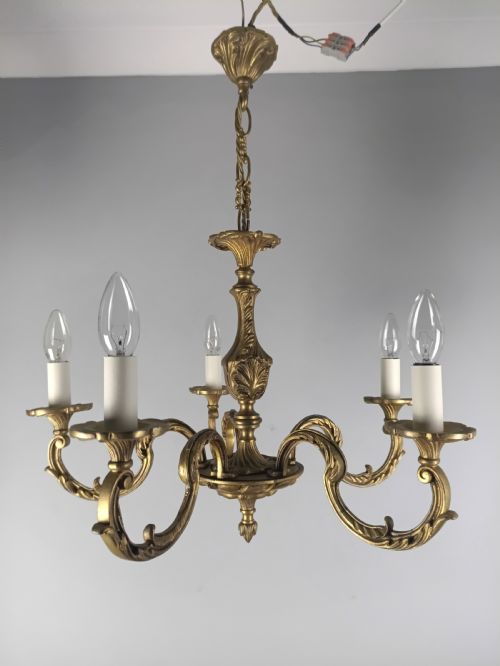
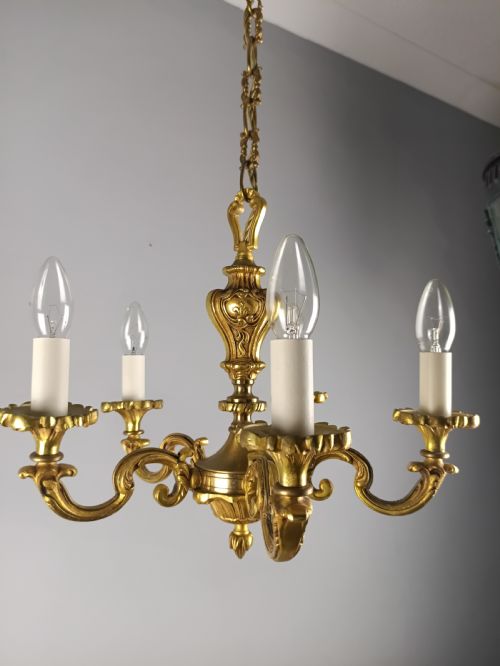
A brass five lamp search brings up multi-armed chandeliers and wall sconces designed to hold five distinct points of light. Buyers encounter French and Italian examples originating from the nineteenth century through to the nineteen-thirties.
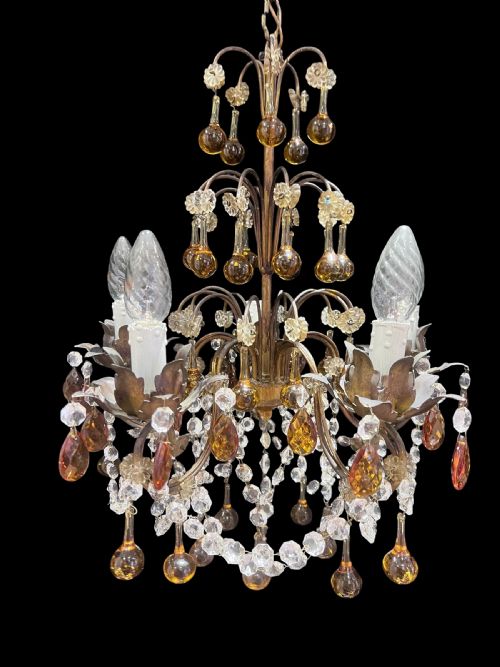
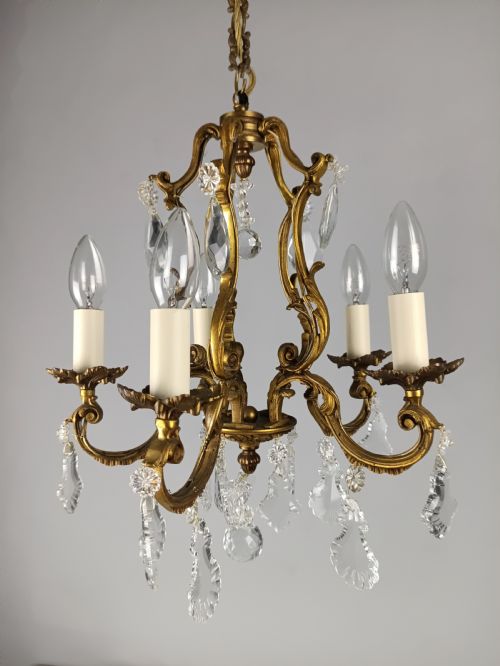
The dominant forms are five-arm chandeliers, often dressed with crystal glass drops or coloured crystals, alongside matching pairs of wall sconces. These fixtures span styles including Art Deco, French Rococo, Gothic Revival, and Neoclassical.
Earlier nineteenth-century pieces include heavy bronze Baroque Palladian designs and brass whale oil lamps from eighteen-seventy. Later examples from the nineteen-twenties and nineteen-thirties lean toward Art Deco tiers and streamlined French gilt brass forms.
Materials and construction methods
Construction relies heavily on cast brass, gilt bronze, and gilt metal shaped into arms and branches to support five lights. Workshops utilised heavy bronze for architectural styles like Baroque and Gothic Revival.
Glass and crystal feature prominently, suspended as drops, tiers, and shades from the metal frames. Frosted glass and coloured crystals appear alongside gilded brass to catch and refract the light.
Early whale oil lamps required weekly trimming of wicks by candlelight.
Distinctions in quality
Quality rests in the crispness of the metal casting and the depth of the gilding, where refined chasing distinguishes superior French bronze work from simpler cast components. The integration of the arms with the central body dictates the structural stability of the fixture.
The presence and integrity of original crystal glass drops, swags, and moulded shades elevate a piece. Heavier gauge metal and nuanced stylistic details such as Rococo scrolls or Neoclassical motifs mark out the finer examples.
The Brass Five Lamp Glossary
- Gilt bronze
- Metal cast and coated with a layer of gold. It provides a durable and warm metallic finish seen on French chandeliers.
- Wall sconce
- A lighting fixture fixed to a wall rather than suspended from a ceiling. Pairs of these often match the style of larger central chandeliers.
- Crystal glass
- High-clarity glass containing lead oxide, cut to refract light efficiently. These form the drops and swags hanging from the arms.
- Whale oil lamp
- An early lighting device utilising oil derived from marine mammals. Nineteenth-century examples often feature graduated brass fonts.
Brass Five Lamp: Frequently Asked Questions
What periods do these come from?
The pieces span from the nineteenth century through the Edwardian era and into the nineteen-twenties and nineteen-thirties. This covers a wide range of aesthetic movements.
Earlier items tend toward heavy bronze and Gothic Revival styles, while later decades introduce Art Deco tiers and French gilt brass.
How do I identify French pieces?
French chandeliers often display specific stylistic traits such as Rococo scrolls, Neoclassical symmetry, or gilt bronze and gilt brass finishes. Many incorporate crystal drops and swags.
They reflect design sensibilities from Parisian workshops across the nineteenth and early twentieth centuries.
What is the difference between brass and bronze?
Bronze is an alloy of copper and tin, valued for its weight and ability to hold fine casting details. Brass is primarily an alloy of copper and zinc.
Both metals appear across the listings, often treated with gilt finishes to enhance their decorative appeal.