
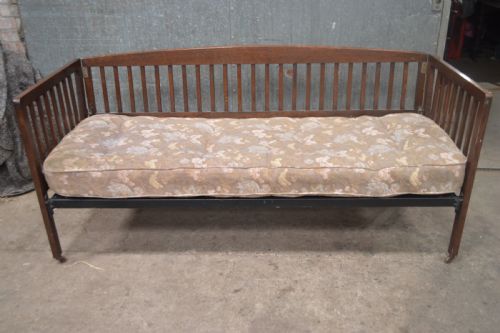
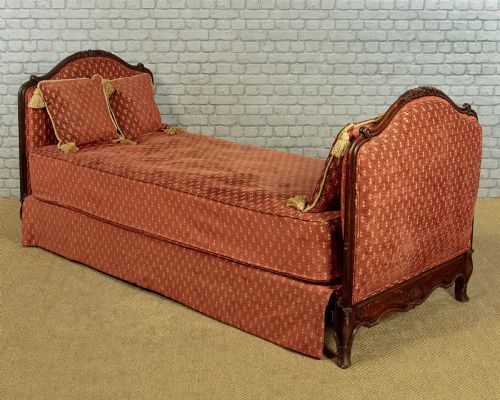
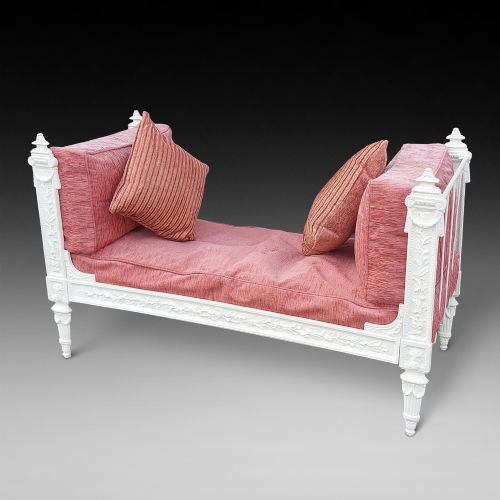
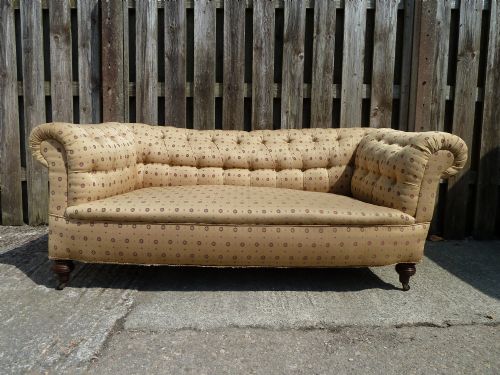


Vintage Upholstered Daybed
A vintage upholstered daybed offers a place to recline during the afternoon that combines the comfort of a sofa with the length of a bed.
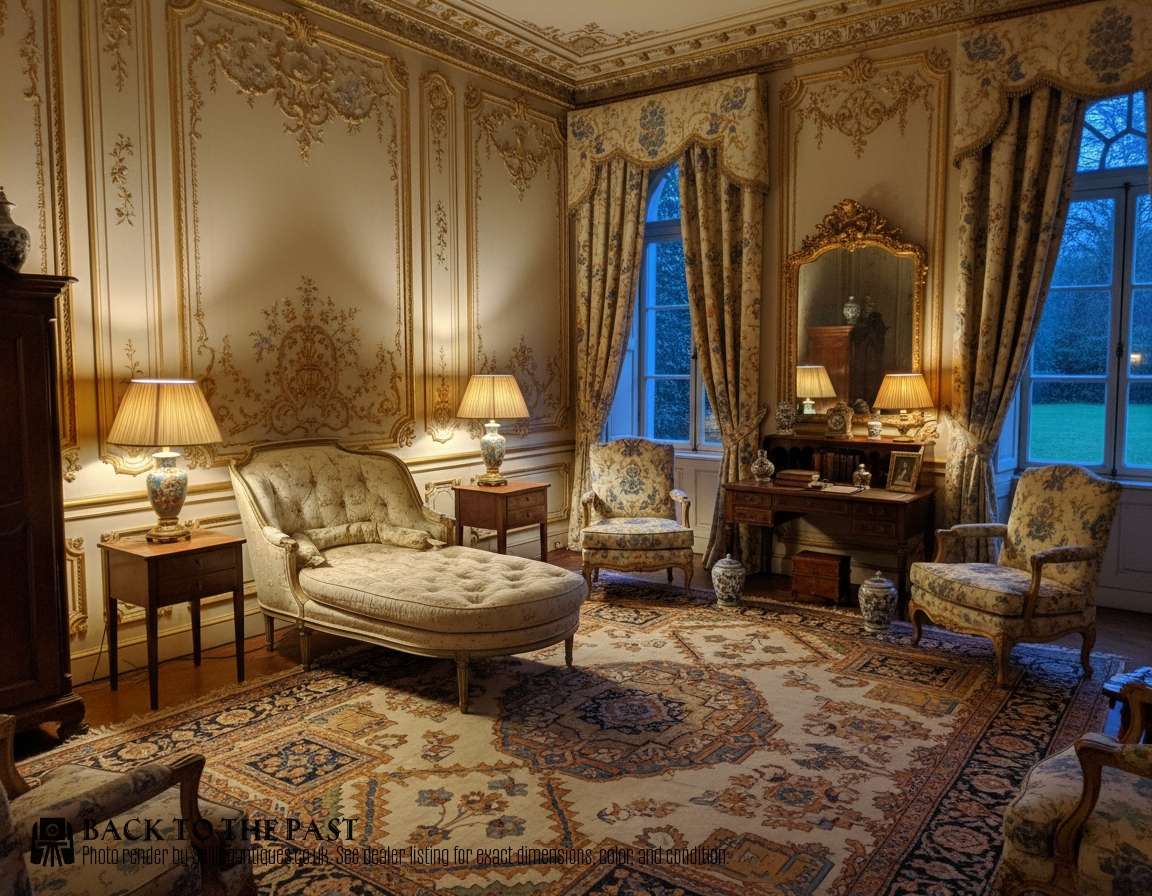
Vintage Upholstered Daybed
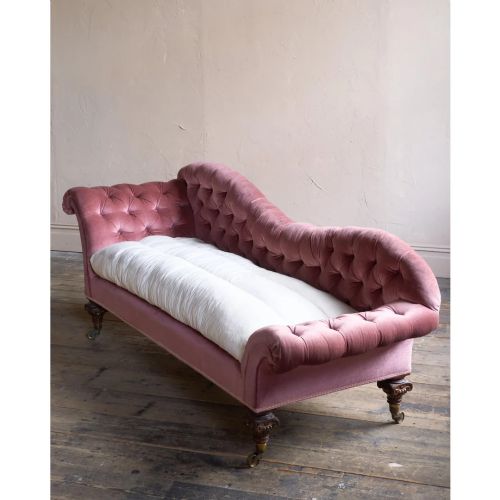
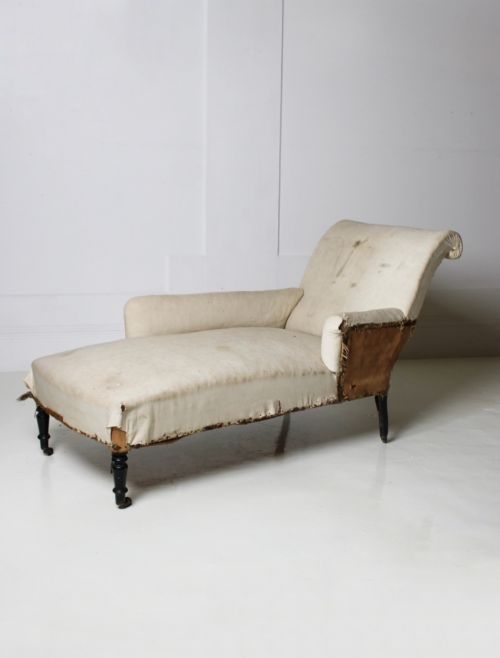
A vintage upholstered daybed sits between a sofa and a bed, serving multiple functions in a room for sitting or lying down. When searching for a vintage upholstered daybed, buyers encounter pieces originating from the nineteenth century through the Edwardian period, with Victorian and Regency examples appearing frequently.
The selection ranges from French Rococo and Louis XVI styles to Arts and Crafts designs, along with substantial country house seating. These forms include daybeds, chaise longues, ottomans, and double-ended sofas that incorporate upholstered frames.
Makers such as Howard & Sons, Jas Shoolbred, William Birch, and Hampton & Sons are represented among the pieces. Such examples demonstrate the range of seating furniture built for nineteenth and early twentieth century interiors.
Materials and construction methods
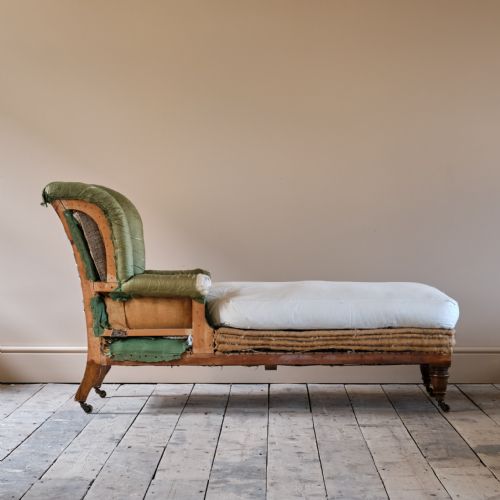
Frames are constructed from timber including mahogany, oak, rosewood, and walnut, often complemented by brass castors and metal supports. These structural woods provide the necessary strength for daybeds and chaise longues designed to support body weight while reclining.
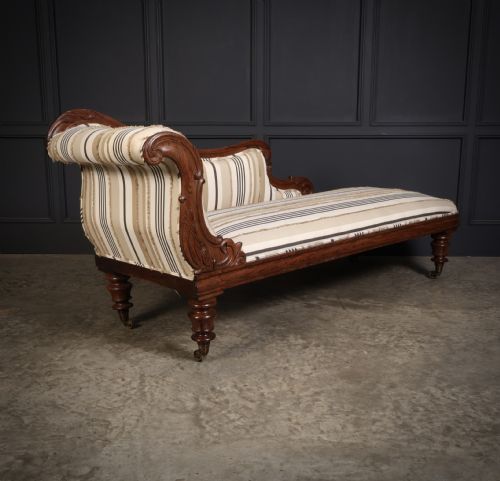
Upholstery relies on fabrics such as velvet, calico, and various specialised upholstery textiles, frequently finished with buttoning. Hand-worked details like gilt decoration, turned legs, and carved mahogany frames accompany the textile coverings.
Vintage Upholstered Daybed Retail Price Guide 2026
Typical asking prices for vintage upholstered daybed among the pieces listed under this phrase on Sellingantiques today, from the lower quarter to the upper quarter. They describe what is for sale here now, not the wider market.
Listings feature frames in mahogany, oak, rosewood, and brass, spanning the nineteenth century through the Edwardian era.
Distinctions in quality
Quality depends on the proportion and refinement of the timber frame, where finely carved mahogany, rosewood, or oak show superior cabinetmaking. Maker attribution, such as work originating from workshops like Howard & Sons or Jas Shoolbred, distinguishes standard production from exceptional pieces.
The execution of the upholstery and the integrity of the frame construction determine the standing of each piece. Original elements, such as turned legs fitted with matching castors and retained gilt decoration, elevate the character of the seating.
Howard & Sons·Jas Shoolbred·William Birch·Hampton & Sons
The Vintage Upholstered Daybed Glossary
- Chaise longue
- An upholstered chair with a seat long enough to support the user's legs. This form functions as a hybrid between a chair and a daybed.
- Ottoman
- A piece of upholstered furniture without a back or with a head end, often used as a couch or window seat. These items provide a compact alternative to standard daybeds.
- Double-ended sofa
- A sofa featuring raised scrolls or backrests at both ends, allowing a person to recline facing either direction. William IV examples show this symmetrical configuration.
- Gilt decoration
- A thin layer of gold applied to wood or metal surfaces to ornament the frame. This technique appears on decorative daybeds from the early twentieth century.
- Castor
- A small wheel mounted on a swivel attached to the bottom of furniture legs for mobility. Original castors indicate that the lower frame remains unaltered.
Vintage Upholstered Daybed: Frequently Asked Questions
What is a vintage upholstered daybed?
A vintage upholstered daybed is a long seating item designed for reclining during the day, combining structural woodwork with upholstered surfaces. These pieces date from the nineteenth and early twentieth centuries.
They appear in various styles including Victorian, Regency, and French Rococo, serving as versatile furniture for drawing rooms and studies.
Where were daybeds placed originally?
In historical interiors, daybeds and chaise longues sat in withdrawing rooms, large bedrooms, or long galleries where residents rested during the afternoon. They offered a comfortable intermediate option between sitting upright and retiring to a bed.
Country houses often utilised these pieces near windows or in private chambers for reading and relaxation.
How do I identify the period?
Dating relies on the style of the wooden frame, such as Regency scroll ends, heavy Victorian mahogany carvings, or Edwardian oak structures. Specific decorative details like Ionic column legs or bobbin turnings point to particular decades.
Attributions to makers like Howard & Sons or Jas Shoolbred also help narrow down the date of manufacture.
Are these daybeds comfortable to use?
These daybeds provide firm support derived from period upholstery techniques, which often feature buttoning and substantial fabric padding. They suit lounging and reading when paired with appropriate cushions.
Buyers can use them as primary seating or auxiliary places to rest in modern living spaces.