


Antique Recliner Couch
An antique recliner couch offers traditional lounging comfort through nineteenth-century day beds and chaise longues upholstered in leather or velvet.
Antique Recliner Couch
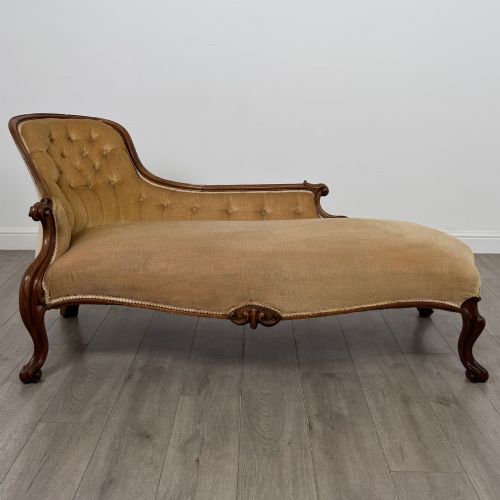
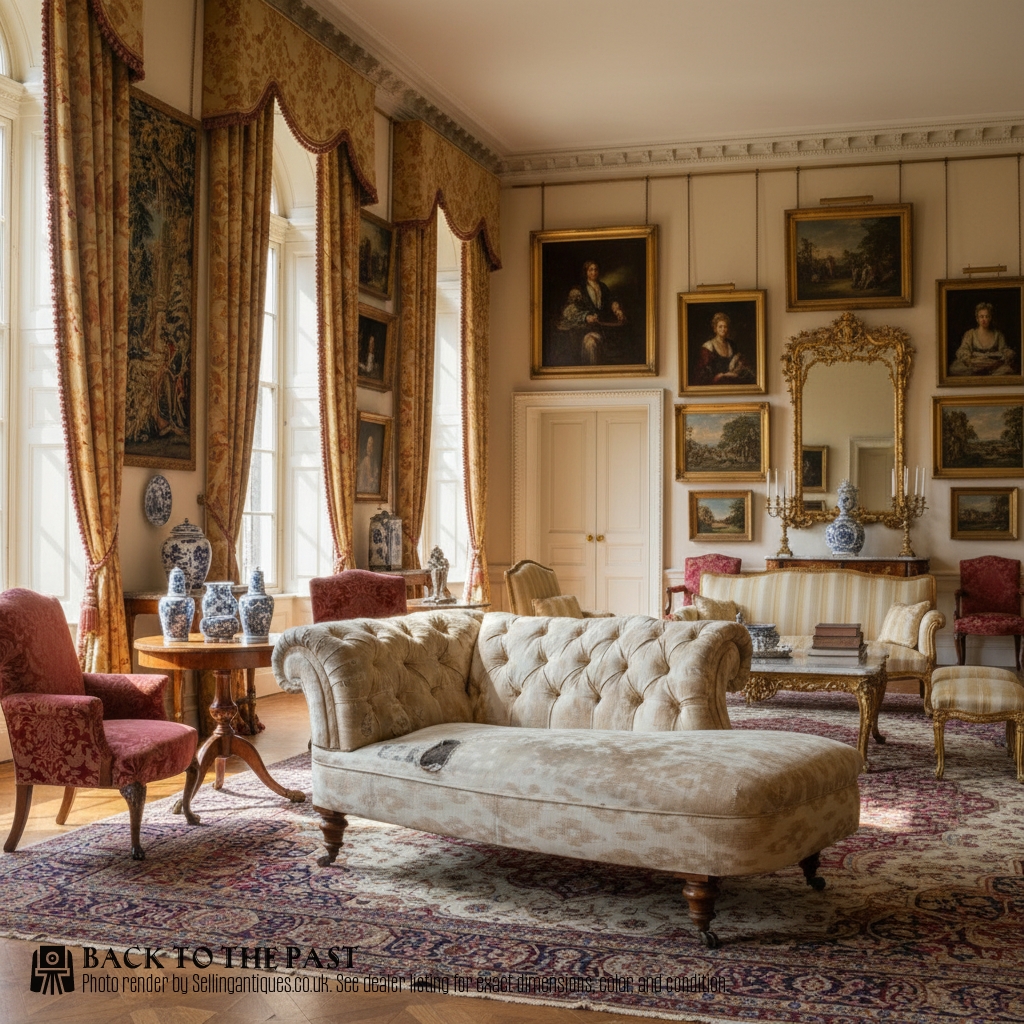
When you search for an antique recliner couch, you are looking at nineteenth-century day beds, Victorian chaise longues, and reclining armchairs designed for horizontal rest. The pieces on this page span the Victorian and Edwardian eras, predominantly taking the form of chaise longues and day beds rather than modern mechanical reclining sofas. These items originate from the 1860s through to 1900, capturing a period when seating prioritised deep relaxation and formal lounging.
The most common forms you will meet here are nineteenth-century chaise longues featuring mahogany or walnut frames paired with buttoned upholstery. You will also encounter specialised reclining day beds and Chesterfield-style loungers that incorporate adjustable ends or built-in backrests. These items reflect the domestic comfort of Victorian and Edwardian drawing rooms, serving as both functional resting furniture and decorative centrepieces.
How they were made
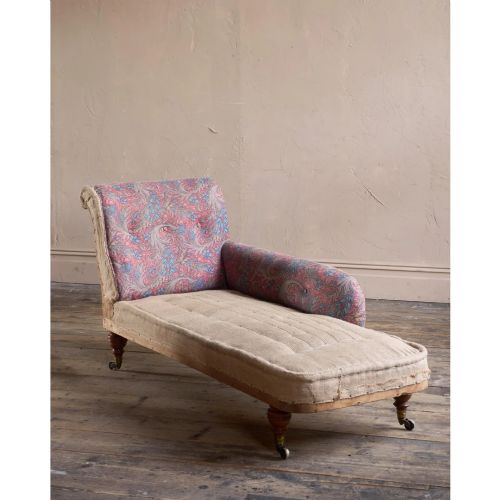
The frames of these pieces rely on dense timbers such as mahogany and walnut, providing a sturdy structural foundation for prolonged use. Woodwork is frequently paired with brass hardware and traditional internal webbing supported by hessian cloth.
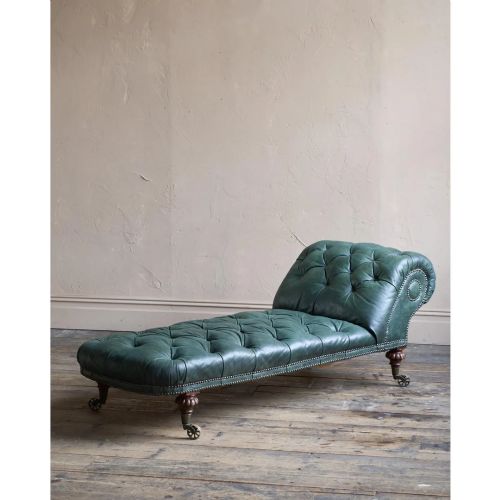
Upholstery techniques define the character of these items, utilising deep buttoning across materials like leather, velvet, fabric, and blue damask. Makers applied hand-tacked finishes and horsehair or wool stuffing to achieve the characteristic cushioned surface required for a reclining day bed.
Antique Recliner Couch Retail Price Guide 2026
Typical asking prices for recliner couch among the pieces listed under this phrase on Sellingantiques today, from the lower quarter to the upper quarter. They describe what is for sale here now, not the wider market.
Victorians invented dedicated reclining day beds specifically so afternoon napping could occur without messing up your main drawing room sofa.
What varies in quality
The distinction between standard examples and the finest pieces often lies in the attribution to notable makers whose workshops defined nineteenth-century upholstery standards. Superior pieces exhibit refined timber carving, balanced frame proportions, and the original maker stamps or paper labels affixed to the woodwork or webbing.
Material selection and upholstery execution further differentiate the range. Top-tier items feature high-grade leather or rich velvet with precise buttoning, whereas simpler variants utilise standard fabric or hessian foundations that reflect more utilitarian domestic production.
Howard and Sons·Jas Shoolbred·Hampton and Sons Pall Mall
The Antique Recliner Couch Glossary
- Chaise longue
- A long upholstered chair or day bed designed for reclining with support for the back and legs. This form dominates the nineteenth-century seating available on this page.
- Buttoned
- An upholstery technique where tightly pulled buttons create a patterned, indented surface across the padding. This method secures the internal stuffing while adding texture to leather and velvet coverings.
- Mahogany
- A durable hardwood commonly utilised for the exposed wooden frames of Victorian seating. Its dense grain allows for stable carving and a polished dark finish.
- Damask
- A reversible figured fabric traditionally woven with patterns visible on both sides. It appears on select nineteenth-century day beds as a decorative covering.
- Hessian
- A coarse woven fabric typically utilised as an internal foundation material for webbing and upholstery stuffing. It provides hidden structural support beneath the visible leather or velvet outer layer.
Antique Recliner Couch: Frequently Asked Questions
What is an antique recliner couch?
An antique recliner couch refers to nineteenth-century day beds, chaise longues, and reclining chairs from the Victorian and Edwardian periods. These pieces combine wooden frames in mahogany or walnut with upholstered surfaces designed for horizontal rest.
Unlike modern mechanical reclining sofas, these historical pieces rely on fixed ergonomic angles, adjustable ends, or day bed formats to achieve comfort. They were built for nineteenth-century drawing rooms to allow daytime lounging.
What materials were used on these day beds?
Nineteenth-century day beds and chaise longues utilise solid wood frames constructed primarily from mahogany and walnut. These timbers provide the structural strength needed to support prolonged reclining.
Surface coverings range from brown and green leather to velvet, fabric, and blue damask. Internal construction relies on brass hardware, hessian fabric foundations, and traditional stuffing materials.
How do I live with an antique day bed?
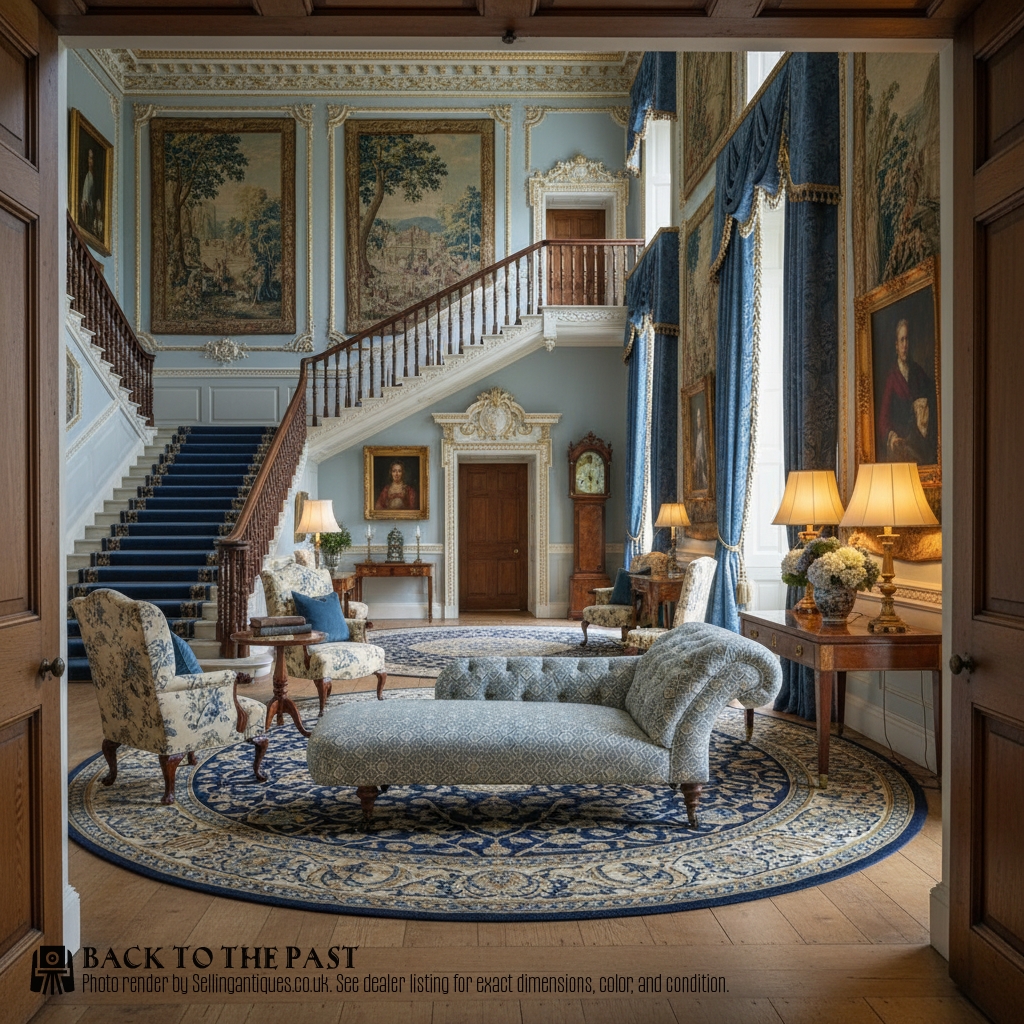
Living with an antique day bed involves placing the piece where its single-ended backrest and long frame do not obstruct room flow. They function well as statement seating in large living spaces or studies.
Maintenance requires standard care appropriate for nineteenth-century leather, velvet, or wood. Protecting the materials from direct sunlight preserves the original upholstery and timber finishes.